

Italy is one of the countries where I have found it easiest to overestimate how much belongs in a single trip. Rome, Florence, Venice, the Amalfi Coast, Tuscany and Cinque Terre can all look close enough on a map to combine, but the Italy I have enjoyed most has rarely come from moving between famous places as quickly as possible.
That is what shaped this seven-day route through Rome, Orvieto and Florence, with time in the Tuscan countryside. The places are relatively close geographically, but they gave me very different experiences: ancient Rome, a smaller Umbrian hill town, Renaissance Florence and rural Tuscany.
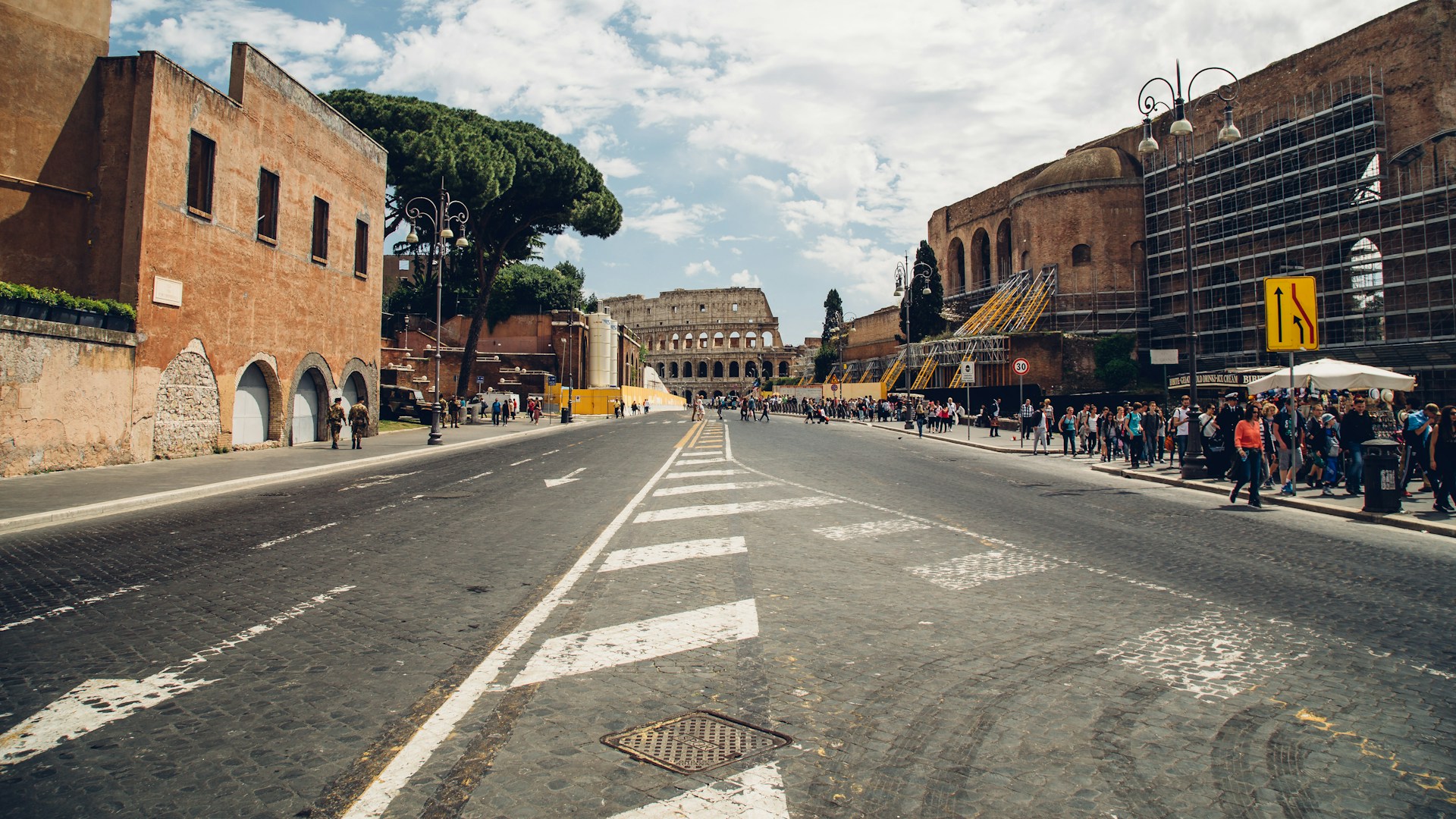
Rome Coliseum streetscape in Rome
My 7-day Italy itinerary at a glance
Overview
Day | Route | Overnight |
|---|---|---|
1 | Rome | Rome |
2 | Rome | Rome |
3 | Rome | Rome |
4 | Rome → Orvieto | Orvieto |
5 | Orvieto → Florence | Florence |
6 | Tuscany day trip | Florence |
7 | Florence | Florence / departure |
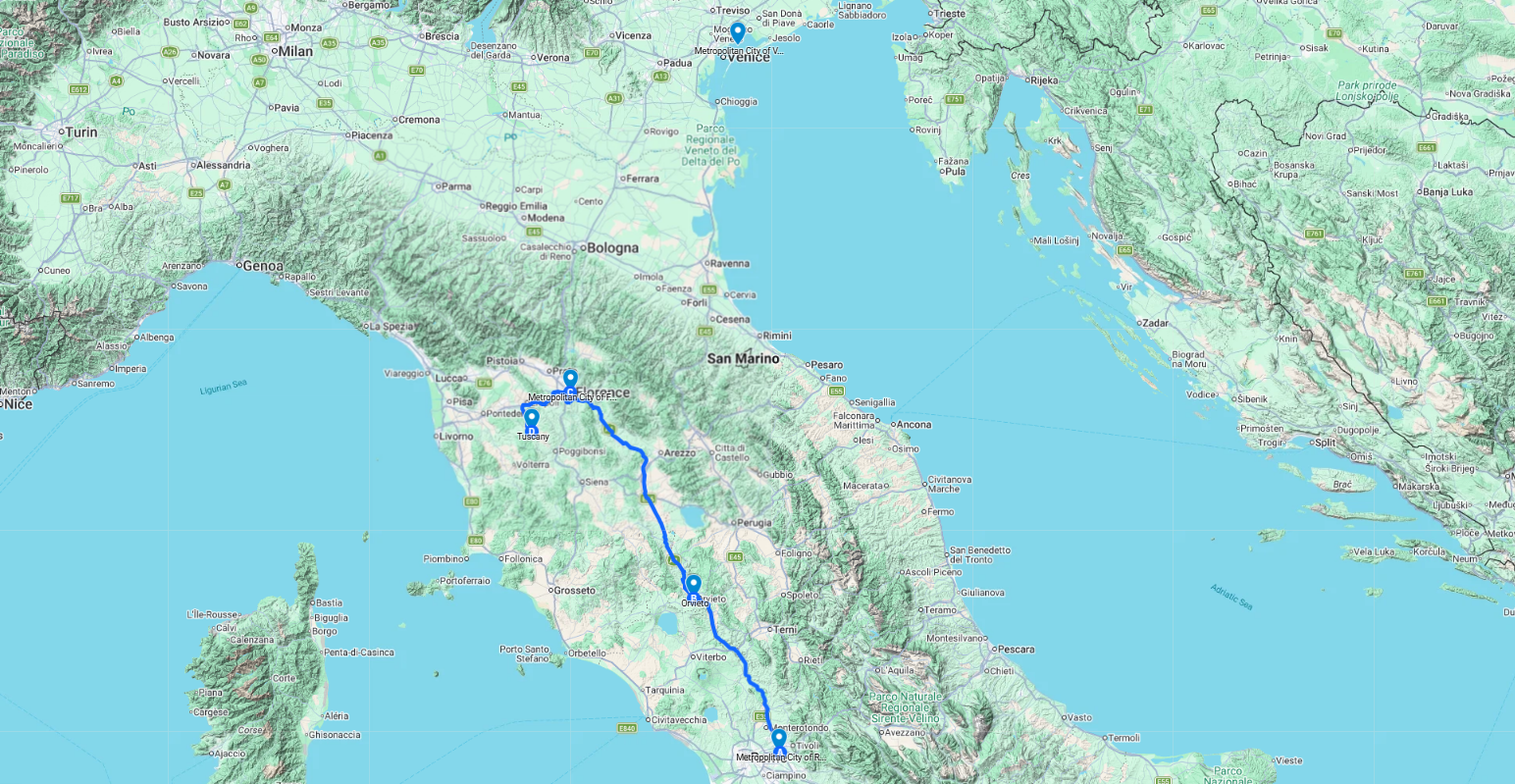
7-day Italy itinerary route
Days 1–3: Rome
Three days in Rome still left far more unseen than seen, but that was part of what I came to accept about the city.
What worked for me was having enough time for the major ancient sites and the Vatican without making every hour another attraction. Rome became much more memorable once there was also space for walking, food and neighbourhoods.
Day 1: Ancient Rome and the historic centre
The Colosseum, Roman Forum and Palatine Hill are obvious places to begin, but experiencing them together helped me understand the scale of ancient Rome in a way that seeing the Colosseum alone never could.
The historic centre felt completely different afterwards. Piazza Venezia, the Pantheon, Piazza Navona and the Trevi Fountain sit close enough together that they became part of a long walk through the city rather than a series of separate sightseeing missions.
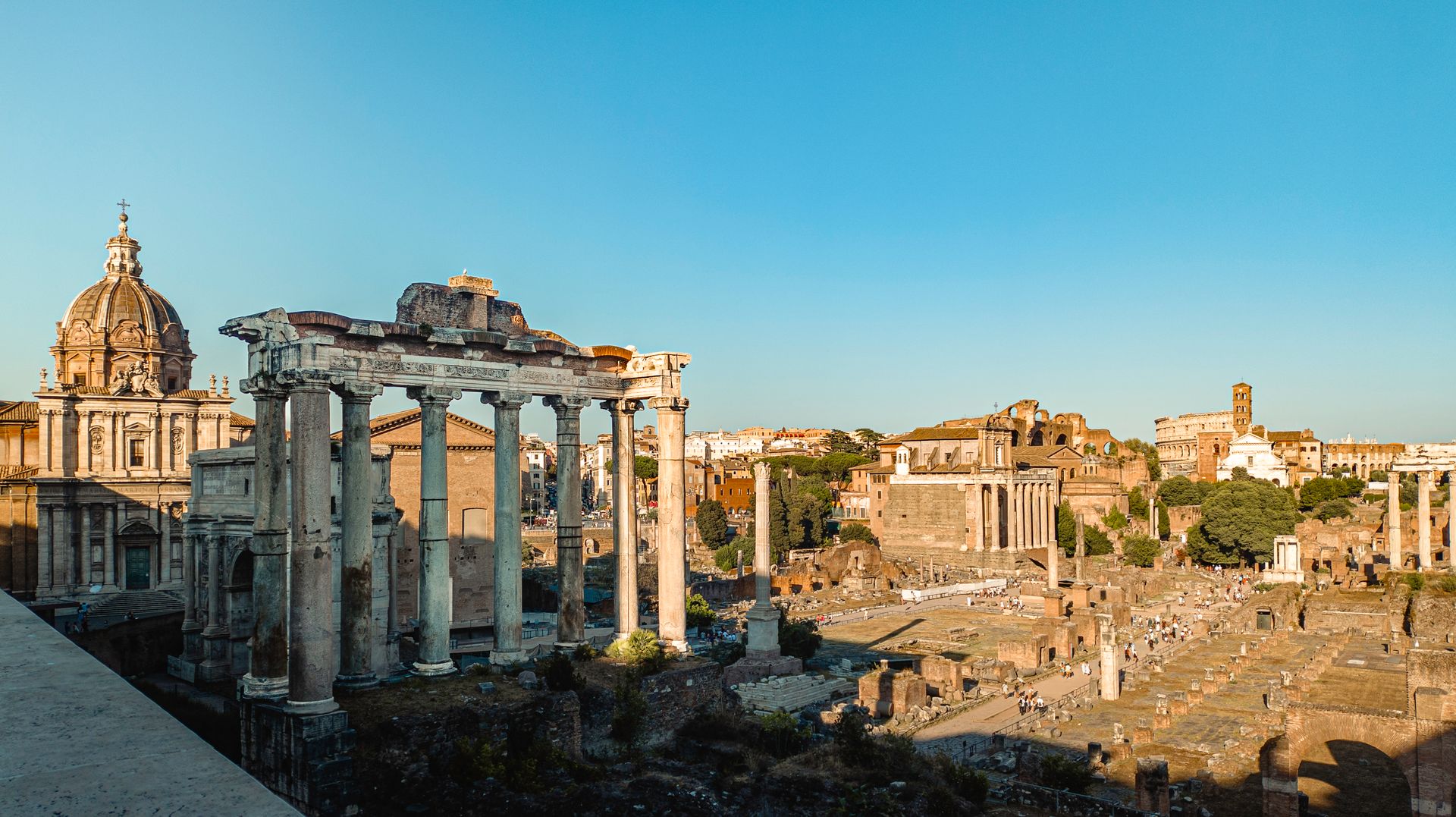
Historic view of the Roman Forum ruins in Rome
Some of my favourite memories of Rome are less about another monument and more about what happened between them: moving through neighbourhoods, stopping for simple Roman dishes and watching the streets become livelier in the evening.
Food had a habit of interrupting the sightseeing, and I found Rome was better for it.
Day 2: Vatican City and Trastevere
The Vatican changed the rhythm of the second day simply because of its scale.
The Vatican Museums and St Peter's Basilica can absorb a large part of a day, particularly when the city is busy. After so much monumental art and architecture, crossing back into Rome later felt like a natural change of pace.
Trastevere was especially enjoyable in the evening. The neighbourhood felt much more alive once the daytime sightseeing had finished, and experiencing it that way made more sense to me than treating it as another quick stop between attractions.
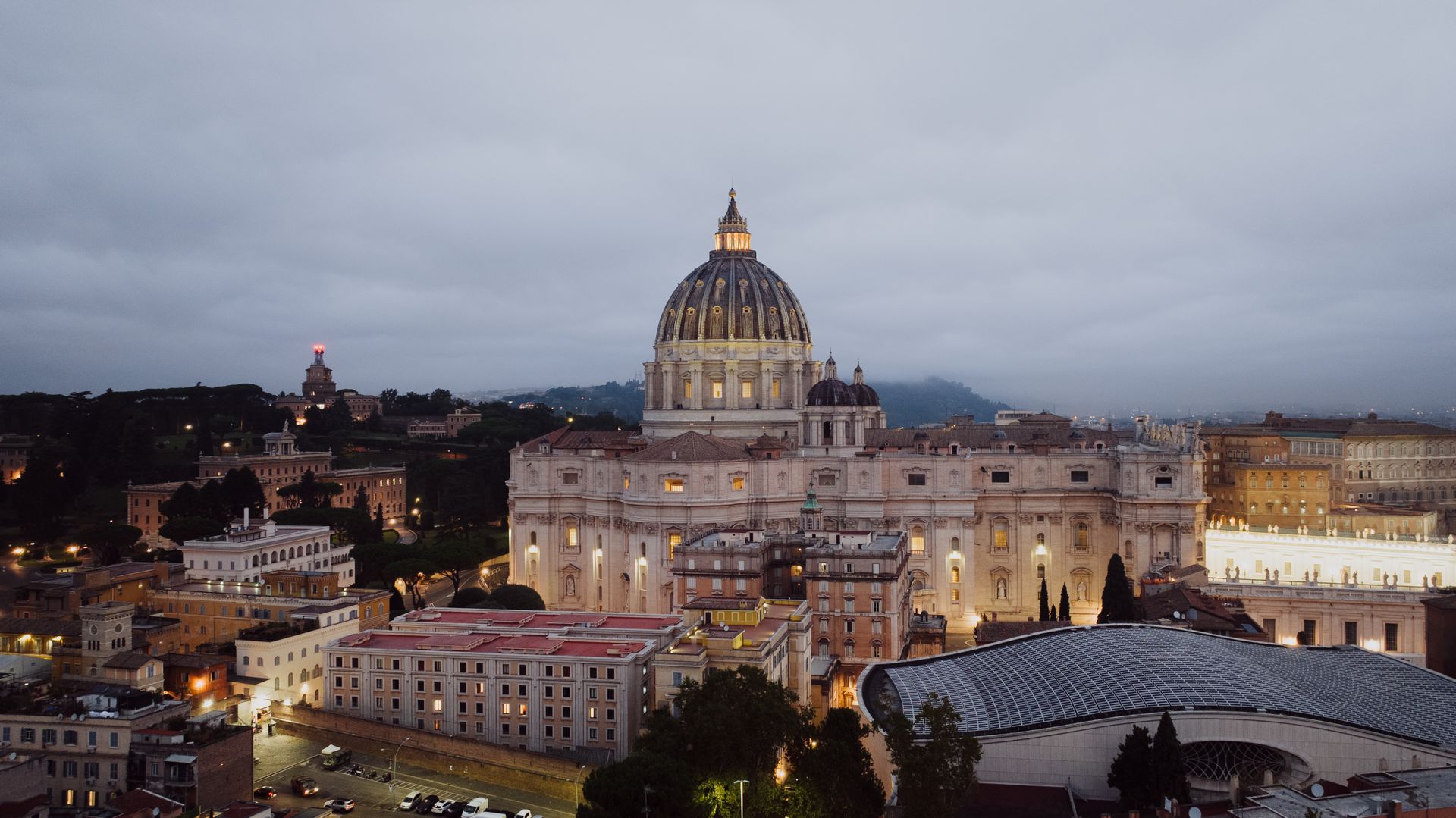
St. Peter's Basilica at dusk in Rome
Day 3: The Rome I found between the major sights
By the third day, I appreciated having some flexibility left.
Rome rarely felt as though it wanted to run exactly to schedule. Queues, heat, long lunches and finding somewhere interesting while walking could all reshape the day.
That made the unstructured time surprisingly valuable. Villa Borghese, churches, museums and different neighbourhoods could fill it, but I found the freedom to revisit somewhere or simply keep walking just as useful.
It was also a reminder that three days in Rome is not about completing the city. It is enough time to experience several sides of it without pretending everything important has been covered.
Day 4: Rome to Orvieto
Orvieto was where this route started to feel very different from a standard week built only around Italy's biggest cities.
The train north from Rome brought me to a much smaller place sitting dramatically on a volcanic plateau above the Umbrian countryside.
Many travellers experience Orvieto as a day trip. Staying overnight changed it for me.
Once the day-trippers left, the streets became quieter and the town felt less like somewhere I was visiting between train times. Having an evening there was part of what made the stop worthwhile.
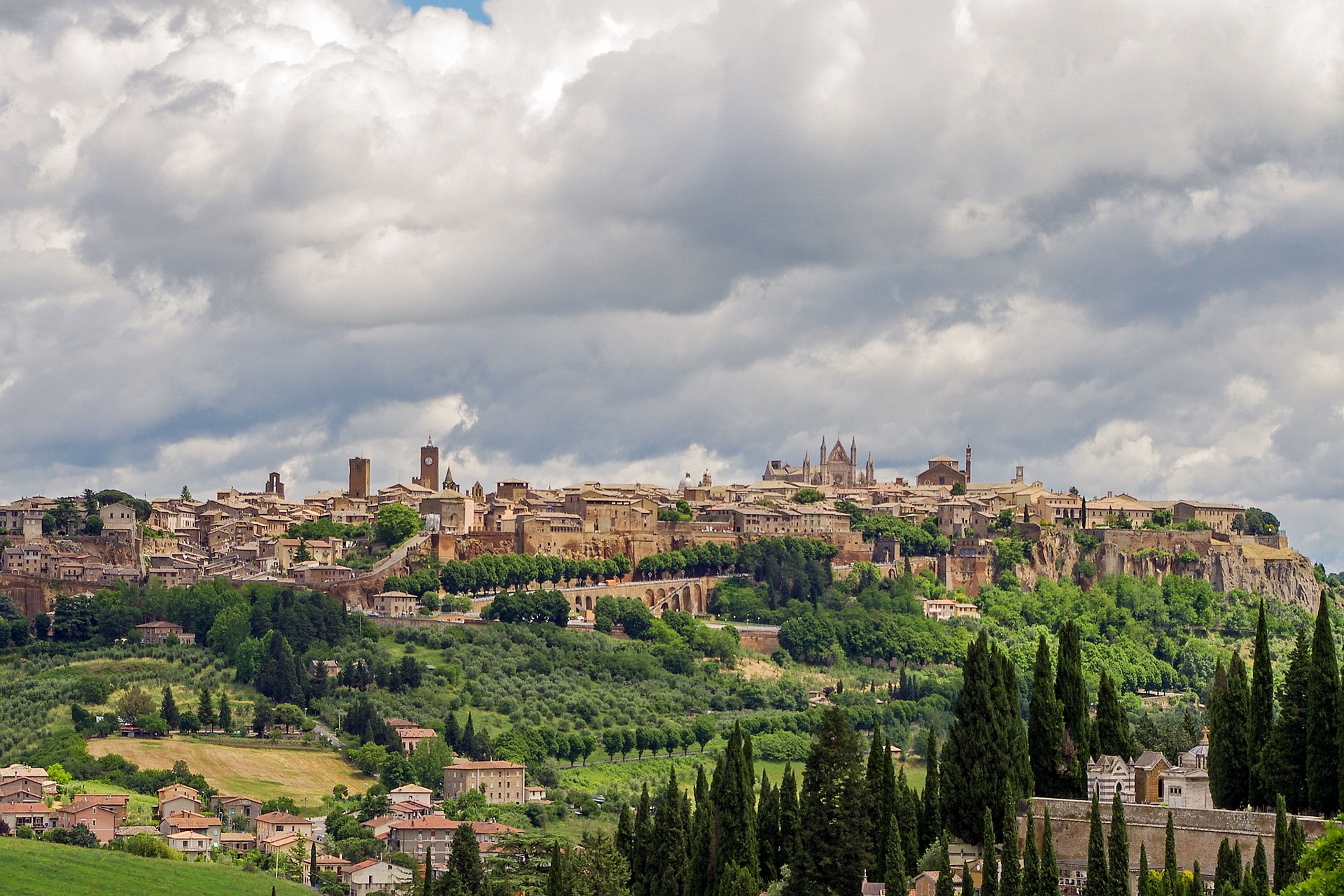
Panoramic view of Orvieto in Umbria
The cathedral dominates the town above ground, but one of the things that surprised me most was what sits underneath it.
Orvieto's underground network contains caves, tunnels, wells and spaces carved into the volcanic rock over centuries. Exploring that side of the town felt completely different from another famous cathedral or art museum.
That contrast is exactly why Orvieto stayed in this itinerary for me.
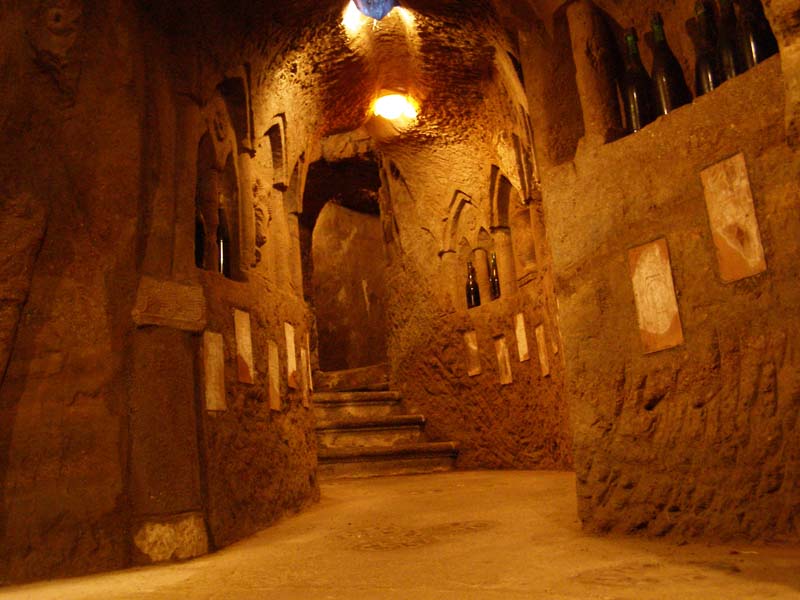
Orvieto Underground tunnels
Stay: Orvieto.
Day 5: Orvieto to Florence
The journey north to Florence continued the route without feeling like a major travel day.
Florence's compact centre was one of the first things I noticed. The Duomo, Piazza della Signoria, Ponte Vecchio and the streets toward Oltrarno are close enough that I could start getting a sense of the city simply by walking.
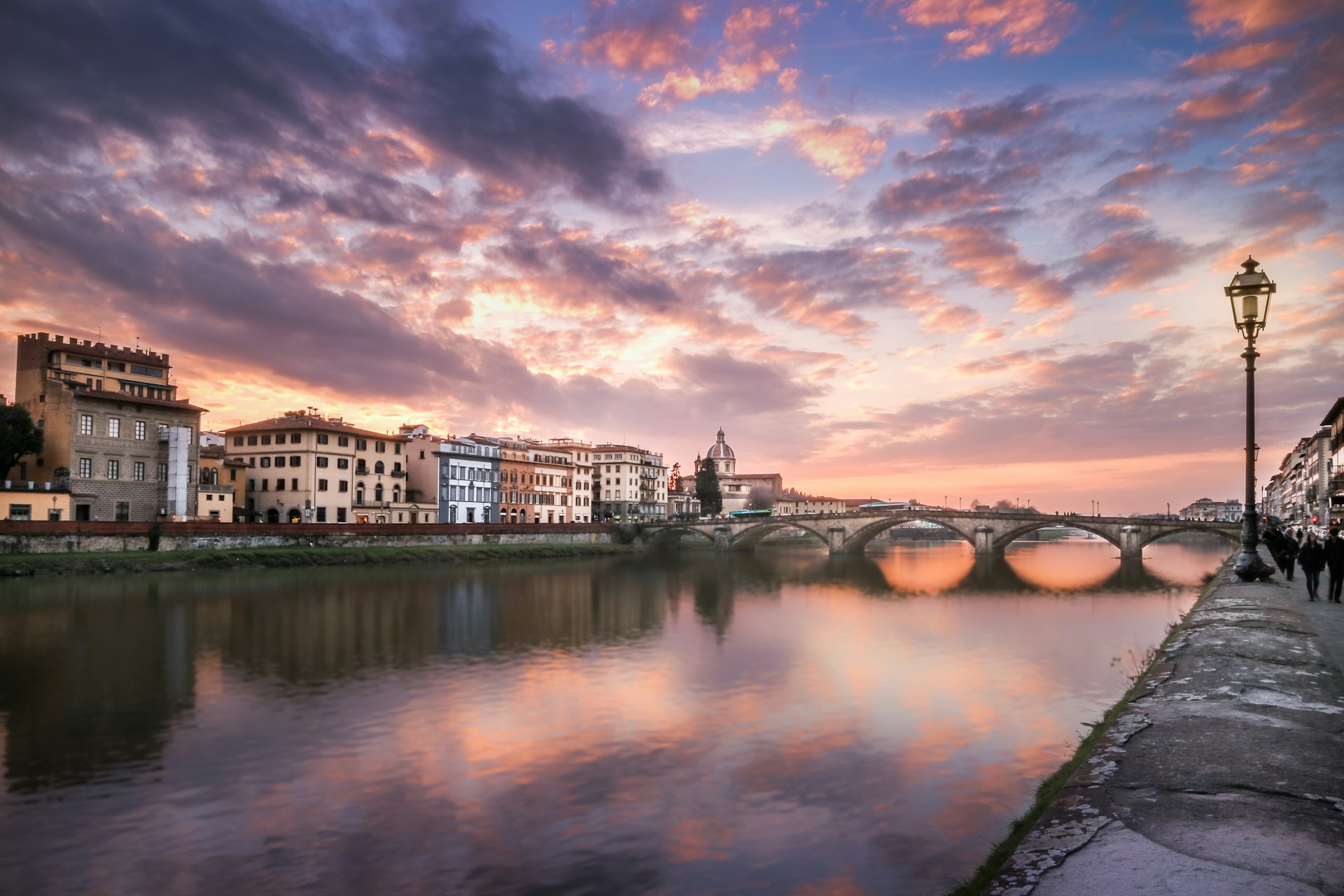
Florence, Italy in sunset
That first afternoon worked better for me as an introduction than as a race through museums.
Piazzale Michelangelo is popular for obvious reasons. Looking back across the rooftops, Duomo and surrounding hills gave me a much clearer sense of Florence as a whole than I had from street level.
Stay: Florence.
Day 6: What Tuscany added to the trip
Leaving Florence for a day changed the character of the week again.
Tuscany is far too large and varied to reduce to a single day, but even a focused trip into the countryside created a contrast I valued after several days in Rome and Florence.
Siena and San Gimignano offer one version of that experience, while Chianti puts more emphasis on rural scenery, food and wine. What mattered to me was not trying to turn the day into a collection of every famous Tuscan name.
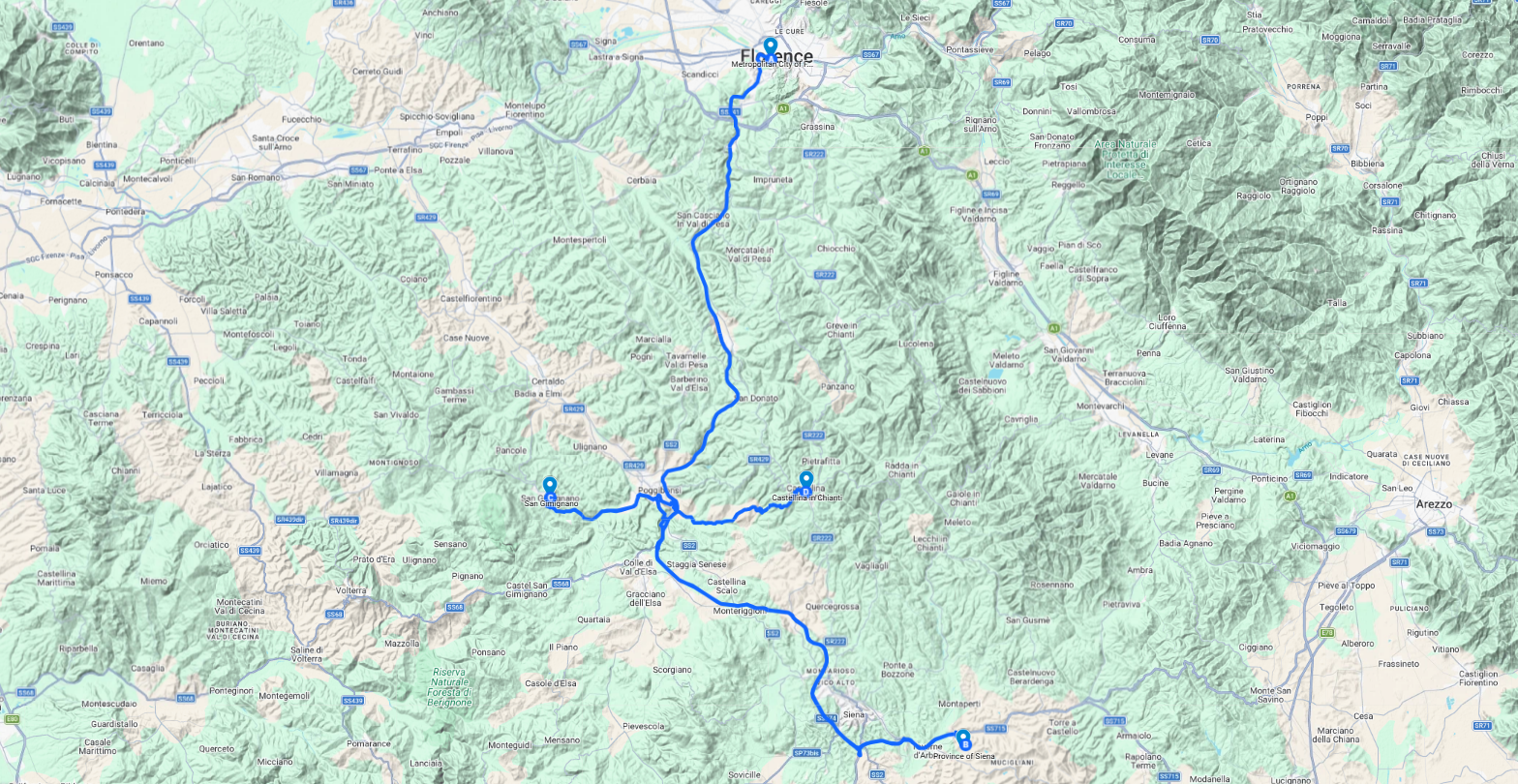
Tuscany day-trip map from Florence
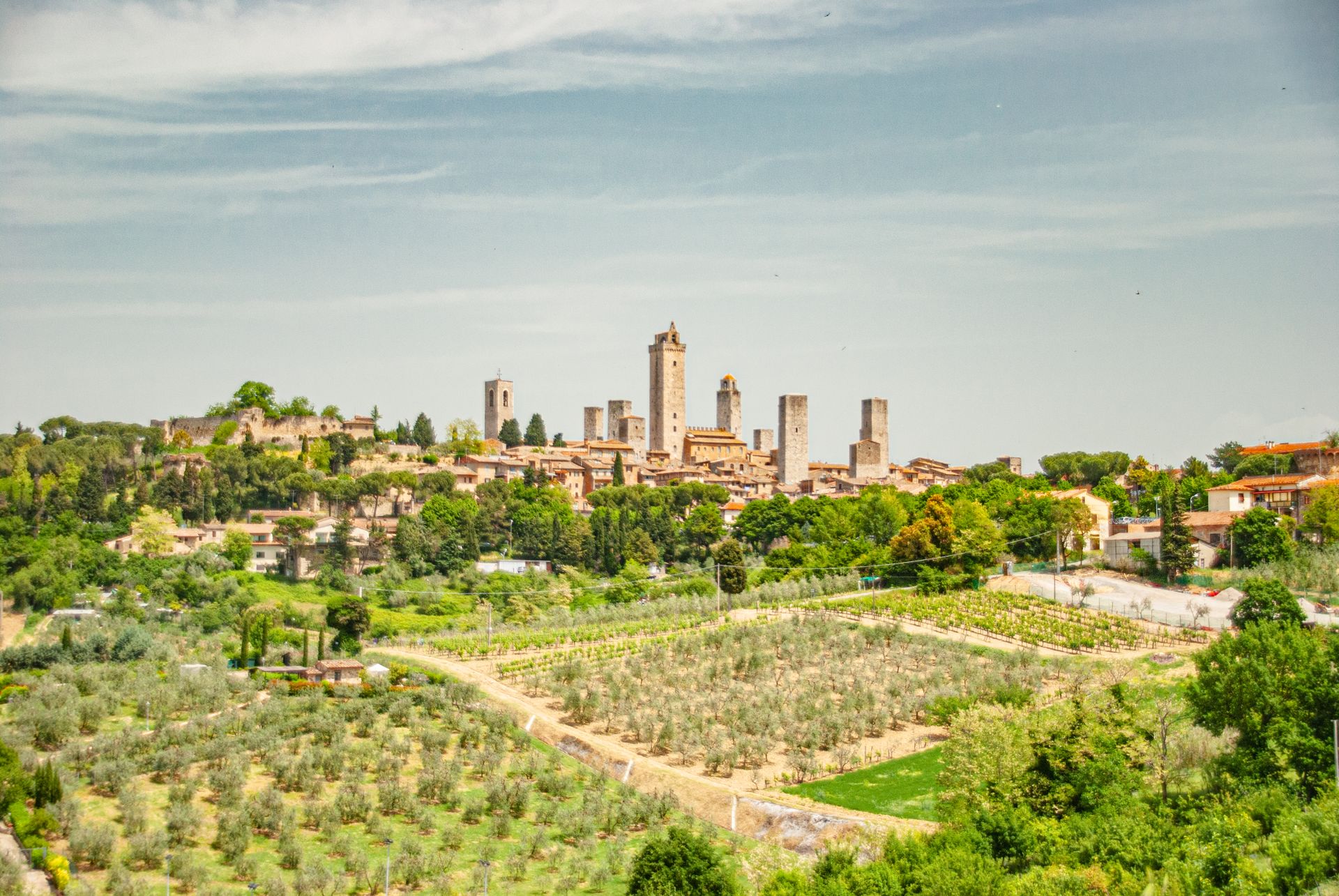
San Gimignano's medieval towers surrounded by lush Tuscan countryside
Rome and Florence are dense with major sights. The Tuscan countryside introduced a completely different pace, and that slower day made the cities either side of it feel more distinct rather than less important.
Stay: Florence.
Day 7: Florence's art, streets and river
Florence's major art collections are difficult to separate from the experience of the city.
The Uffizi and Michelangelo's David at the Accademia are obvious examples, and both can attract substantial queues. Advance timed tickets can make a significant practical difference when they are available.
But my impression of Florence was never limited to what was inside the museums.
Oltrarno, the Arno, the bridges, food and simply walking through the historic centre were just as important in making the city feel different from Rome.
That mixture of major Renaissance art and a centre compact enough to keep exploring on foot is what made Florence work so well at the end of this route.
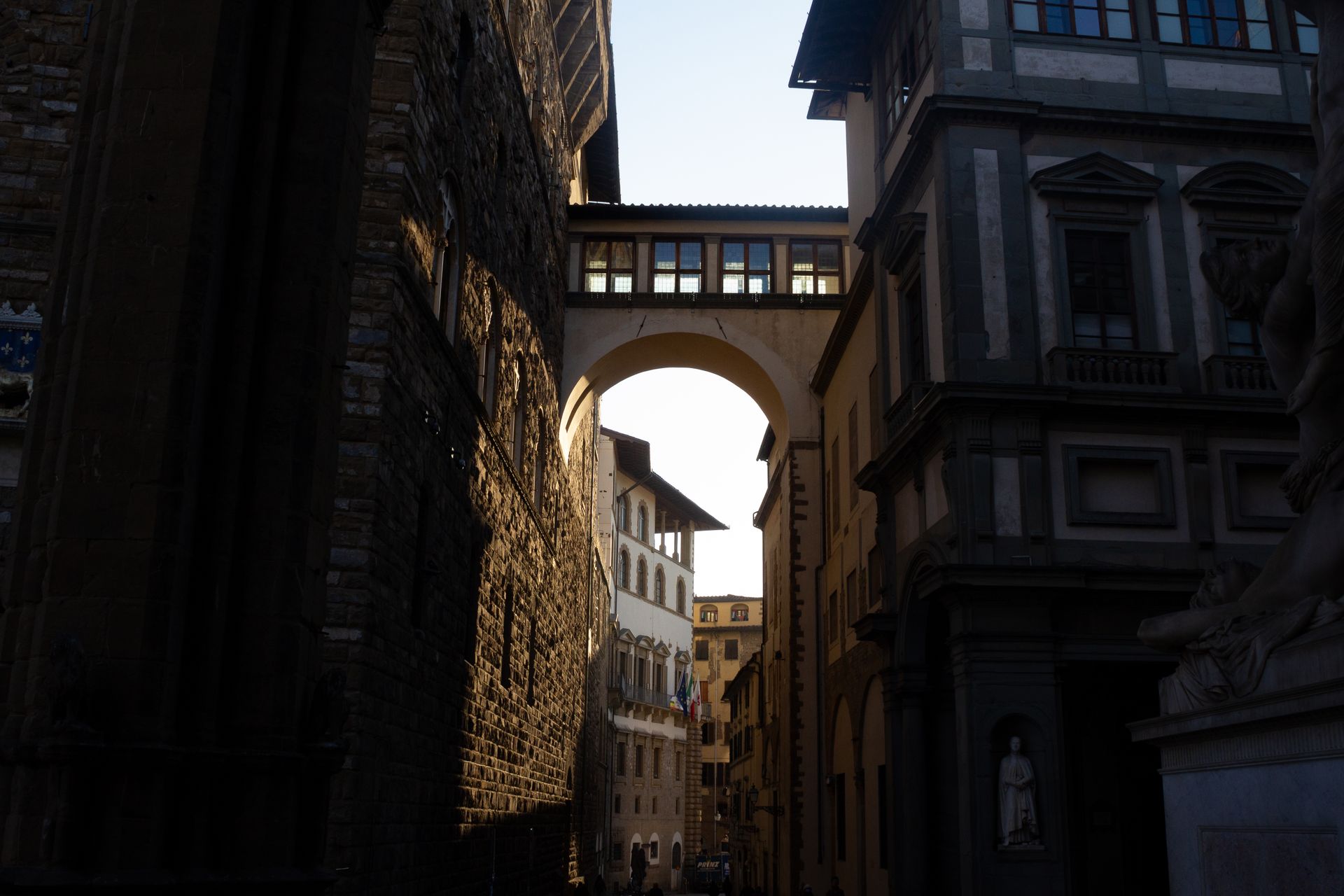
View through the archway of the Uffizi Gallery in Florence, Italy
Why this route worked for me in seven days
The biggest advantage was that the week never became a checklist of Italian cities.
Rome → Orvieto → Florence followed a natural geographical progression, but the places themselves felt very different. Adding the Tuscan countryside created another change of atmosphere without another hotel move.
That balance appealed to me much more than using the same seven days to add another famous city for a single night.
Where Venice fits
Venice is the obvious temptation because it is relatively easy to reach from Florence.
High-speed trains between Florence and Venice take a little over two hours on many services, so a route of Rome → Orvieto → Florence → Venice is entirely realistic.
The difference is not whether it can be done. It is what gets traded for it.
Adding Venice generally means less time in Florence, losing the Tuscany day, or accelerating another part of the week. For someone whose strongest reason for visiting Italy is Venice, that trade can make complete sense.
My own preference for this particular week is the slower version. Orvieto, Tuscany and the extra time in Florence gave the route a variety that I valued more than adding another major city.
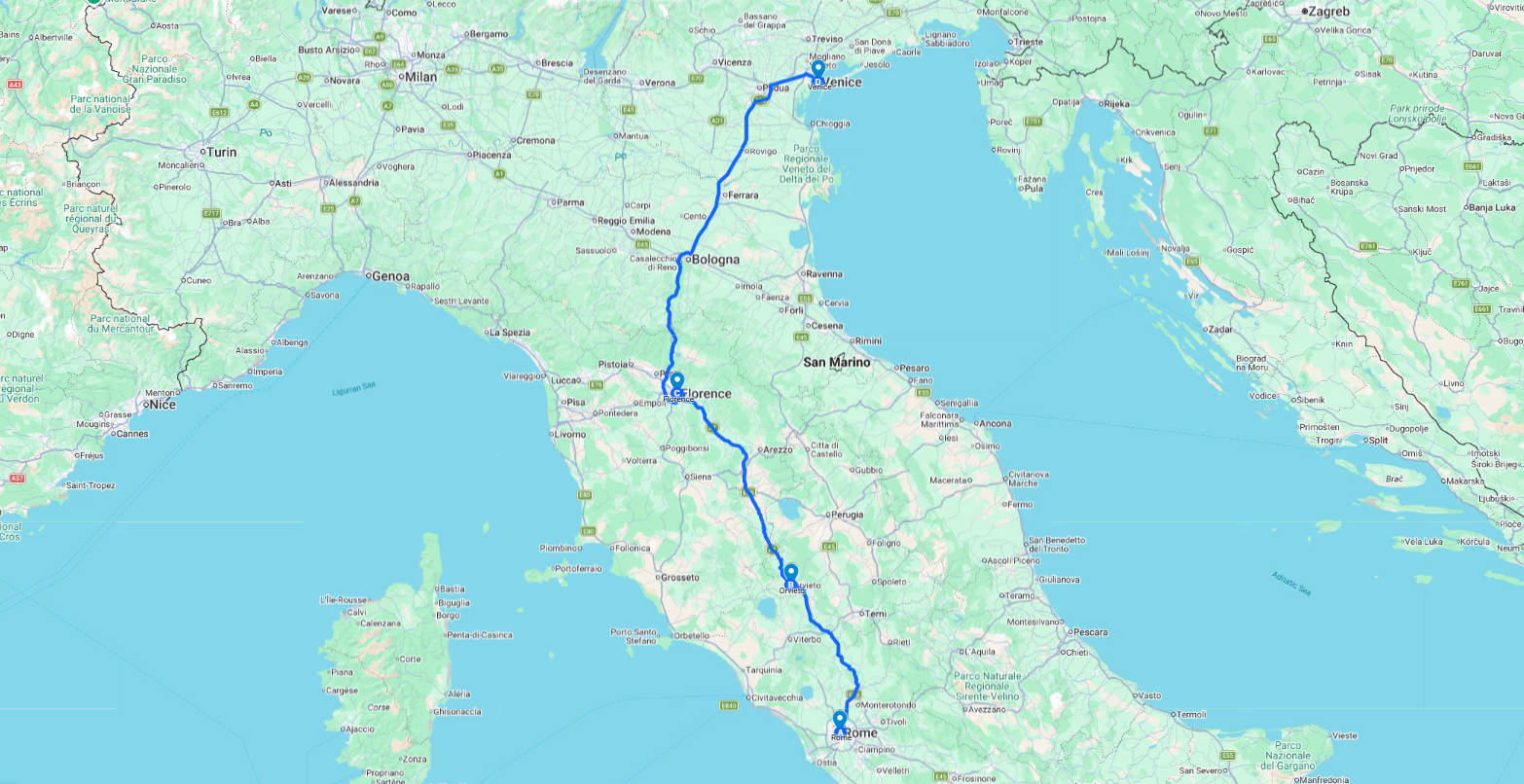
Alternative Italy Itinerary route
What transport felt like on this route
One of the reasons this itinerary felt relatively easy was that I did not need a car for the core route.
Rome, Orvieto and Florence are connected by rail, while having a car inside the major cities would have added complications without improving the experience.
Tuscany is the exception where a car can change what is possible. Smaller villages and rural areas become easier to explore independently, although organised day trips and public transport also work for some destinations.
For me, that meant the trip could remain largely rail-based without giving up the countryside entirely.
How much travel is involved?
The route is intentionally light on long transfers.
That relatively simple progression was one of the things I liked most about the route. Travel connected the destinations rather than becoming the dominant experience of the week.
What I left out
The Amalfi Coast, Cinque Terre, Milan, the Italian lakes, Sicily and the Dolomites are all absent from this route.
None of that reflects how worthwhile they are. My experience of travelling in Italy has simply made me appreciate regional trips more.
Every extra famous destination has a cost: another transfer, another hotel, less time in the streets and restaurants, and less opportunity for a place to feel like more than its headline attraction.
Leaving large parts of Italy for another trip became much easier once I stopped seeing that as something the itinerary had failed to include.
Have You Seen Our Travel Concierge Service?
Your trip, planned by local experts
We are not a travel agent - we design custom itineraries around your budget and style, without receiving commissions or booking fees.
Custom itinerary
Built around your dates, budget, and travel style.
Local expert knowledge
Recommendations from people on the ground, not review sites.
Travel smarter, spend less
We optimise for your budget to make your money go further.
What seven days in Italy felt like
Seven days was enough for a very good introduction to one part of Italy. It was not enough to experience Italy as a whole, and I do not think it needs to be.
Rome, Orvieto, Florence and Tuscany gave me ancient history, food, Renaissance art, city life, a smaller hill town and countryside without making the week feel dominated by transport.
That is the distinction that matters most to me with Italy.
The trip became better once I stopped measuring it by how many famous places could fit and started paying more attention to how differently each place felt while I was there.