

Australia is one of the countries where a map can be genuinely misleading.
The Great Barrier Reef, tropical rainforest, white-sand islands, Sydney, the Red Centre and southern cities all belong to the same country, but the distances between them can be enormous.
My experience of Australia is why I think ten days needs a clear purpose.
For an iconic natural-landscape trip, the combination that stays with me is the Great Barrier Reef → Daintree Rainforest → Whitsundays → Uluru.
It is ambitious and requires flights. The reward is experiencing four environments that feel almost unrelated to one another.
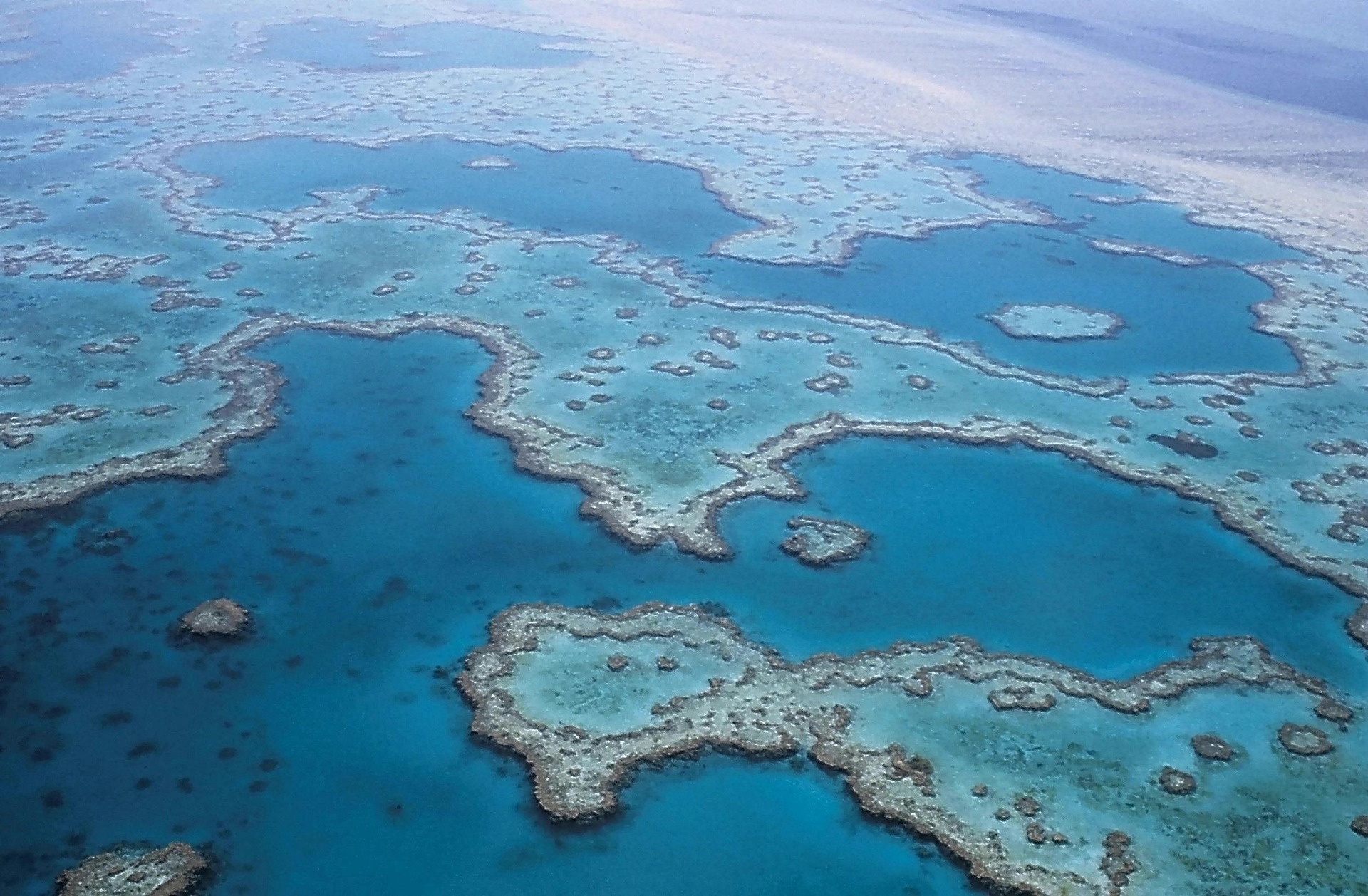
Aerial view of the Great Barrier Reef in Queensland, Australia
My 10-day Australia itinerary at a glance
Overview
Day | Route | Overnight |
|---|---|---|
1 | Cairns or Port Douglas | Cairns or Port Douglas |
2 | Great Barrier Reef | Cairns or Port Douglas |
3 | Daintree Rainforest | Daintree or Cape Tribulation |
4 | Daintree Rainforest | Daintree or Cape Tribulation |
5 | Cairns → Whitsundays | Airlie Beach or Whitsunday Islands |
6 | Whitsundays | Whitsundays |
7 | Whitsundays | Whitsundays |
8 | Travel toward Uluru | connecting city or Uluru, depending on flights |
9 | Uluru | Yulara |
10 | Uluru and Kata Tjuta | Departure |
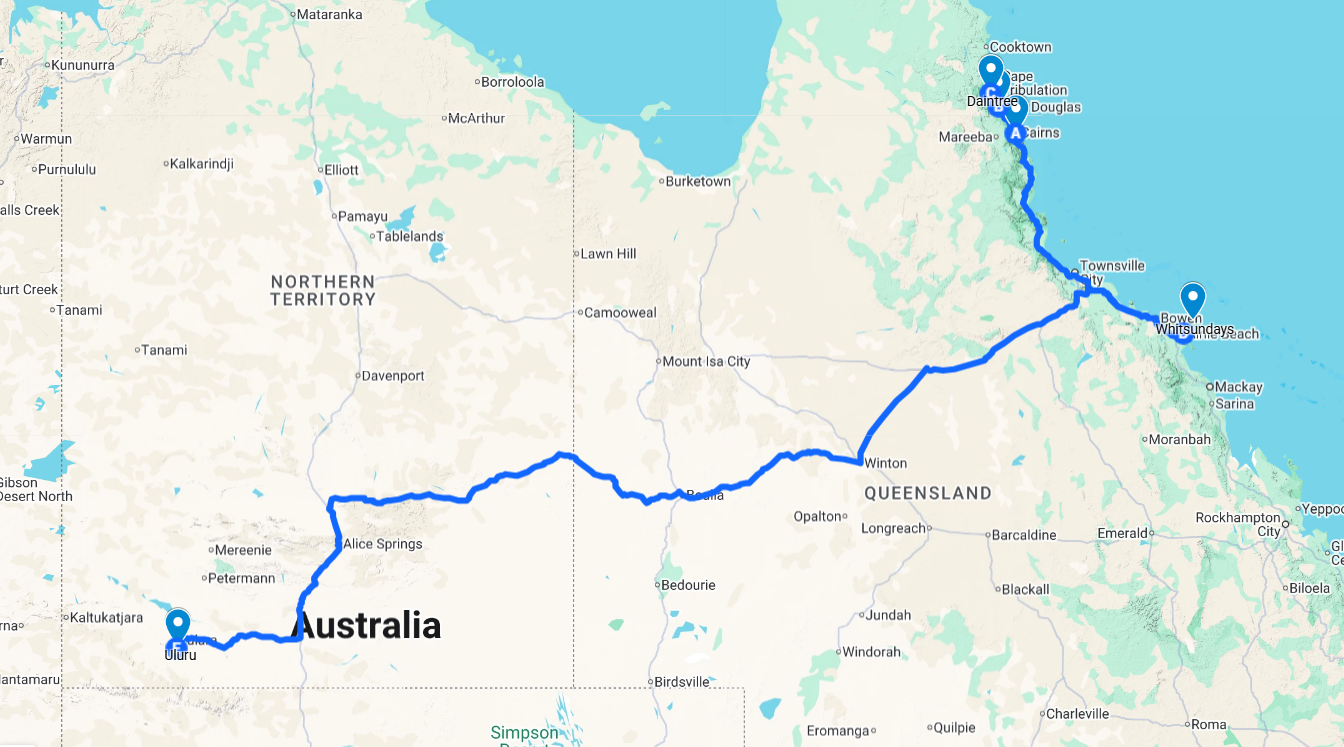
10-day Australia itinerary route
The flight problem that shapes this route
The Queensland section can be surprisingly efficient.
Current direct Cairns–Proserpine services operate on selected days and take around 1 hr 25 min, making the move from the tropical north to the Whitsundays much easier than the road distance suggests.
The Whitsundays → Uluru leg is different.
There is no simple direct flight from Proserpine or Hamilton Island to Uluru. Connections commonly involve Sydney, Brisbane or Melbourne and can require an overnight stop.
That awkward leg is not something I want to hide inside a neat-looking itinerary.
The route only works when the actual flight pattern works.
Depending on the dates, reversing the itinerary or putting Uluru first can be much more sensible than forcing a poor connection.
Days 1–2: Great Barrier Reef
Far North Queensland gave me one of the strongest introductions to Australia's scale.
Cairns is the practical tour and transport hub. Port Douglas feels more like a holiday destination and sits closer to the Daintree.
Whichever becomes the base, I like the fact that the reef has a full day rather than being squeezed around a long-haul arrival.
Day 1: Arriving in Far North Queensland
The first day works as a transition into the tropical north.
The heat, vegetation and coast already feel very different from Australia's southern cities.
I never saw much value in attaching a major reef trip to the same day as an international journey.
Sea conditions and weather matter, and being rested changed how much I enjoyed the time in the water.
Stay: Cairns or Port Douglas.
Day 2: What the Great Barrier Reef felt like underwater
If I had to choose one natural experience in Australia, the Great Barrier Reef would be very difficult to beat.
I knew it stretched for more than 2,300 kilometres along the Queensland coast.
That number only became meaningful once I was actually out on the water.
Then I got beneath the surface.
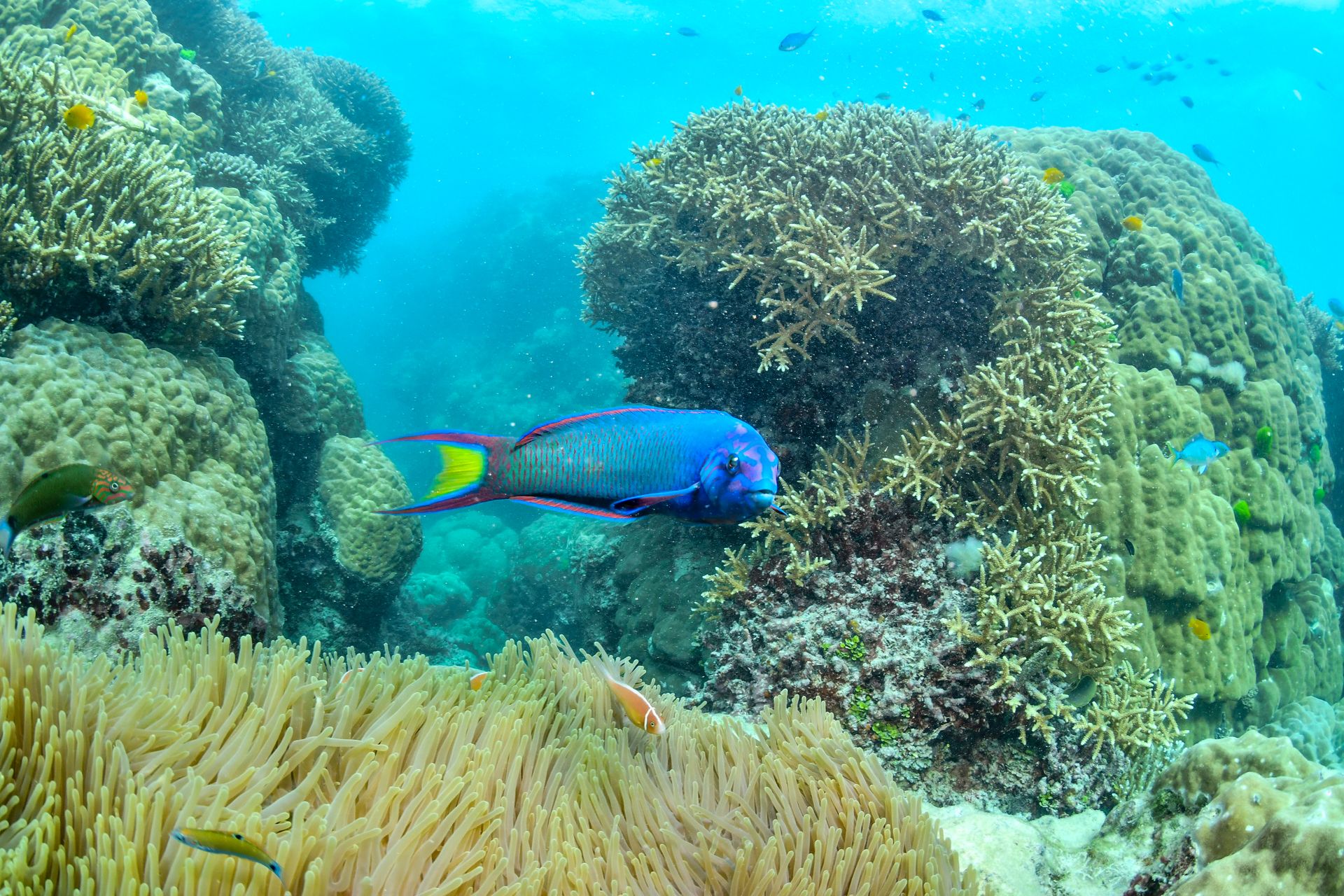
Parrotfish amidst diverse coral formations in Australia's Great Barrier Reef
Coral gardens stretched around me, tropical fish moved through the reef in colours that looked almost exaggerated, and sea turtles seemed completely indifferent to the fact that I was swimming nearby.
It was one of those rare travel experiences where the reality comfortably exceeded the images I had seen beforehand.
Different reef trips create very different days.
Large boats can make snorkelling easier for beginners, while experienced divers may care more about specific sites. Liveaboards create far more time on the reef.
Within ten days, a strong full-day outer-reef trip preserved the rest of the route without making the reef feel incidental.
Stay: Cairns or Port Douglas.
Day 3: Into the Daintree
Driving north changed the atmosphere gradually.
Mossman Gorge introduced the rainforest, but crossing the Daintree River was the point where the region began to feel genuinely different to me.
Roads became quieter, mobile coverage less reliable and the forest seemed to close in around everything.
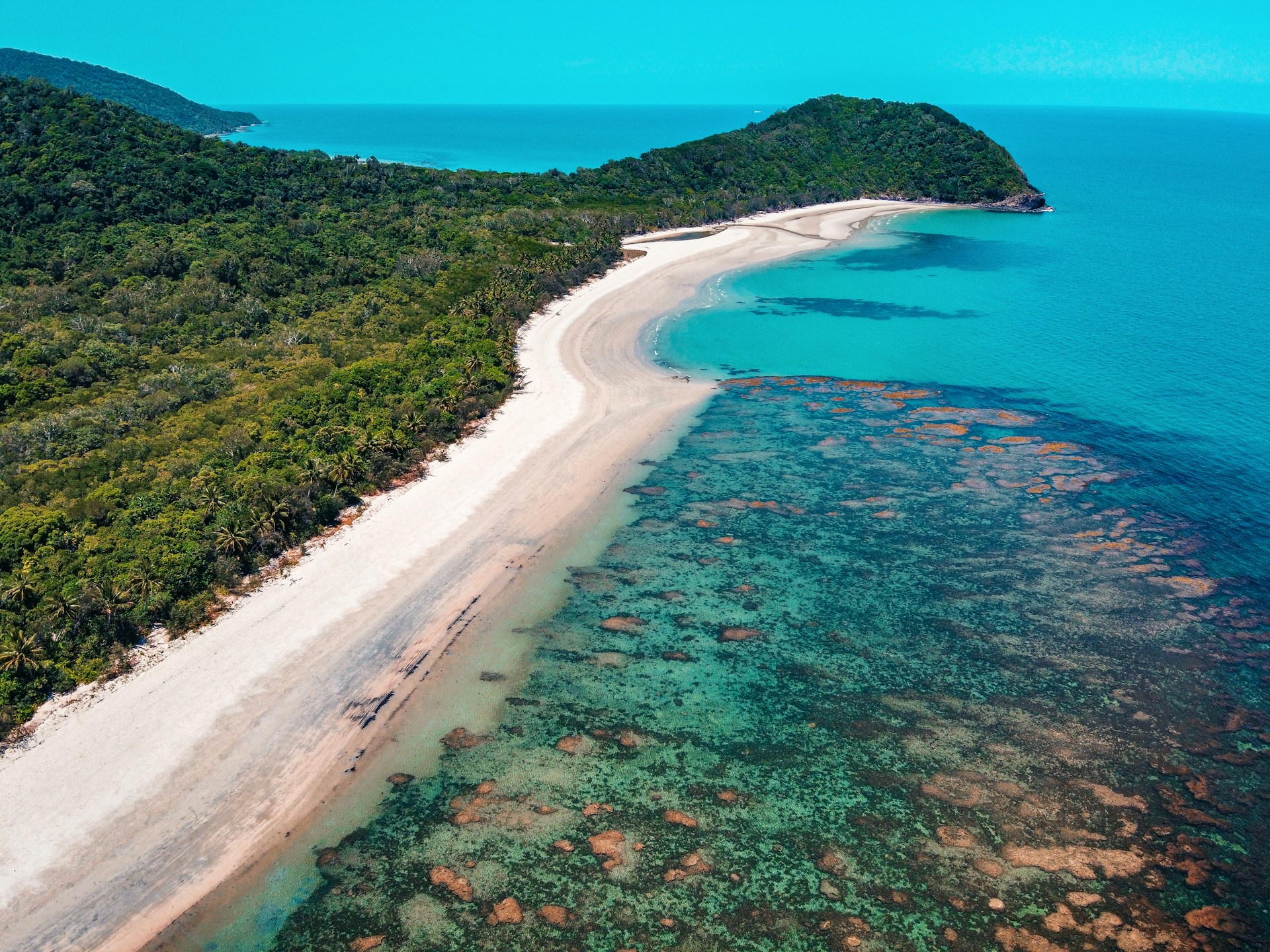
Cape Tribulation where rainforest meets the beach
Some of my favourite memories were simple.
Swimming in the clear water around Mossman Gorge.
Walking through dense forest while listening to unfamiliar bird calls.
Standing on the beach at Cape Tribulation with rainforest-covered mountains behind me.
None of those experiences needed a packed schedule.
They needed time inside the landscape.
Stay: Daintree or Cape Tribulation.
Day 4: Why I liked staying in the rainforest
The Daintree changed after the day visitors began leaving.
Waking beneath the canopy and hearing the forest after dark became part of the experience for me.
That is why the region felt very different from a rushed return excursion from Cairns.
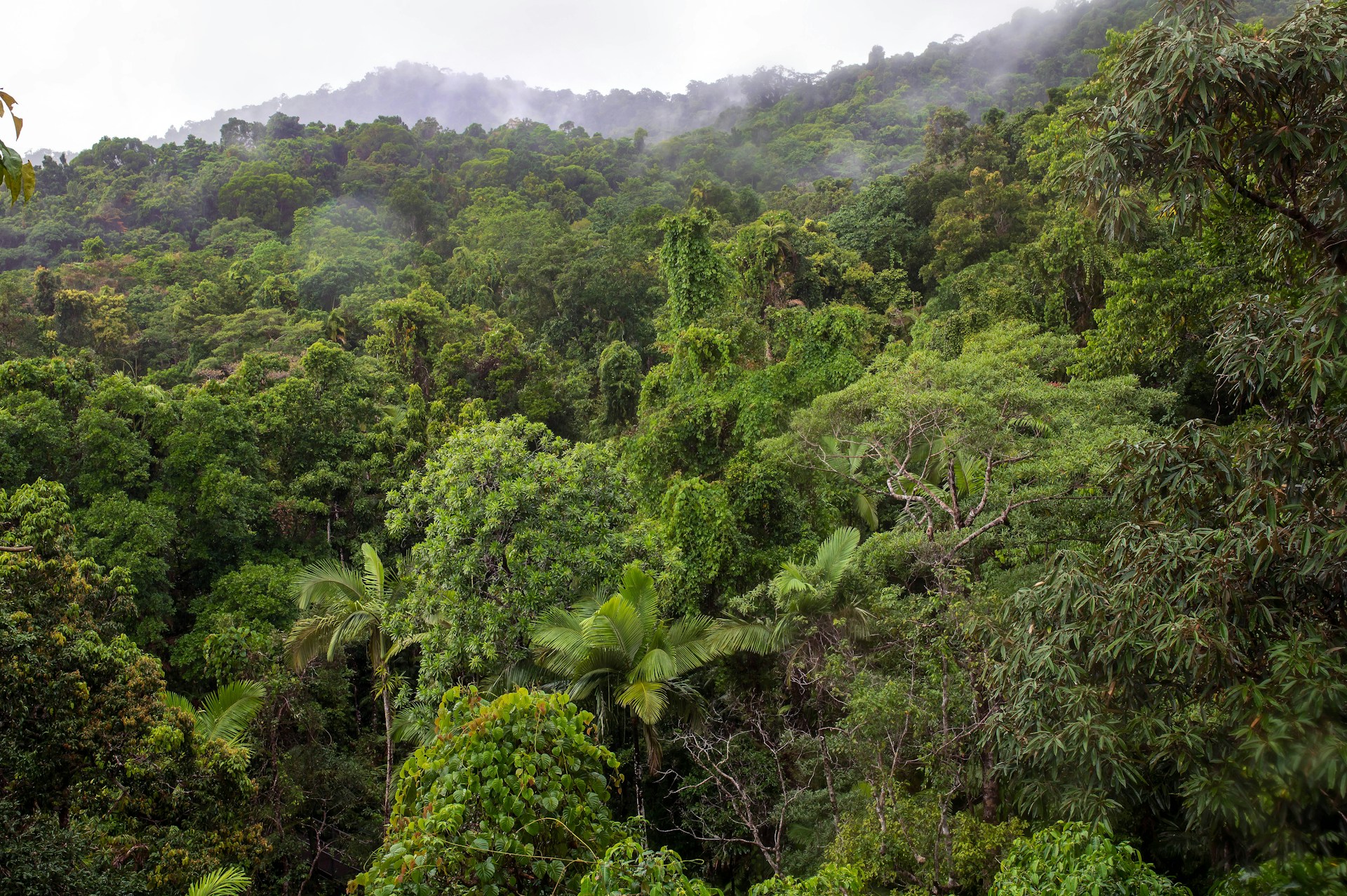
View of the tropical jungle from tower of the Daintree Discovery Centre in Australia
Boardwalks, beaches, wildlife and Indigenous cultural experiences can all add structure to the day.
What stayed with me most was less the fact that the Daintree is one of the world's oldest surviving tropical rainforests and more how ancient and alive the place actually felt.
The flight south determines whether the second night remains in the rainforest or ends closer to Cairns.
That is one of the practical compromises in the route rather than something worth disguising.
Day 5: Cairns to the Whitsundays
When a direct Cairns–Proserpine flight operates, the transfer takes around 1 hr 25 min.
That connection is what keeps the Queensland section proportionate to a ten-day trip.
Without it, the road alternative is long. Cairns to Airlie Beach by coach is roughly 10.5 hours.
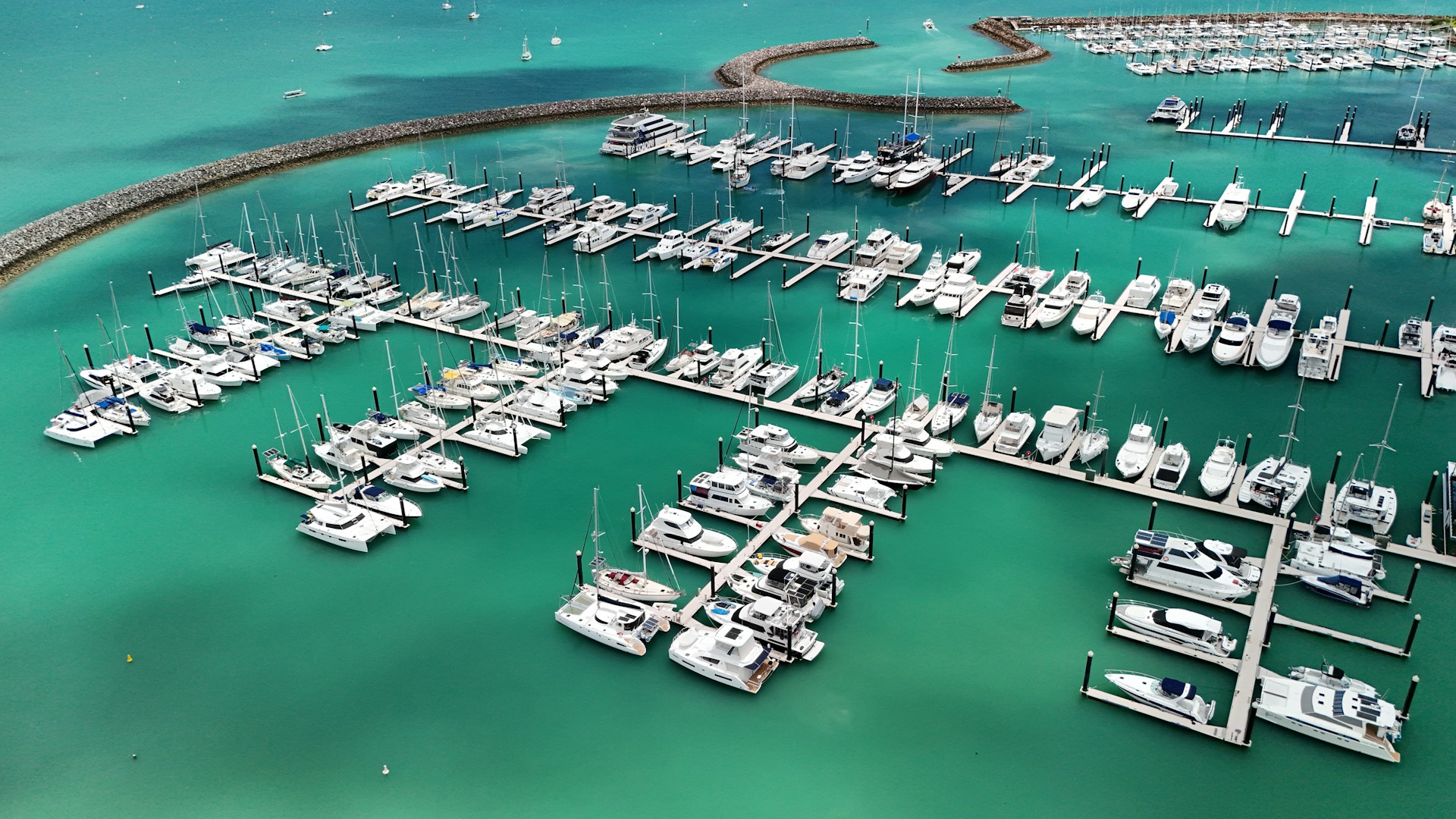
Coral Sea Marina in Airlie Beach QLD, Australia
Proserpine connects into Airlie Beach, while island stays add a boat or resort transfer.
The important part for me is that the day moves between regions without consuming the same amount of time as the distance would by road.
Stay: Airlie Beach or Whitsunday Islands.
Days 6–7: Whitsunday Islands
Whitehaven Beach was the visual highlight for me.
I have visited a lot of beaches around the world, but the combination of brilliantly white sand and water shifting between turquoise and deep blue genuinely stands apart.
From Hill Inlet, the tidal patterns in the sand changed the entire view.
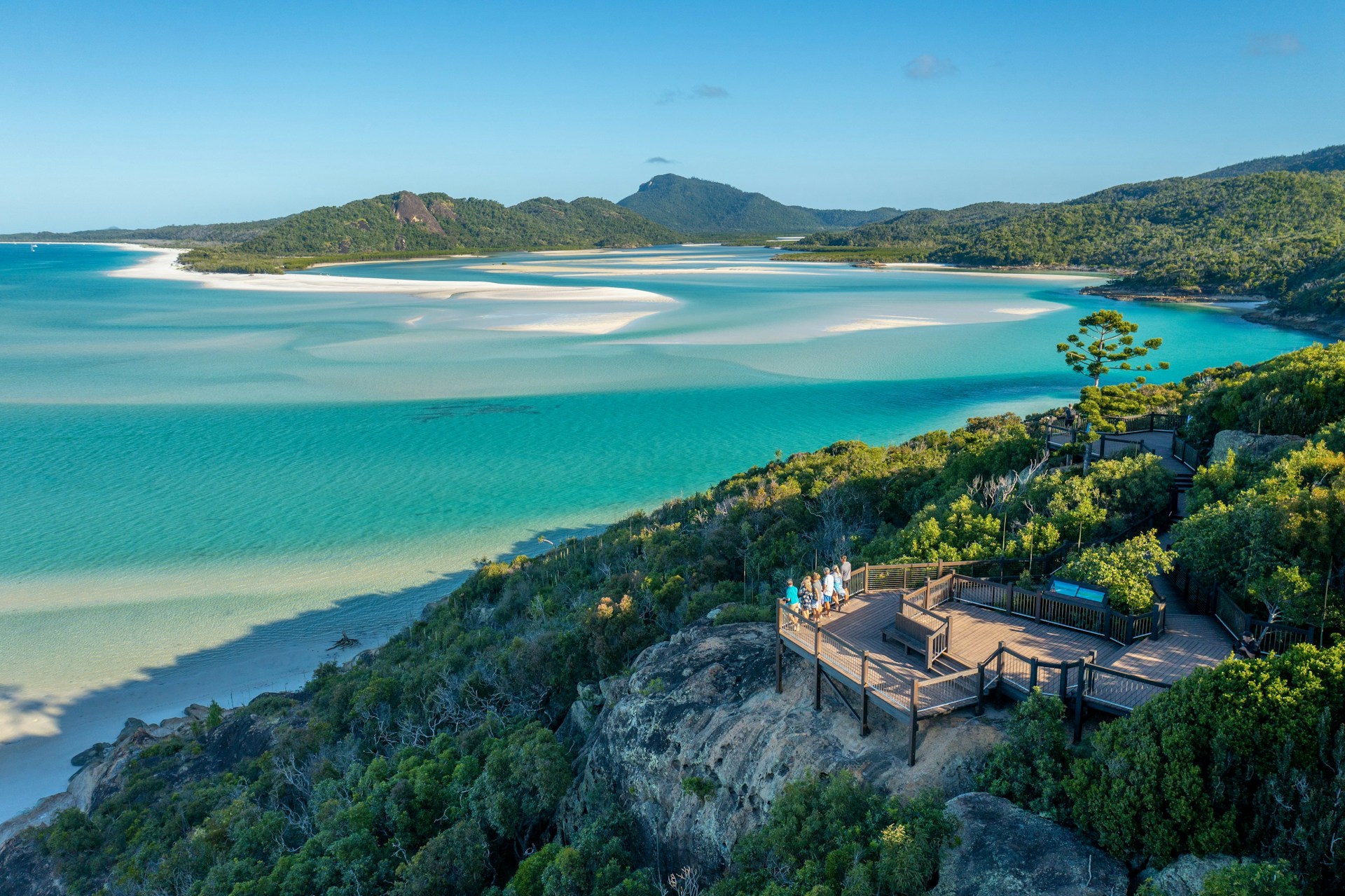
Whitsunday Island - Hill Inlet lookout over Whitehaven Beach
But Whitehaven is not the whole reason I remember the Whitsundays.
What I loved just as much was being on the water.
Sailing between islands, dropping anchor in quieter bays and snorkelling directly from the boat made the journey part of the experience.
That is why two days felt very different from a quick Whitehaven excursion.
An overnight on the water or on an island changes the atmosphere again, especially once the day boats leave.
The Whitsundays made most sense to me when they were treated as a landscape to move through rather than a beach to photograph and leave.
Stay: Whitsundays.
Day 8: The awkward journey to Uluru
This is the least elegant day in the itinerary.
The Whitsundays and Uluru are both extraordinary, but they do not connect neatly.
Current schedules generally require at least one connection through a major city, and some dates can turn the journey into an overnight transit.
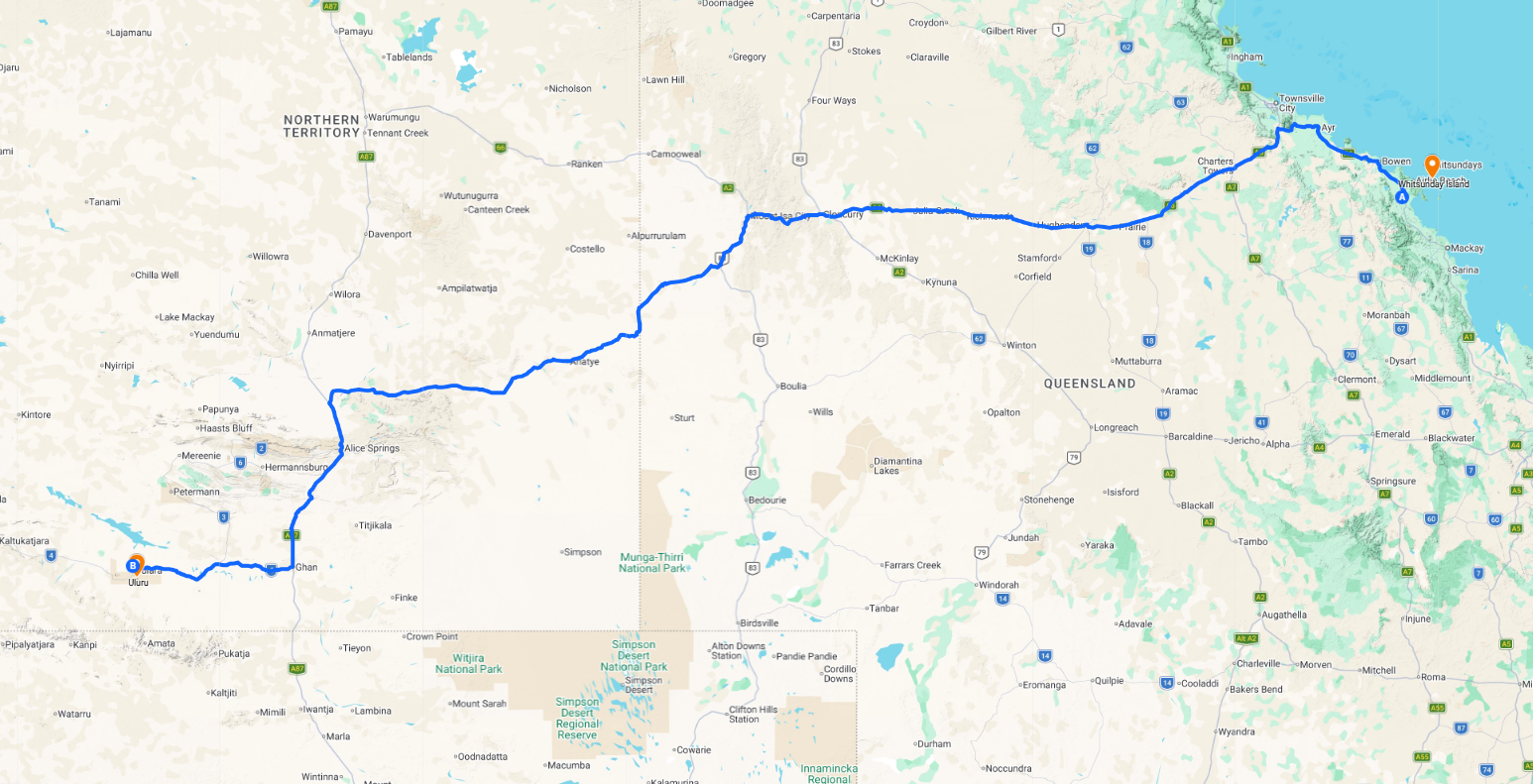
Map inset for 10 day Australia itinerary
I see that honestly as the cost of combining tropical Queensland with the Red Centre in ten days.
A good flight pattern can make the route ambitious but workable.
A poor one can make it exhausting.
That is why the order of the trip is flexible. Uluru first can be a better version on dates when the flights align that way.
Stay: connecting city or Yulara.
Days 9–10: Uluru and Kata Tjuta
Uluru is the reason I still think the difficult transfer can be worthwhile.
Before my first visit, I thought I knew exactly what it would look like because I had seen it in photographs for years.
The reality felt completely different.
Standing at the base made me realise how poorly photographs communicate the scale.
What surprised me even more was how much the colour changed during the day: muted in the morning, brighter orange through the afternoon and a much deeper red around sunset.

Uluru, Australia's iconic rock formation, at sunrise in the Outback
Day 9: Experiencing Uluru up close
The base changed my understanding of Uluru.
From the famous distant viewpoints it can look almost smooth and simple.
Closer up, waterholes, folds, rock formations and surface details appear that disappear in the classic wide photographs.
Learning about the Anangu connection to the landscape also changed how I understood the place.
Uluru is not simply a geological landmark, and the cultural guidance and restrictions provided by the traditional owners and Parks Australia are part of experiencing it respectfully.
The climb is permanently closed.
Sunrise and sunset can sound like predictable tourist rituals.
At Uluru, watching the colour change made both feel justified to me.
Stay: Yulara.
Day 10: Kata Tjuta and a different Red Centre landscape
Kata Tjuta impressed me almost as much as Uluru.
Its 36 enormous domes sit around 50 kilometres away and create a very different sense of the desert.
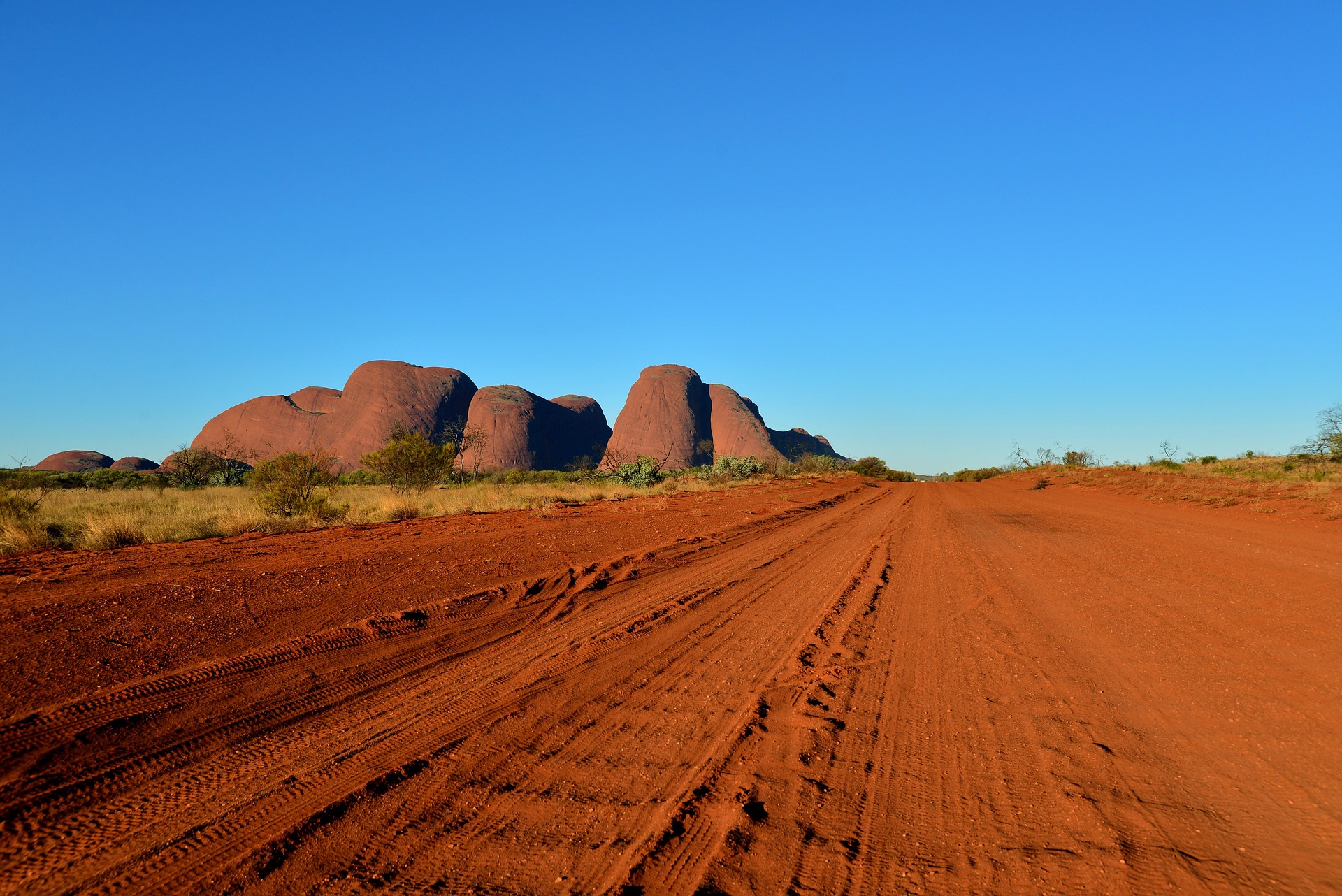
A red track leading to the domes of Kata Tjuta in the Australian outback
Walking among them made their scale much easier to understand than viewing them from a distance.
The Valley of the Winds is one of the main walking experiences, although extreme temperatures can trigger early trail closures.
That is particularly important in hotter periods, when the Red Centre shapes the day's timing far more than an itinerary does.
Ending here also reinforces why an open-jaw flight can be valuable in Australia.
Automatically returning to the city where an international trip began can create enormous backtracking in a country this large.
Is this route too rushed?
For some travellers, yes.
The main route exchanges simplicity for variety.
In ten days it moves through:
Those landscapes feel genuinely different from one another.
The cost is several flights and one awkward connection.
My own experiences at the reef, in the Daintree, around Whitehaven and at Uluru are why I can see the appeal of making that trade.
Someone who dislikes airports or prefers spontaneous road travel is likely to enjoy a completely different Australia trip more.
A lower-transit alternative: Sydney to the Sunshine Coast
The east-coast road trip creates almost the opposite experience.
Route: Sydney → Port Stephens/Newcastle → Mid North Coast → Byron Bay → Gold Coast/Brisbane → Sunshine Coast/Noosa
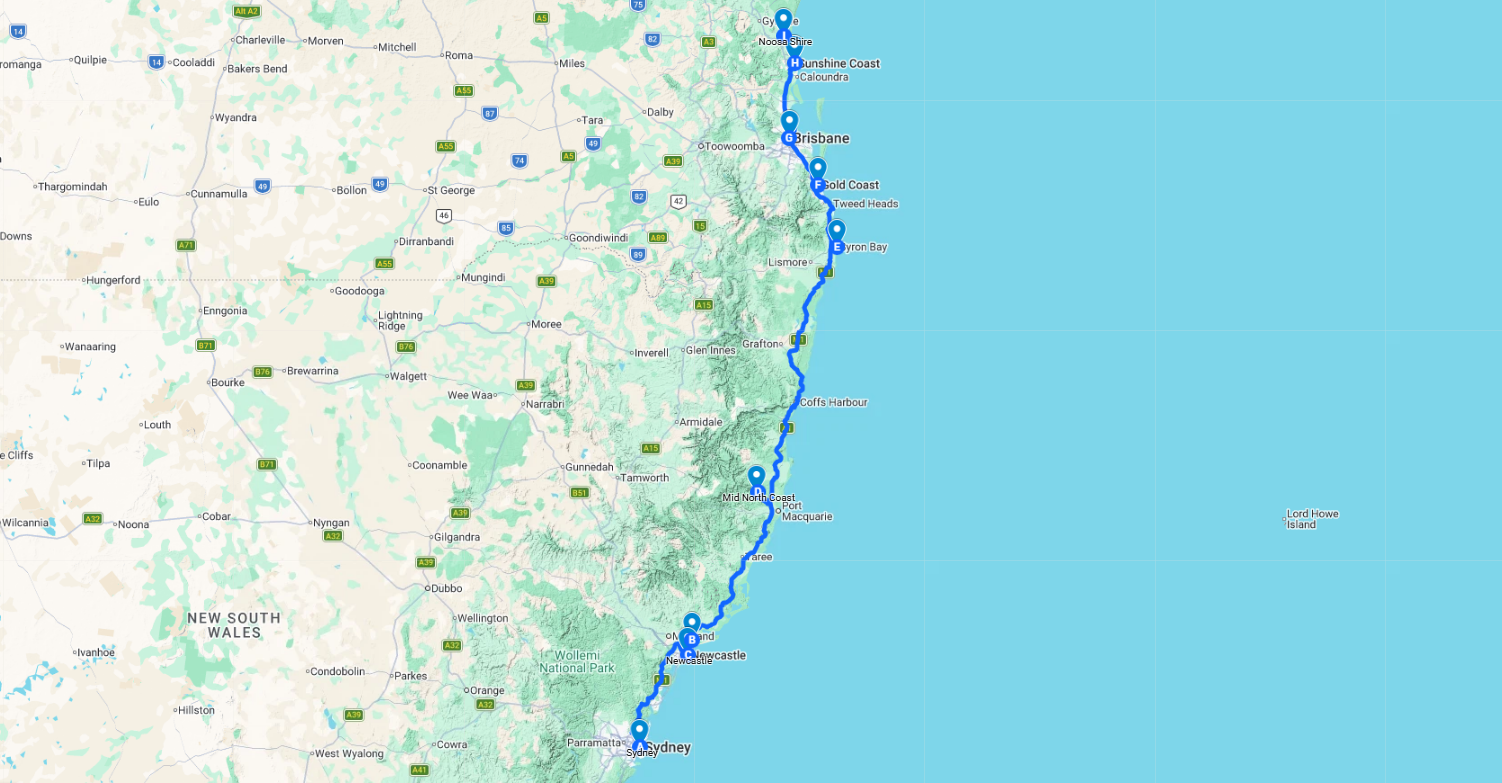
East-coast road route for Australia itinerary
The Sydney–Brisbane coastal route is roughly 1,000 km before continuing farther north toward the Sunshine Coast.
Tourism Australia suggests around nine days for Sydney–Brisbane when the journey is treated as a road trip rather than a motorway transfer.
That slower approach matches my own experience of the east coast much better.
The value comes from the places between the endpoints: beach towns, national parks, surf culture and the freedom to stop when the coast looks interesting.
Byron Bay is one of the places that stayed with me.
The sunrise walk to Cape Byron Lighthouse remains one of my favourite ways to start a day on Australia's east coast.
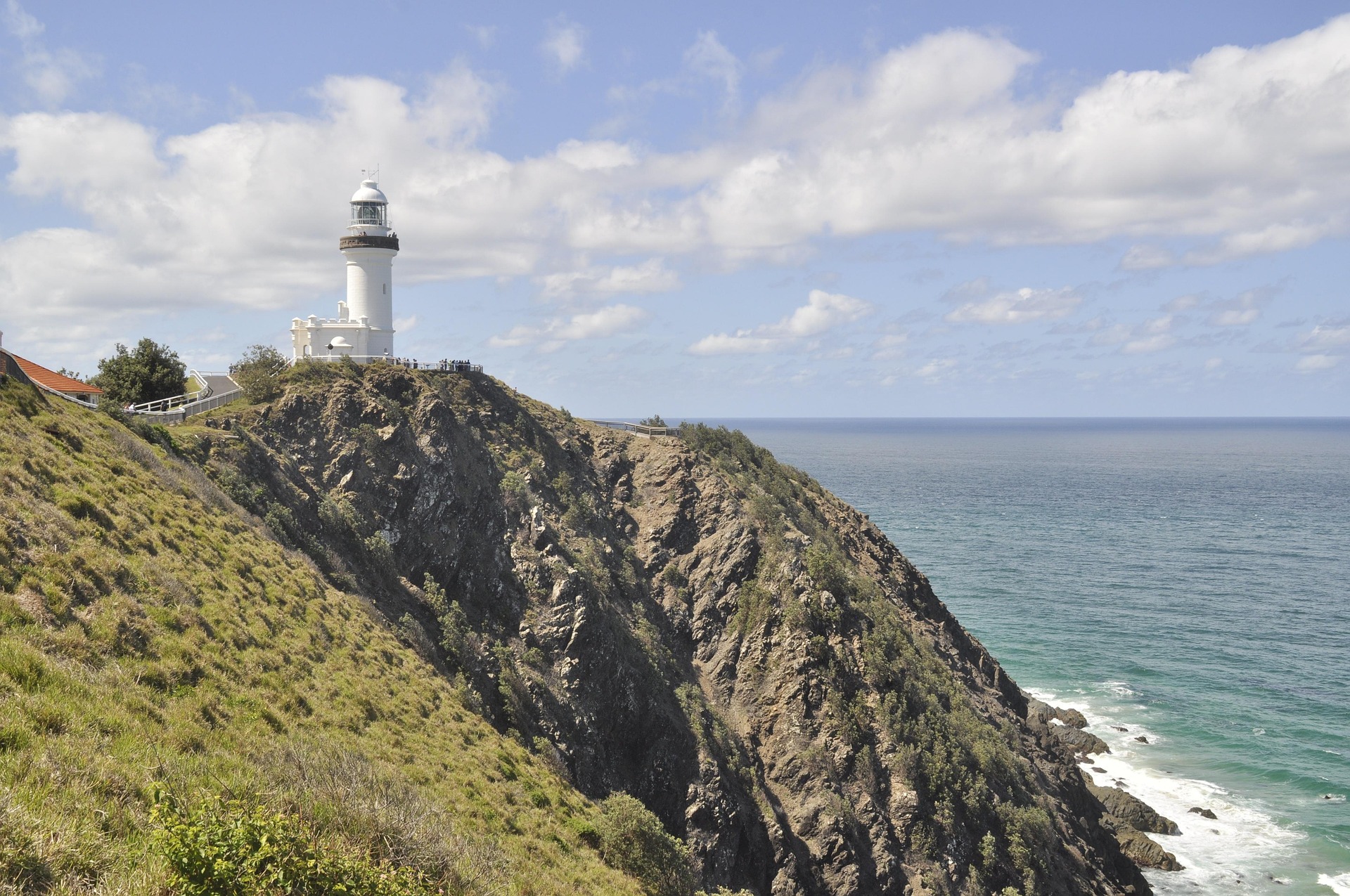
White lighthouse on rocky Cape Byron coast in Australia above the blue ocean
The town gets plenty of hype, but the setting genuinely earned it for me.
Bangalow and the hinterland also changed the experience by pulling me away from the main beach and into a quieter inland landscape.
Continuing north through the Gold Coast or Brisbane toward Noosa creates a ten-day trip where the road itself is part of the holiday.
A car or camper makes sense here for exactly the opposite reason it does not make sense on the fly-heavy iconic route.
Two very different versions of Australia
I do not see one of these itineraries as universally better.
Trying to combine both in ten days would remove the main advantage of each.
The first works because flights bridge enormous distances.
The second works because the distances are allowed to unfold gradually.
When the iconic route works best
There is no perfect month because tropical Queensland and the central Australian desert have different climates.
Far North Queensland is generally drier from roughly May to October, a popular period for reef and rainforest travel.
Uluru is also more comfortable outside the extreme heat of central Australian summer.
That makes roughly May through September a strong overlap for this route, although it is also popular and accommodation can book well ahead.
Current reef conditions, tropical weather, road access and Uluru–Kata Tjuta National Park alerts remain more useful than assuming a season guarantees conditions.
How much transport is involved?
That final leg is the route's central compromise.
What having a car changed
A car was valuable in the Daintree because it allowed the rainforest section to unfold at its own pace.
It was unnecessary for the reef and Whitsundays, where boats and local transfers define the experience.
Around Yulara, local transport and tours can cover Uluru–Kata Tjuta National Park.
The Sydney–Sunshine Coast alternative reverses that logic.
There, the car or camper is not merely transport. It is what makes the smaller coastal stops possible.
Have You Seen Our Travel Concierge Service?
Your trip, planned by local experts
We are not a travel agent - we design custom itineraries around your budget and style, without receiving commissions or booking fees.
Custom itinerary
Built around your dates, budget, and travel style.
Local expert knowledge
Recommendations from people on the ground, not review sites.
Travel smarter, spend less
We optimise for your budget to make your money go further.
What ten days in Australia felt like
Ten days was enough for a memorable trip.
It was not remotely enough for Australia as a whole.
The tropical north, Red Centre, east-coast beaches, Tasmania, Western Australia and southern cities can each become completely different journeys.
That is what makes choosing the type of trip more important than choosing the maximum number of famous places.
The iconic route asks more from the logistics, but my memories explain why it remains compelling: being underwater among reef life, hearing the Daintree after dark, sailing through the Whitsundays and watching Uluru change colour.
The road-trip alternative offers something the fly-heavy version cannot: continuity.
For me, both work when they are allowed to be the kind of Australia trip they actually are.