

Greece is one of the countries where a seven-day itinerary can become unrealistic very quickly.
Ancient cities, mountain landscapes, monasteries, beaches and hundreds of islands all compete for the same week. My experience there made the differences between those places feel much greater than they appear on an itinerary map.
That is why this route still works for me: Athens → Delphi → Meteora → Santorini.
Athens gave me ancient history inside a modern, energetic city. Delphi and Meteora changed the landscape completely. Santorini then introduced the volcanic, island side of Greece without trying to turn the week into a chain of ferries and check-ins.
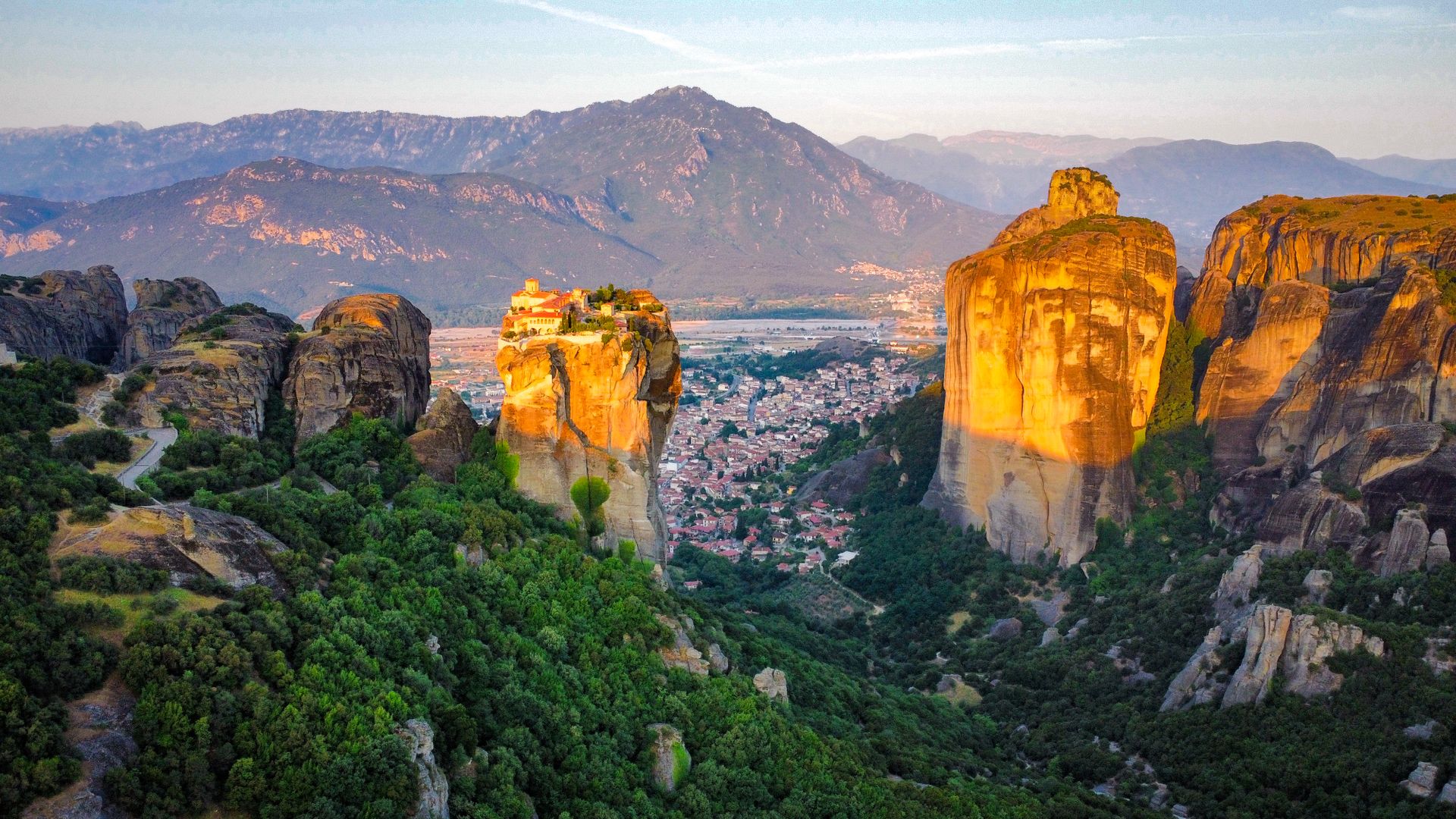
Meteora monasteries perched on towering rock formations in Kalabaka, Greece
My 7-day Greece itinerary at a glance
Overview
Day | Route | Overnight |
|---|---|---|
1 | Athens | Athens |
2 | Athens | Athens |
3 | Athens → Delphi | Delphi |
4 | Delphi → Meteora | Kalambaka/Kastraki |
5 | Meteora → Athens | Athens |
6 | Athens → Santorini | Santorini |
7 | Santorini — Santorini | Departure |
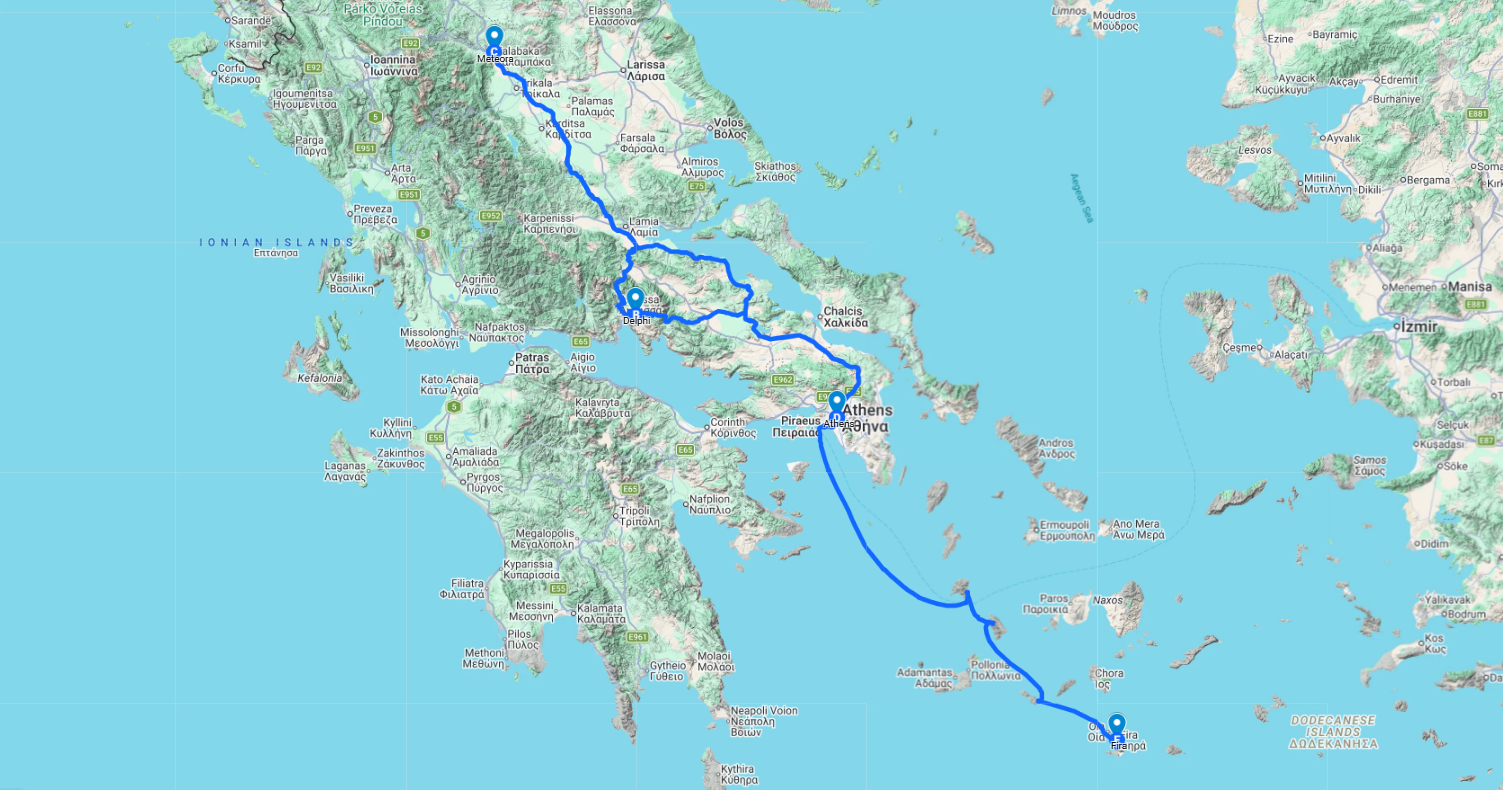
7-day Greece itinerary route
The route naturally divides into two parts.
A car makes the mainland loop through Delphi and Meteora much easier, while Santorini works as a separate island section reached from Athens by air or sea.
That separation helped the trip feel coherent to me. I never needed the car in central Athens, and taking it to Santorini would have added another layer of logistics without improving the main experience.
Days 1–2: Athens
Athens surprised me because the ancient sites never made the city feel like an open-air museum.
The Acropolis is extraordinary, but cafés stay busy late, neighbourhoods change within a few streets and modern Athens carries on around the ruins.
That contrast is what stayed with me.
Two days gave me enough time for the major ancient sites while still experiencing the city around them.
Day 1: The Acropolis and historic Athens
The first time I stood beneath the Parthenon, the scale felt completely different from photographs.
Images tend to flatten the hill and separate the monument from the city below. Standing on the Acropolis made me understand how dominant the site is over Athens.
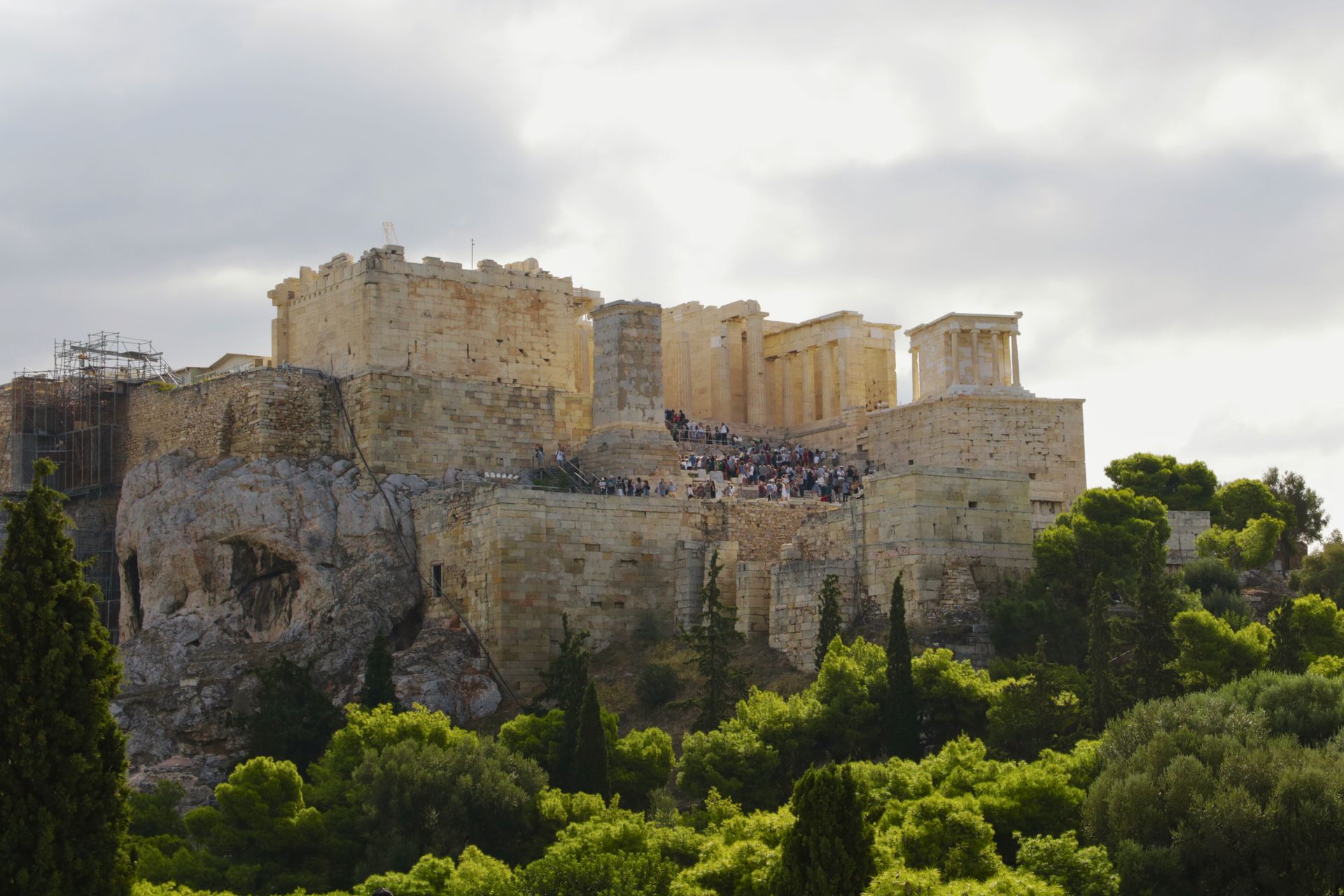
Acropolis, Athens, surrounded by lush greenery in early morning light
Walking the wider site mattered too. The Parthenon is the obvious focus, but the experience made much more sense once I stopped treating it as a single viewpoint.
The Acropolis Museum added another layer afterwards.
What I particularly liked was being able to look at objects from the site while seeing the Acropolis itself through the windows. The archaeology and the modern city never felt completely separated.
Plaka and Monastiraki then changed the rhythm again, with streets, food and everyday city life replacing the more formal archaeological experience.
Stay: Athens.
Day 2: Athens beyond the Acropolis
A second day made Athens feel less dominated by one hill.
The Ancient Agora continues the historical story, while the National Archaeological Museum can easily absorb several hours for anyone particularly interested in antiquity.
But one of the things that surprised me most was how much life existed around all of that history.
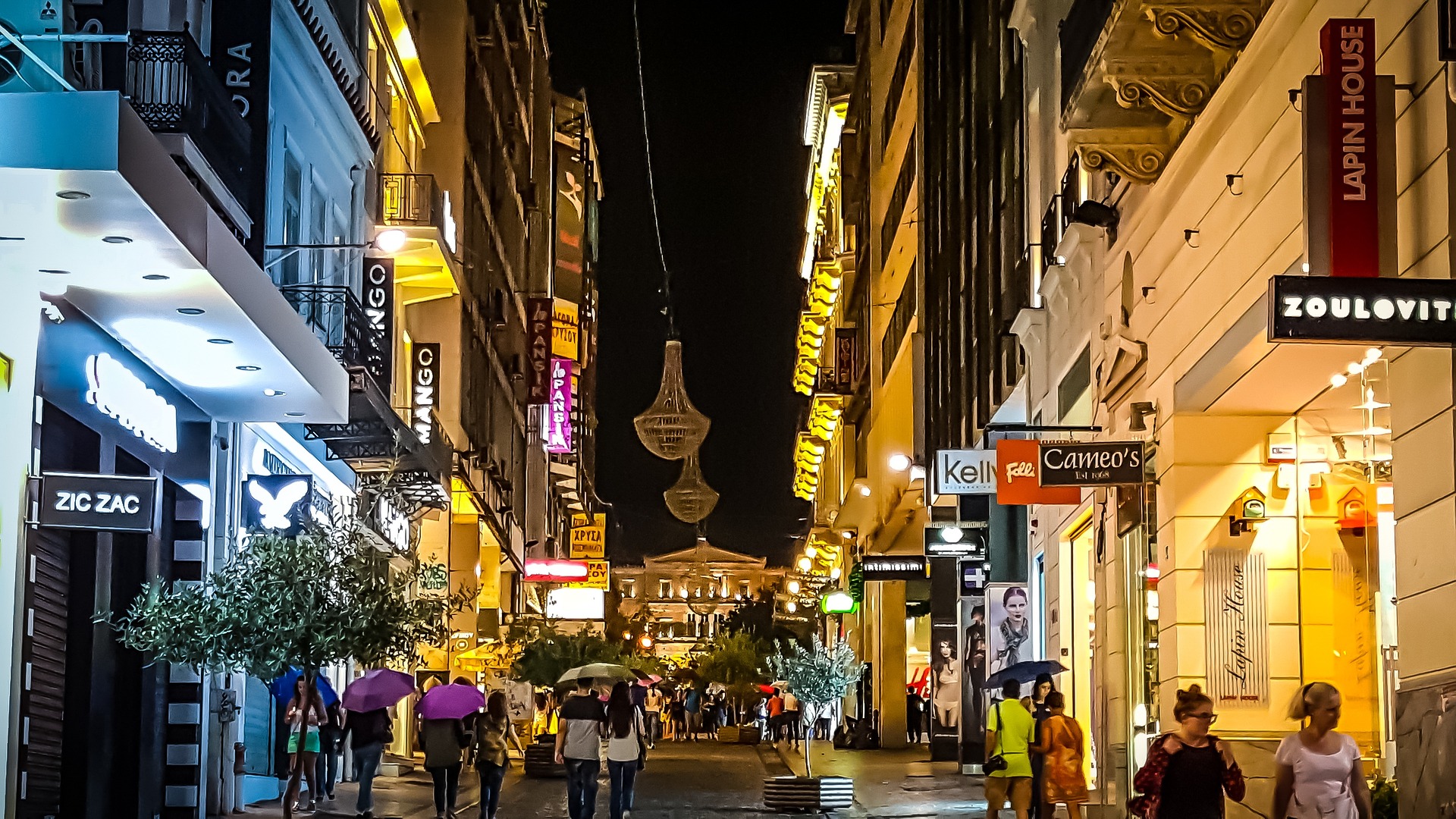
Rainy night shopping street in central Athens, Greece
Psyrri, Monastiraki and the central market area showed me a version of Athens that was louder, busier and more contemporary than the image I had before visiting.
That is why I am glad the city had two days rather than becoming an overnight stop before the mainland road trip or islands.
The ruins are fundamental to Athens, but they were not the whole experience.
Stay: Athens.
Day 3: Athens to Delphi
Driving: roughly 180 km / about 2 hr 15 min in normal conditions.
Leaving Athens for Delphi changed the trip much more than the relatively short distance suggested.
As the road climbed into the mountains, the landscape became quieter and increasingly dramatic.
By the time I reached Delphi, I could understand why the ancient Greeks associated this setting with the centre of their world.
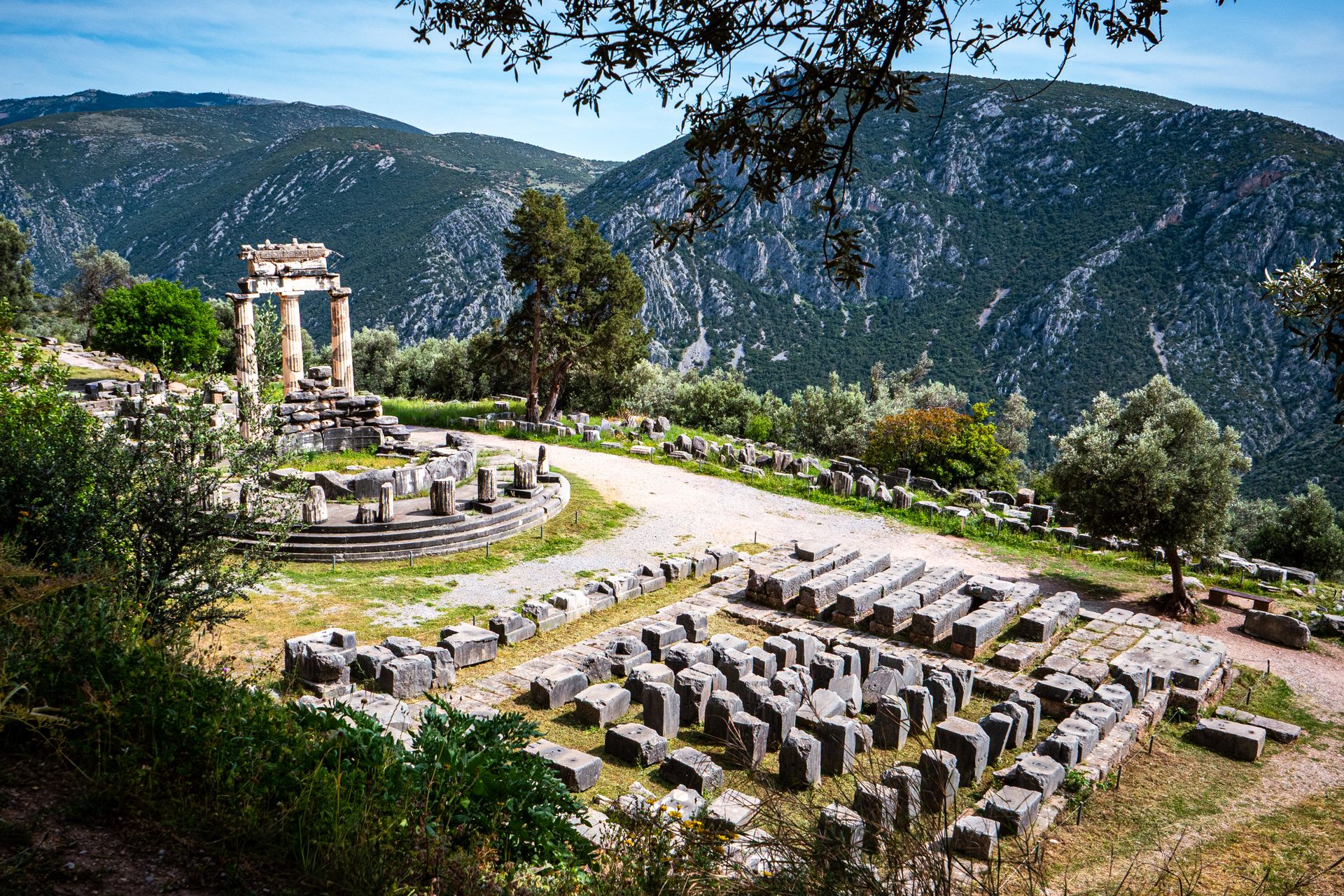
Ancient ruins of Delphi, a UNESCO World Heritage Site in Greece
The archaeological site follows the slope above the valley, with the Sacred Way climbing through the sanctuary toward the theatre and stadium.
The Charioteer of Delphi in the museum was one of those works that made me stop for much longer than I expected.
But the setting stayed with me most.
Athens had placed ancient history inside a huge modern city. Delphi put it against mountains and open landscape.
That contrast was the reason an overnight here felt worthwhile to me rather than experiencing Delphi only as a return excursion from Athens.
Stay: Delphi.
Day 4: Delphi to Meteora
Driving: approximately 210–225 km / around three hours on the direct route, depending on road and traffic conditions.
Meteora was one of those rare places where seeing photographs beforehand did very little to prepare me for the real scale.
The first time I saw the sandstone pillars rising from the plain with monasteries balanced on top, I struggled to understand what I was looking at.
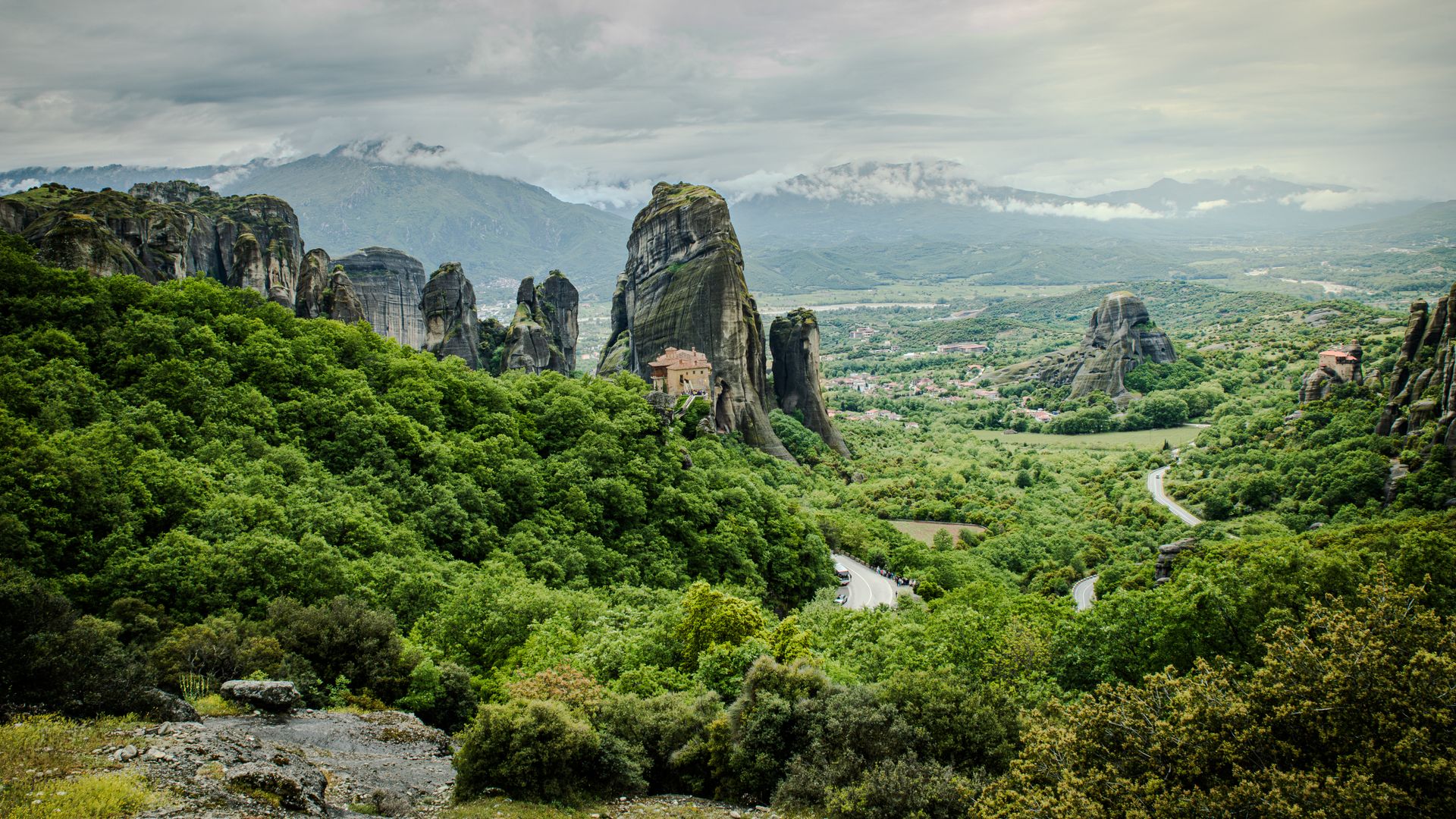
Rock formations and historic monasteries of Meteora in Trikala, Greece
The road between the main viewpoints is relatively short.
My experience of it was anything but quick.
I kept stopping.
Every change in position altered the relationship between the rock towers, monasteries and valley below. Even after several hours, I still found myself looking back at the skyline.
That is what shaped my view of Meteora far more than the number of monasteries visited.
Opening days vary between monasteries and can change around religious dates, so the current schedule is one of the practical details worth checking close to travel.
The landscape itself needs no timetable.
Stay: Kalambaka or Kastraki.
Day 5: Another morning at Meteora and the return to Athens
Driving: roughly 345 km / around 3 hr 40 min before stops and traffic.
Having another morning at Meteora gave the place a very different feel from arriving, photographing the landscape and leaving again.
The monasteries themselves involve steps, walking and dress requirements, and the physical setting is part of what makes visiting them memorable.
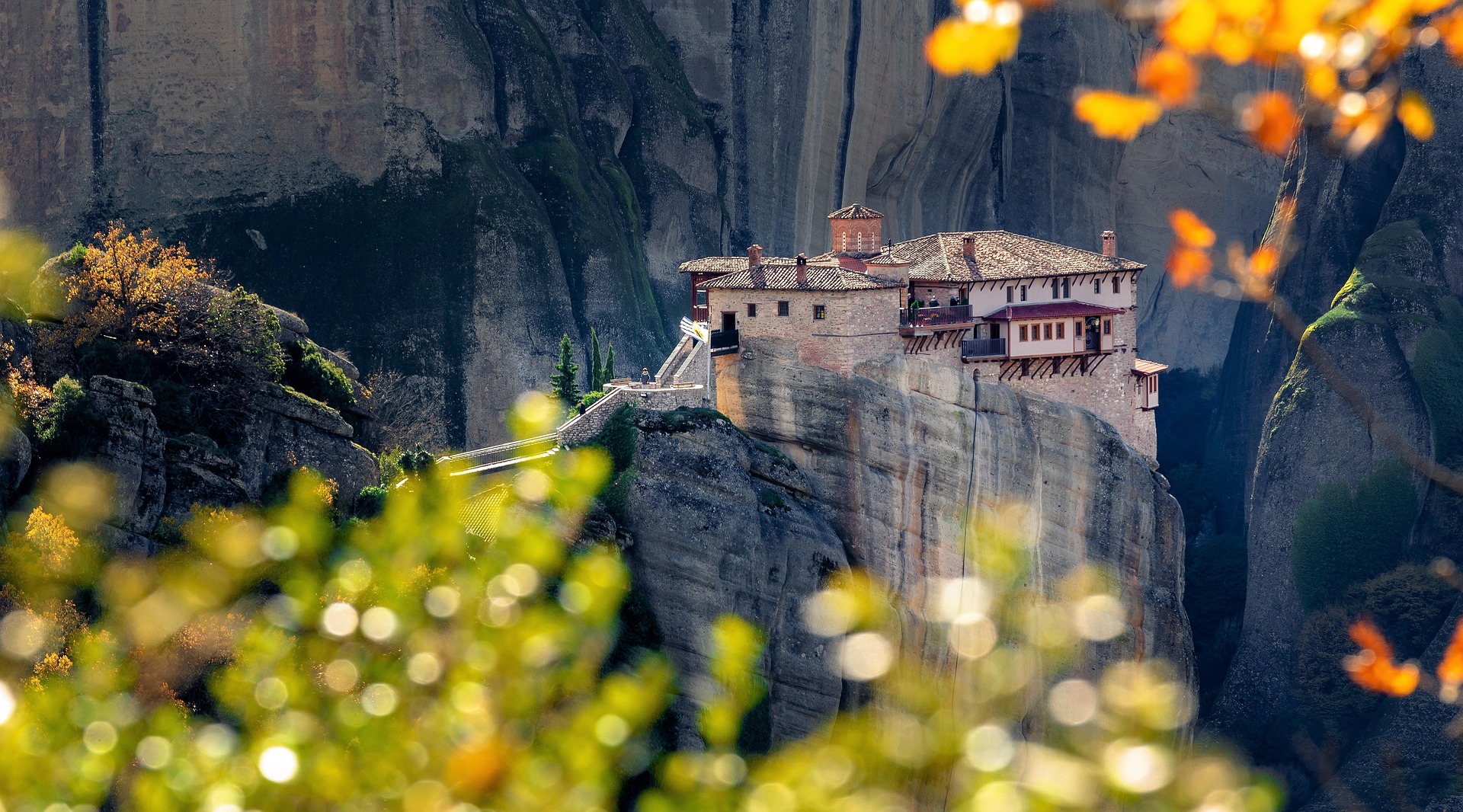
Meteora monastery on a dramatic rock cliff in Greece
For me, the experience was never about completing all of them.
The strongest memory is still the wider landscape and how frequently I stopped between viewpoints.
The drive back to Athens is the longest transfer in this route. It is also the practical compromise that reconnects the mainland loop with the island part of the week.
I see that return journey as the cost of keeping Delphi and Meteora together rather than trying to attach Santorini directly to northern Greece.
Stay: Athens.
Days 6–7: Santorini
Santorini introduced a completely different Greece.
My strongest first impression did not come from Oia or a blue-domed church.
It came from arriving by sea.
Looking up from the water at the enormous caldera cliffs, with villages sitting along the rim far above, made the island's geology much easier to understand.
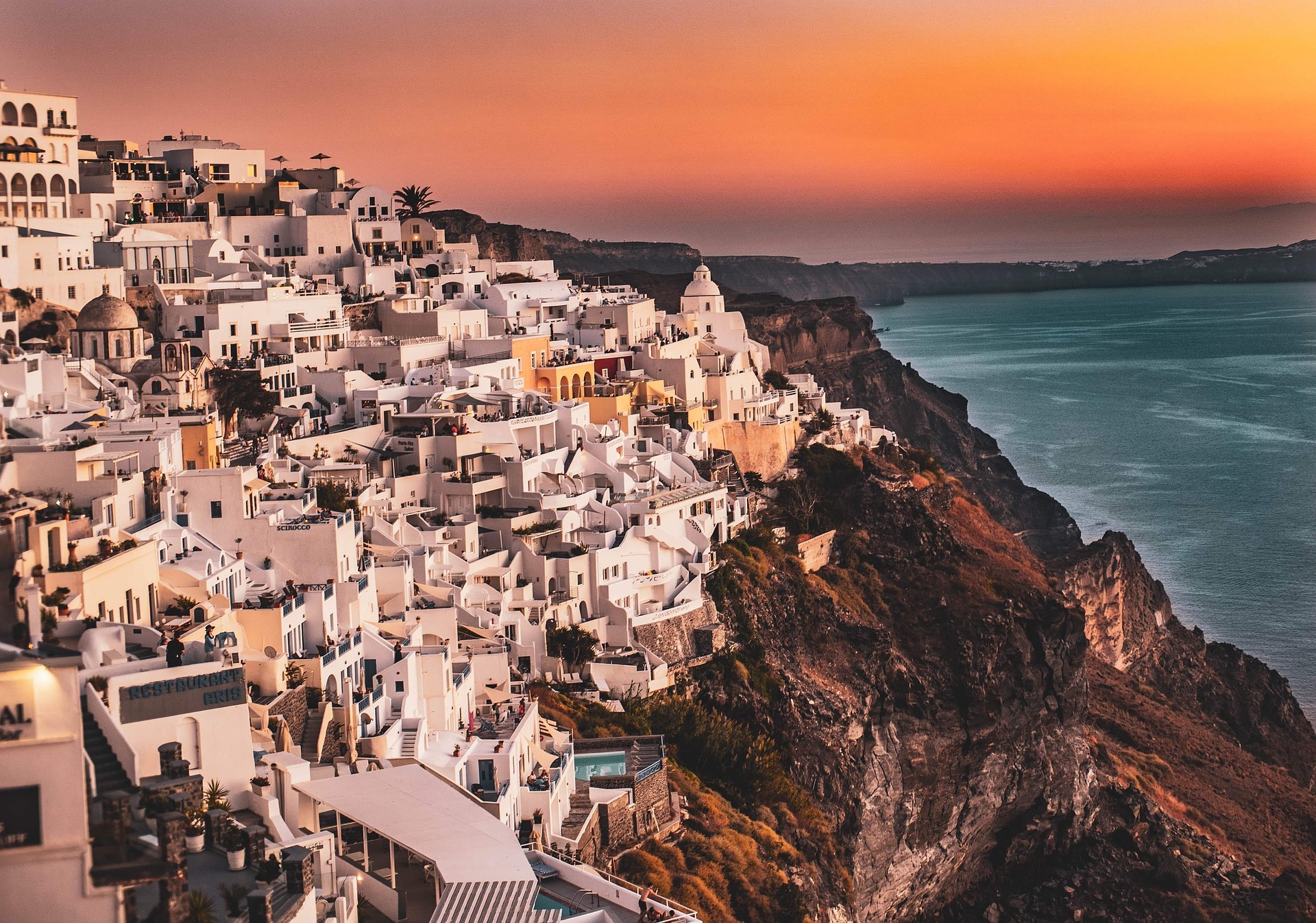
Whitewashed Santorini homes above the caldera at sunset
That approach remains one of my favourite memories of the island.
For a seven-day trip, though, the transport decision is a trade-off. Ferries make the arrival more memorable but use substantially more time; a flight from Athens protects more of the short island stay.
Day 6: The caldera side of Santorini
The caldera is what made Santorini distinctive for me.
Fira, Imerovigli and Oia all sit along that volcanic edge, but the experience was not limited to the famous sunset viewpoints.
I enjoyed getting away from the busiest areas and finding smaller lanes where the island felt much calmer.
Pyrgos and Emporio show another side of Santorini away from the most photographed caldera villages.
There are Greek islands with beaches I prefer, but very few places I have visited combine volcanic landscape, whitewashed architecture and enormous sea views in quite the same way.
That is why Santorini belongs here for me despite its crowds and popularity.
Stay: Santorini.
Day 7: Santorini beyond the postcard
A second day gave the island more depth than the standard Oia image.
The Fira–Oia trail follows the caldera and makes the island's shape much easier to appreciate on foot.
Santorini's vineyards also look unlike most European wine regions. Assyrtiko vines are traditionally trained low to the ground, helping protect them from the island's strong winds.
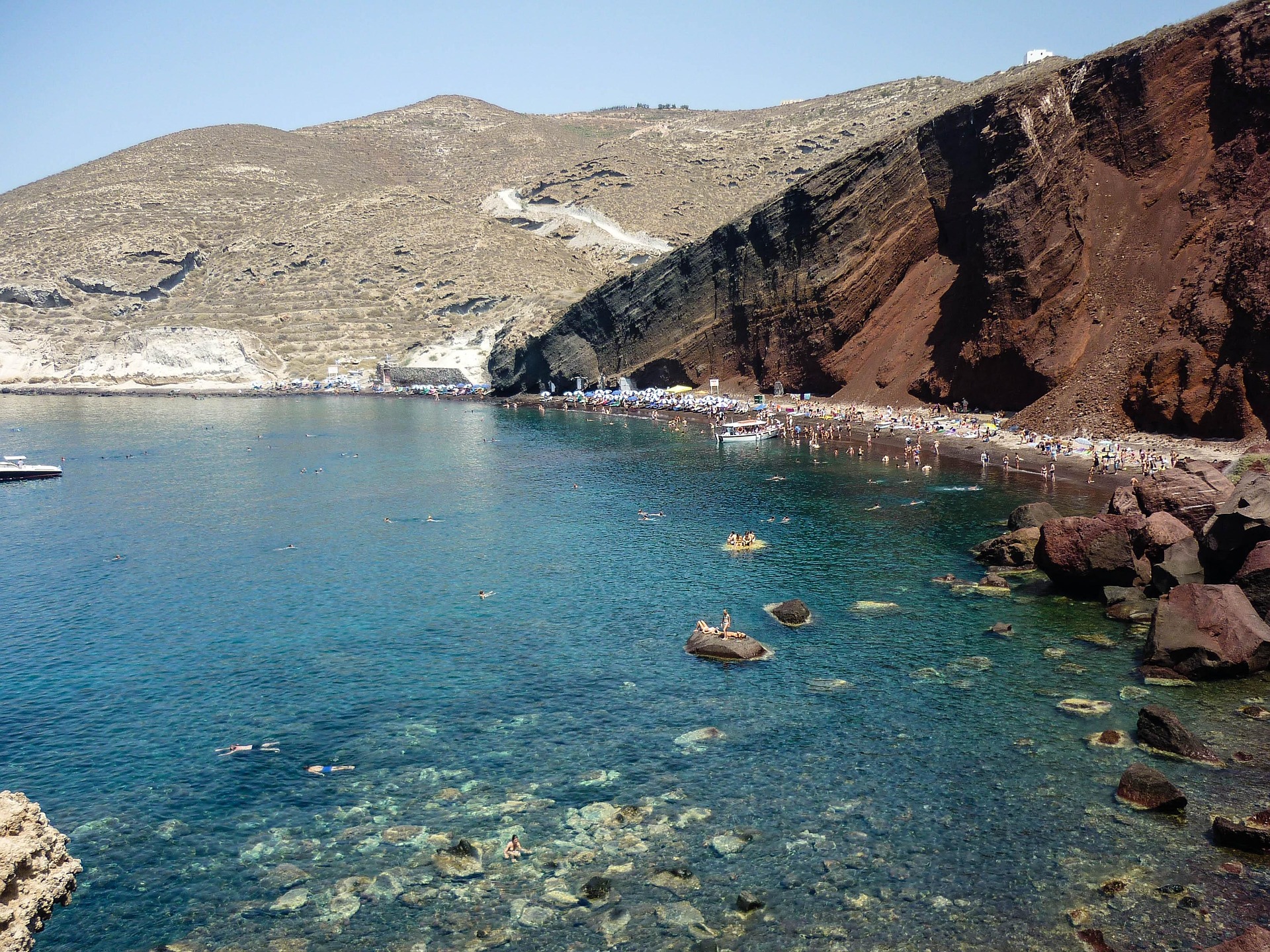
Red Beach in Santorini with volcanic cliffs and clear blue water
Akrotiri and the black-sand beaches add still more versions of the island.
What mattered to me was that Santorini became more interesting once it stopped being only a sunset destination.
The final transport still deserves respect. A same-day ferry back to Athens combined with a tight onward flight introduces exactly the sort of connection risk that can dominate the end of a short trip.
Why this Greece route worked for me
The variety is the main reason.
Those contrasts are what I remember, not the fact that the itinerary covered four named destinations.
The route also works beyond the height of summer because most of the week does not depend on a dense network of seasonal island ferries.
That makes it a version of Greece I still find convincing in spring and autumn.
What having a car changed on the mainland
The car mattered between Athens, Delphi and Meteora.
The rough travel pattern is:
Those are planning estimates rather than promises. Mountain roads, stops, weather and traffic can all add time.
For me, the value of the car was less about speed and more about controlling the pace between places.
That was particularly noticeable around Meteora, where stopping repeatedly became part of the experience.
Once back in Athens, the car had done its job.
Ferry or flight to Santorini
I enjoyed arriving at Santorini by sea enough that I still remember the approach as one of the highlights.
That does not automatically make the ferry the best use of time in a seven-day itinerary.
The fastest Piraeus–Santorini ferries can complete the crossing in under five hours, while conventional services can take six hours or considerably longer. Reaching Piraeus and allowing time before departure adds more to the journey.
Flying protects more of Day 6.
The choice therefore comes down to what matters more: time on the island or the experience of arriving by sea.
My own memory explains why the ferry appeals to me. The length of the trip explains why flying can be the more practical choice.
A seasonal alternative: Athens, Naxos and Paros
When the islands are the main reason for travelling to Greece, the entire structure of the week can change.
A compact Cycladic route is:
Athens → Naxos → Paros → Athens
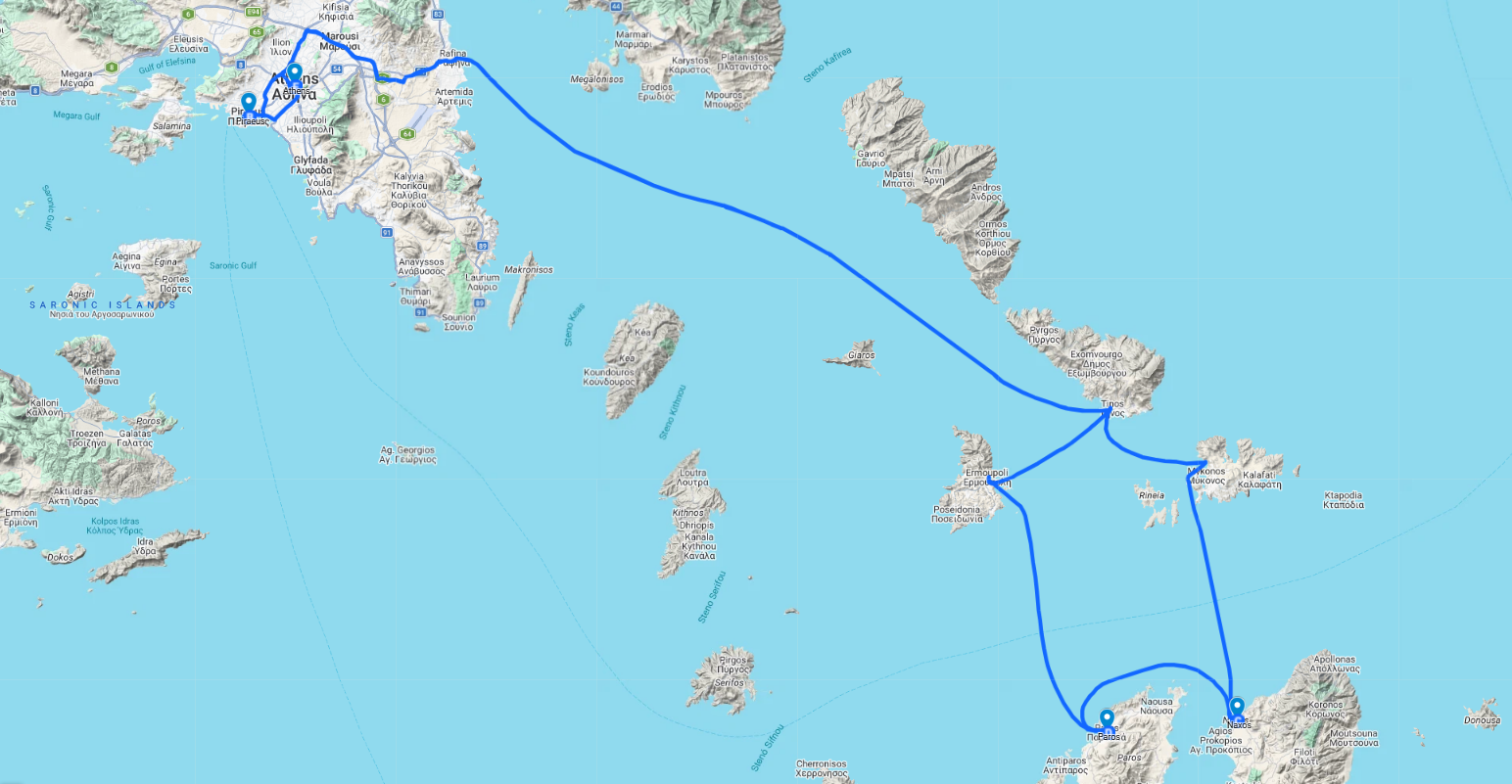
Seasonal map for Greece itinerary
A simple split is:
This alternative is based on geography and ferry efficiency rather than pretending I have the same depth of firsthand material for Naxos and Paros as I do for Athens, Delphi, Meteora and Santorini.
The connection between Naxos and Paros is short.
Piraeus to Naxos takes from roughly 3 hr 15 min on the fastest 2026 services, while Naxos to Paros can take around 25–50 minutes on many sailings. Paros back to Athens can take from roughly 2 hr 40 min on faster services.
That makes two islands possible without making ferries the dominant experience.
Naxos offers more space, beaches and mountain villages, while Paros has attractive towns such as Naoussa and Parikia and a more compact island experience.

Iconic Portara gate in Naxos, Greece with Naxos Town behind
This version becomes much more attractive from late spring into early autumn, when ferry frequency is stronger and beaches form a meaningful part of the trip.
Outside the main island season, the Athens–Delphi–Meteora–Santorini route is less dependent on those connections.
What I leave out of seven days in Greece
A lot.
Mykonos, Crete, Rhodes, the Peloponnese, Nafplio and dozens of other islands and mainland regions can all justify different itineraries.
Even within the Cyclades, islands that look interchangeable on a map can have very different personalities.
That is why I no longer see adding destinations as automatically improving a Greece trip.
Athens + Delphi + Meteora + Mykonos + Santorini + another island may fit into a spreadsheet.
It would produce a very different experience from the Greece I remember: standing beneath the Parthenon, taking in Delphi's mountain setting, repeatedly stopping around Meteora and approaching Santorini beneath the caldera cliffs.
Those moments needed some space around them.
Have You Seen Our Travel Concierge Service?
Your trip, planned by local experts
We are not a travel agent - we design custom itineraries around your budget and style, without receiving commissions or booking fees.
Custom itinerary
Built around your dates, budget, and travel style.
Local expert knowledge
Recommendations from people on the ground, not review sites.
Travel smarter, spend less
We optimise for your budget to make your money go further.
When this Greece route felt most appealing
Spring and early autumn suit the main Athens → Delphi → Meteora → Santorini route particularly well.
Athens and the mainland are easier to explore without peak-summer heat, while walking around Meteora is more comfortable.
Santorini still has plenty of life in these periods without quite the same pressure as July and August.
Summer brings higher temperatures and much larger crowds, particularly in Athens and Santorini.
Winter is possible for the mainland route, although Santorini becomes much quieter and tourism businesses can reduce hours or close. Meteora monastery schedules also change seasonally.
The Naxos–Paros alternative is much more tied to the warmer months and actual ferry schedules.
What seven days in Greece felt like
Seven days was enough for an excellent introduction.
It was nowhere near enough for Greece.
That became obvious because every stage suggested another possible journey: more of Athens, another mainland region, another monastery, another island.
What made this route memorable for me was not resisting Greece's variety. It was allowing four very different places to show it.
Athens, Delphi, Meteora and Santorini never felt repetitive.
For me, that is a much stronger reason for keeping the route focused than simply saying that more destinations would be too rushed.