

Spain is far too varied to properly cover in seven days. Growing up here made that especially obvious to me. Madrid, Barcelona, Seville, Granada and the coast can look easy to combine because the transport is so good, but they represent very different parts of a country that changes enormously from one region to another.
For a first week, Madrid and Barcelona give a particularly clear sense of that contrast. Madrid feels unmistakably inland and central; Barcelona has a Mediterranean rhythm and a strong Catalan identity. Spending time in both has always felt more revealing to me than trying to add several more cities simply because the trains make it possible.
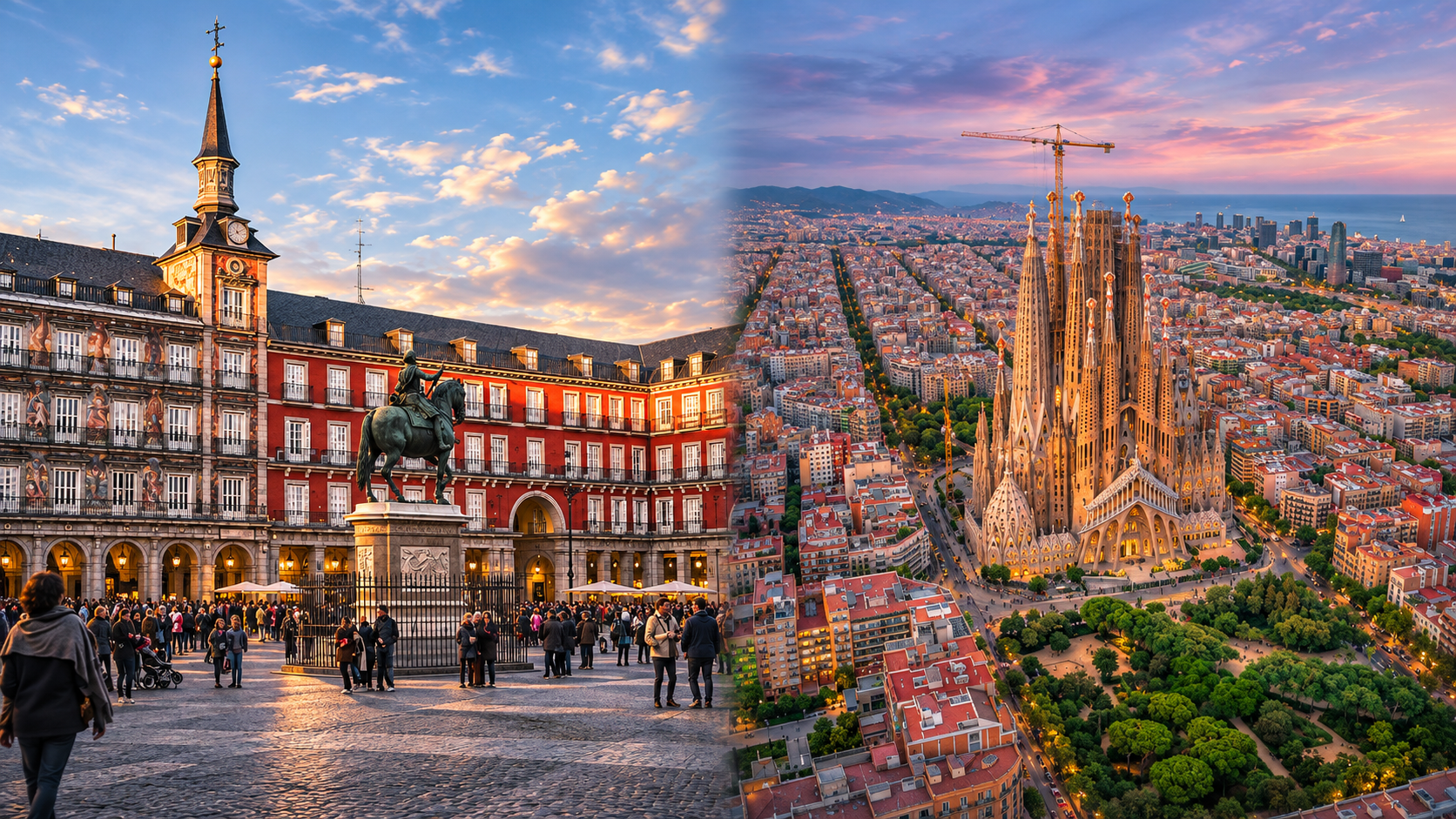
Comparing Madrid's historic centre with Barcelona's Mediterranean Modernist architecture
My 7-day Spain itinerary at a glance
Overview
Day | Route | Overnight |
|---|---|---|
1 | Madrid | Madrid |
2 | Madrid | Madrid |
3 | Madrid | Madrid |
4 | Madrid → Barcelona | Barcelona |
5 | Barcelona | Barcelona |
6 | Barcelona | Barcelona |
7 | Barcelona | Barcelona / departure |
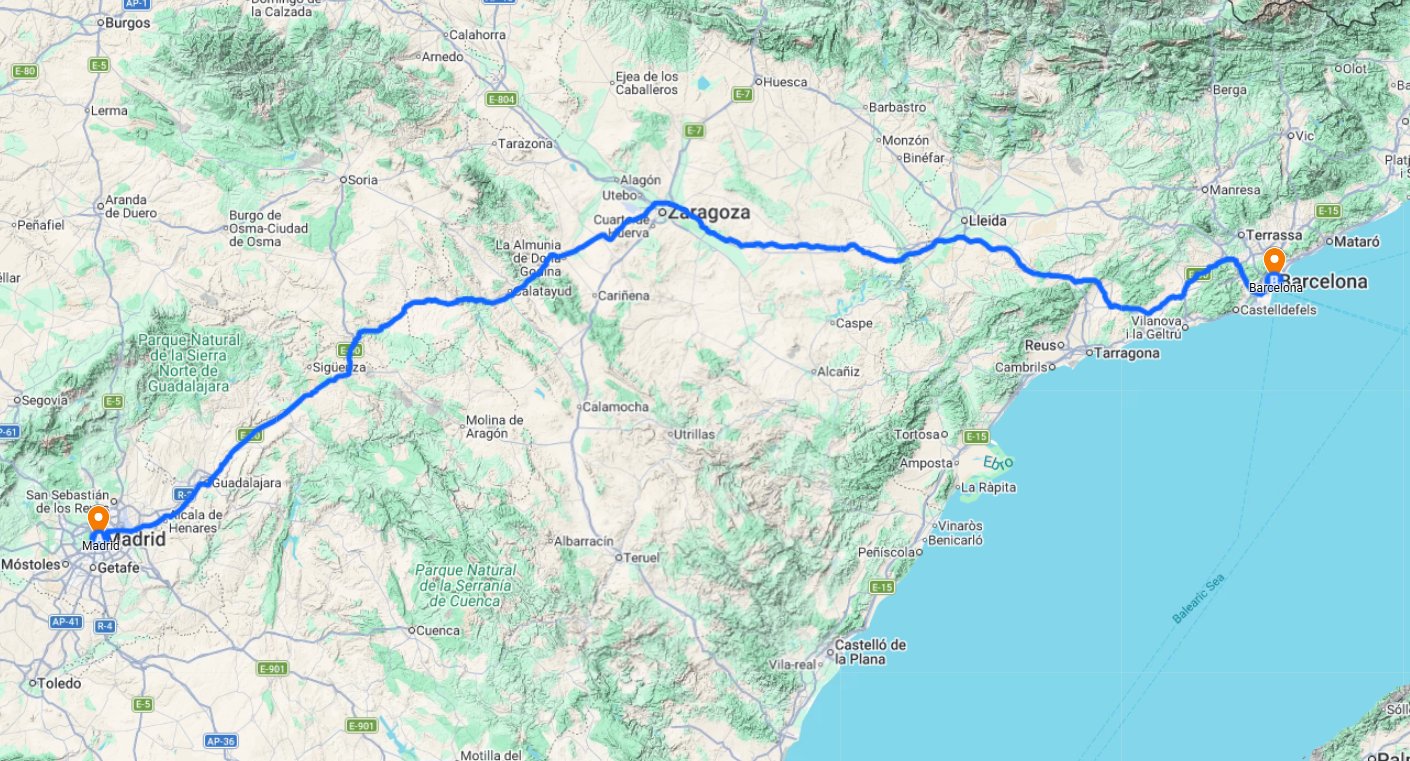
7-day Spain itinerary route
The high-speed railway is a big part of why these two cities work so naturally together. The fastest Madrid–Barcelona services take around 2 hours 30 minutes across roughly 625 km, connecting the centres of both cities. For me, that makes the journey feel like a transition between two parts of Spain rather than a travel day that consumes the itinerary.
Days 1–3: Madrid
Madrid has sometimes been treated as the less exciting half of a Madrid–Barcelona trip by first-time visitors I have spoken to. That has never matched my experience of the city.
It is the Spanish capital, but what I enjoy most is not simply its status or major sights. Madrid has excellent museums and grand architecture, but also enormous parks, neighbourhoods that become increasingly lively through the evening and some of the simplest food I associate with Spain.
Three days leaves plenty unseen, but it gives those different sides of the city room to emerge.
Day 1: Central Madrid and the pleasure of walking
The centre of Madrid has always made most sense to me on foot.
Puerta del Sol, Plaza Mayor, Mercado de San Miguel, the Royal Palace and Gran Vía sit close enough together that I have never experienced them as isolated attractions. They become landmarks within a much broader walk through Madrid de los Austrias and the surrounding streets.
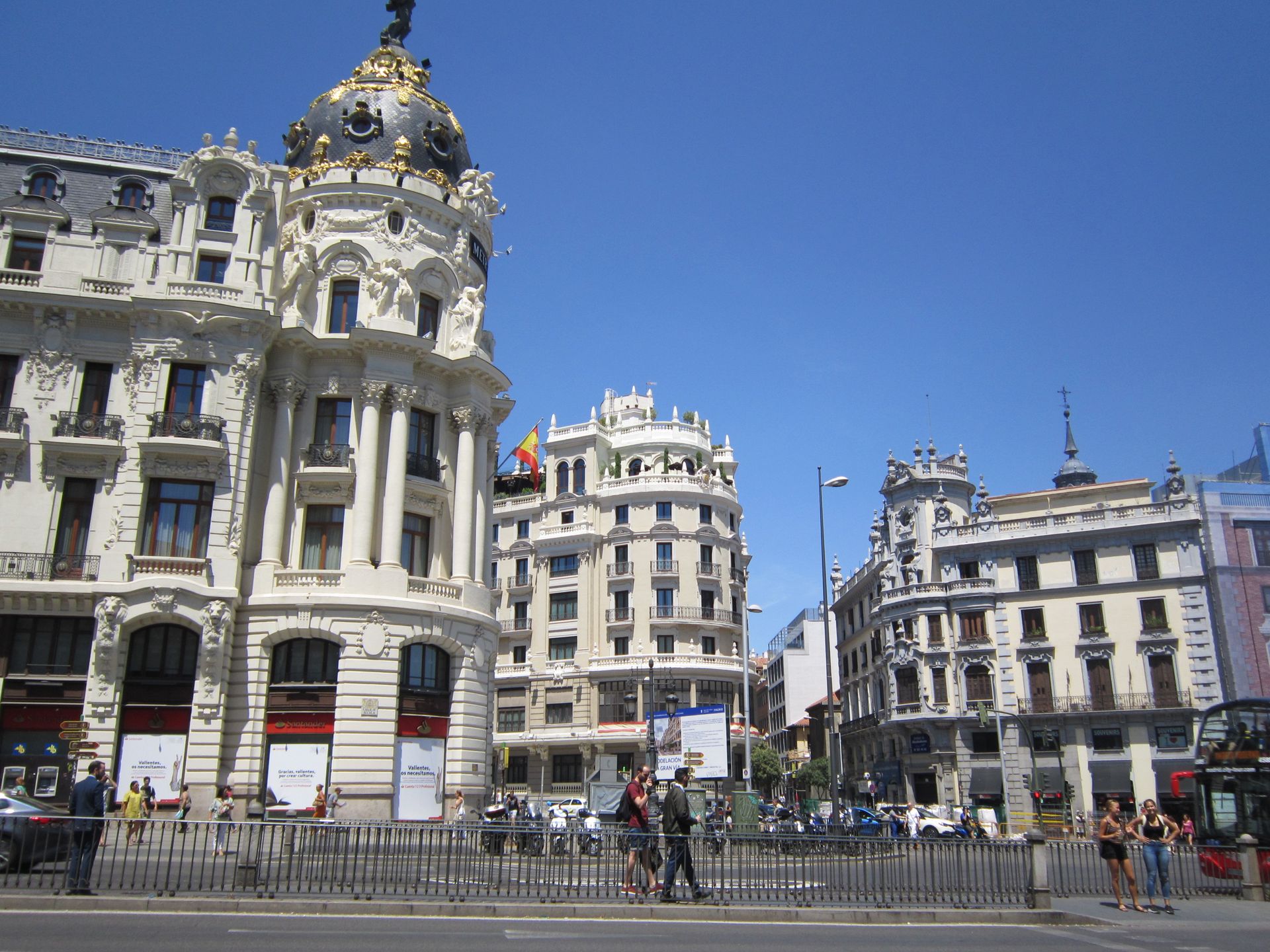
Street view of Gran Vía in Madrid
What I remember just as clearly are the moments when that walk stopped being sightseeing: continuing into La Latina, finding somewhere to eat or watching Gran Vía become busier later in the day.
That is the Madrid I know best. The major landmarks matter, but the city rarely feels as though it needs to be experienced in 45-minute blocks.
A simple food memory from Madrid
One thing I think visitors sometimes miss in Madrid is how memorable very ordinary Spanish food can be.
One meal I still remember is tortilla de patatas from Casa Dani in Mercado de la Paz. The outside was lightly browned, but the centre stayed soft and slightly runny.
It is an incredibly simple dish, which is exactly why it has stayed with me. Markets and neighbourhood restaurants have often given me a stronger sense of Madrid than meals built around famous reservations.
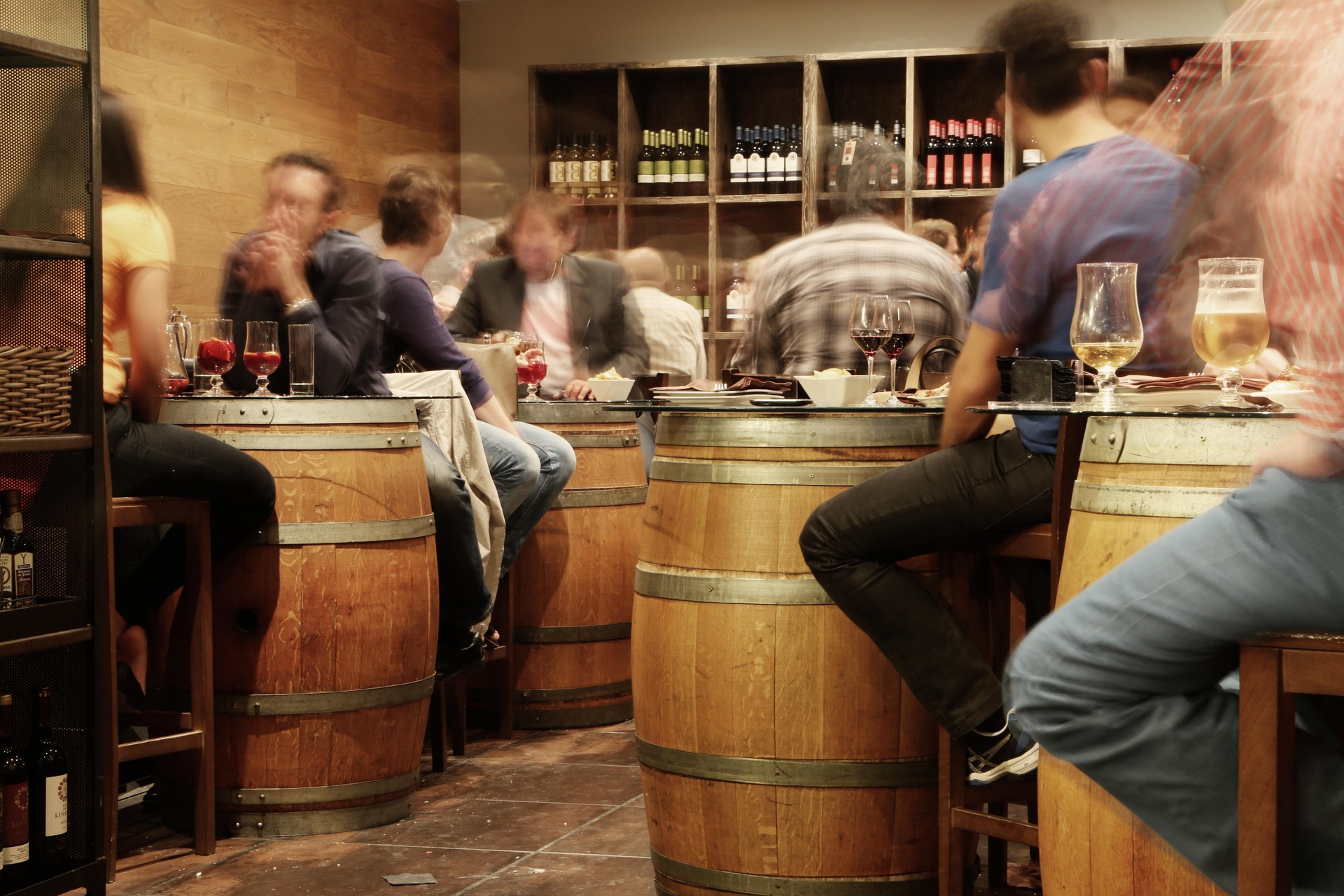
Rustic tapas-bar interior in Madrid
Day 2: The Prado, Retiro and Madrid's art district
The area around Paseo del Prado shows a completely different side of Madrid.
The Museo del Prado is enormous, and my experience of museums like this has always been better when I stop thinking about seeing every room. The collection is simply too large for that to be particularly meaningful.
El Retiro changes the pace almost immediately afterwards. Moving from several hours of art into a large green space is one of the things I like about this part of Madrid.
The Reina Sofía and Thyssen-Bornemisza are nearby as well, which means someone deeply interested in art can spend far longer here. What matters to me is that Madrid does not depend on doing that. The city still has plenty of character away from its major museums.
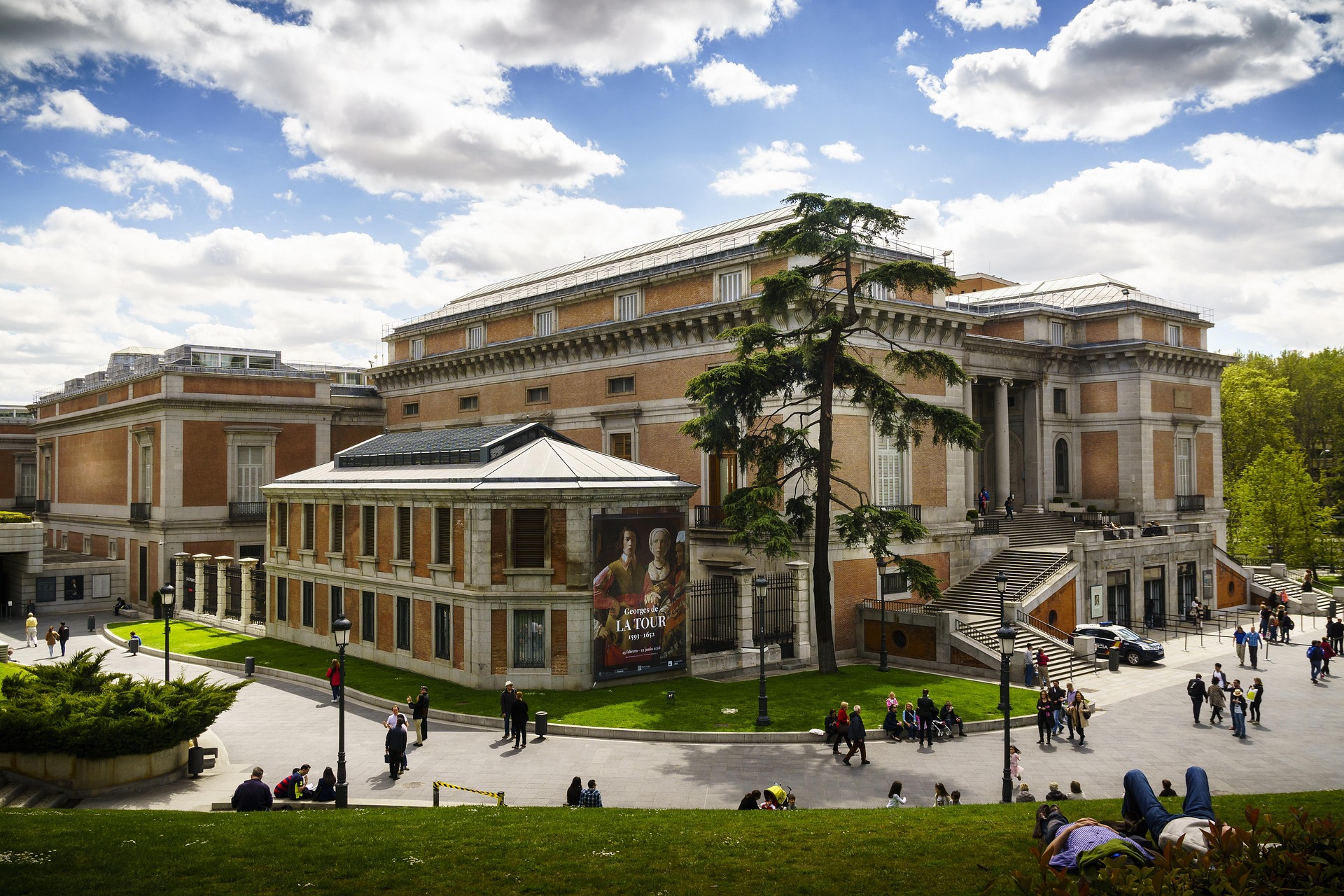
Exterior of the Prado Museum in Madrid, Spain
Day 3: The Madrid beyond its headline sights
By a third day, the city begins to feel less like a collection of famous places.
Malasaña and Chueca, football at the Santiago Bernabéu, more time in Retiro, markets or simply another long walk can all reveal very different versions of Madrid.
Because I grew up in Spain, Madrid has never felt to me like somewhere I need to search constantly for a manufactured “Spanish experience.”
A long lunch, people staying out surprisingly late, busy neighbourhood bars and streets becoming lively again after the afternoon heat are already part of it. Leaving space to notice those rhythms has always felt more valuable to me than filling every hour.
Where Toledo and Segovia fit
Toledo and Segovia are both close enough to Madrid to make easy day trips, and each adds something quite different from the capital.
In a seven-day Madrid and Barcelona trip, though, they create a genuine trade-off rather than a free extra. Time in either means seeing less of Madrid.
That balance depends heavily on what interests someone. Medieval streets and historic architecture can easily justify the exchange; for me, the important point is recognising that the third Madrid day has value of its own rather than assuming it must become a day trip.
Day 4: Madrid to Barcelona
The train journey is one of the easiest transitions between major cities I have experienced in Spain.
Journey: approximately 625 km / from around 2 hr 30 min on the fastest direct services.
Travelling from Madrid Puerta de Atocha to Barcelona Sants keeps the journey city centre to city centre. Once airport transfers, security and waiting are considered, flying has never felt especially compelling to me on this route.
Advance fares can vary substantially, so this is one of the practical parts of the itinerary where having fixed dates can matter.
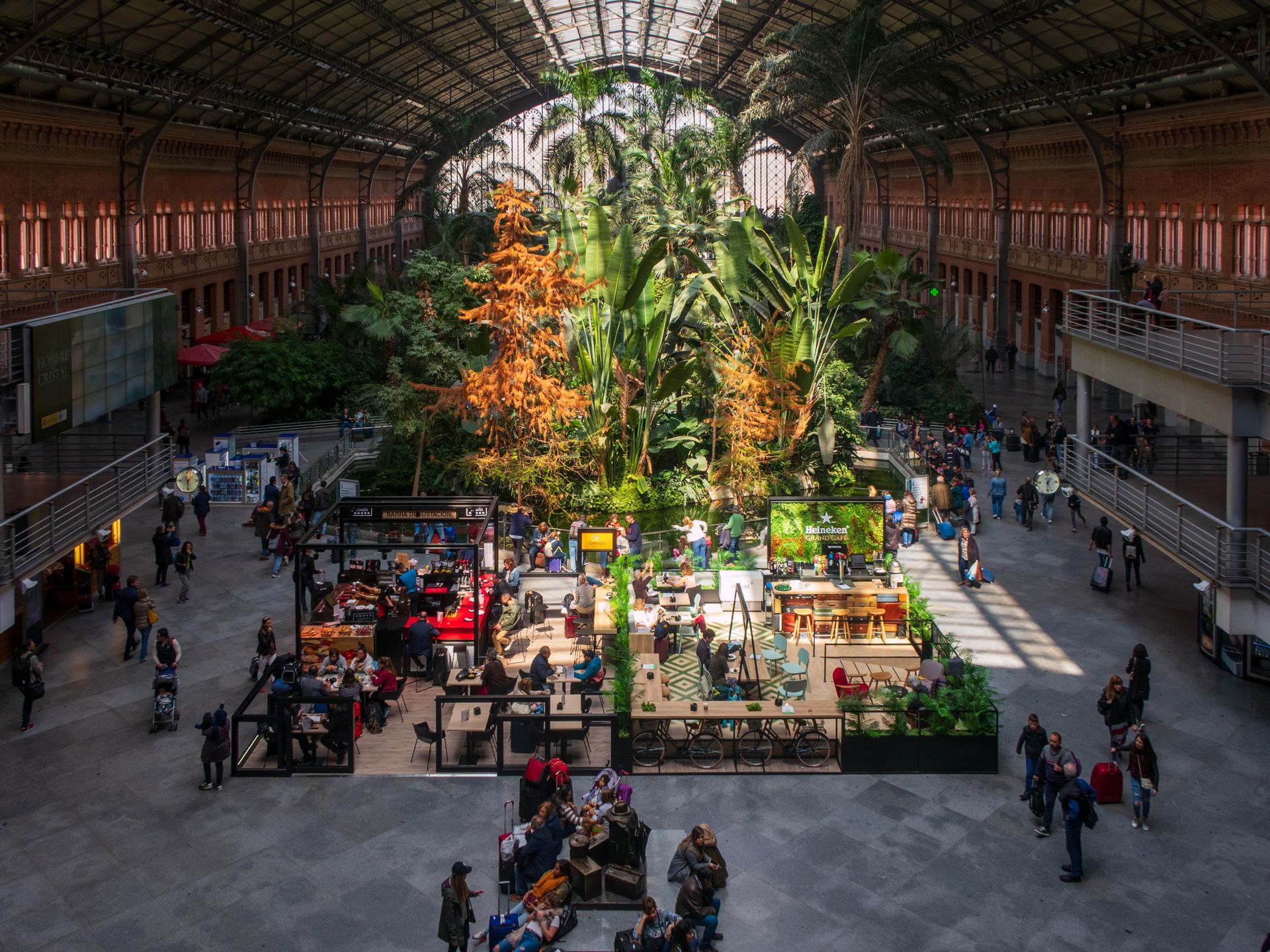
Atocha Station's indoor tropical garden
First impressions of Barcelona
Barcelona feels different from Madrid almost immediately.
The Mediterranean climate, Catalan architecture, tighter medieval streets and proximity to the sea give it a noticeably different rhythm.
The Gothic Quarter and El Born have always worked well for me as places to absorb that change. Walking through those streets and eventually reaching the waterfront makes the contrast with inland Madrid especially clear.
It is one of the reasons I like combining these two cities: the journey is simple, but the destination does not feel like more of the same.
Day 5: Experiencing Gaudí's Barcelona
Gaudí's architecture is one of the things that makes Barcelona unlike anywhere else in Spain.
Sagrada Família is the clearest example. I had seen countless photographs before experiencing it, but the interior was the part images had not really prepared me for. The coloured light through the stained glass changes the feeling of the space completely.
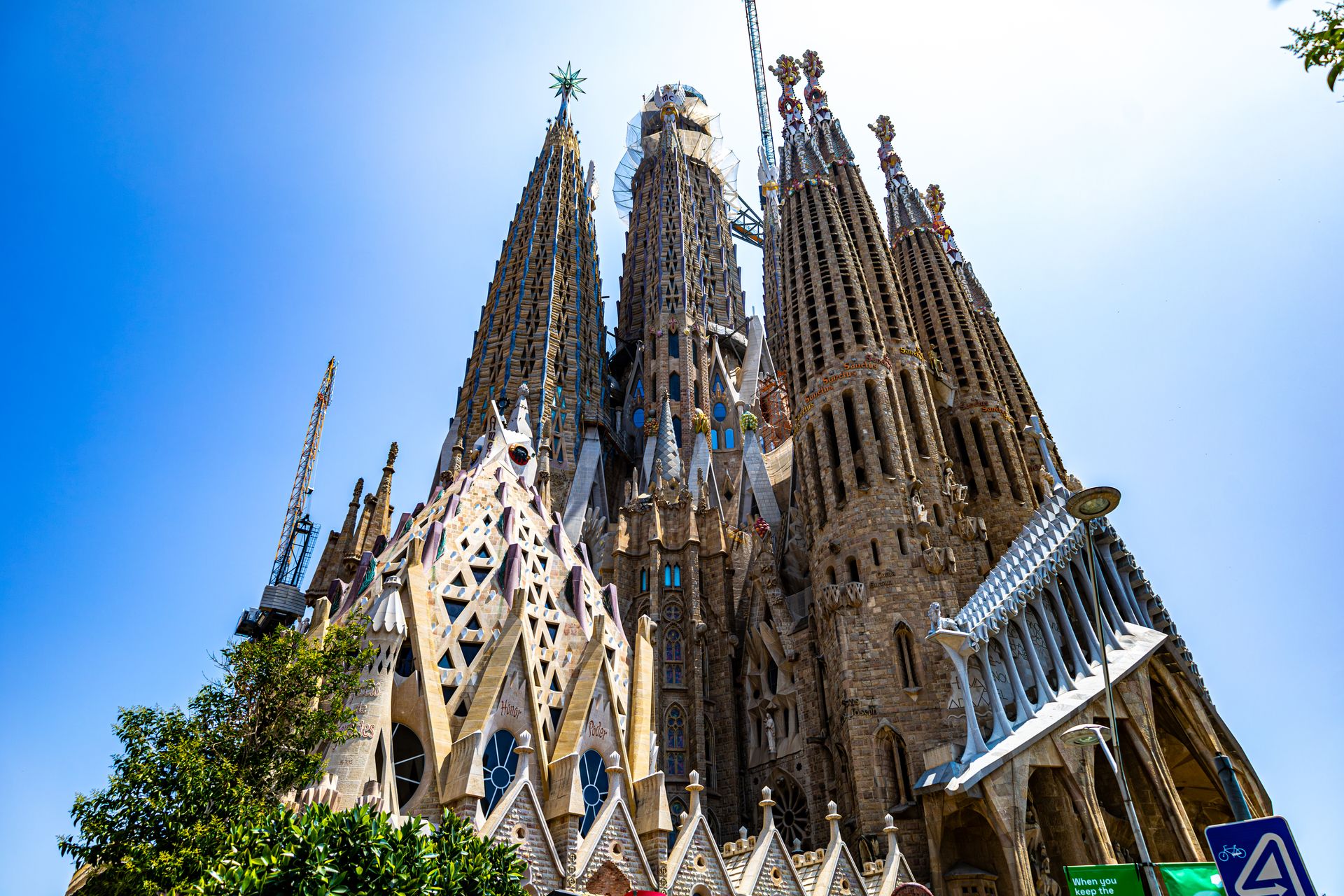
Sagrada Familia's intricate facade in Barcelona, Spain
Park Güell presents Gaudí in a very different setting, with architecture, landscape and views over the city coming together.
Sagrada Família, Park Güell, Casa Batlló and La Pedrera are often presented as a Barcelona checklist. Seeing them that way has never appealed to me as much as allowing individual buildings some time and then returning to the city around them.
Gràcia and Passeig de Gràcia are part of that experience too. Barcelona's Modernist architecture makes more sense when it is seen within the neighbourhoods rather than only as a sequence of ticketed interiors.
Day 6: Barcelona beyond Gaudí
Barcelona becomes more interesting once Gaudí stops being the entire story.
The Gothic Quarter and El Born bring the medieval city into focus, while Barceloneta and the waterfront introduce the Mediterranean side of Barcelona.
How important that coastline feels changes dramatically with the season.
In summer, the sea becomes part of the city's appeal in a way it simply is not in February. In cooler months, I have always found those hours easier to imagine elsewhere in the city.
That seasonal difference matters far beyond Barcelona. Spain is one of those countries where the same itinerary can feel completely different depending on when it is travelled.
Montjuïc adds yet another perspective, but I also value evenings in Barcelona that are simply about food and being outside rather than reaching another attraction.
Day 7: What an extra day in Barcelona adds
By the final day, having time left in Barcelona feels more valuable to me than adding another city for a few hours.
There are still obvious possibilities: Casa Batlló, La Pedrera, museums, the coast or neighbourhoods that have only been passed through briefly.
But the value of the extra day is that none of those needs to become compulsory.
A long lunch or another walk through a neighbourhood can be just as revealing as another famous interior.
That breathing room is why four nights in Barcelona has always made more sense to me in this route than trying to attach Seville to the final 24 hours. Spain's transport makes the latter possible; my experience of the country does not make it especially appealing.
Why Madrid and Barcelona work so well together
Spain is not one homogeneous destination, and these two cities make that immediately apparent.
Madrid is inland, central and strongly shaped by the rest of Spain converging on the capital. Barcelona is Mediterranean and Catalan, with its own architecture, language and identity.
Experiencing both gives the week contrast without making the logistics complicated.
The fact that the route involves only one hotel change is important too. It leaves more time for the ordinary parts of travel — meals, neighbourhoods, evenings and unplanned walks — that have always shaped my memories of Spain as much as the headline attractions.
Where Seville fits
Madrid → Seville → Barcelona is entirely possible by high-speed rail.
What changes is the character of the week.
Seville adds another exceptional city, but it also removes time from Madrid and Barcelona and introduces another arrival, departure and hotel change.
With more time, that trade becomes much easier. In seven days, I see it less as a question of whether Seville can fit and more as a choice between experiencing three cities quickly or two with more depth.
For this particular route, the latter reflects how I prefer to travel Spain.
How the season changes my view of this route
Spain's size and climate mean I do not think there is one seven-day itinerary that is equally convincing throughout the year.
Spring and autumn
Madrid and Barcelona are especially easy to enjoy during the milder months. Walking plays such a large role in how I experience both cities that comfortable temperatures make a noticeable difference, particularly in Madrid.
Summer
Madrid can become extremely hot in summer. The rhythm of the city changes with it: earlier starts, long lunches or indoor time during the hottest part of the afternoon, and much more life later in the evening.
Barcelona is moderated more by the Mediterranean, and the coast becomes a bigger part of the experience.
Summer also makes other versions of Spain increasingly attractive. For someone whose strongest interest is beaches rather than cities, the Balearics, Costa Brava, northern Spain and other coastal routes can make more sense than treating Madrid + Barcelona as an automatic answer.
Winter
Madrid and Barcelona still work in winter, but this is when Andalucía becomes especially interesting to me.
Seville, Córdoba, Granada and Málaga offer a very different journey through Spain, and cooler weather removes some of the intense heat that can make southern Spain harder work in summer.
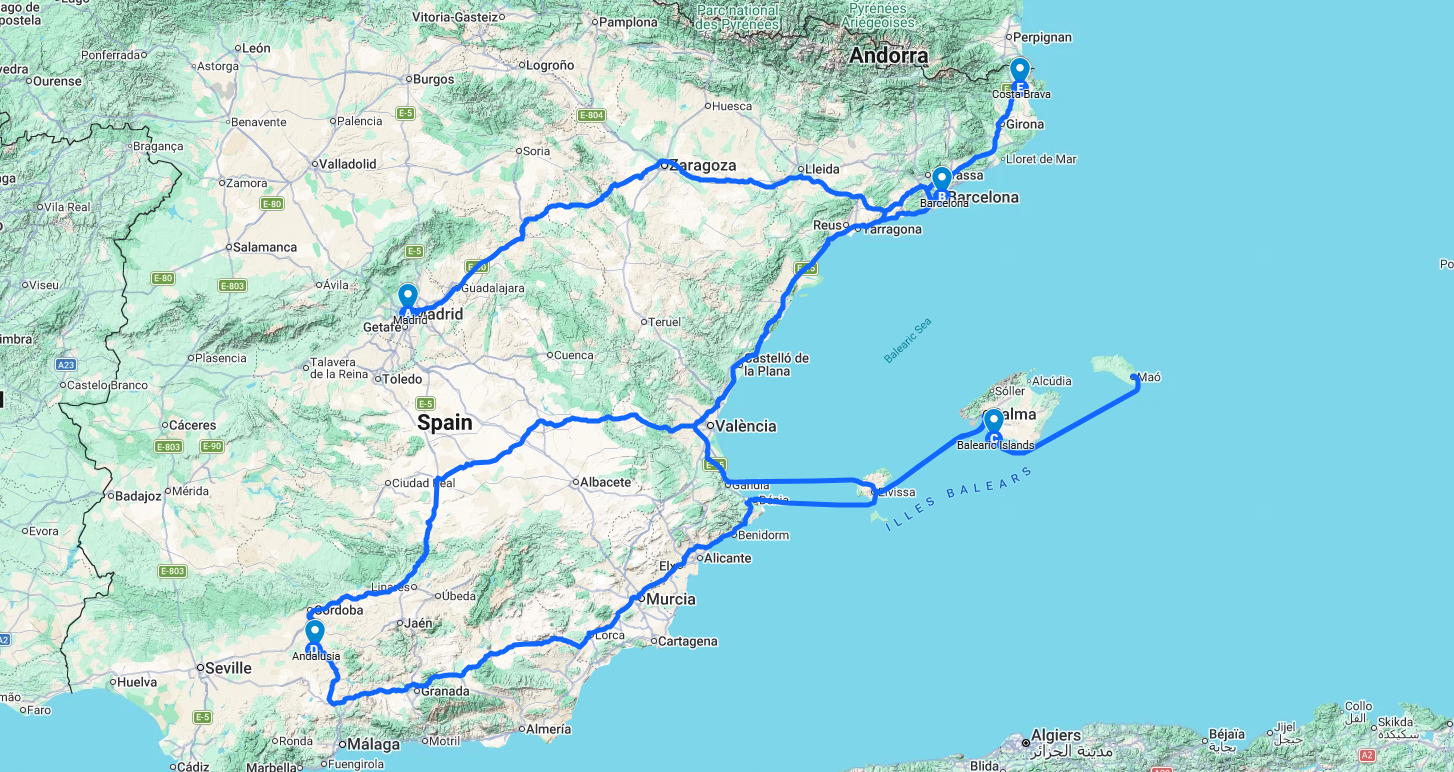
Optional seasonal-alternatives for Spain Itinerary
What transport felt like on this route
A car has never felt necessary to me for a Madrid and Barcelona trip.
Both cities have extensive public transport and are easy to explore on foot in their central areas. The high-speed train connects them directly.
That simplicity is one of the strengths of the route. Walking, metro and rail cover almost everything, without the parking and traffic complications that a rental car introduces in two large cities.
How much travel is involved?
Very little compared with many Spain itineraries.
The only significant intercity journey is Madrid → Barcelona: approximately 625 km / from around 2 hr 30 min by high-speed train.
Spain's transport network makes it remarkably easy to add destinations. Travelling here has also taught me that this can become a trap.
Just because another city is reachable does not mean the journey becomes better by adding it.
What I left out of this seven-day Spain route
Most of Spain — and I mean that positively.
Seville, Granada, Valencia, San Sebastián, Bilbao, Mallorca and the Canary Islands can each justify a completely different Spain itinerary.
Growing up here made me especially reluctant to describe Madrid + Barcelona as the definitive way to see the country. It is one version of Spain, not Spain itself.
What makes this route useful is the combination of two major but very different cities with unusually simple transport between them.
Have You Seen Our Travel Concierge Service?
Your trip, planned by local experts
We are not a travel agent - we design custom itineraries around your budget and style, without receiving commissions or booking fees.
Custom itinerary
Built around your dates, budget, and travel style.
Local expert knowledge
Recommendations from people on the ground, not review sites.
Travel smarter, spend less
We optimise for your budget to make your money go further.
What seven days in Spain feels like
Seven days is enough for a very good first trip. It is nowhere near enough to understand Spain as a whole.
Growing up here made that particularly obvious to me. Travel from Galicia to Andalucía, Madrid to the Basque Country or Barcelona to the Canary Islands and the landscapes, food, climate, architecture and even the languages around you can change dramatically.
That variety is why I have never found the idea of “completing” Spain particularly useful.
Madrid and Barcelona work well for a week because they offer a strong contrast while remaining easy to connect. More importantly, there is enough time for each city to become something more than its famous sights.
For me, that is a much better introduction to Spain than simply increasing the number of places on the map.