

Albania surprised me more than I expected. I found Ottoman towns tucked beneath mountains, ancient ruins surrounded by countryside, dramatic hiking trails, and some of the clearest water I've seen along the Mediterranean.
What I loved most was that so much of it still felt relatively undiscovered.
Albania has changed enormously since opening to the world in the 1990s, but it hasn't lost that sense of discovery. These are the 10 places I'd make room for on your first trip.
Have You Seen Our Travel Concierge Service?
Your trip, planned by local experts
We are not a travel agent - we design custom itineraries around your budget and style, without receiving commissions or booking fees.
Custom itinerary
Built around your dates, budget, and travel style.
Local expert knowledge
Recommendations from people on the ground, not review sites.
Travel smarter, spend less
We optimise for your budget to make your money go further.
Tarragona
(pronounced: tah-rah-GOH-nah)
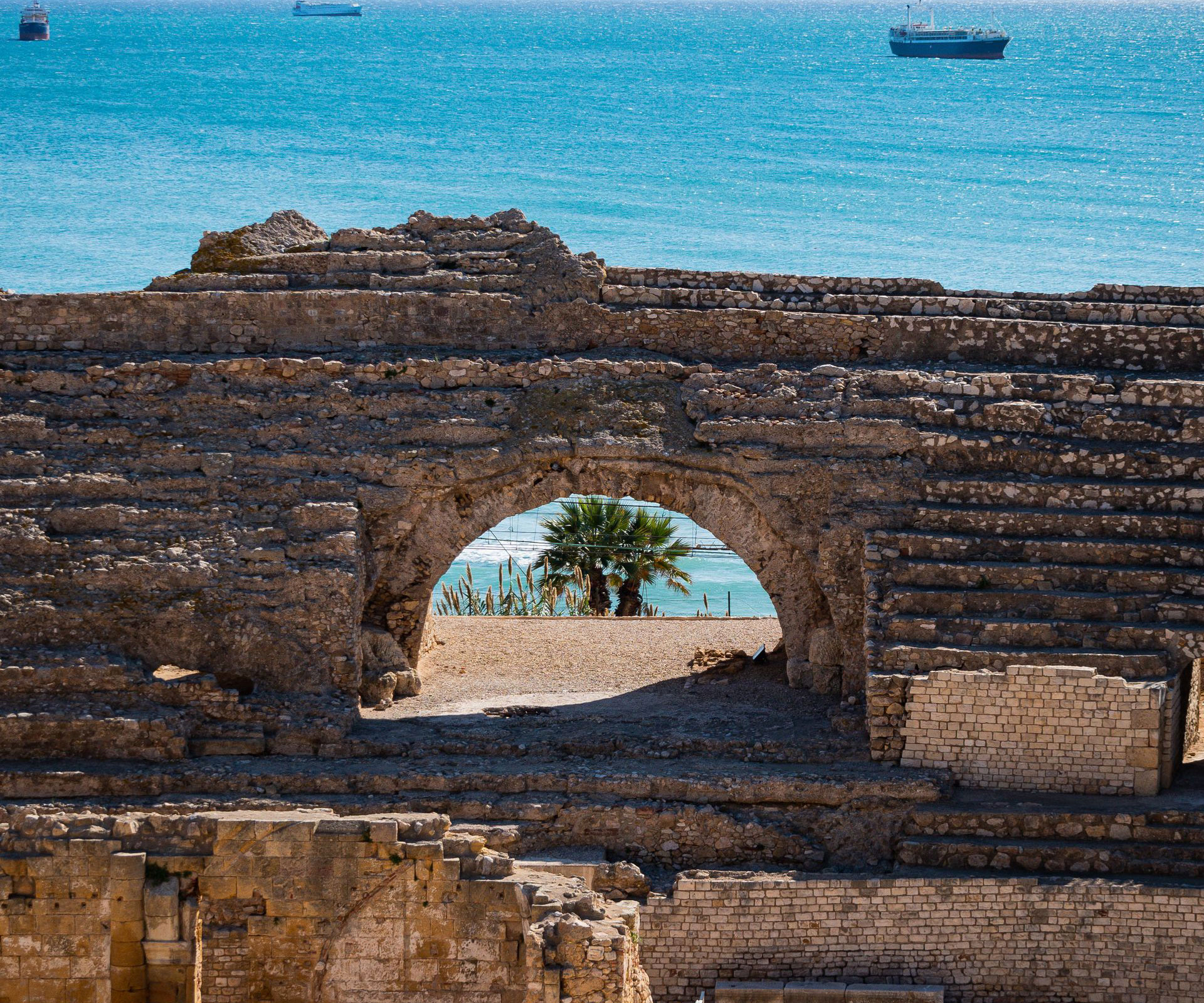
Tarragona at a glance
Catalonia, northeastern Spain
Roman ruins, history, Mediterranean views, food
2 nights
History lovers, couples, and photographers
Relaxed, coastal, and wonderfully walkable
April to June and September
Tarragona gave me one of my favorite combinations in Spain: ancient history and the Mediterranean almost on top of each other.
The Roman amphitheatre was the obvious highlight. It sits right beside the sea, so instead of exploring ruins surrounded by a modern city, I had the Mediterranean stretching out behind them.
Tarragona was once Tarraco, one of the Roman Empire's most important cities in Hispania, and remnants of that period seemed to appear everywhere I walked.
I explored the old Roman walls and the remains of the circus before heading outside the center to see the Pont del Diable aqueduct.
Nearly 2,000 years later, its enormous arches still cross the valley, and seeing it in person gave me a much better sense of just how ambitious Roman engineering was.
I also liked that the history didn't overwhelm everything else. I could wander through the medieval old town, walk down the Rambla Nova toward the Mediterranean viewpoint, and stop for seafood without the city feeling particularly hectic.
For somewhere so close to Barcelona, I was surprised by how different the pace felt. Two nights gave me enough time to explore without treating Tarragona like a checklist of Roman ruins.
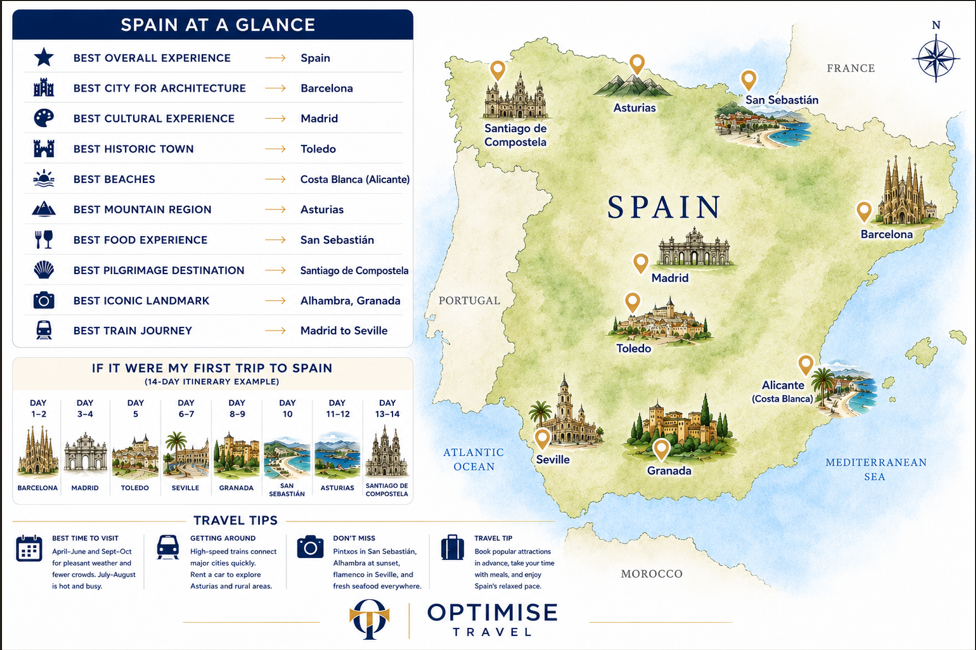
How Tarragona fits into your Spain itinerary
Tarragona is an easy addition after Barcelona and works particularly well if you're continuing south along Spain's Mediterranean coast toward Valencia.
If you're visiting in May, check the dates for Tarraco Viva. The annual festival brings Tarragona's Roman history to life with historical reenactments, demonstrations, and events across the city.
Alicante & the Costa Blanca
(pronounced: ah-lee-KAN-teh)
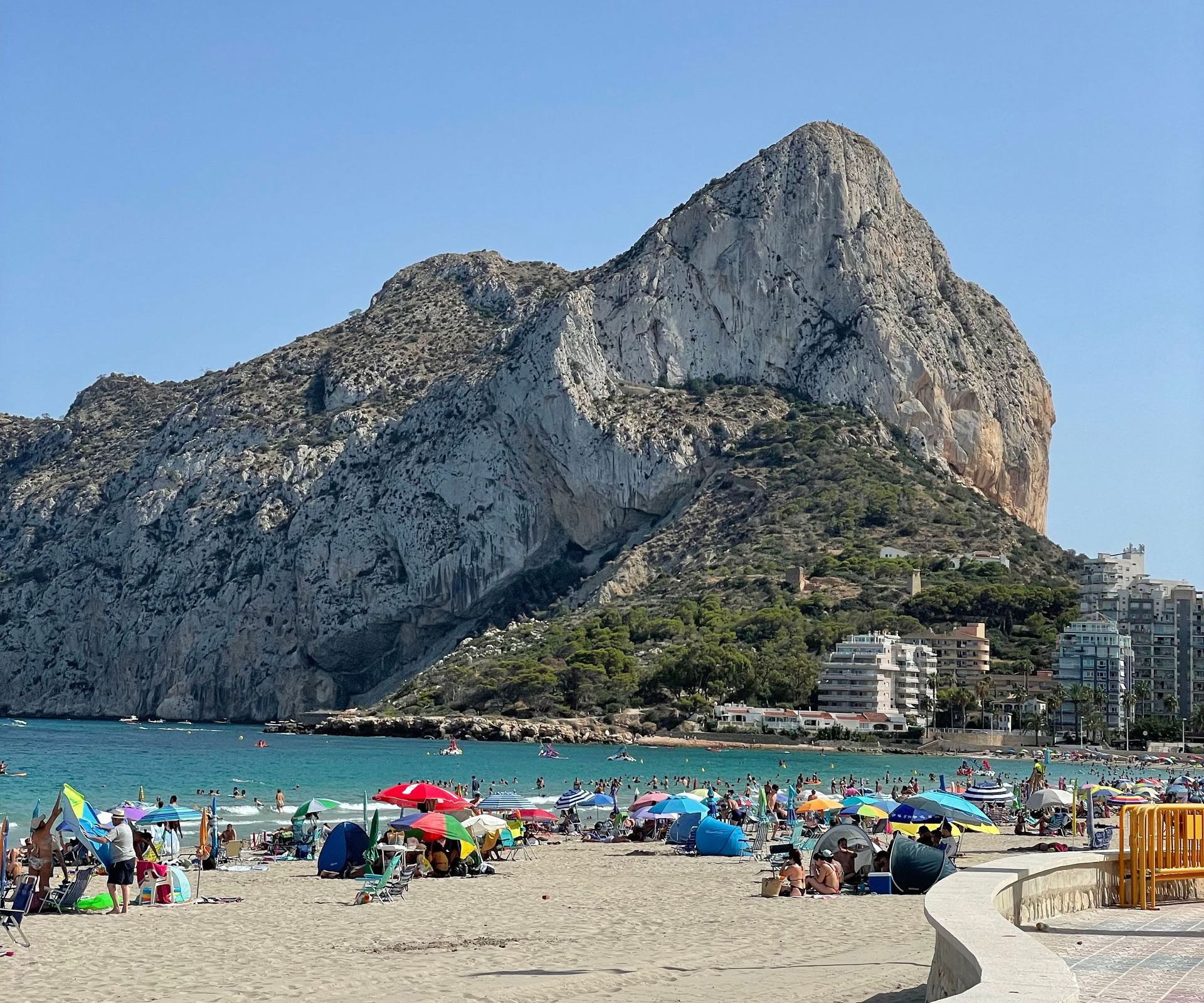
Alicante & the Costa Blanca at a glance
Southeastern Spain, Valencian Community
Beaches, coastal hiking, seafood, and scenic drives
4 nights
Beach lovers, food lovers, hikers, and road trippers
Mediterranean, sunny, scenic, and relaxed
June and September, October for fewer crowds
The Costa Blanca was nothing like the version of Spain I'd associated with places like Benidorm. Once I started exploring farther north, I found rugged limestone cliffs, ridiculously clear coves, whitewashed villages, and some fantastic places to eat.
One of my favorite sights was the Peñón de Ifach near Calpe, a huge limestone rock rising straight from the Mediterranean. There's a trail to the summit, and the higher I climbed, the better the views became over Calpe and the coastline.
I also loved exploring Altea, particularly the old town climbing toward its distinctive blue-domed church.
Jávea was another highlight, with small coves tucked between cliffs and water that made it very difficult to stay on dry land for long.
I'd definitely make time to head inland as well. Guadalest felt completely different from the coast, with its historic village perched dramatically above a turquoise reservoir.
Food was another reason I enjoyed this part of Spain. Dénia is particularly well known for its seafood and rice dishes, and I'd recommend trying arroz a banda, a local rice dish cooked in intensely flavorful fish stock and traditionally served with allioli.
How Alicante & the Costa Blanca fits into your Spain itinerary
The Costa Blanca fits naturally between Valencia and southeastern Spain.
I'd give it several nights and use one coastal base, such as Jávea, rather than changing hotels as you explore Calpe, Altea, Dénia, and Guadalest.
If your schedule allows, I'd visit the northern Costa Blanca in September or October. I loved how much quieter the coves and restaurants became once the peak summer crowds disappeared.
Santiago de Compostela
(pronounced: san-TYAH-goh deh kom-pos-TEH-lah)
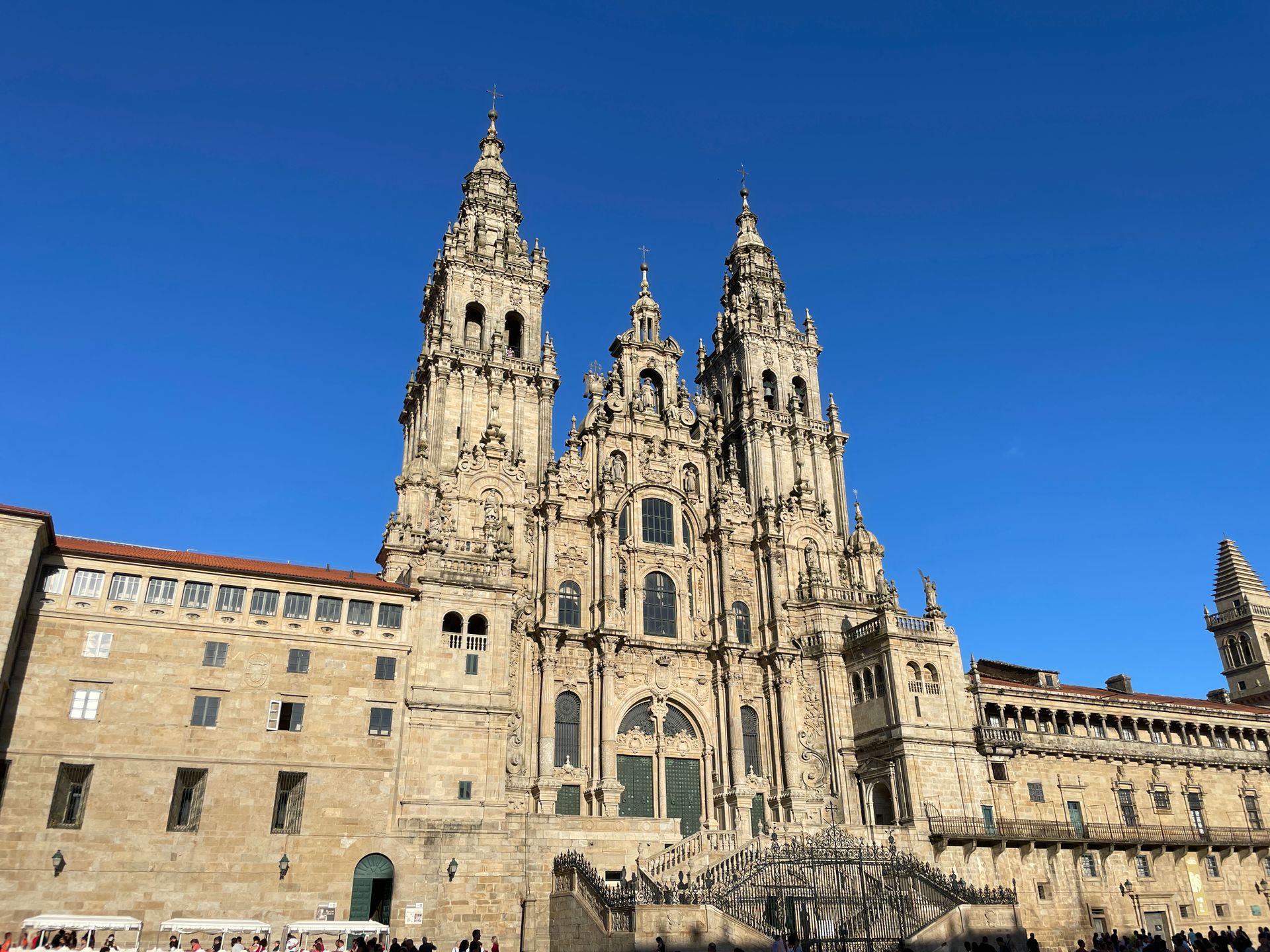
Santiago de Compostela at a glance
Galicia, northwestern Spain
History, pilgrimage culture, architecture, Galician food
2 nights
History lovers, food lovers, cultural travelers, walkers
Atmospheric, reflective, and quietly beautiful
May to June and September to October
Santiago de Compostela affected me in a way I hadn't really expected. Plenty of Spanish cities impressed me with their architecture or setting, but here it was the people arriving that gave the city so much of its character.
I spent time in Praza do Obradoiro watching Camino pilgrims reach the cathedral after days or even weeks of walking.
Some celebrated, some hugged, and others simply stood looking at the cathedral. Even though I hadn't walked the Camino myself, it was difficult not to get caught up in what that moment meant to them.
Inside the cathedral, the famous Botafumeiro reminded me of Santiago's centuries-old connection to pilgrimage.
This enormous incense burner can be swung high across the transept during certain services, although it isn't something you're guaranteed to see on every visit.
Away from the cathedral, I loved wandering the granite streets and arcades of the old town, particularly when a little Galician rain made everything look even more atmospheric.
And I wouldn't come here without making food part of the experience. Pulpo a feira, tender octopus seasoned with paprika, was one dish I'd seek out, along with Galician empanada and a glass of local Albariño.
How Santiago de Compostela fits into your Spain itinerary
Santiago works best as the anchor for a few days in Galicia rather than a quick detour from Madrid.
From here, I'd continue exploring northwestern Spain or build a longer trip around part of the Camino de Santiago.
Don't plan your visit around seeing the Botafumeiro unless you've checked the cathedral's schedule. It is only used for certain liturgical celebrations and services, so seeing it swing isn't guaranteed.
Asturias
(pronounced: as-TOO-ryahs)
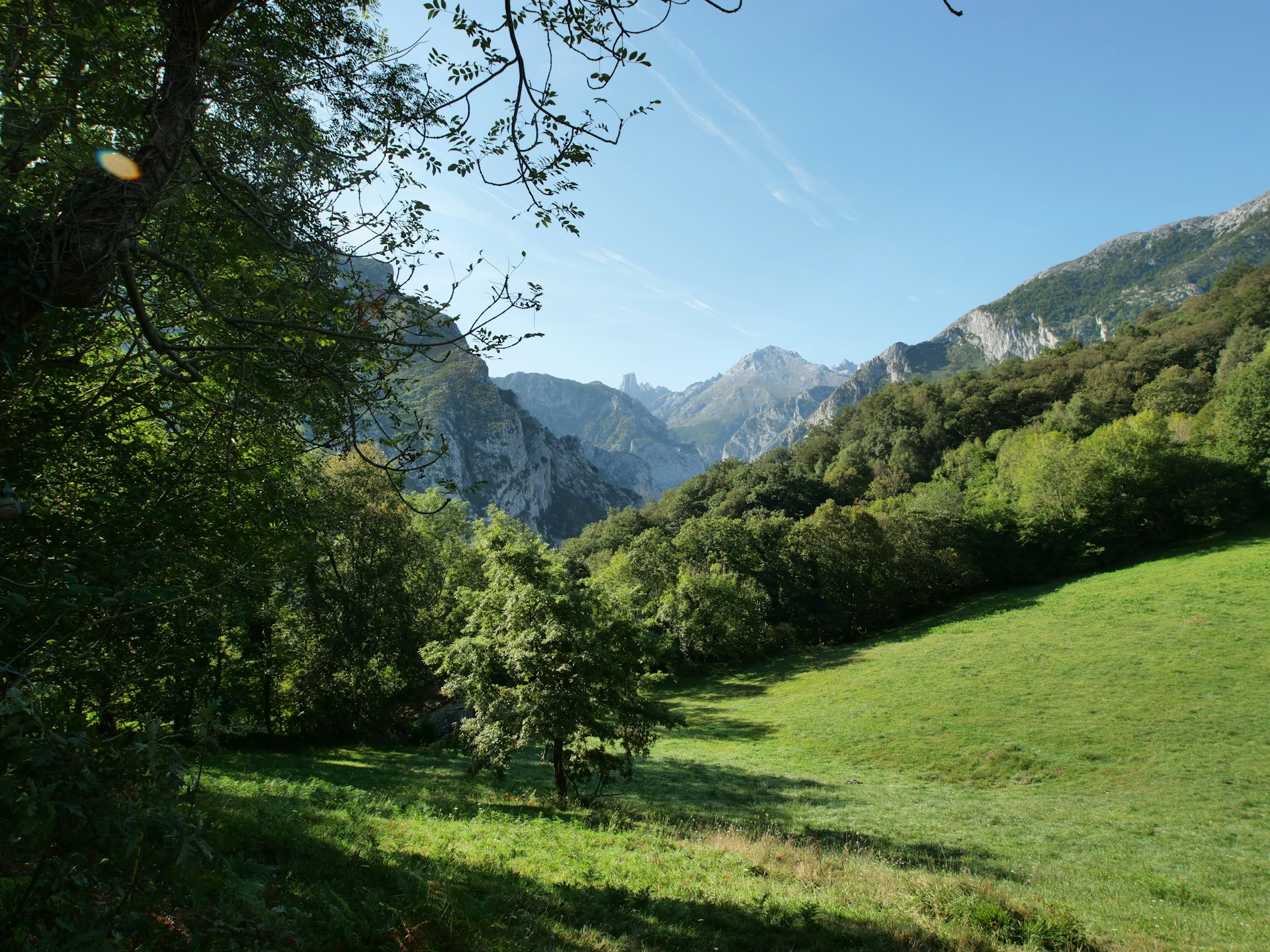
Asturias at a glance
Northern Spain, between Galicia and Cantabria
Mountains, hiking, dramatic coastline, and food
4 nights
Hikers, nature lovers, foodies, and road trippers
Green, rugged, traditional, and wonderfully uncrowded
June to September
Asturias felt like the perfect mix of city, sea, and mountains, and that combination was what made this part of northern Spain so memorable for me.
The biggest surprise was just how green everything was. At times, the rolling hills and misty landscapes reminded me more of Ireland than the Spain I'd pictured before visiting.
Then there were the Picos de Europa, where enormous limestone peaks rise only a relatively short distance from the coast.
Some of my favorite time in Asturias was spent in these mountains.
The Ruta del Cares follows a spectacular path through the Cares Gorge, while the glacial lakes above Covadonga gave me another completely different view of the landscape. I think the Picos are one of the real highlights of northern Spain.
Then I could leave the mountains behind and head for the sea. I loved Cudillero, where colorful houses seemed to tumble down the hillside toward the tiny fishing harbor.
Oviedo added the city element, along with historic architecture and a fantastic food culture. I quickly learned that cider here is practically an event in itself, traditionally poured from high above the glass.
I'd also make room for fabada asturiana, a hearty white bean stew, and Cabrales, the region's famously punchy blue cheese.
How Asturias fits into your Spain itinerary
Asturias fits beautifully into a northern Spain road trip between Galicia and Cantabria.
I'd give it around four nights so you have enough time to experience the mountains, coast, and Oviedo rather than choosing between them.
I'd rent a car for Asturias. Having one made it much easier to combine the Picos de Europa, Covadonga, small coastal villages, and Oviedo without turning the trip into a complicated series of connections.
Toledo
(pronounced: toh-LEH-doh)
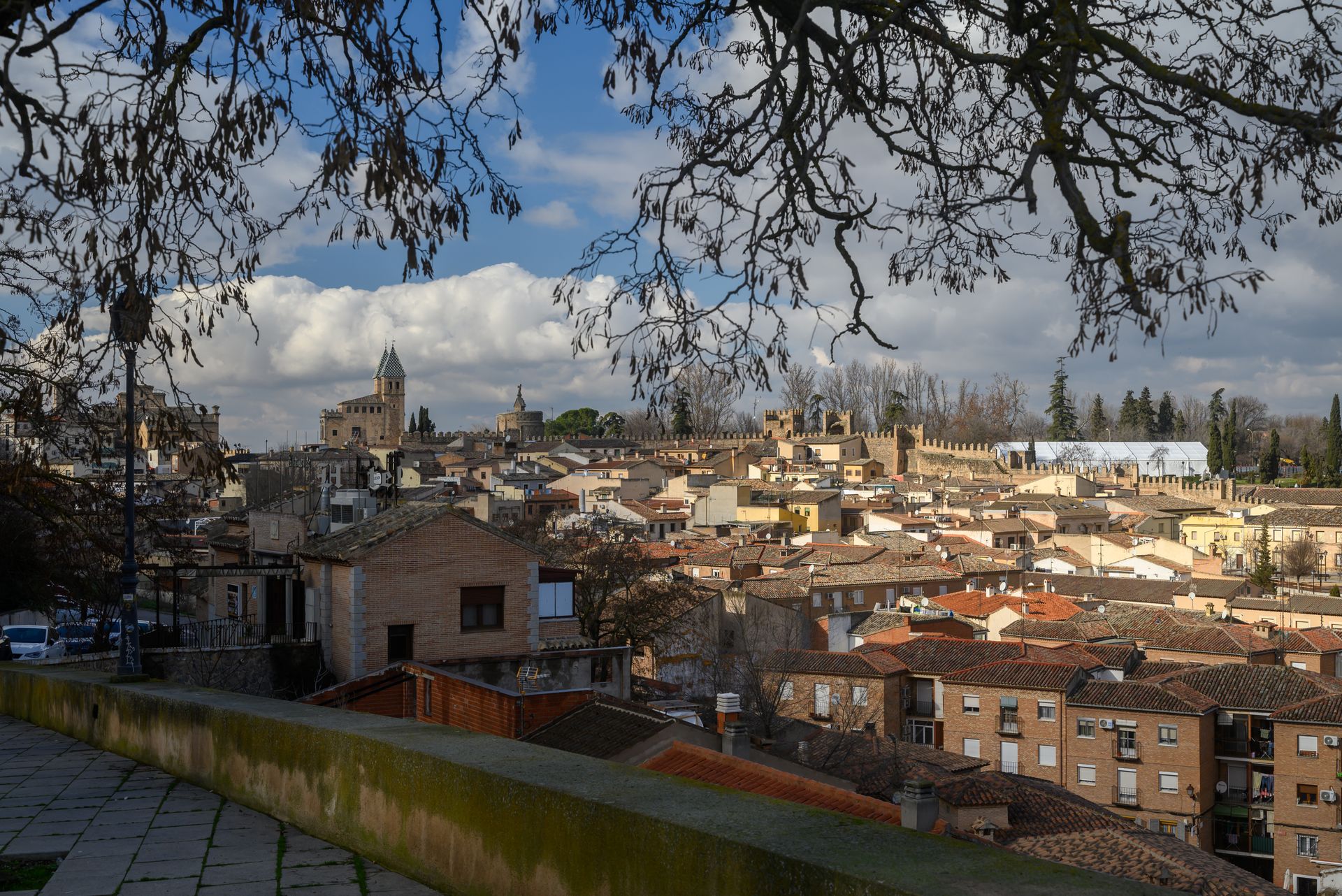
Toledo at a glance
Central Spain, about 70 km south of Madrid
Medieval history, architecture, religious heritage, and food
1-2 nights
History and art lovers, photographers, and cultural travelers
Medieval, atmospheric, labyrinthine, and beautifully preserved
April to June and September to October
Toledo was one of those cities where I found myself constantly looking up, down side streets, and through old archways because another piece of history seemed to be everywhere I turned.
Christian, Jewish, and Islamic influences have all left their mark here, and I loved seeing how closely those different layers sit together.
I could visit the enormous Gothic Catedral Primada, explore the former Cristo de la Luz mosque, and then see the intricate Mudéjar decoration inside the Sinagoga del Tránsito, all within the same compact historic center.
Toledo is also closely associated with El Greco, and seeing The Burial of the Count of Orgaz in the Church of Santo Tomé gave me another reason to slow down rather than simply rush through the city's headline monuments.
And then there was the marzipan. Toledo is famous for mazapan, and I found it richer and nuttier than the overly sweet marzipan I'd tried elsewhere.
It's soft and slightly chewy, with a strong toasted-almond flavor balanced by just enough sweetness. Some of the most traditional versions are still made by convents around the city.
My favorite experience, though, was seeing the cathedral at night. The scale and detail of the interior felt completely different after dark, and it's the one Toledo experience I'd make an effort to plan around.
How Toledo fits into your Spain itinerary
Toledo is one of the easiest additions to a Madrid itinerary, but I'd stay for at least one night rather than treating it purely as a day trip.
Stay overnight if you can. Toledo gets busy with day-trippers from Madrid, but the historic center became much quieter in the evening and early morning, which was when I enjoyed wandering it most.
Madrid
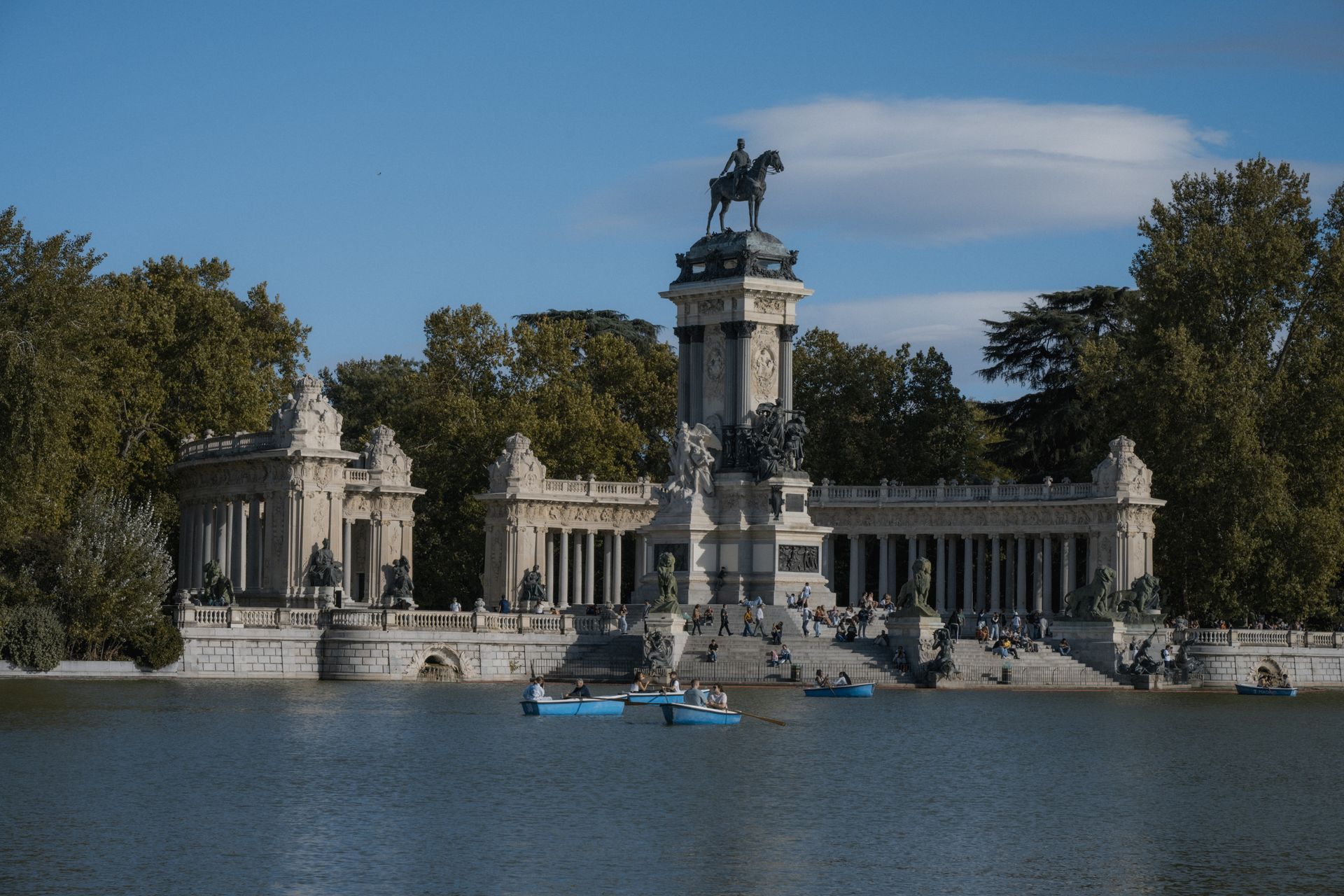
Madrid at a glance
Central Spain
World-class art, food, nightlife, parks, and day trips
4 nights
Art lovers, food lovers, city breakers, and night owls
Energetic, cultured, social, and unapologetically late-night
March to May and September to November
Madrid didn't have the coastline or dramatic ancient monuments that grabbed my attention elsewhere in Spain, but it didn't take long for me to understand why people become so attached to it.
For me, the museums alone justified the visit.
The Prado was the standout, and I could have spent hours moving between works by Velázquez and Goya. Seeing Las Meninas in person was one of those experiences where I wanted enough time to simply stand there and take it in.
The Reina Sofía was equally memorable for a completely different reason, particularly seeing Picasso's Guernica at its enormous real-life scale.
But I wouldn't spend the entire trip indoors. I loved breaking up museum time with a walk through Retiro Park, browsing El Rastro on a Sunday morning, and then experiencing Madrid once the rest of Europe would normally be thinking about bed.
That late schedule took some adjustment, but I quickly embraced it. Dinner at 9 or 10 suddenly didn't seem strange when La Latina and Malasaña were only getting started.
Four nights felt about right to me. Madrid is somewhere I'd deliberately leave space in the itinerary rather than filling every hour with attractions.
Some of my favorite time here was simply moving between neighborhoods, stopping for tapas, and seeing where the evening went.
How Madrid fits into your Spain itinerary
Madrid makes an excellent starting point for a wider Spain itinerary thanks to its central location and high-speed rail connections. It's also an ideal base for adding Toledo without reorganizing the rest of your route.
Book a timed ticket for the Prado in advance, and go as early as you can. I found the experience far better when I could spend time with the paintings without navigating the busiest museum crowds.
Barcelona
(pronounced: bar-seh-LOH-nah)
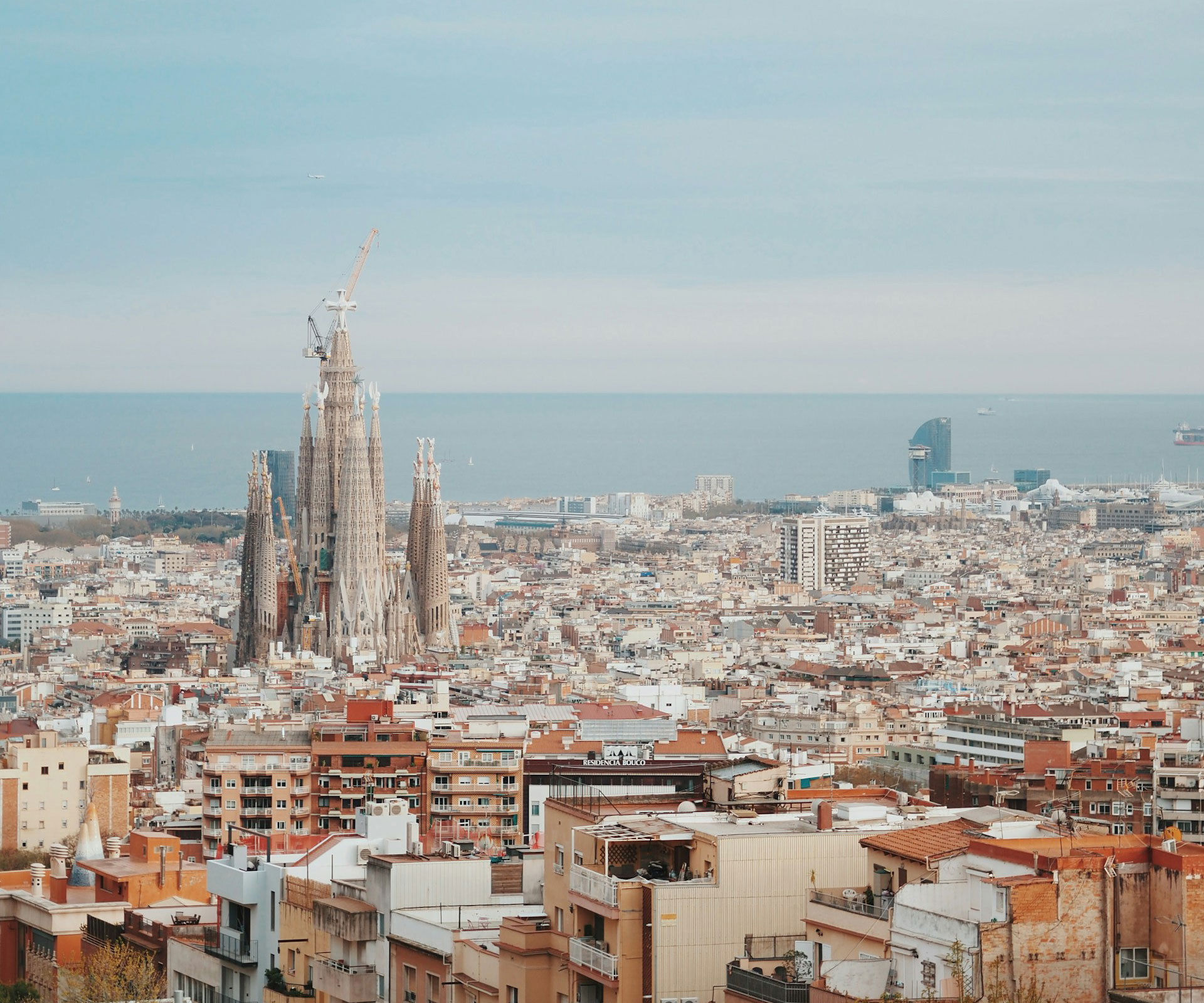
Barcelona at a glance
Catalonia, northeastern Spain
Gaudi architecture, food, beaches, and art
4 nights
Foodies, art lovers, and first-time visitors
Creative, Mediterranean, energetic, colorful
April to June and September to October
Barcelona was one of those places where I understood both the hype and the complaints almost immediately. It was busy, sometimes overwhelmingly so, but I still wouldn't consider a first trip to Spain complete without seeing it.
Gaudí was a huge part of that for me. The Sagrada Família looked extraordinary from outside, but it was the interior that really surprised me.
The branching columns, enormous height, and colored light pouring through the stained glass made it feel unlike any other church I'd visited.
I also loved seeing how his style changed from place to place, from the playful mosaics and city views of Park Güell to the almost skeletal curves of Casa Batlló.
Barcelona became much easier to appreciate when I got away from its busiest hours. I particularly enjoyed the Gothic Quarter early in the morning, when its narrow lanes felt dramatically different from the crowded streets I'd encounter later in the day.
And that was really Barcelona's appeal for me. I could spend the morning surrounded by architecture and history, stop at a market or neighborhood restaurant, and finish the day beside the Mediterranean.
Four days gave me enough time to see the major sights without making the entire visit about ticking them off.
How Barcelona fits into your Spain itinerary
Barcelona makes an obvious starting or finishing point for a Spain itinerary and pairs particularly well with Tarragona before continuing south along the Mediterranean coast.
Book the Sagrada Família and Park Güell well in advance, and be particularly careful with your phone, wallet, and bag in crowded tourist areas and on public transport.
Barcelona has a well-documented pickpocketing problem, so this is one place where I wouldn't be casual about valuables.
Seville
(pronounced: seh-VEE-yah)
Seville at a glance
Andalusia, southern Spain
Moorish architecture, flamenco, tapas, history, and festivals
3 nights
Foodies, history and architecture lovers, and cultural travelers
Romantic, vibrant, traditional, and unmistakably Andalusian
April and October
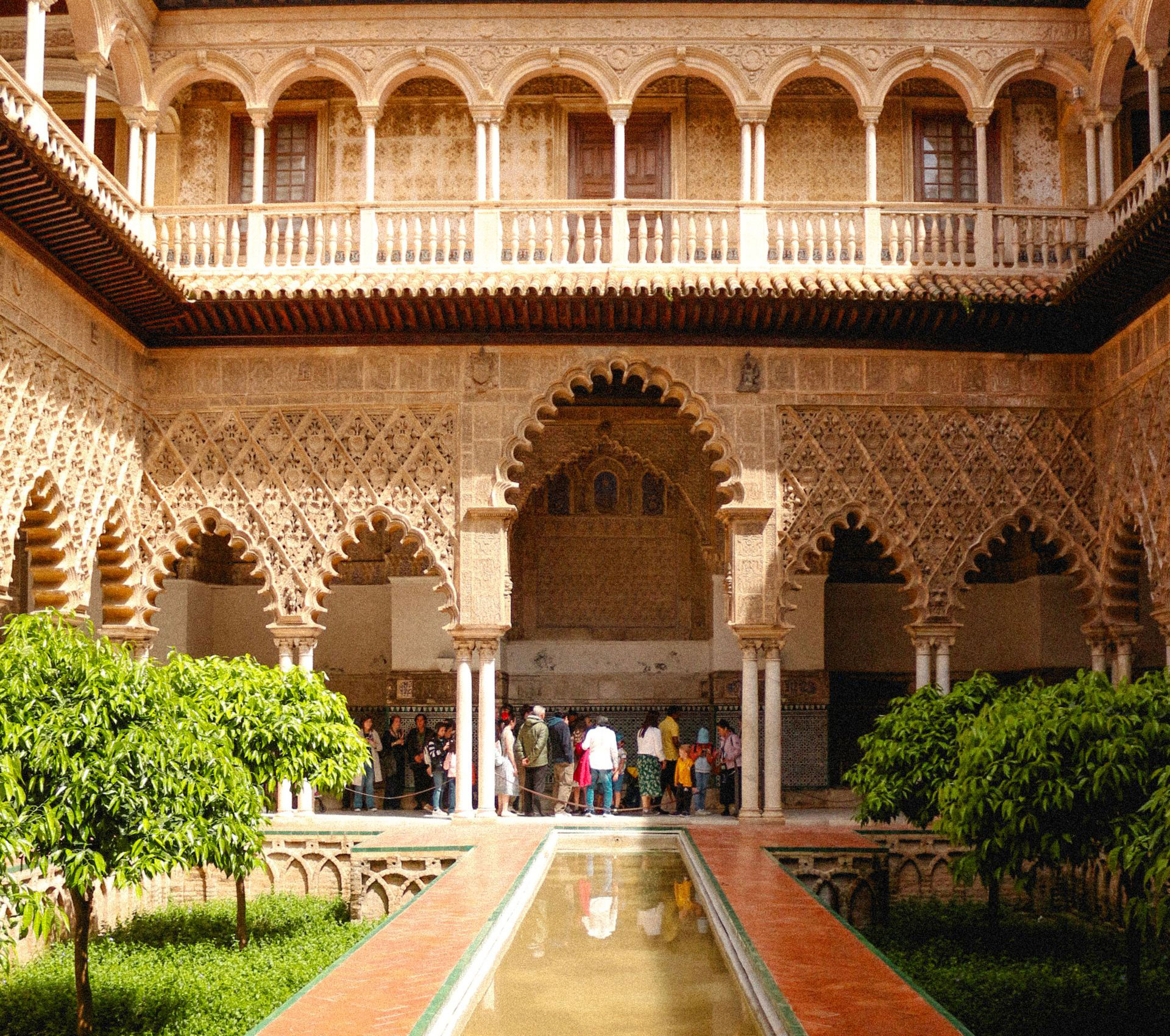
Seville was the Spain I'd imagined before I ever visited. Orange trees, tiled courtyards, late-night tapas bars, flamenco, and beautiful historic buildings all seemed to come together here.
The Real Alcázar was my standout. I loved the intricate architecture, but the gardens made me want to linger.
Wandering between fountains, orange trees, tiled pavilions, and quiet courtyards early in the day was one of my favorite experiences in Seville. Nearby, the enormous cathedral and Giralda made the historic center feel even more impressive.
Across the Guadalquivir, Triana gave me a different side of the city. The neighborhood has deep connections to flamenco, and I'd absolutely make time for a performance in a smaller tablao.
Watching the footwork and intensity of the dancers from close range gave me a much better appreciation for just how powerful flamenco can be.
Food was equally memorable. I loved moving between tapas bars rather than settling in for one long meal, and historic spots like El Rinconcillo added another layer to the experience.
Seville is also somewhere I'd happily structure my day around the weather. I explored in the morning, slowed down during the hottest part of the afternoon, and headed back out when the streets came alive again in the evening.
How Seville fits into your Spain itinerary
Seville is the natural anchor for an Andalusia itinerary and combines particularly well with Córdoba and Granada. I'd give it at least three nights before continuing through southern Spain.
Book the Real Alcázar in advance and choose one of the earliest entry times available. I found the gardens particularly beautiful before the biggest crowds arrived.
Granada
(pronounced: grah-NAH-dah)
Granada at a glance
Andalusia, southern Spain
Moorish architecture, history, tapas, and mountain views
3 nights
Foodies, photographers, and history lovers
Historic, romantic, and intricate
April to June and September to October
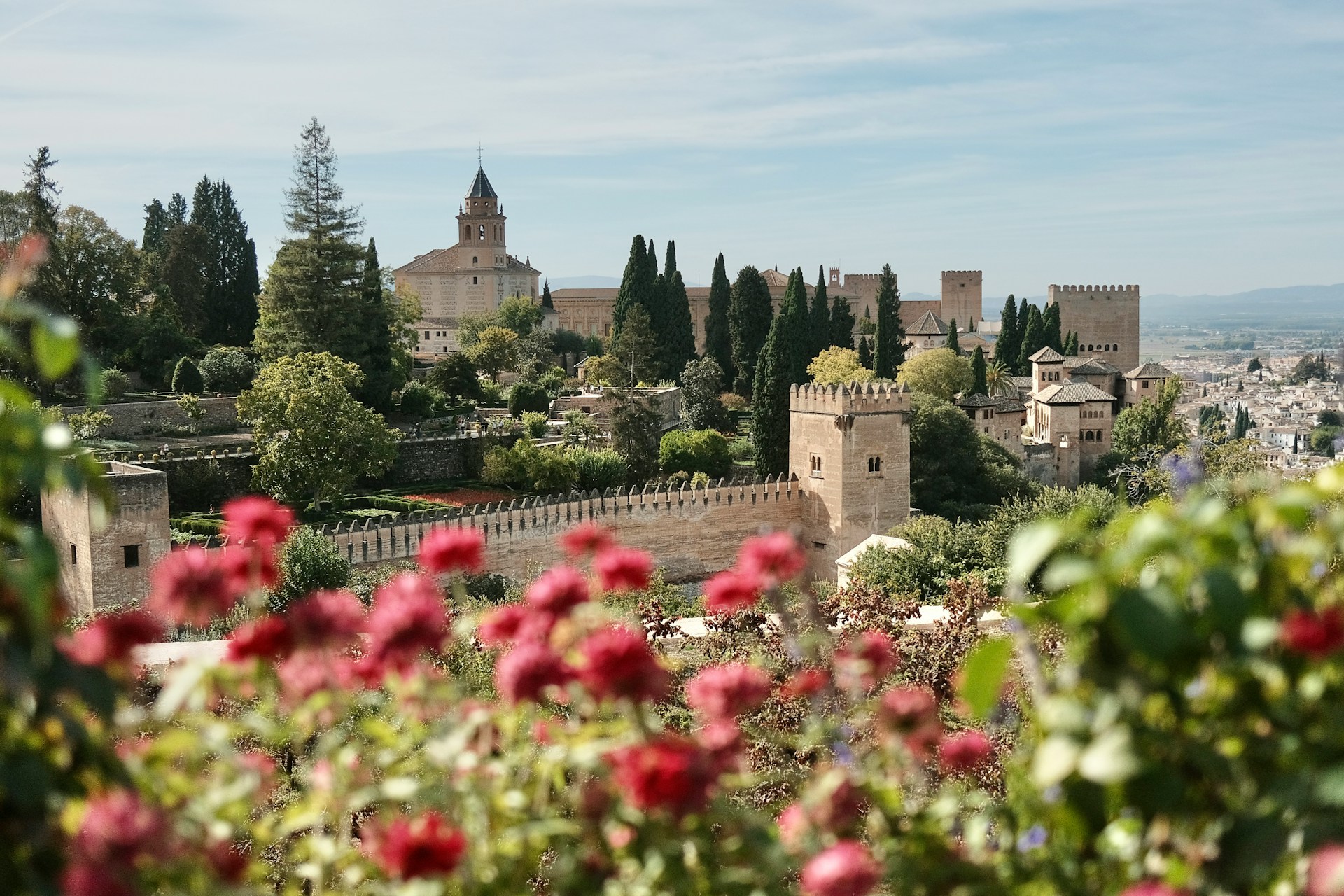
The Alhambra was one of those rare places where I'd seen so many photographs beforehand that I wondered whether the real thing could possibly live up to them. Somehow, it did.
What struck me most wasn't its size, but the detail. Inside the Nasrid Palaces, I found myself constantly stopping to look more closely at the geometric patterns, Arabic calligraphy, carved plasterwork, and tiles covering seemingly every surface.
The Court of the Lions was beautiful, but some of the smaller details were just as memorable.
I also loved the contrast of the Generalife gardens, where reflecting pools, fountains, hedges, and courtyards provided a much calmer setting after the intensity of the palaces.
Granada itself deserved just as much time.
I wandered through the steep, whitewashed streets of the Albaicín and made my way to the Mirador de San Nicolás, where the Alhambra sits across the valley with the Sierra Nevada rising behind it. It's a famous view for a reason.
Then there were the tapas. Granada still has a wonderful tradition of serving a complimentary tapa with a drink at many bars.
I loved ordering a glass of wine and seeing what appeared alongside it, which turned an evening of bar-hopping into dinner without much planning at all.
How Granada fits into your Spain itinerary
Granada fits naturally into an Andalusia itinerary with Seville and Córdoba. I'd stay three nights so the Alhambra doesn't become your entire experience of the city.
Book your Alhambra ticket as soon as your travel dates are confirmed, particularly if you want to visit the Nasrid Palaces. Entry is timed and popular dates can sell out well ahead of your visit.
San Sebastián
(pronounced: san seh-bas-TYAHN)
San Sebastián at a glance
Basque Country, northern Spain
Pintxos, beaches, food, coastal scenery, and surfing
3 nights
Food lovers, beach lovers, couples, cultural travelers
Elegant, sociable, coastal, food-obsessed
May to June and September
San Sebastián may have an extraordinary collection of fine-dining restaurants, but some of my favorite food experiences here happened standing at crowded bar counters.
I loved the ritual of txikiteo in the Parte Vieja: moving from one pintxos bar to another, ordering a drink and one or two specialties, then continuing to the next.
Instead of sitting down for a long dinner, the entire old town became the restaurant. Bar Txepetxa was a great stop for its famous anchovy pintxos, while La Viña's creamy, deeply caramelized Basque cheesecake was absolutely worth saving room for.
I'd also try txakoli while you're here. This local Basque wine tasted crisp, very dry, and slightly fizzy to me, which worked particularly well alongside salty seafood pintxos.
What made San Sebastián even more appealing was everything surrounding the food.
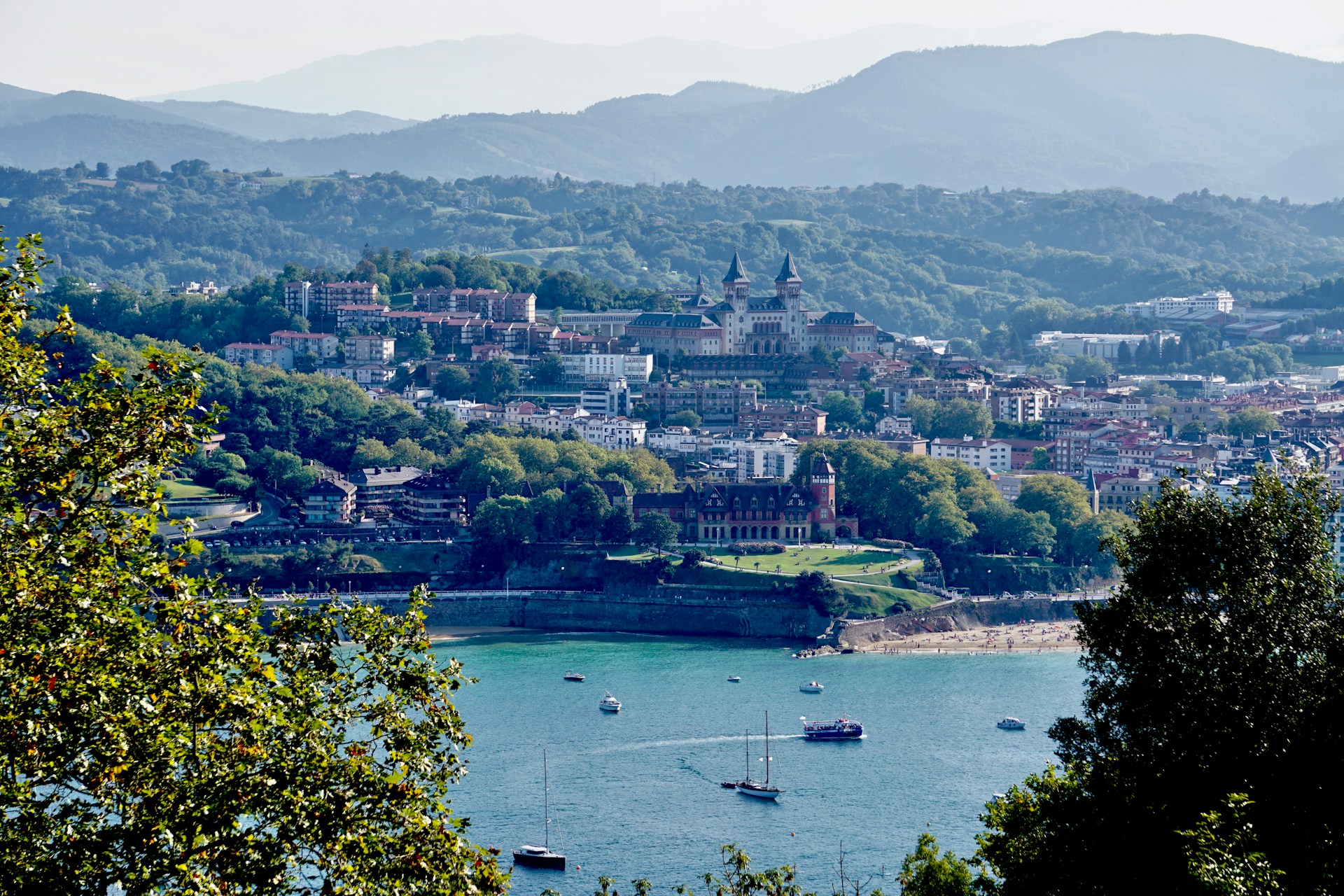
La Concha is one of the most beautiful urban beaches I've visited, with its sweeping bay framed by green hills. I also loved seeing the city from above, where the coastline's shape really became apparent.
Three nights gave me enough time to enjoy the beaches and old town without rushing the meals, which would almost defeat the purpose of coming here.
How San Sebastián fits into your Spain itinerary
San Sebastián is a fantastic anchor for northern Spain and pairs easily with Bilbao and the Basque coast. I'd also make time for a trip to nearby Getaria if you have an extra day.
Don't try to eat an entire meal at the first pintxos bar you find. Order one of the specialties each bar is known for, have a drink, and move on. The wandering is half the fun!
Spain is much larger and more varied than it first appears on a map, so I wouldn't try to squeeze every destination in this guide into one trip.
I found Spain much more enjoyable when I focused on one logical route and left enough time to actually experience each city rather than spending half the trip on trains.
Here are three ways I'd plan a first trip depending on how much time you have.
Spain itinerary: 7 days
For a one-week Spain itinerary, I'd keep things simple and focus on Madrid and Andalusia. This gives you three very different Spanish cities without losing too much time moving between them.
Route: Madrid → Seville → Granada
| Days 1-2 | Day 3 | Days 4 | Days 5 | Days 6-7 |
|---|---|---|---|---|---|
Destination | Madrid | Madrid to Seville | Seville | Seville to Granada | Granada |
Overnight | Madrid | Seville | Seville | Granada | Granada |
Why this route? Madrid gives you the museums, neighborhoods, and big-city energy, while Seville and Granada introduce you to Andalusia and its Moorish architecture, flamenco, tapas culture, and completely different atmosphere.
I'd save Barcelona for another trip rather than forcing four major cities into seven days.
Spain itinerary: 10 days
With 10 days in Spain, I'd add Barcelona and Tarragona before crossing the country to Madrid and continuing south into Andalusia.
Route: Barcelona → Tarragona → Madrid → Seville → Granada
| Days 1-3 | Day 4 | Days 5-6 | Days 7-8 | Days 9-10 |
|---|---|---|---|---|---|
Destination | Barcelona | Tarragona | Madrid | Seville | Granada |
Overnight | Barcelona | Tarragona | Madrid | Seville | Granada |
Why this route? This itinerary gives you a much broader introduction to Spain, from Gaudí and the Mediterranean in Catalonia to Madrid's art museums and the Islamic and Andalusian heritage of southern Spain.
Tarragona adds Roman history without requiring a major detour.
Spain itinerary: 14 days
If I had two weeks and wanted to see as much of Spain as realistically possible, I'd use the country's major cities as anchors and work my way through several completely different regions.
This is a busy itinerary, but the payoff is seeing just how dramatically Spain changes as you travel from the Mediterranean to Andalusia and then across the green north.
Route: Barcelona → Madrid → Toledo → Seville → Granada → San Sebastián → Asturias → Santiago de Compostela
Week 1 | Days 1-2 | Days 3-4 | Days 5 | Day 6-7 |
|---|---|---|---|---|
Destination | Barcelona | Madrid | Toledo | Seville |
Overnight | Barcelona | Madrid | Toledo | Seville |
Week 2 | Days 8-9 | Days 10 | Days 11-12 | Day 13-14 |
|---|---|---|---|---|
Destination | Granada | San Sebastián | Asturias | Santiago de Compostela |
Overnight | Granada | San Sebastián | Asturias | Santiago de Compostela |
Why this route? This itinerary gives you the broadest possible taste of Spain, combining Barcelona and Madrid with Andalusia before heading north for the Basque Country, Asturias, and Galicia.
It's fast-paced, but you'll experience an incredible range of architecture, food, landscapes, and regional cultures in two weeks.
Why Spain deserves a trip beyond Barcelona and Madrid
Barcelona and Madrid absolutely deserve their popularity, but some of my favorite experiences in Spain happened well beyond its two biggest cities.
I loved how dramatically the country changed as I traveled through it, from the Moorish palaces and tapas culture of Andalusia to the pintxos bars of San Sebastián, the green mountains of Asturias, and the pilgrimage history of Santiago de Compostela.
Spain's regional differences were a huge part of what made it so interesting to me. The food, architecture, landscapes, traditions, and even languages could change considerably from one part of the country to the next.
If you're planning a trip to Spain, I wouldn't stop after Barcelona and Madrid. Give yourself time to explore at least one other region, because that's where I really started to understand just how varied Spain is.
FAQs about traveling to Spain
The currency in Spain is the euro (€), and credit and debit cards are widely accepted in hotels, restaurants, shops, and major attractions.
Visa requirements depend on your nationality; many travelers can visit Spain and the wider Schengen Area visa-free for up to 90 days within a 180-day period, while others need a Schengen visa. The new ETIAS (European Travel Information and Authorisation System) is expected to begin soon.
Driving in Spain is generally straightforward thanks to its extensive road network, and traffic drives on the right-hand side of the road; travelers from some countries may also need an International Driving Permit.
Spain is generally a safe destination for travelers, although petty theft and pickpocketing are concerns in busy tourist areas, so keep a close eye on your belongings.
Spain uses European-style round-pin plugs, primarily Types C and F, with a 230V, 50Hz electricity supply, so travelers from countries with different sockets will need an adapter.
Spanish, or Castilian, is spoken throughout Spain, while Catalan/Valencian, Galician, and Basque are also official in their respective regions.
Ready to explore Spain? Optimise Travel is here to help
Spain is a huge and incredibly varied country, and deciding how to divide your time between its major cities, Mediterranean coastline, historic towns, mountains, and distinct regions can quickly become the hardest part of planning a trip.
At Optimise Travel, we create personalized travel itineraries based on your interests, travel style, and budget.
Whether you're dreaming of seeing Gaudí's Barcelona, exploring Madrid's world-class museums, discovering the Alhambra in Granada, eating your way through San Sebastián, hiking in Asturias, or experiencing the history and traditions of Santiago de Compostela, we'll help you build an itinerary that makes the most of your time.
If you'd like help planning your trip to Spain, click here to learn more about our concierge travel services.