

Portugal is compact enough that it is very easy to over-plan.
Lisbon, Porto, Coimbra, the Algarve, Sintra, Évora and the Douro Valley can all look close enough on a map to belong in the same week. My experience of travelling there has made me less interested in trying.
The Portugal I remember most clearly came from having time inside places rather than adding more of them: taking small detours through Lisbon, exploring Sintra beyond a single palace, stopping repeatedly for views in Porto and watching the Douro unfold around the river.
That is what shaped this seven-day route around two bases: Lisbon and Porto, with Sintra and the Douro Valley extending each city in a completely different direction.
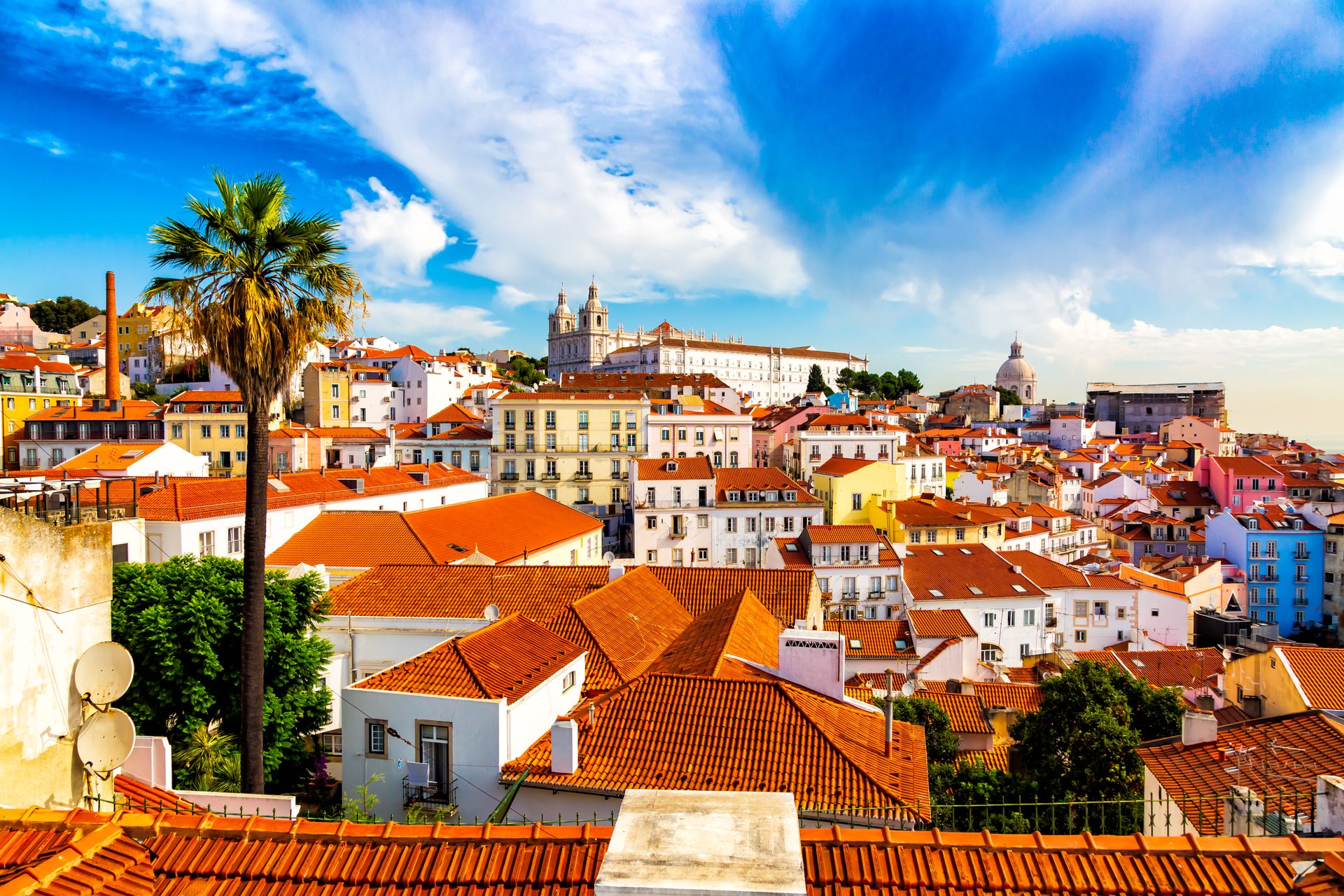
Rooftops and historic architecture in Lisbon's scenic Alfama district
My 7-day Portugal itinerary at a glance
Overview
Day | Route | Overnight |
|---|---|---|
1 | Lisbon | Lisbon |
2 | Lisbon | Lisbon |
3 | Sintra | Lisbon |
4 | Lisbon → Porto | Porto |
5 | Porto | Porto |
6 | Douro Valley | Porto |
7 | Porto | Departure |
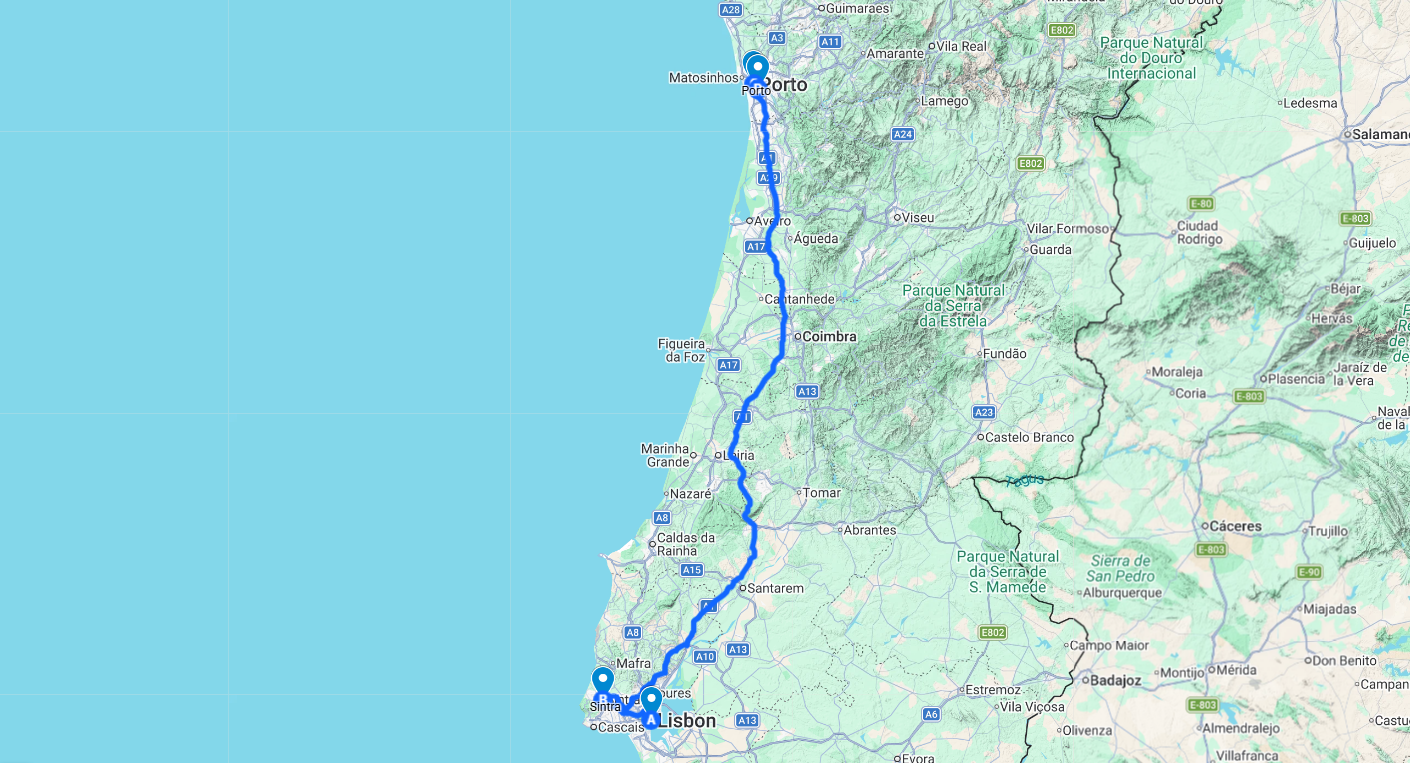
7-day Portugal itinerary route
One of the things I like about this route is how little transport interferes with the week.
Lisbon and Porto are connected easily by train, while Sintra sits close enough to Lisbon and the Douro Valley close enough to Porto that neither requires another hotel move.
I never felt that a rental car added much to the core journey. In Lisbon and Porto, walking and public transport suited the way I experienced the cities far better.
Days 1–2: Lisbon
Lisbon is a city where my plans have often become less important once I started walking.
The hills, tiled façades, narrow streets and sudden views across the rooftops give different neighbourhoods very distinct personalities.
What I remember most is not moving efficiently between attractions. It is turning a corner looking for a church or café and unexpectedly finding another view over the city.
Two days gave those small detours room to become part of the experience.
Day 1: Alfama, Baixa and Lisbon's viewpoints
Baixa, Praça do Comércio, Rossio and Alfama sit close enough together that the historic centre unfolded naturally for me on foot.
Alfama was where that became most obvious.
Its narrow streets, stairways and tiled buildings made following a rigid route feel almost beside the point. Getting slightly distracted was often the interesting part.
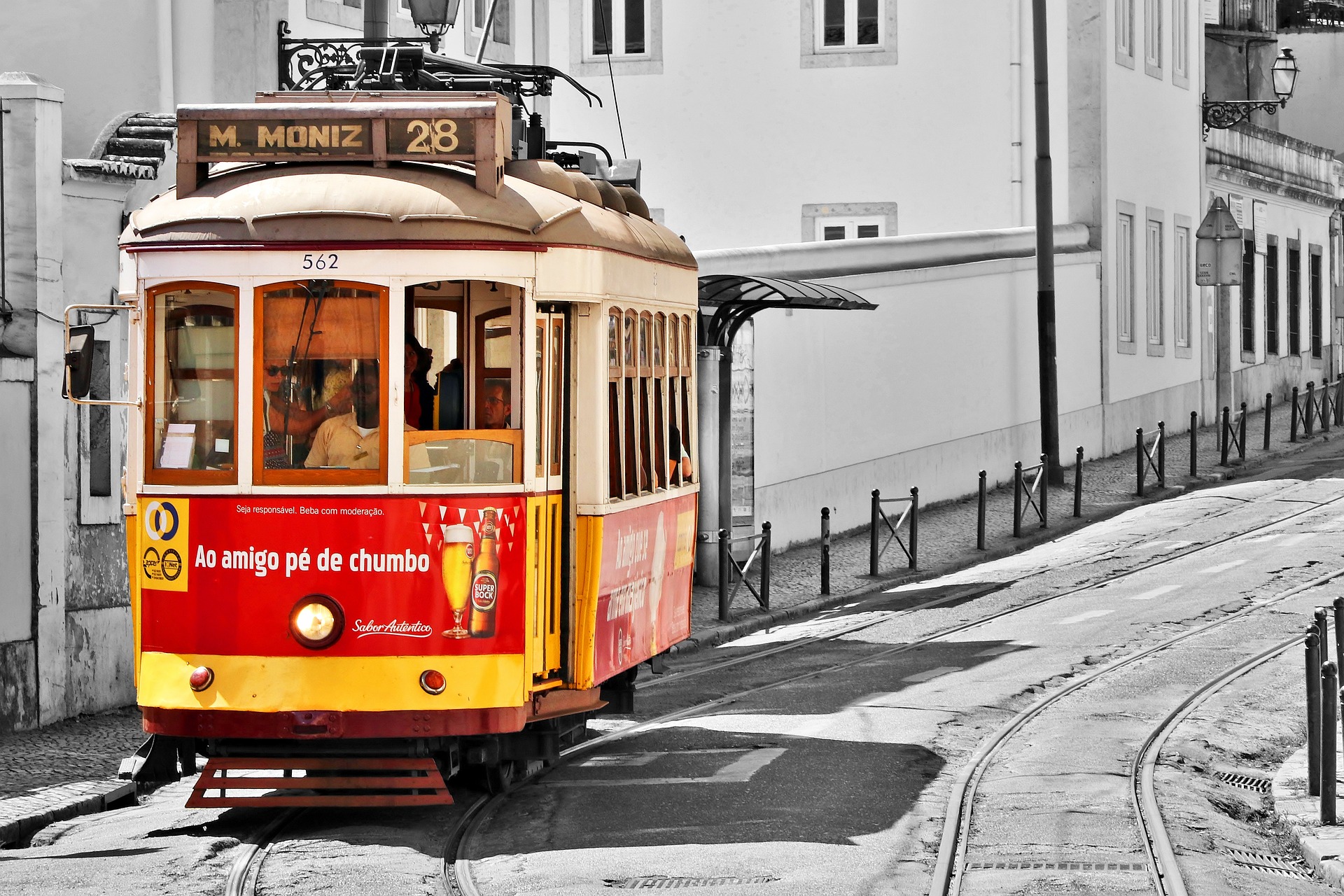
Historic Lisbon tram travels through a monochrome street
The hills are real, and I definitely felt them. But they are also part of what gives Lisbon its character.
Climbing through the neighbourhood and then suddenly reaching a miradouro made the views feel connected to the city rather than simply being scenic stops.
That is one of the reasons Lisbon stayed in my memory as a place to wander rather than a list of monuments.
Stay: Lisbon.
Day 2: Belém and another side of Lisbon
Belém changes the scale again.
Jerónimos Monastery and the riverfront bring Portugal's maritime history much more visibly into the city, while Belém Tower sits farther along the Tagus.
But one of my simpler memories from this part of Lisbon is food.
Trying a pastel de nata while it was still warm in Belém was one of those very touristy experiences that I still found completely worthwhile.

Jerónimos Monastery's gothic architecture in Lisbon, Portugal
That small experience also reflects something I enjoy about Lisbon generally. Food, cafés and time spent outside the formal attractions never felt secondary to the sightseeing.
Returning toward central Lisbon afterwards leaves the city open again: Chiado, Bairro Alto, another viewpoint or simply more time in streets that were passed through too quickly on the first day.
Having Sintra on the following day meant I never felt much need to attach another excursion to Lisbon itself.
Stay: Lisbon.
Day 3: Sintra beyond Pena Palace
Sintra felt completely different from Lisbon almost as soon as I reached its forested hills.
Pena Palace is the obvious image of the town, and it was the first thing that caught my attention when I visited.
The yellow and red towers look almost unreal against the greenery. I had seen the photographs many times beforehand and still found the palace more impressive in person.
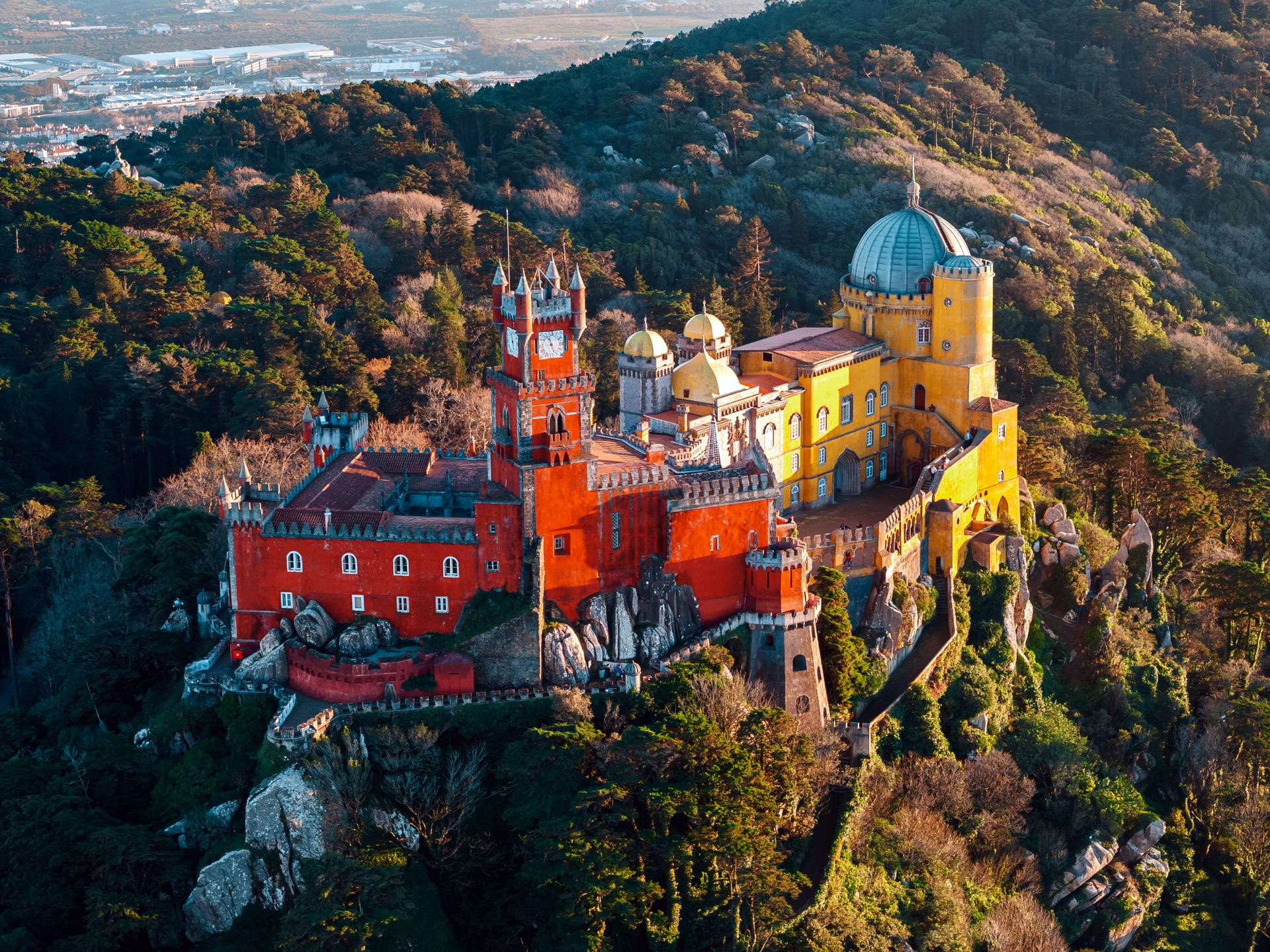
Aerial shot of the colorful Pena Palace nestled in the lush hills of Sintra, Portugal
But Pena Palace is not my strongest memory of Sintra.
Quinta da Regaleira was one of the most memorable places I explored in Portugal.
The tunnels, grottoes and Initiation Well made it feel less like a conventional palace visit and more like somewhere I was discovering piece by piece.
That contrast is what made Sintra work so well for me. It was not simply another historic building outside Lisbon.
The practical side does need some structure. Entry to the interior of Pena Palace requires a booked date and time, and the official operator warns that the walk from the park entrance to the palace itself can take around 30 minutes. Late arrivals can lose their slot.
Private cars also cannot access Pena from Sintra's historic centre, which is one reason the train from Lisbon combined naturally with local transport and walking.
There are enough palaces and historic sites around Sintra to fill far more than a day. My own memories are stronger because Pena and Regaleira had time to feel distinct rather than becoming two entries in a long list.
Stay: Lisbon.
Day 4: Lisbon to Porto
Fast rail services between Lisbon and Porto typically take around three hours, depending on the departure.
That straightforward city-centre connection helped the week feel like two substantial stays rather than a chain of short stops.
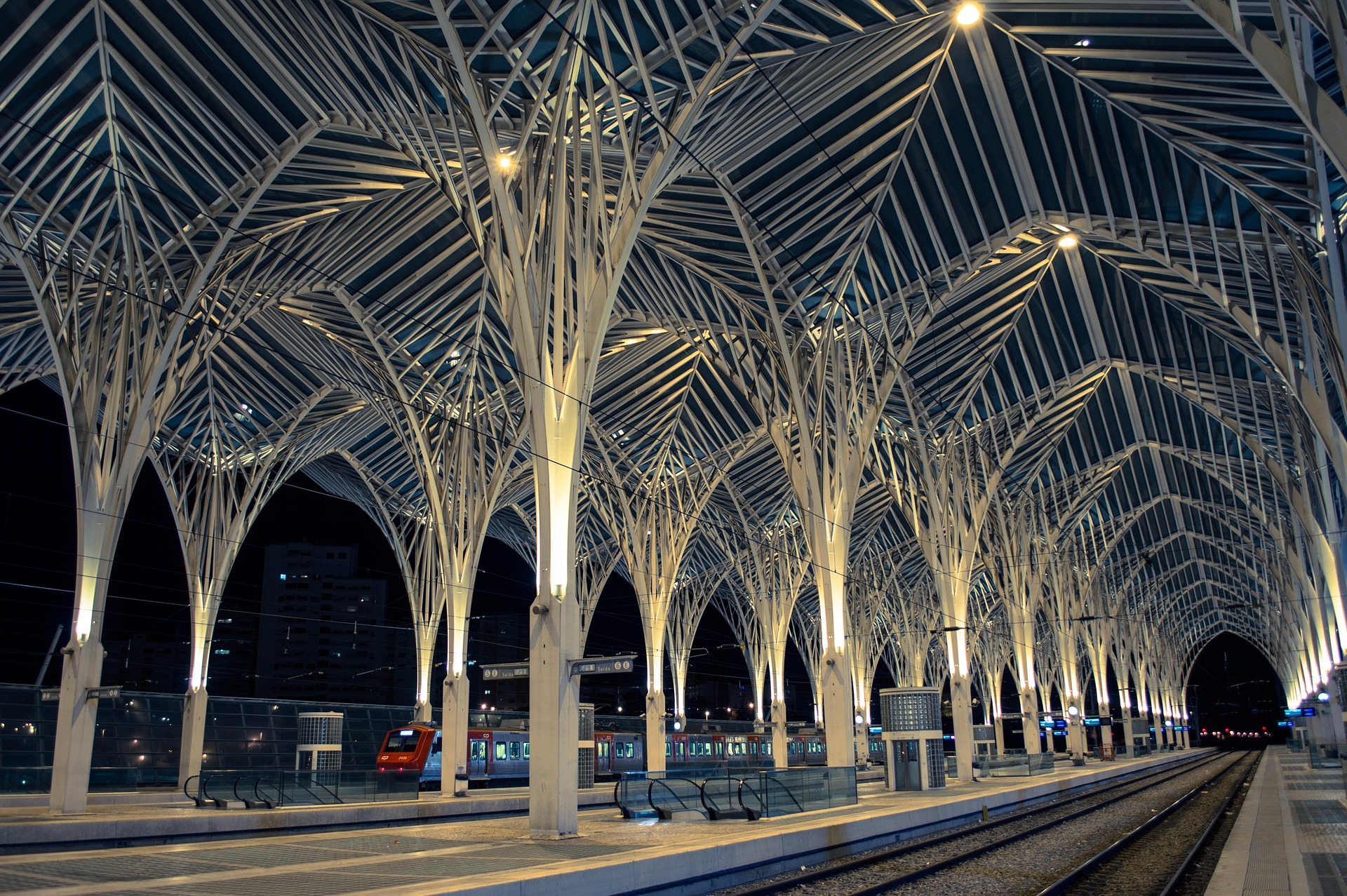
Modern Gare do Oriente station in Lisbon at night
Porto felt different from Lisbon almost immediately.
It is smaller, more intimate and a little rougher around the edges in a way I really like.
Reaching Ribeira and the Douro was when that difference became clearest.
I remember constantly stopping because almost every change in elevation produced another view I wanted to look at for longer.
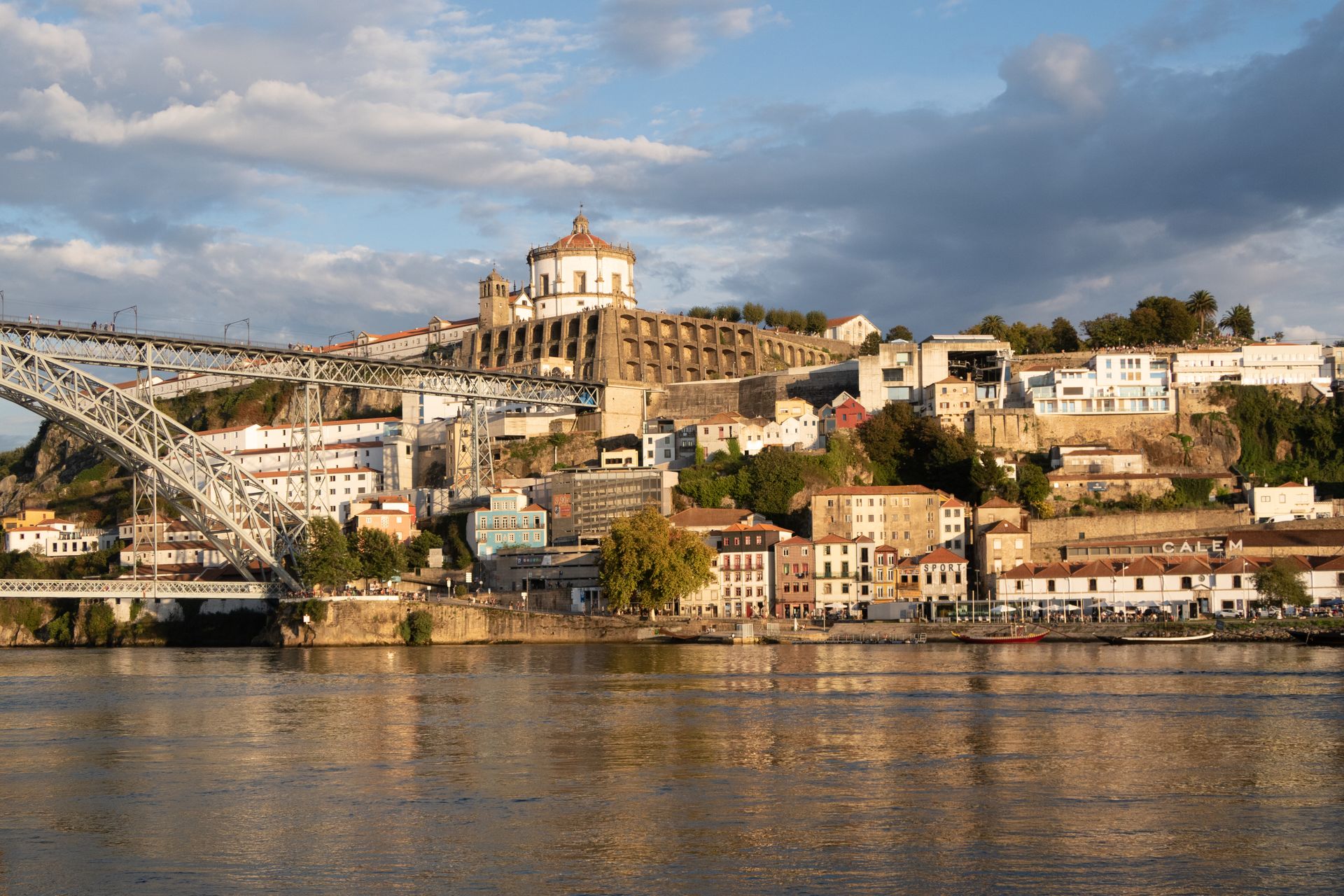
Porto with Dom Luís I Bridge at sunset
The Dom Luís I Bridge also makes the relationship between Porto and Vila Nova de Gaia immediately obvious, with the two sides rising steeply from the river.
That geography became a major part of how I experienced the city.
Stay: Porto.
Day 5: Porto and the Douro riverfront
Porto deserved a full day for me rather than functioning only as the gateway to the Douro Valley.
São Bento Station, the historic centre, Ribeira and the river all sit within a city compact enough to explore largely on foot, although the hills make the distances feel more substantial than they look.
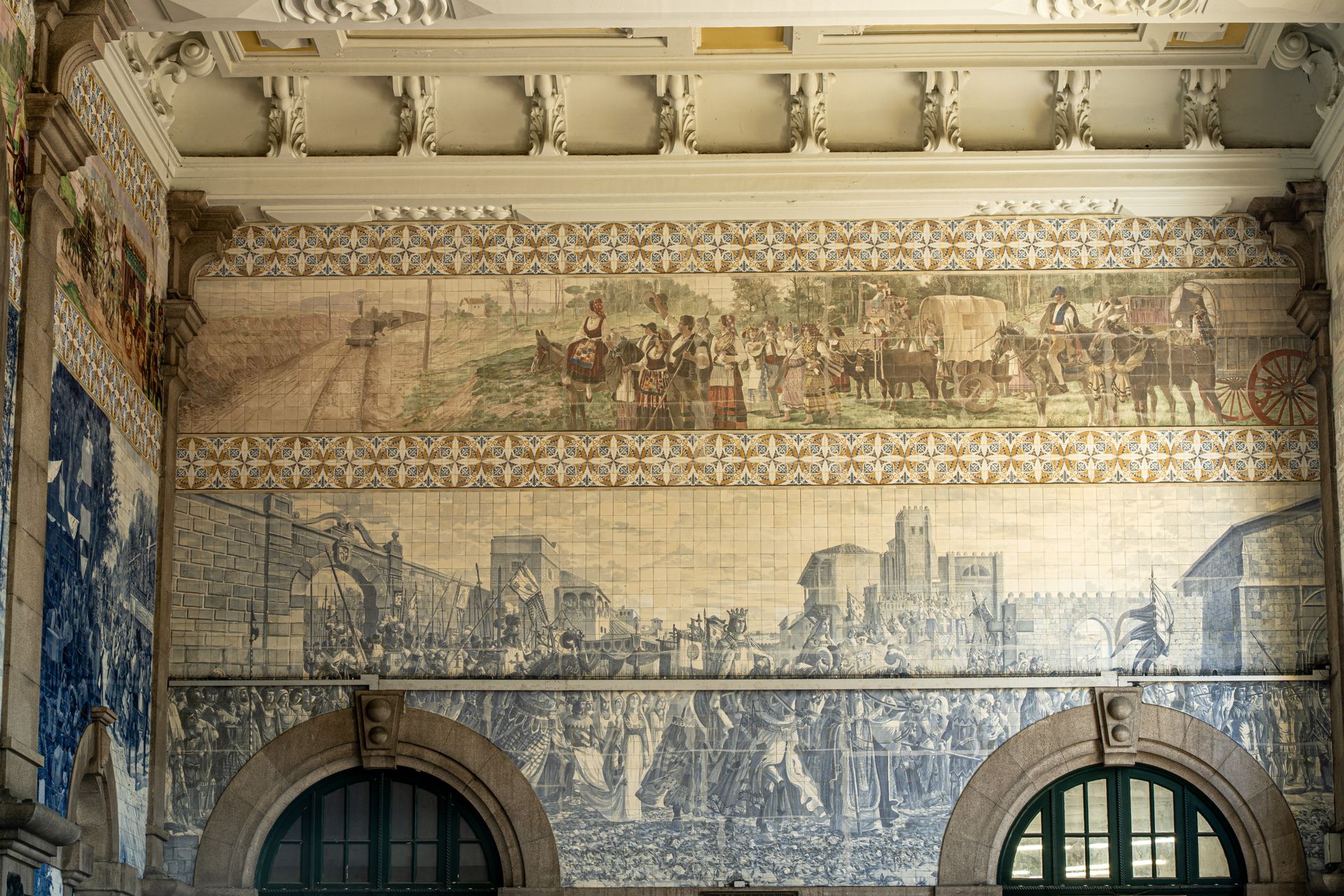
Tile murals depicting historical scenes at São Bento Railway Station
Crossing into Vila Nova de Gaia changed the perspective again.
Port wine cellars line this side of the river, but even without a tasting, looking back toward Porto from Gaia was one of the experiences I enjoyed most.
I have always liked the Douro most around the end of the day.
As the light changed, the bridges, steep riverbanks and buildings above Ribeira began to feel more dramatic. It was one of those places where leaving part of the evening unstructured paid off.
The city gave me enough reasons to linger that I never felt a need to fill the day with several separate excursions.
Stay: Porto.
Day 6: What the Douro Valley added
The Douro Valley completely exceeded my expectations.
I knew about the wine before going. I was less prepared for how dramatic the landscape would be.
Terraced vineyards climb steep hillsides above the river, and the scenery seemed to change at almost every bend.
Even without any interest in wine, I would have remembered the valley for that landscape alone.
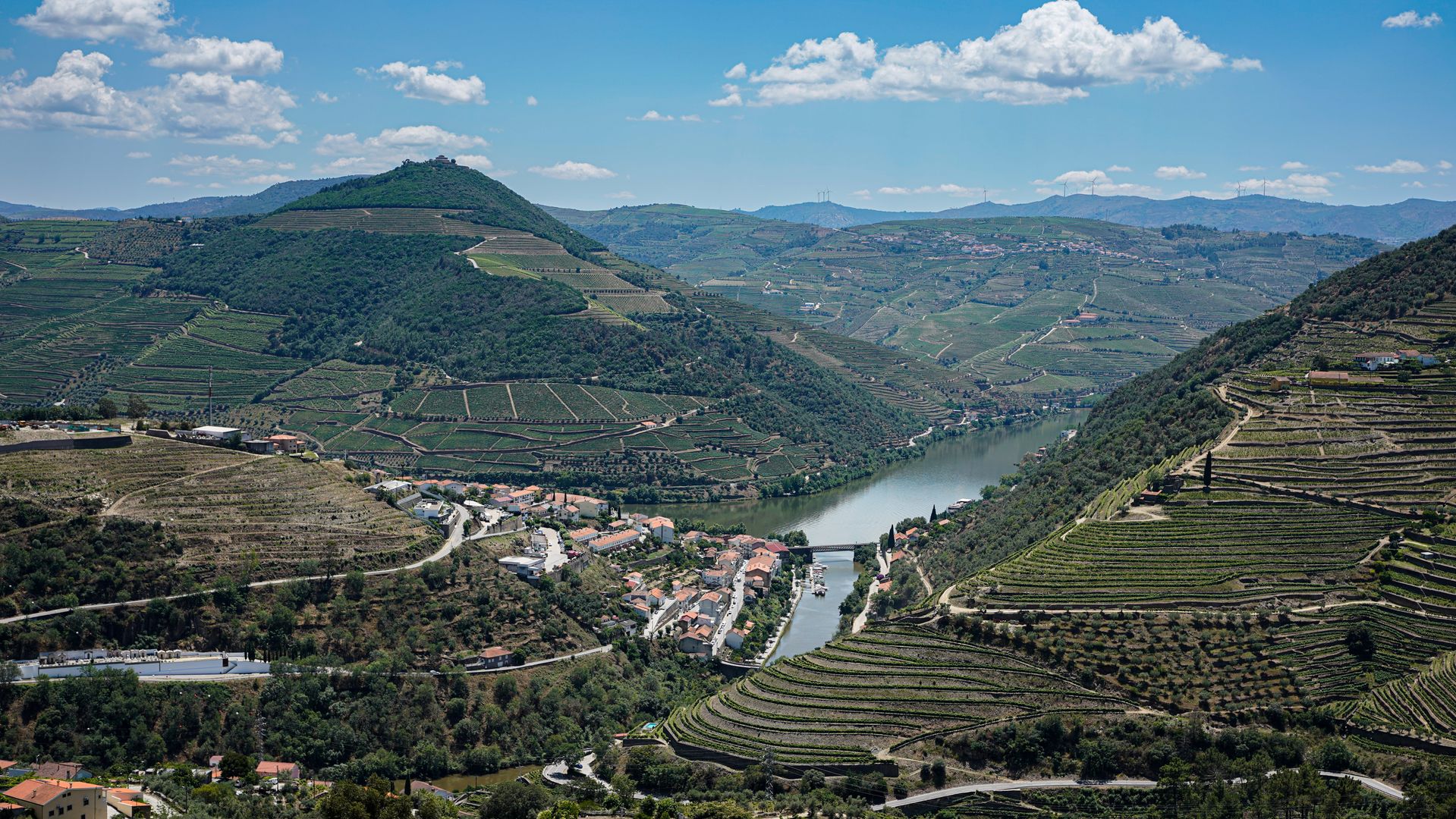
Aerial view of Douro Valley vineyards and river in Portugal's wine region
The railway became part of the experience rather than simply a way of reaching it.
The line follows the Douro through the valley toward places such as Régua and Pinhão, keeping the river and terraces visible for much of the journey.
Pinhão works particularly well as a focus for a day from Porto because it creates enough distance to feel immersed in the valley without pretending to cover the whole region.

Small Douro Valley map for Portugal itinerary
A winery, lunch or short river cruise can all become part of the day, but what stayed with me most was simply the scenery.
I actually prefer the idea of experiencing the Douro more slowly and spending a night at a quinta when time allows.
In a seven-day trip, though, returning to Porto preserved the simple two-base structure. That felt like a worthwhile compromise rather than a sacrifice.
Stay: Porto.
Day 7: Another side of Porto
By the final day, I liked having Porto still available rather than automatically turning it into another day trip.
There is plenty that can remain: another market, the cathedral, a port cellar, quieter residential streets or simply more time around the river.
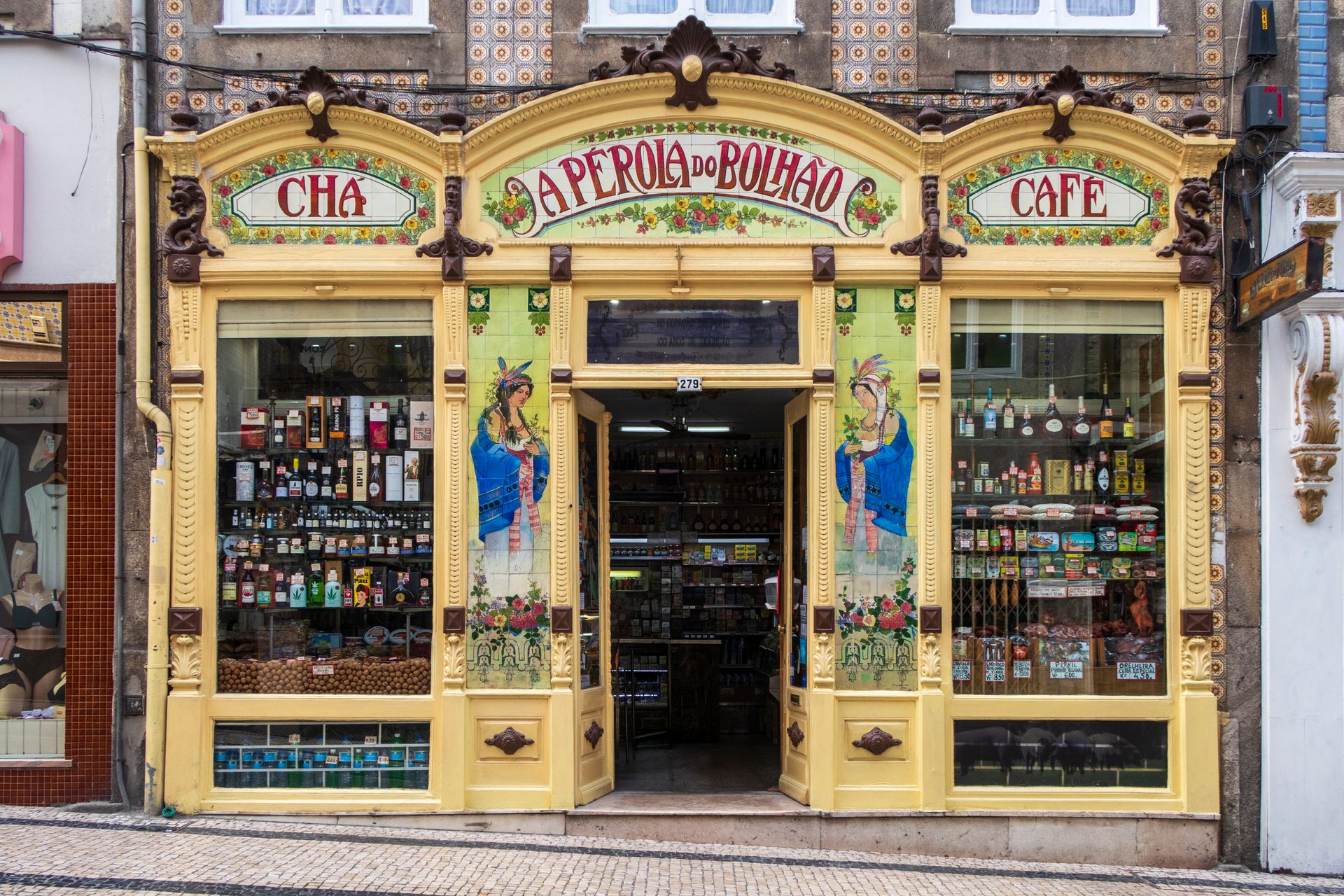
A Pérola do Bolhão featuring tea and coffee displays in Porto, Portugal
Braga, Guimarães and Aveiro are all accessible from Porto, which makes them tempting additions.
But travelling through Portugal has made me increasingly aware that accessibility and necessity are not the same thing.
An extra day in Porto gave the city more depth and avoided ending the week with another return journey fitted around a departure.
Why the two-base route worked for me
The biggest strength was its simplicity.
Lisbon and Porto were the only hotel bases.
Sintra extended Lisbon into forested hills, palaces and gardens. The Douro Valley extended Porto into vineyards and rural landscapes.
That produced four genuinely different experiences without four sets of arrivals, check-ins and departures.
More importantly, it gave me time for the moments I actually remember: unexpected Lisbon viewpoints, exploring Regaleira's tunnels, stopping repeatedly above Porto's riverfront and watching the Douro landscape unfold.
Those memories are the reason I prefer this structure to a more comprehensive-looking route through Portugal.
Where Coimbra fits
I like Coimbra a lot.
Its hilltop university, student atmosphere and historic centre give it a completely different character from Lisbon and Porto.
Its position between the two also makes it look almost impossible to leave out.
That is exactly why it illustrates the problem with planning Portugal by map alone.
A meaningful stop still takes time, even when the train passes nearby.
For me, Coimbra fits more naturally once the trip becomes long enough for an overnight stay. In a seven-day version, keeping that time in Lisbon and Porto preserved the pace I enjoyed more.
What transport felt like on this route
Portugal's rail network made the main itinerary unusually straightforward.
Lisbon and Porto were easier for me without a car. Sintra worked naturally by train and local transport, while the Lisbon–Porto journey connected the two city centres without an airport.
The Douro Valley is where the transport question becomes more interesting.
A car gives more freedom around rural quintas, but wine tasting complicates driving. The train offers less flexibility but makes the journey along the river part of the experience.
For my own trip, that scenic rail journey suited the valley particularly well.
How much travel is involved?
The route is deliberately light on long transfers.
Current CP timetables are the right reference for exact travel dates because service patterns can change.
When this Portugal route felt most appealing
Spring and early autumn suit the combination particularly well.
Lisbon and Porto involve a lot of walking, and milder temperatures make their hills easier to enjoy. Sintra is also more comfortable away from the strongest summer heat.
The Douro takes on another dimension around the harvest period in September and October.
Summer still works, but Lisbon can become hotter, Sintra busier and popular attractions more pressured.
A beach-focused Portugal trip is a different proposition altogether. The Algarve can easily become the centre of a seven-day itinerary rather than an extra region attached to this one.
Have You Seen Our Travel Concierge Service?
Your trip, planned by local experts
We are not a travel agent - we design custom itineraries around your budget and style, without receiving commissions or booking fees.
Custom itinerary
Built around your dates, budget, and travel style.
Local expert knowledge
Recommendations from people on the ground, not review sites.
Travel smarter, spend less
We optimise for your budget to make your money go further.
What seven days in Portugal felt like
Seven days gave me a strong introduction to one version of Portugal.
It did not make the country feel complete.
Lisbon, Sintra, Porto and the Douro Valley gave the week city life, palaces, food, wine and countryside without making travel the dominant experience.
The compactness of Portugal makes adding more places unusually tempting.
My experience had the opposite effect. The more I enjoyed wandering Lisbon, exploring Sintra and lingering beside the Douro, the less interested I became in using every possible transport connection.
For me, the success of this route comes from having only two bases while still experiencing four places that feel genuinely different.