

Suriname felt unlike anywhere else I'd travelled in South America.
I found colourful Dutch colonial architecture, an extraordinary mix of cultures, enormous rivers, and rainforest stretching far beyond the places most visitors ever reach.
With so much of the country still covered in forest and relatively few international tourists, exploring it often felt like travelling somewhere genuinely off the beaten path.
What interested me most was how much variety I found in such a small country.
These are the five best places to visit in Suriname that I'd make room for on your trip.
Have You Seen Our Travel Concierge Service?
Your trip, planned by local experts
We are not a travel agent - we design custom itineraries around your budget and style, without receiving commissions or booking fees.
Custom itinerary
Built around your dates, budget, and travel style.
Local expert knowledge
Recommendations from people on the ground, not review sites.
Travel smarter, spend less
We optimise for your budget to make your money go further.
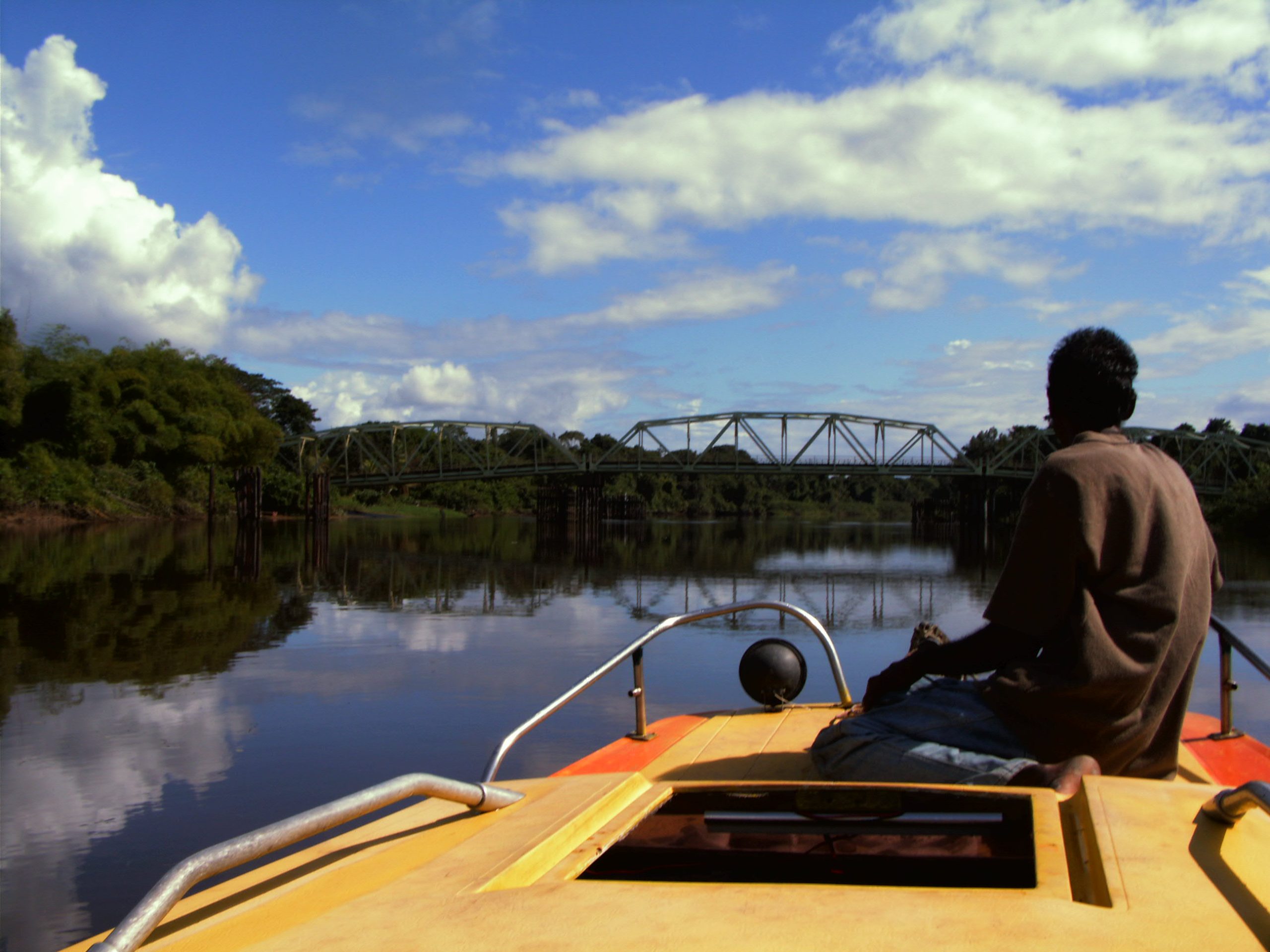
The Commewijne River
(pronounced: koh-meh-VINE-eh)
The Commewijne River at a glance
Commewijne District, east of Paramaribo
Plantation history, cycling, river trips, and wildlife
Full-day trip
History lovers, cyclists, nature lovers, and slow travellers
Peaceful, historic, rural, and atmospheric
February to April and August to November for drier conditions
The Commewijne River gave me a quieter look at Suriname after spending time in Paramaribo.
Just across the water from the capital, I found a landscape of old plantations, tropical vegetation and broad brown waterways that felt surprisingly rural considering how close I still was to the city.
I enjoyed exploring the area by both bike and boat. Cycling between former plantation estates let me see much more of the countryside at my own pace, passing wooden houses, canals and remnants of properties once used to produce coffee, cocoa and sugar.
The history here is complicated, though. These plantations were built on enslaved labour during the Dutch colonial period, and learning about that history gave the old estates much more meaning than simply admiring their architecture.
My favourite part came later in the day when I headed back onto the river. Being out on the water as the light softened was a wonderfully peaceful way to finish the trip, and the chance of spotting Guiana dolphins gave me another reason to keep watching the water.
I'd allow a full day for Commewijne rather than trying to squeeze it into a few hours.
How the Commewijne River fits into your Suriname itinerary
I'd visit Commewijne as a full-day trip from Paramaribo rather than changing accommodation. Its proximity to the capital makes it an easy addition before heading farther into Suriname's interior.
I'd choose a tour that properly explains the history of the plantations and the people who lived and worked there. It made the experience far more meaningful for me than simply visiting the estates themselves.
Galibi Nature Reserve
(pronounced: gah-lee-BEE)
Galibi Nature Reserve at a glance
Northeastern Suriname, near the mouth of the Marowijne River
Sea turtles, wildlife, boat journeys and remote beaches
2 nights
Wildlife lovers, photographers, and adventurous travellers
Remote, wild, peaceful, and culturally rich
February to August for turtle nesting (especially April to May)
Galibi gave me one of the wildlife experiences I was most excited about in Suriname. Reaching the reserve was part of the adventure, with the journey continuing by boat from Albina through the waterways near the mouth of the Marowijne River.
The real reason I wanted to come here, though, was the turtles.
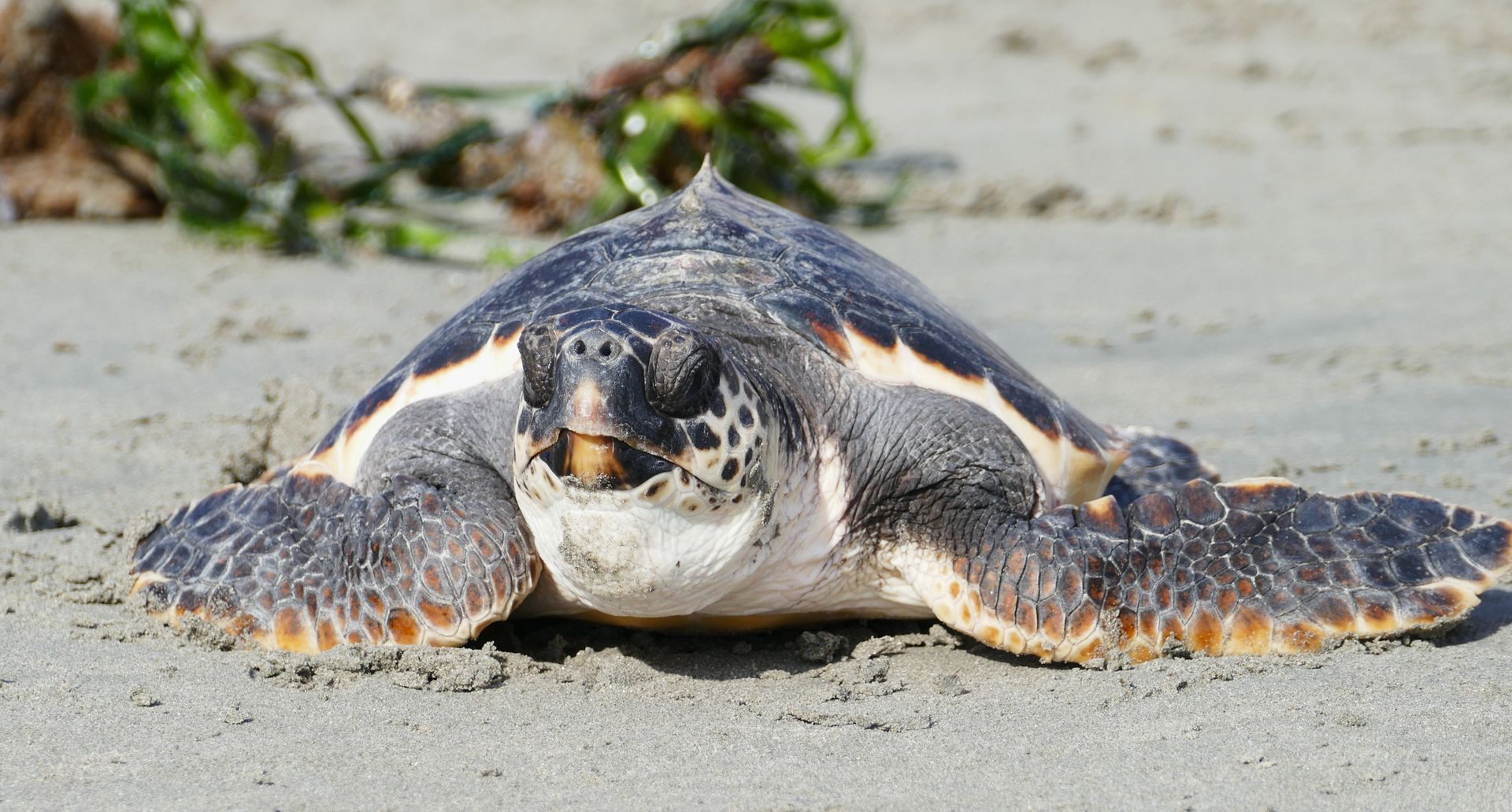
Galibi's beaches are an important nesting area for several species of sea turtle, including enormous leatherbacks, and during nesting season you can head out after dark with a guide to look for females coming ashore, which was definitely a bucket-list experience for me.
Seeing a leatherback on the beach was extraordinary. These turtles can grow to an incredible size, but what stayed with me was watching the slow process of nesting and then seeing one disappear back towards the Atlantic.
It was one of those experiences where I was very aware that I was simply a visitor in their environment.
There was more to Galibi than wildlife, too. The area is home to Indigenous Kaliña communities, which gave my visit a cultural dimension I hadn't experienced elsewhere in Suriname.
I'd spend two nights here, particularly if seeing the turtles is a priority.
How Galibi Nature Reserve fits into your Suriname itinerary
I'd travel from Paramaribo to Albina and continue to Galibi by boat, staying two nights before returning west. It works particularly well as a coastal wildlife experience before heading into Suriname's rainforest interior.
Turtle sightings are never guaranteed, so I'd avoid building the trip around the expectation of seeing one particular species.
Brownsberg Nature Park
(pronounced: BROWNS-berg)
Brownsberg Nature Park at a glance
Brokopondo District, around 2–3 hours south of Paramaribo
Rainforest hiking, waterfalls, wildlife, and nature
2 nights
Hikers, wildlife lovers, photographers, and adventurous travellers
Wild, lush, adventurous, and peaceful
February to April and August to November for slightly drier trails
Getting to Brownsberg Nature Park turned out to be part of the adventure. After travelling south from Paramaribo, I climbed into a van for the final journey up to the top of the forested plateau.
I'm very glad I wasn't driving. It had recently rained, so the steep track was slick with mud, and the van bumped and slid its way upwards through the forest.
Our driver clearly knew exactly what he was doing, and we reached the top without any problems, but by then my heart felt like I'd just run a 10K.
Once I was safely out of the van, Brownsberg showed me a completely different side of Suriname.
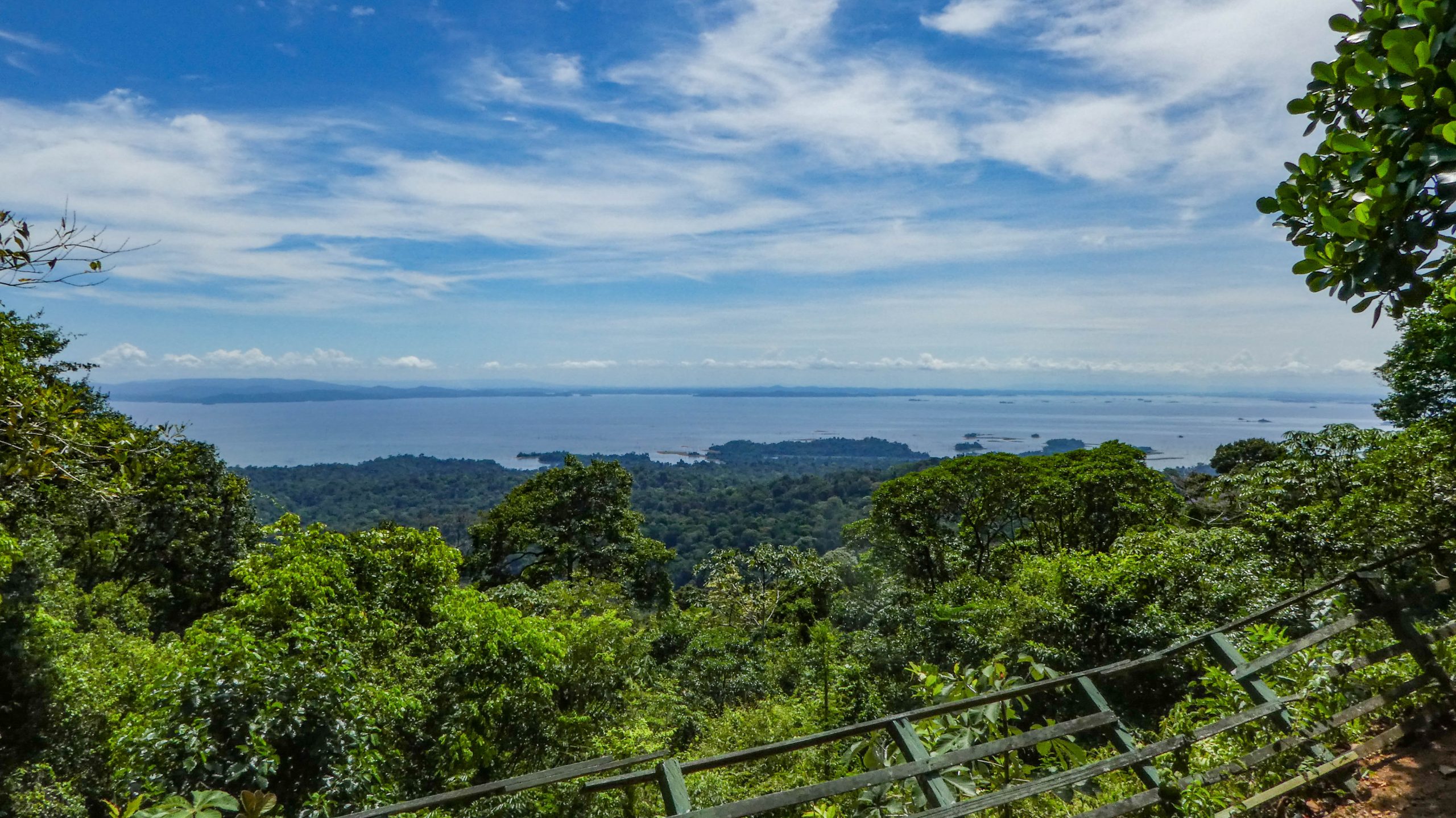
Walking trails disappeared beneath the rainforest canopy, leading towards waterfalls and viewpoints overlooking the enormous Brokopondo Reservoir and its scattered islands.
I loved how alive the forest felt, particularly early in the morning when birds and howler monkeys provided the soundtrack. Staying overnight also meant I could experience Brownsberg after the day visitors had left.
I'd spend two nights here. That gave me enough time to hike, enjoy the waterfalls, and actually slow down rather than treating the rainforest as another attraction to tick off.
How Brownsberg Nature Park fits into your Suriname itinerary
Brownsberg was my natural first step into Suriname's interior after exploring Paramaribo and the coast. It's close enough to the capital to reach without a major expedition while still giving you a genuine taste of the country's rainforest.
Bring shoes with plenty of grip. Even outside the wettest periods, rainforest trails can be muddy and slippery, particularly after recent rain.
Paramaribo
(pronounced: pa-ra-MA-ree-boh)
Paramaribo at a glance
Northern Suriname, on the Suriname River
Colonial architecture, history, markets, and day trips
3 nights
Foodies, history buffs, culture seekers, and first-time visitors
Multicultural, laid-back, and colourful
February to April and August to November
Paramaribo was unlike any other South American capital I'd visited. It felt relaxed and surprisingly intimate, and I loved simply walking around the historic centre rather than rushing between a long list of attractions.
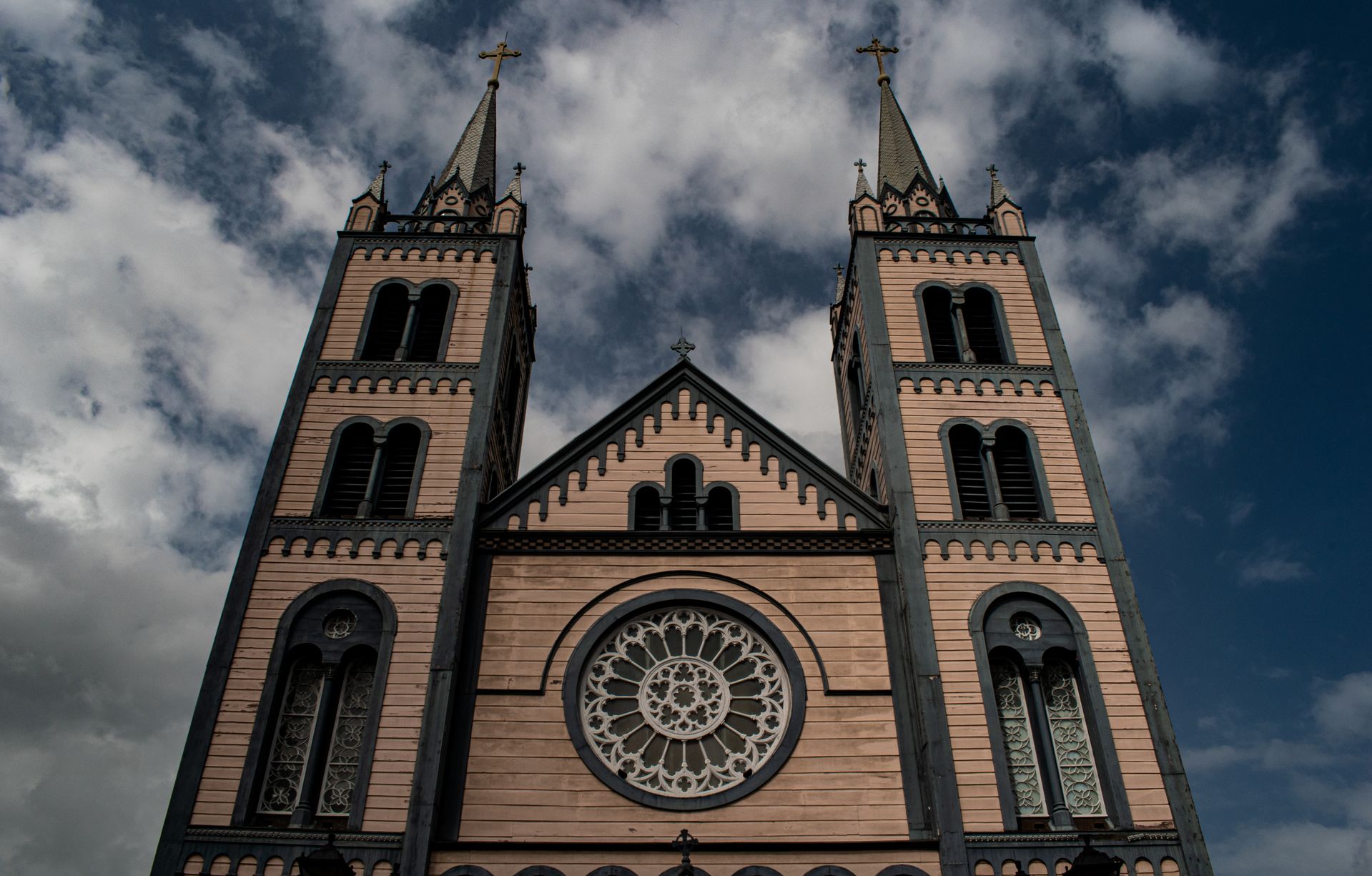
The architecture immediately stood out. Elegant white timber buildings gave parts of the city an almost European appearance, while the enormous wooden Cathedral of Saints Peter and Paul was one of the landmarks I particularly wanted to see.
But it was Paramaribo's cultural mix that fascinated me most. Seeing a mosque and synagogue standing beside each other was a memorable sight, and Hindu temples and Christian churches added to the diversity I noticed throughout the city.
I tasted that mix as much as I saw it. Suriname's combination of Javanese, Hindustani, Creole, Chinese and other influences made eating here one of the highlights of my stay. I could go from roti to Javanese dishes without travelling far at all.
My favourite dish was pom, a rich baked casserole made with chicken and pomtajer that I found incredibly comforting and flavourful.
In the evening, I enjoyed heading towards the waterfront, grabbing a cold drink and watching life unfold beside the Suriname River. Three nights gave me time to explore without rushing and still use the city as my base for trips farther afield.
How Paramaribo fits into your Suriname itinerary
I'd make Paramaribo the beginning and end of the trip. It's the country's main transport hub and the easiest base for a Commewijne River day trip before continuing towards places such as Galibi and Brownsberg.
Don't arrive with a rigid restaurant list. I found Paramaribo much more fun when I tried food from several of its different culinary traditions rather than sticking to one style of Surinamese cooking.
Central Suriname Nature Reserve
Central Suriname Nature Reserve at a glance
Central Suriname, deep in the country's rainforest interior
Remote rainforest, wildlife, hiking, and river journeys
3-4 nights
Adventurous travellers, hikers, and wildlife lovers
Remote, pristine, and immense
February to April and August to November
Central Suriname Nature Reserve was where I really understood just how wild this country still is. Covering around 1.6 million hectares, the reserve protects an enormous expanse of rainforest with virtually no roads, towns or other signs of modern development.
Even getting there felt like an expedition. Travelling by small plane and then continuing deeper into the forest made me realise how far I was leaving everyday life behind. Rivers became the highways, and seemingly endless rainforest stretched beneath me.
One of the experiences I was most excited about was Raleighvallen and the Voltzberg, a huge granite dome rising above the canopy.
The hike through the humid forest was challenging, but reaching the exposed rock and looking across an almost uninterrupted horizon of green made the effort worthwhile.
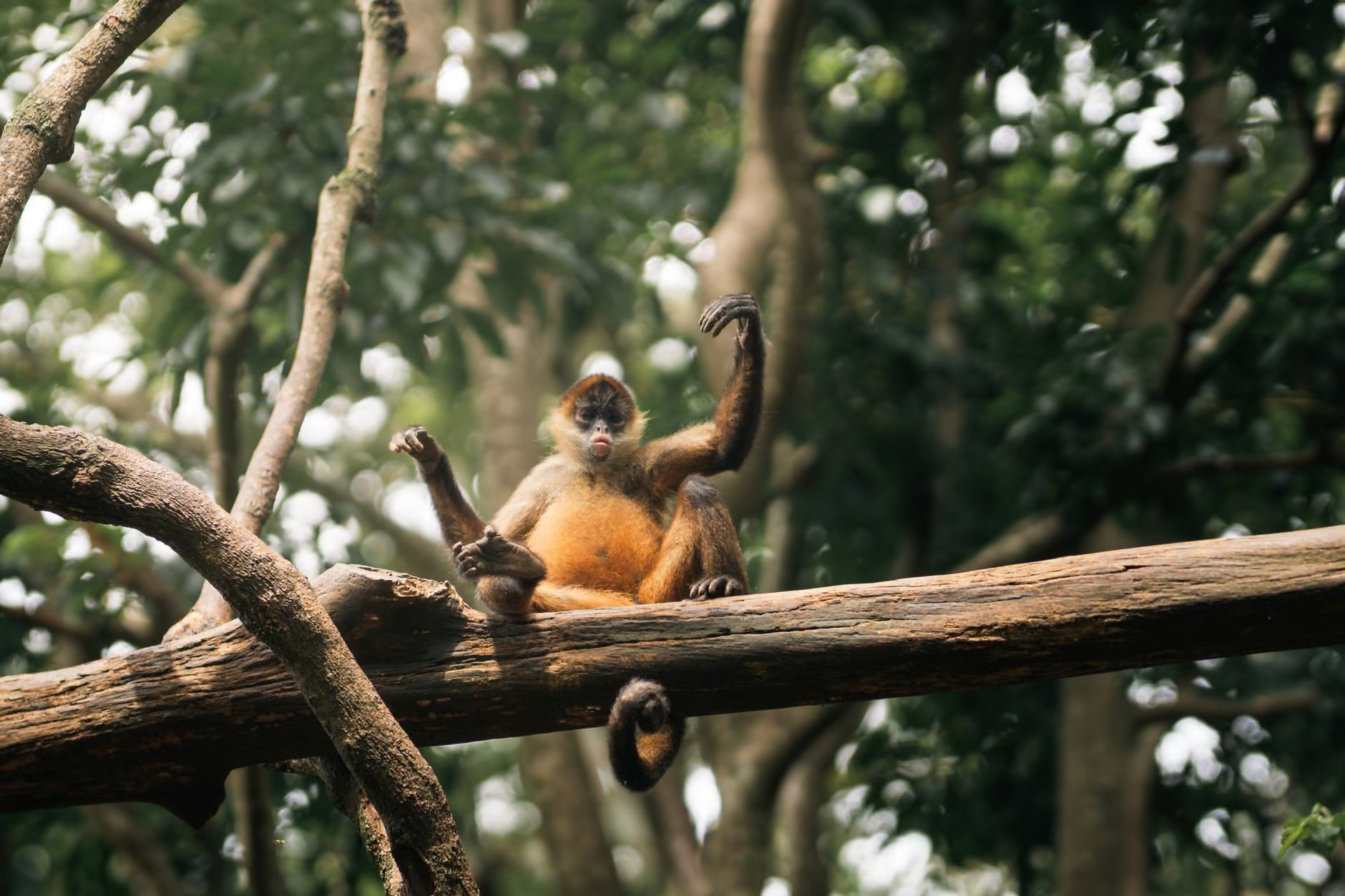
Wildlife was another reason I wanted to spend several days here. The reserve supports monkeys, tapirs, giant river otters, jaguars, and an extraordinary variety of birds, although in a rainforest this dense, sightings are never guaranteed.
What stayed with me most was the sheer remoteness. I'd allow at least three or four nights because Central Suriname isn't somewhere I'd travel all this way to rush.
How Central Suriname Nature Reserve fits into your Suriname itinerary
I'd save this for the final major adventure of the trip, after Paramaribo, the coast and Brownsberg. Brownsberg gave me an accessible introduction to the rainforest, while Central Suriname felt like taking that experience several levels deeper.
Pack lighter than you normally would. Reaching remote rainforest lodges can involve small aircraft and boats with stricter luggage limits, so I'd confirm the allowance with your operator before leaving Paramaribo.
Suriname itinerary ideas
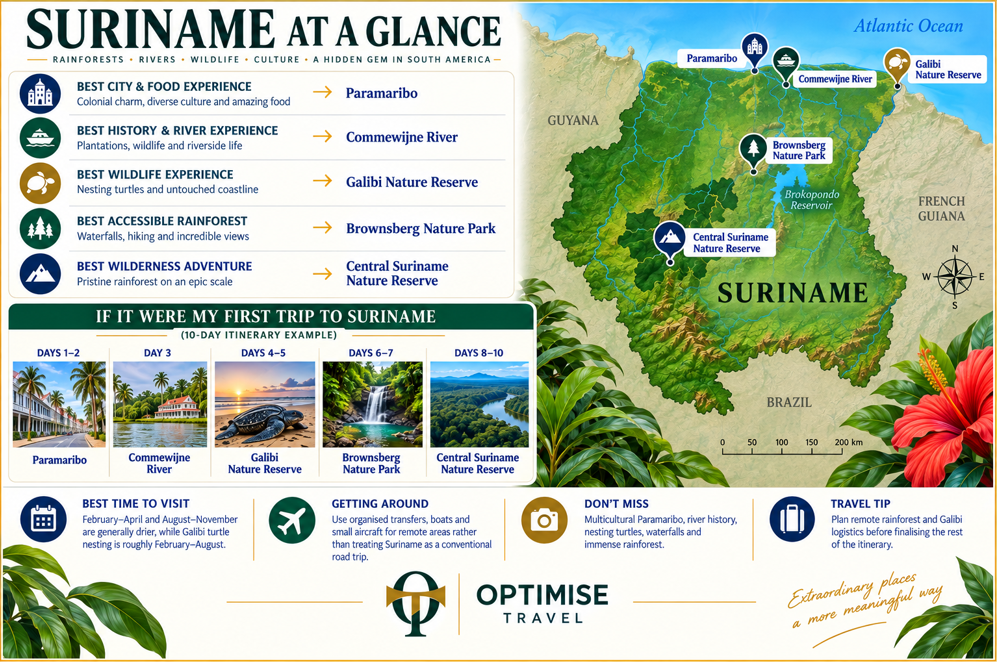
Suriname is compact on the map, but travelling between its coast and rainforest interior can take considerably longer than the distances suggest. For my first Suriname itinerary, I'd allow around 10 days.
That gives you enough time to experience Paramaribo, the country's colonial and cultural history, its coastal wildlife and, most importantly, some of the extraordinary rainforest that covers much of Suriname.
Suriname itinerary: 10 days
Route: Paramaribo → Commewijne River → Galibi → Brownsberg → Central Suriname Nature Reserve
| Days 1-2 | Day 3 | Days 4-5 | Days 6-7 | Days 8-10 |
|---|---|---|---|---|---|
Destination | Paramaribo | Commewijne River | Galibi Nature Reserve | Brownsberg Nature Park | Central Suriname Nature Reserve |
Overnight | Paramaribo | Paramaribo | Galibi | Brownsberg | Rainforest Lodge |
Why this route? I like this Suriname itinerary because it gradually moves from the country's most accessible experiences into its wildest landscapes.
*This is one trip where I'd organise the remote sections before worrying too much about the exact day-by-day schedule. Galibi and especially the Central Suriname Nature Reserve require more logistical planning than a typical road trip, with boats, transfers and potentially small aircraft involved.
Why Suriname deserves a closer look as your next travel destination
Suriname doesn't appear on nearly as many South America itineraries as I think it deserves, and that was part of what made travelling here so interesting for me.
I loved how quickly the experience changed, from eating my way through multicultural Paramaribo and exploring the old plantations along the Commewijne River to watching for turtles at Galibi and venturing into the rainforest at Brownsberg.
What stood out most was how much of the country still felt genuinely wild. Once I travelled into the interior, enormous stretches of rainforest, remote rivers and wildlife replaced towns and roads altogether.
If you're looking for somewhere in South America that feels adventurous and noticeably different from the continent's more established travel routes, I'd give Suriname a much closer look.
FAQs about travelling to Suriname
The official currency is the Surinamese dollar (SRD), although US dollars are also widely accepted. Cash is important because international credit cards aren't accepted everywhere, particularly once you travel outside Paramaribo.
Entry requirements depend on your nationality. Many nationalities can visit Suriname visa-free for tourism for up to 90 days but must pay an entry fee before travelling, while citizens of certain countries have additional visa requirements.
Driving is relatively straightforward around Paramaribo and some coastal areas, but conditions become much more challenging in the interior. Traffic drives on the left, an international driving licence is required to rent a car, and potholes, flooding and poorly maintained dirt roads can make independent driving difficult.
Suriname is generally safe for travellers, although robbery and pickpocketing can occur, particularly in parts of Paramaribo. For remote areas outside the capital, using an established tour operator is recommended.
Suriname commonly uses Types A, B, C and F plugs, and the electricity supply is generally 127V at 60Hz. Because both socket types and voltage compatibility can matter, I'd check your devices and bring a suitable travel adapter before leaving home.
Dutch is the official language of Suriname, while Sranan Tongo is widely spoken as a lingua franca. You'll also hear languages including Sarnami Hindustani, Javanese and several Indigenous and Maroon languages, reflecting the country's unusually diverse population.
Ready to explore Suriname? Optimise Travel is here to help
Suriname may be South America's smallest country, but planning a trip here can take some work, especially once you start combining Paramaribo and the coast with remote rainforest reserves that require boats, specialist transfers, or small aircraft.
At Optimise Travel, we create personalized travel itineraries based on your interests, travel style, and budget.
Whether you're dreaming of exploring multicultural Paramaribo, cruising the Commewijne River, watching for nesting turtles at Galibi, hiking through the rainforest at Brownsberg, or venturing deep into the Central Suriname Nature Reserve, we'll help you build an itinerary that makes the most of your time.
If you'd like help planning your trip to Suriname, click here to learn more about our concierge travel services.