

Guatemala was one of those countries where I felt like something completely different was waiting around every corner.
I explored ancient Maya ruins surrounded by jungle, wandered through colourful highland towns, stood beneath towering volcanoes and found some of the most beautiful lakes and natural pools I'd seen in Central America.
What stayed with me most was how closely Guatemala's landscapes, history and living Maya culture seemed to connect.
These are the 10 best places to visit in Guatemala I'd happily make time for again.
Have You Seen Our Travel Concierge Service?
Your trip, planned by local experts
We are not a travel agent - we design custom itineraries around your budget and style, without receiving commissions or booking fees.
Custom itinerary
Built around your dates, budget, and travel style.
Local expert knowledge
Recommendations from people on the ground, not review sites.
Travel smarter, spend less
We optimise for your budget to make your money go further.
Río Dulce and Livingston
(pronounced: REE-oh DOOL-seh)
Río Dulce and Livingston at a glance
Eastern Guatemala, near the Caribbean coast
River journeys, jungle scenery, and Caribbean food
1-2 nights
Culture lovers, nature lovers, and adventurous travellers
Tropical, laid-back, colourful, and culturally distinctive
February to April
Río Dulce and Livingston showed me a side of Guatemala that felt completely removed from the volcanoes and cooler highlands I'd come to associate with the country.
The journey was a big part of the experience for me.
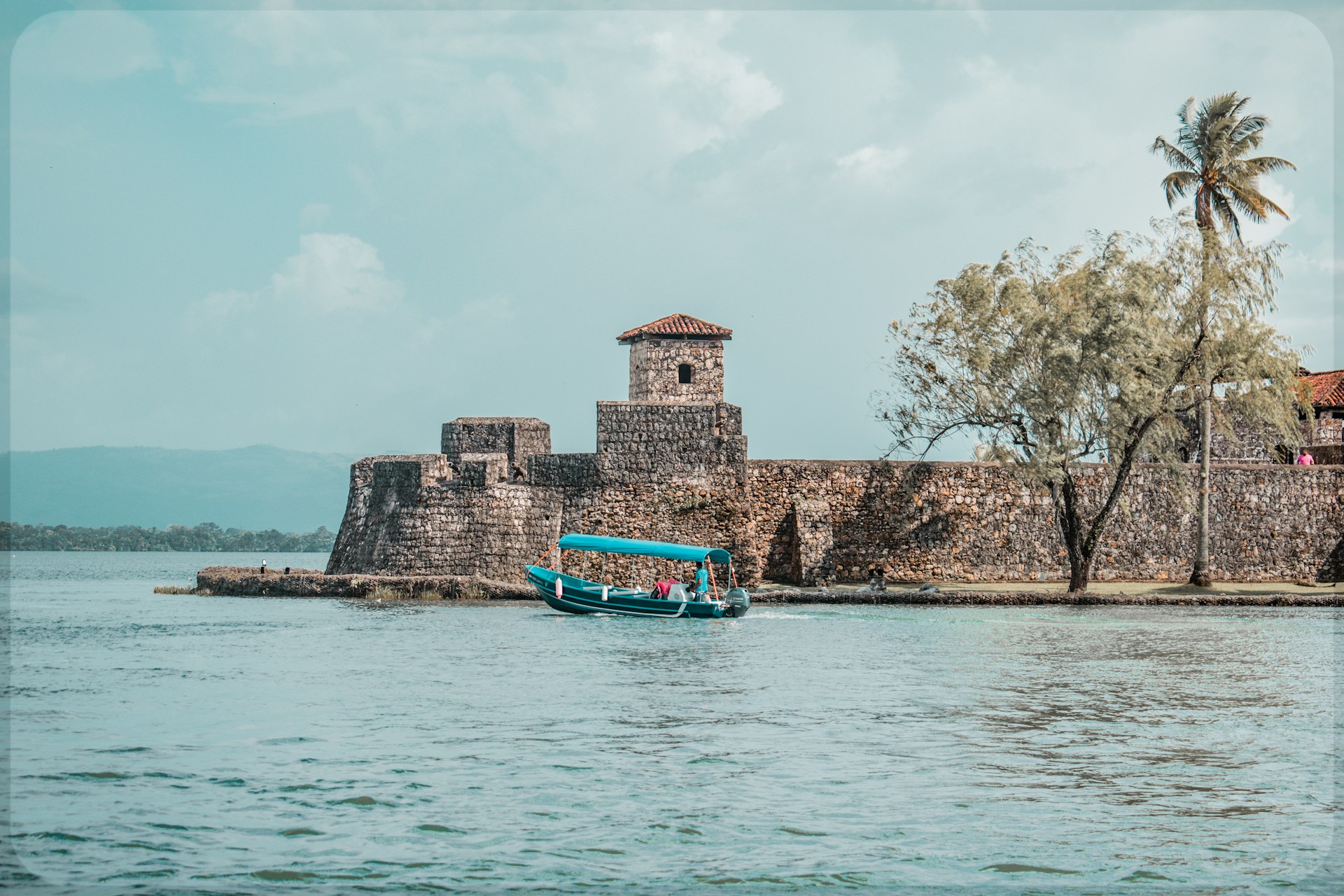
Travelling by boat along the Río Dulce took me through a gorge surrounded by thick tropical vegetation, and I loved watching the scenery gradually become more Caribbean as we approached the coast.
Hot springs and little riverside settlements gave me plenty to look out for along the way.
Arriving in Livingston was just as memorable. With no road connecting the town to the rest of Guatemala, getting there by boat immediately gave it a different atmosphere.
I enjoyed wandering around town, listening to music and trying Garífuna food, which introduced me to flavours I hadn't encountered elsewhere in Guatemala.
That cultural contrast was what stayed with me most. Livingston's Garífuna heritage, with its Afro-Caribbean traditions, language, music and cooking, made this feel like much more than a scenic river excursion.
I'd stay at least one night rather than rushing back the same day.
How Río Dulce and Livingston fit into your Guatemala itinerary
I'd use Río Dulce as the gateway between inland Guatemala and the Caribbean, spending one or two nights exploring the river and Livingston. It also pairs naturally with Tikal and the Petén region if you're building a longer route through eastern and northern Guatemala.
Try tapado while you're in Livingston. This traditional Garífuna seafood and coconut-milk stew is one of the dishes I'd specifically seek out here.
Quetzaltenango
(pronounced: ket-sal-teh-NAN-goh)
Quetzaltenango at a glance
Western highlands of Guatemala
Highland culture, volcano hiking, hot springs, and local markets
2-3 nights
Hikers, culture lovers, slow travellers, and adventures
Local, mountainous, history, and refreshingly untouristy
November to April
Quetzaltenango, or Xela as everyone seemed to call it, gave me a chance to experience Guatemala's highlands without the visitor numbers I encountered in some of the country's better-known destinations.
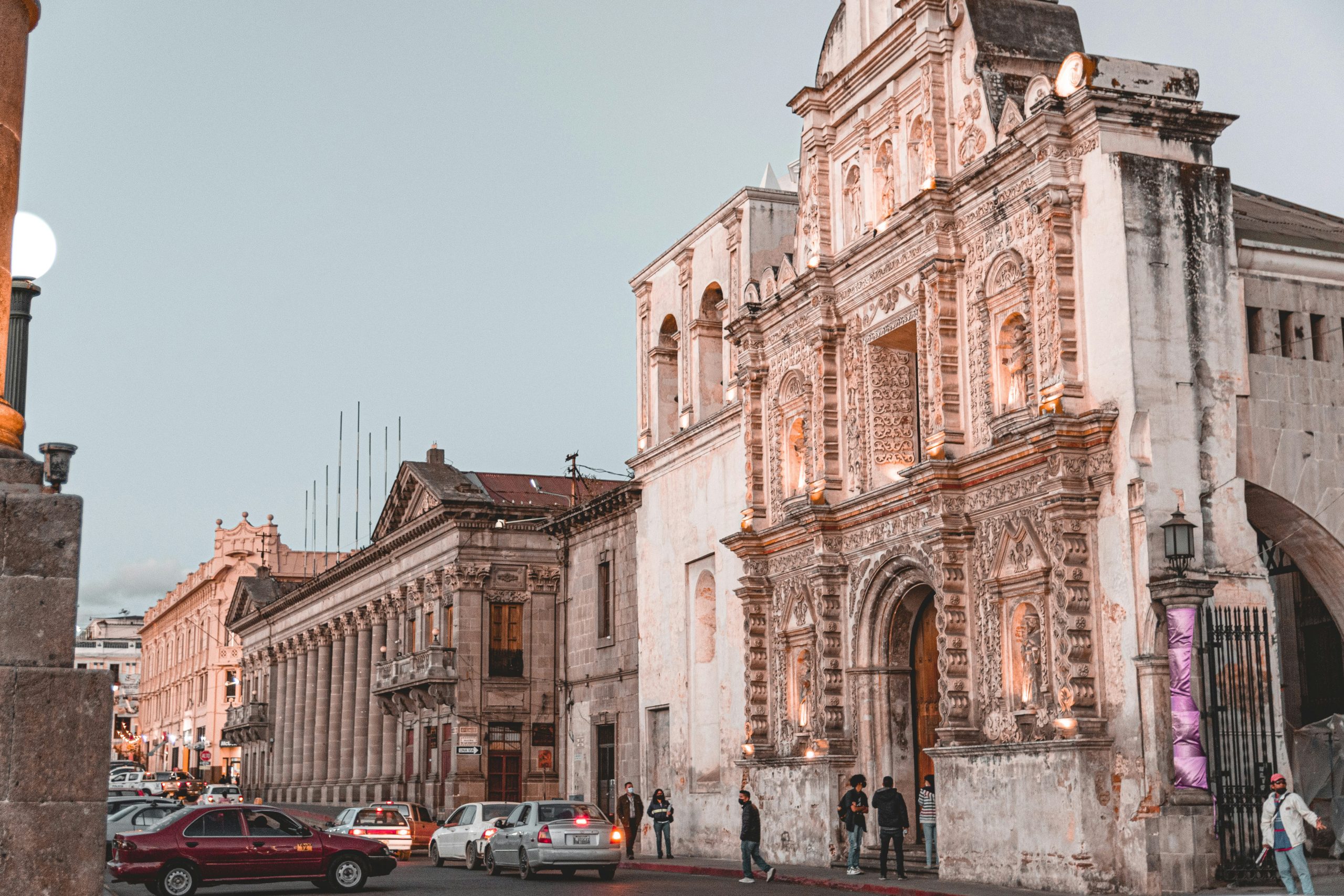
I started around the historic centre, where grand neoclassical buildings surround Parque Centro América.
I enjoyed the architecture, but what I liked even more was that Xela still felt like a working Guatemalan city rather than somewhere built around tourism.
The cooler mountain air also made me want to spend more time outdoors. Xela is surrounded by volcanoes, highland villages and hiking trails, so the city worked brilliantly as a base rather than simply a destination to explore on foot.
One of my favourite ways to break up the hiking was visiting the area's natural hot springs. Soaking in warm water surrounded by misty highland scenery was especially welcome after spending time on the trails.
I also enjoyed heading beyond the city into smaller towns and markets, where traditional Maya clothing, languages, and customs remained part of everyday life. That made Xela feel like a particularly rewarding place to slow down for a few days.
How Quetzaltenango fits into your Guatemala itinerary
I'd give Xela two or three nights while travelling through western Guatemala, especially if you want to hike or explore the surrounding highlands. It pairs naturally with Lake Atitlán before continuing towards Antigua and Guatemala City.
Pack warmer layers than you might expect for Guatemala. Xela sits at more than 2,300 metres above sea level, and I found the mornings and evenings noticeably chilly.
Monterrico
(pronounced: mon-teh-REE-koh)
Monterrico at a glance
Pacific coast of southern Guatemala
Black-sand beaches, sea turtles, birdwatching, and relaxing
1-2 nights
Wildlife lovers, couples, and families
Rustic, tropical, relaxed, and wildlife-focused
July to December for turtle nesting and releases, November to April for beach weather
Monterrico was a welcome change of pace after spending so much time exploring Guatemala's cities and highlands.
The first thing that caught my attention was the beach. Instead of the pale sand I usually associate with a tropical escape, Monterrico has a long stretch of dark volcanic sand.
I loved how dramatic it looked against the Pacific, particularly later in the day when the heat started to ease.
Wildlife gave me another reason to stay. The surrounding mangroves are best explored by boat, and drifting through the narrow waterways looking for birds and caimans felt worlds away from Antigua's cobbled streets.
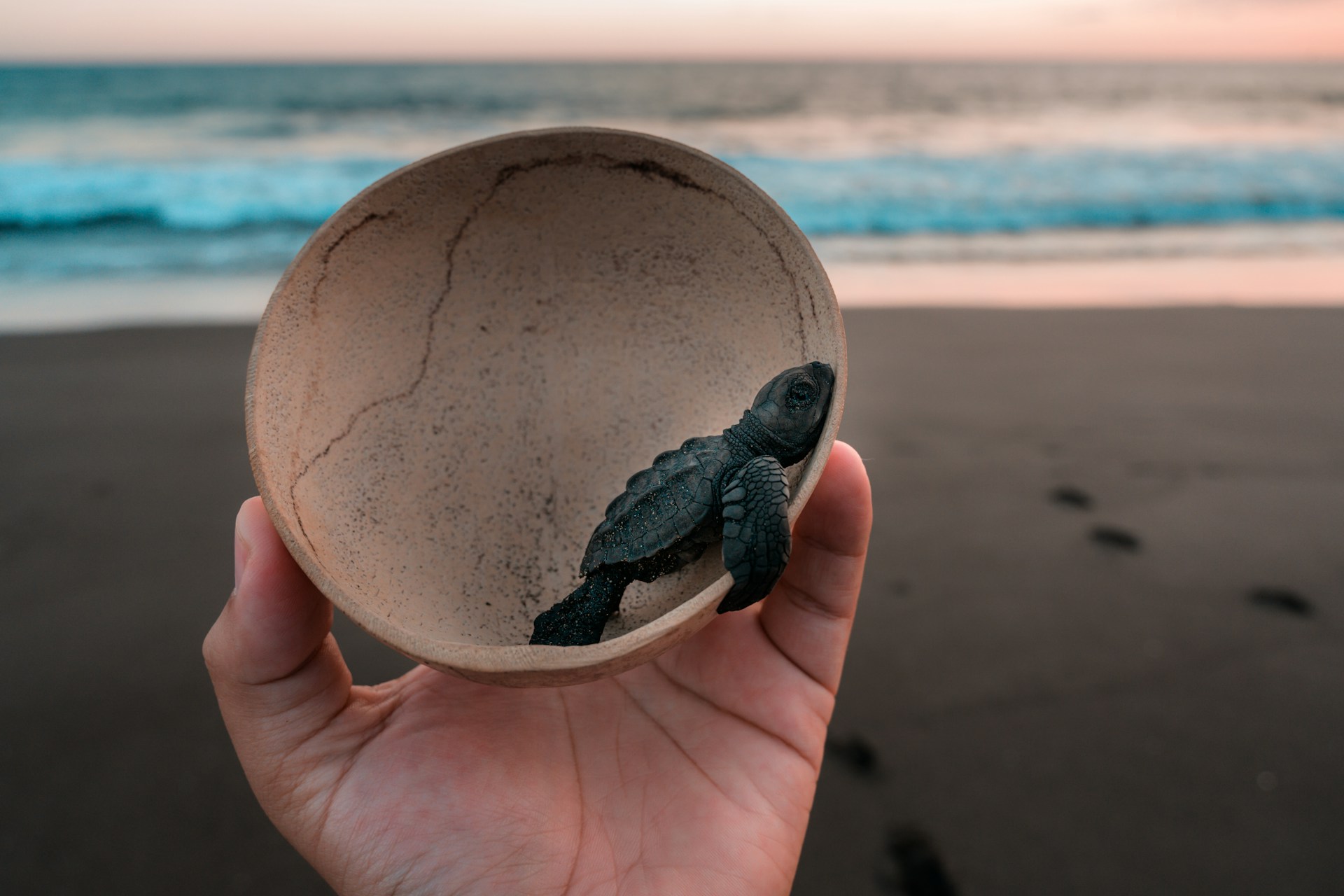
Sea turtles are the experience Monterrico is best known for. During nesting season, local conservation projects protect eggs and organise opportunities to watch hatchlings make their way towards the ocean.
Seeing those tiny turtles heading across the sand at dusk was easily the most memorable part of my time on the coast.
Monterrico itself is simple and fairly rustic, which was part of the appeal for me. I was happy spending a night or two slowing down before heading back inland.
How Monterrico fits into your Guatemala itinerary
I'd add Monterrico after Antigua for one or two nights on the Pacific coast. It's an easy way to work some beach time and wildlife into an itinerary otherwise dominated by Guatemala's highlands, volcanoes and historic towns.
The black volcanic sand can become extremely hot during the middle of the day, so I'd bring sandals rather than planning to walk barefoot along the beach.
Chichicastenango
(pronounced: chee-chee-kas-teh-NAN-goh)
Chichicastenango at a glance
Western highlands of Guatemala
Maya culture, traditional markets, textiles, and handicrafts
1 night
Culture lovers, photographers, shoppers, and curious travellers
Colourful, energetic, traditional, atmosphere
November to April (Thursday or Sunday for the market)
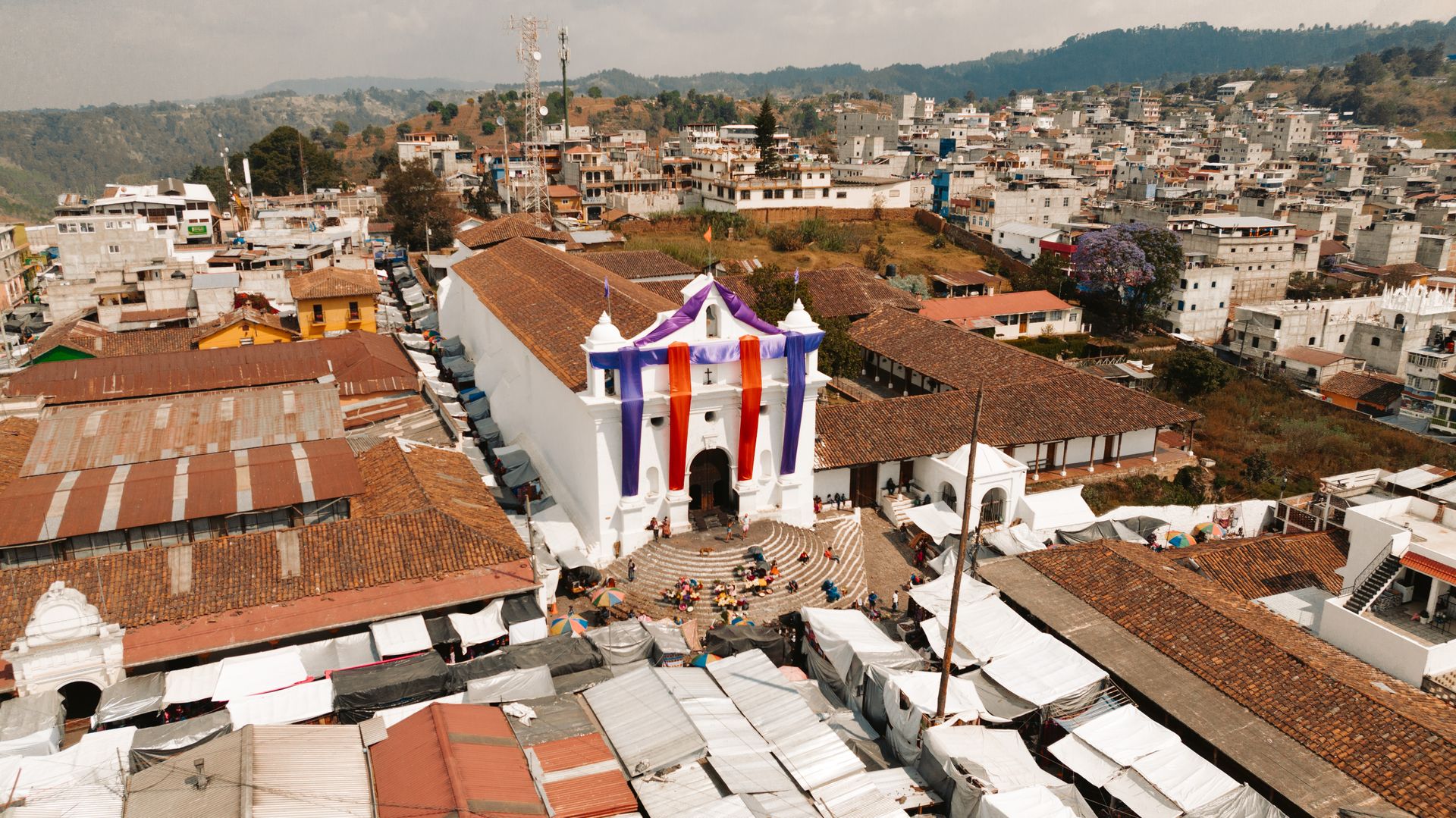
Chichicastenango was easily one of the most colourful places I visited in Guatemala, but it was the atmosphere rather than the shopping that made the biggest impression on me.
I timed my visit for market day, when traders from surrounding Maya communities filled the streets with textiles, masks, pottery, flowers, produce and food.
There was something happening everywhere I looked, and I loved simply wandering without much of a plan and seeing what I stumbled across.
What made Chichi particularly interesting was how everyday commerce and Maya traditions existed side by side.
Around the Santo Tomás Church, I watched incense drift through the air as ceremonies took place on the steps, while the busy market continued around them.
I found that contrast fascinating. This wasn't simply a market arranged for visitors, and taking time to observe what was happening beyond the souvenir stalls gave me a much better appreciation of the town.
Staying overnight also changed the experience for me. I could explore early, before most day-trippers arrived, and see Chichicastenango at a much quieter pace.
How Chichicastenango fits into your Guatemala itinerary
I'd spend one night in Chichicastenango and make sure it coincides with the Thursday or Sunday market. It fits particularly well between Quetzaltenango and Lake Atitlán when travelling through Guatemala's western highlands.
Ask before photographing people, ceremonies or traders. Chichicastenango is incredibly photogenic, but I treated the market as a living cultural space rather than simply a photo opportunity.
Flores
(pronounced: FLOH-res)
Flores at a glance
Petén Department, northern Guatemala
Tikal day trips, colourful streets, lake views, sunset, and relaxing
2 nights
History lovers, couples, and slow travellers
Colourful, compact, relaxed, and tropical
November to April
Flores was exactly the kind of place I appreciated after spending long, hot days exploring Guatemala's jungle and archaeological sites.
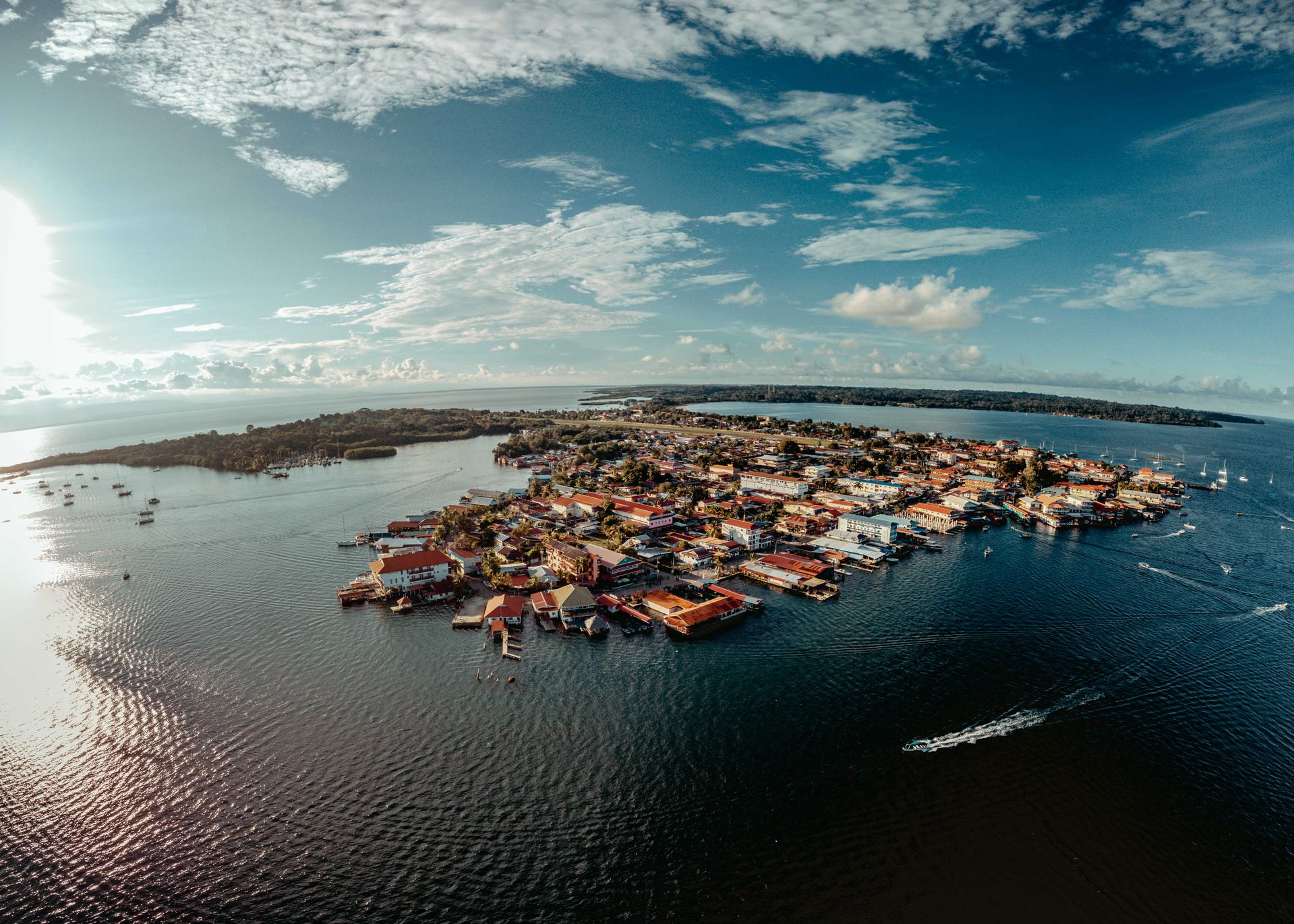
The old town occupies a tiny island in Lake Petén Itzá, and I loved how easy it was to explore on foot.
I could wander along cobbled streets lined with colourful houses, stop for something to eat and eventually find myself back beside the water without ever really needing a plan.
For me, Flores worked particularly well as a base for Tikal. Getting up early for the ruins meant a long day, so returning somewhere small and relaxed afterward was a welcome contrast to trekking through the jungle.
The lake became one of my favourite parts of staying here. I spent time walking along the waterfront, and sunset was when Flores really came into its own.
Watching the sky change over Lake Petén Itzá from beside the water was a wonderfully easy way to finish the day.
I wouldn't come to northern Guatemala solely for Flores, but I also wouldn't treat it simply as somewhere to sleep before visiting Tikal. The town deserved some time of its own.
How Flores fits into your Guatemala itinerary
I'd spend two nights in Flores and use it as my base for exploring Tikal and the wider Petén region. From here, you can continue south towards Río Dulce and Livingston, creating a natural route from Guatemala's northern jungle to its Caribbean coast.
Stay on the island itself if you can. Flores is small enough that being within walking distance of the waterfront, restaurants, and sunset spots made my stay much easier.
Semuc Champey
(pronounced: seh-MOOK cham-PAY)
Semuc Champey at a glance
Alta Verapaz, central Guatemala, near Lanquín
Swimming, jungle scenery, hiking, caves, and adventure
2 nights
Adventure travellers, hikers, nature lovers, and backpackers
Remote, tropical, adventurous, and spectacular
November to April
Semuc Champey made me work harder than most places in Guatemala to reach it, but that was also part of what made arriving feel so rewarding.
The journey into the mountains was long and bumpy, and by the time I reached the jungle around Lanquín, I was more than ready to get out and explore.
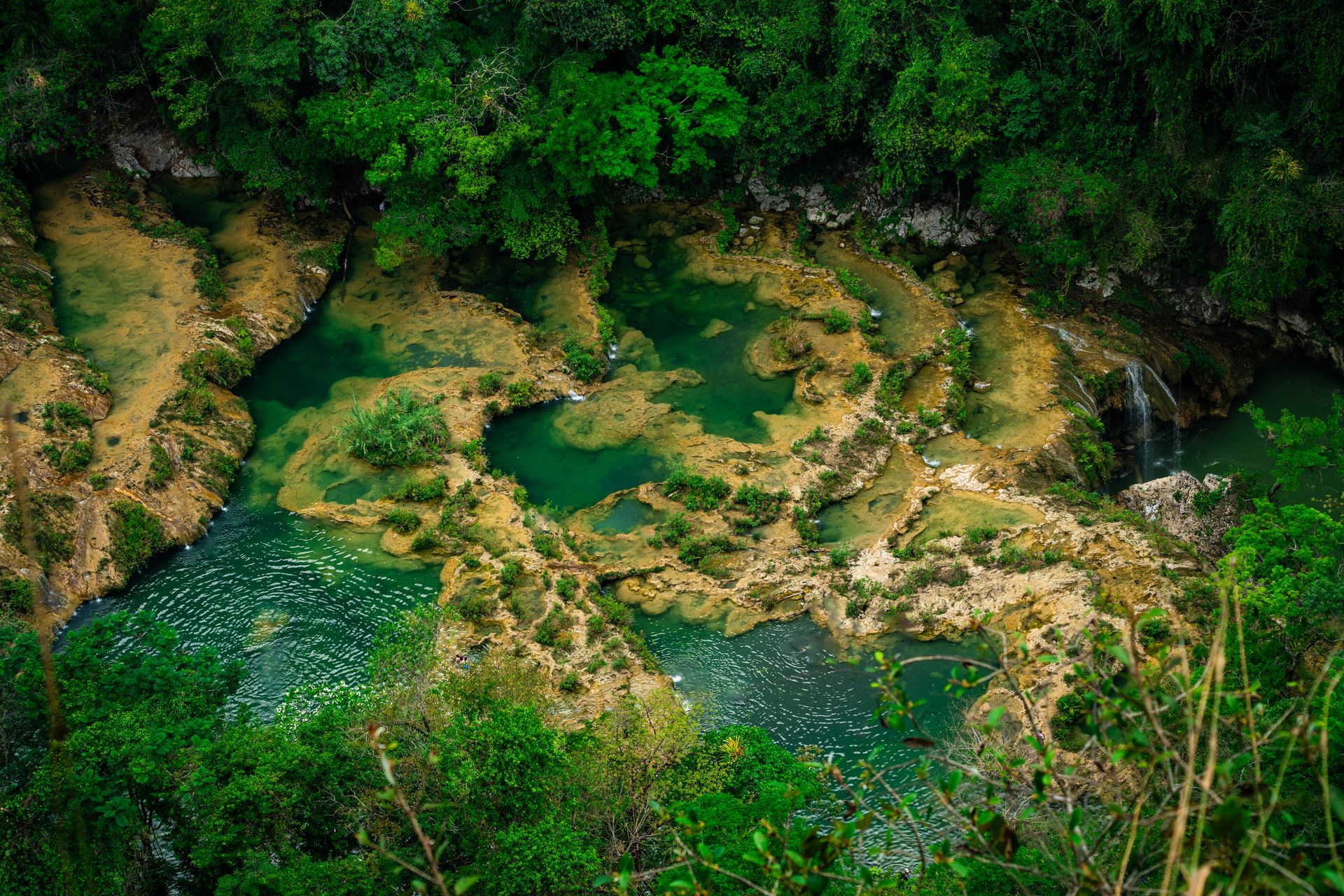
My first proper look at Semuc Champey from the viewpoint made the journey worthwhile. The turquoise pools looked almost unreal against the dense green forest.
After the hike, getting into the water felt even better. I spent time swimming between the stepped limestone pools, finding little waterfalls and simply enjoying how clear and refreshing the water was.
What fascinated me most was knowing that the Cahabón River was rushing underneath us through a natural limestone passage while we swam above it. It made an already beautiful place feel even more unusual.
There was plenty of adventure nearby too, including river tubing and cave tours, but I was glad I'd allowed two nights rather than trying to squeeze Semuc Champey into a rushed stop.
How Semuc Champey fits into your Guatemala itinerary
I'd allow two nights around Lanquín and treat the journey as part of the experience rather than trying to rush through. Semuc Champey fits particularly well between the highlands and Flores, breaking up the route towards northern Guatemala and Tikal.
I'd bring proper shoes with good grip rather than relying on flip-flops. The climb to the viewpoint is steep, humid, and can become slippery.
Acatenango and the volcanoes
(pronounced: a-ka-teh-NAN-goh)
Acatenango and the volcanoes at a glance
Guatemalan highlands, near Antigua
Volcano hiking, overnight camping, mountain scenery and adventure
2 nights around Antigua
Hikers, adventure travellers, and active travellers
Challenging, dramatic, wild, unforgettable
November to April
Hiking Acatenango was one of the toughest experiences I took on in Guatemala, but the view from high on the volcano made every exhausting step feel worthwhile.
The climb itself was part of the adventure. I passed through changing landscapes as I gained altitude, eventually leaving the greener slopes behind for exposed volcanic terrain. By the time I reached camp, I was tired, cold and very happy to put my backpack down.
Then Fuego started stealing the show.
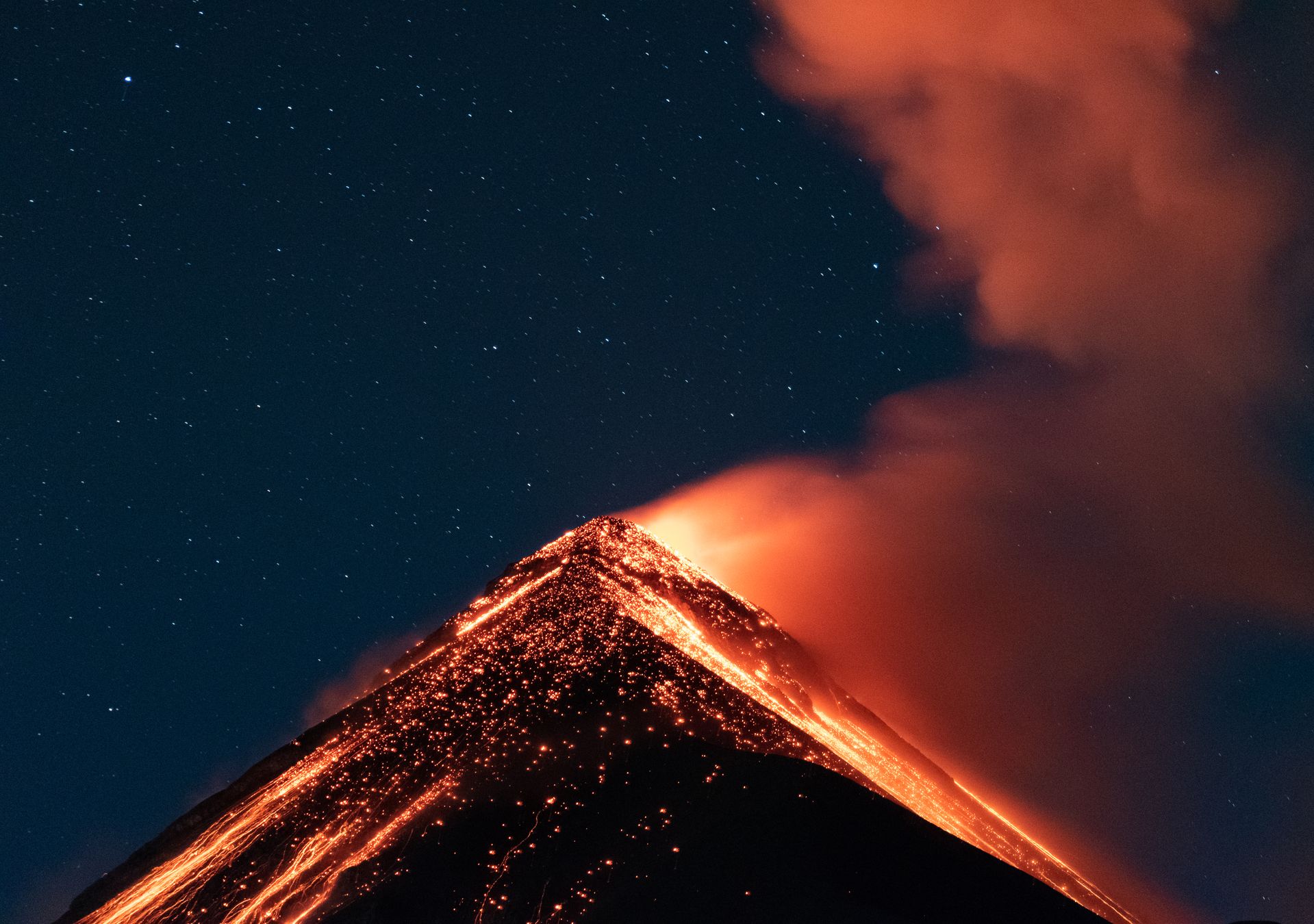
Watching the neighbouring volcano erupt from across the valley was extraordinary.
During daylight, I could see plumes of ash rising above the summit, but after dark the experience became even more dramatic. Glowing bursts from Fuego stood out against the night sky while I watched from camp.
I also liked that Guatemala offered less demanding ways to experience its volcanic landscape. Pacaya, near Antigua, can be tackled as a shorter hike and gave me a completely different experience, with barren volcanic scenery and warm rocks underfoot.
For me, though, Acatenango was the big one. It was physically demanding, cold at altitude and absolutely worth the effort.
How Acatenango fits into your Guatemala itinerary
I'd use Antigua as my base and dedicate two days to the overnight Acatenango trek, with time to recover afterwards. If a strenuous overnight hike isn't for you, Pacaya makes a much easier volcano experience to add while staying around Antigua.
Don't underestimate how cold Acatenango can become overnight. I'd pack proper warm layers, gloves and a hat even if Antigua feels pleasantly warm when you set off.
Lake Atitlán
(pronounced: a-teet-LAN)
Lake Atitlán at a glance
Western highlands of Guatemala
Volcano scenery, Maya culture, village hopping, kayaking, hiking, textiles
3-4 nights
Culture lovers, nature lovers, photographers, hikers, and slow travellers
Scenic, peaceful, colourful, culturally rich
November to April
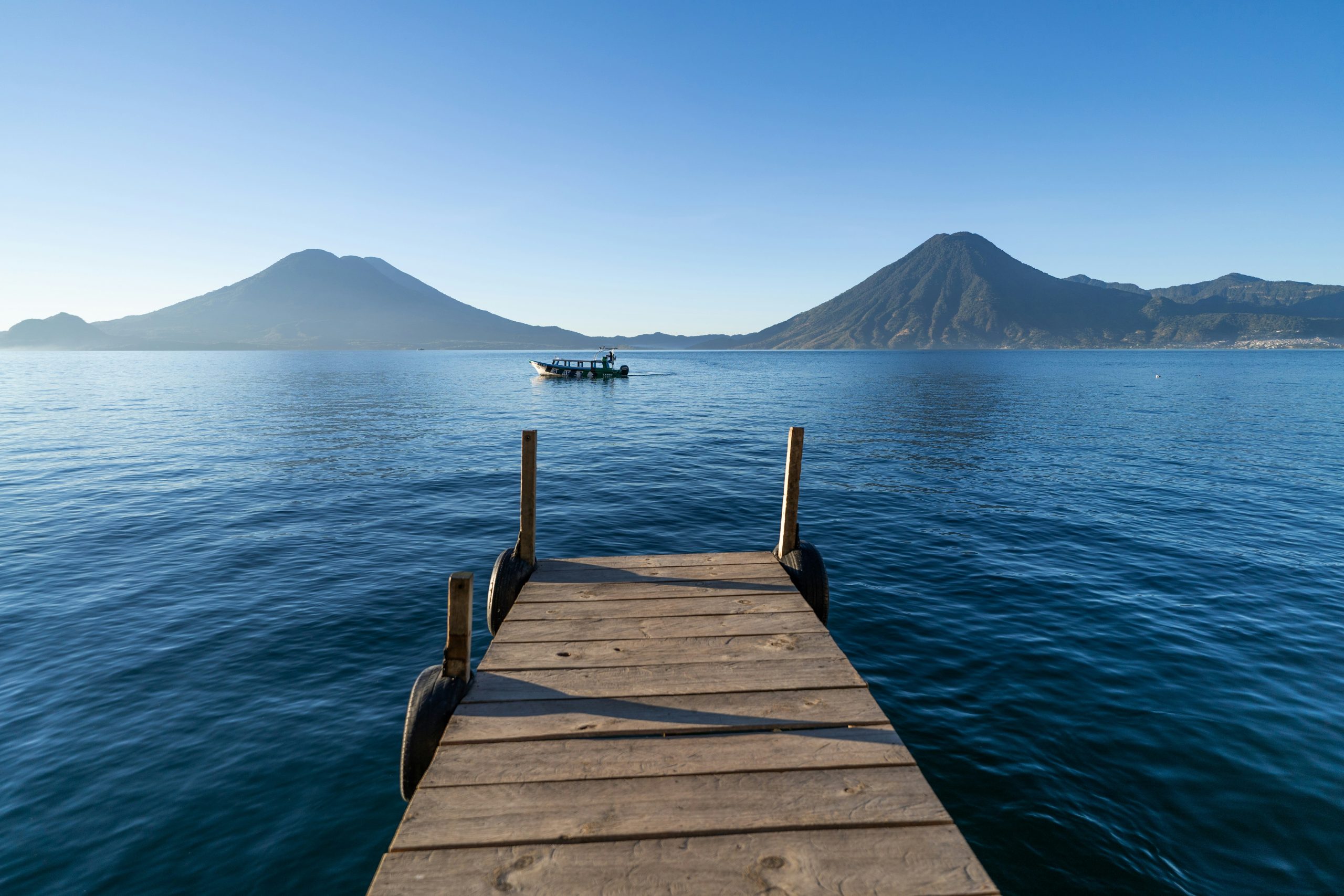
Lake Atitlán was one of those places where I was perfectly happy doing very little. With deep blue water surrounded by steep mountains and three volcanoes, the scenery was enough to keep me lingering by the shoreline.
What I enjoyed most, though, was exploring the villages scattered around the lake. I used the small passenger boats to travel between them, and each stop seemed to reveal a different side of Atitlán.
Panajachel was the busy gateway, while elsewhere I found quieter streets, colourful markets and communities where Maya languages, traditional clothing and weaving remained part of everyday life.
Other villages had a completely different personality, with cafés, artists, backpackers and yoga retreats giving them a more international feel.
I loved being able to spend one morning browsing textiles and another kayaking or walking beside the lake. Even the boat journeys became part of the experience, with those enormous volcanoes constantly changing perspective as I crossed the water.
Three nights gave me enough time to explore without rushing, although this was somewhere I could easily have stayed longer.
How Lake Atitlán fits into your Guatemala itinerary
I'd give Lake Atitlán at least three nights while exploring the western highlands.
It fits naturally between Chichicastenango and Antigua, giving you an easy route from Guatemala's highland markets and Maya communities towards its colonial and volcanic heartland.
I'd do longer boat journeys earlier in the day when possible. The lake can become noticeably choppier later in the afternoon, making the small-boat rides less comfortable.
Antigua
(pronounced: an-TEE-gwa)
Antigua at a glance
Central highlands of Guatemala, southwest of Guatemala City
Colonial architecture, food, volcano views, and day trips
3-4 nights
Culture lovers, foodies, couples, and first-time visitors
Historic, colourful, lively, and effortlessly beautiful
November to April for drier weather; March or April for Semana Santa when Easter falls during these months
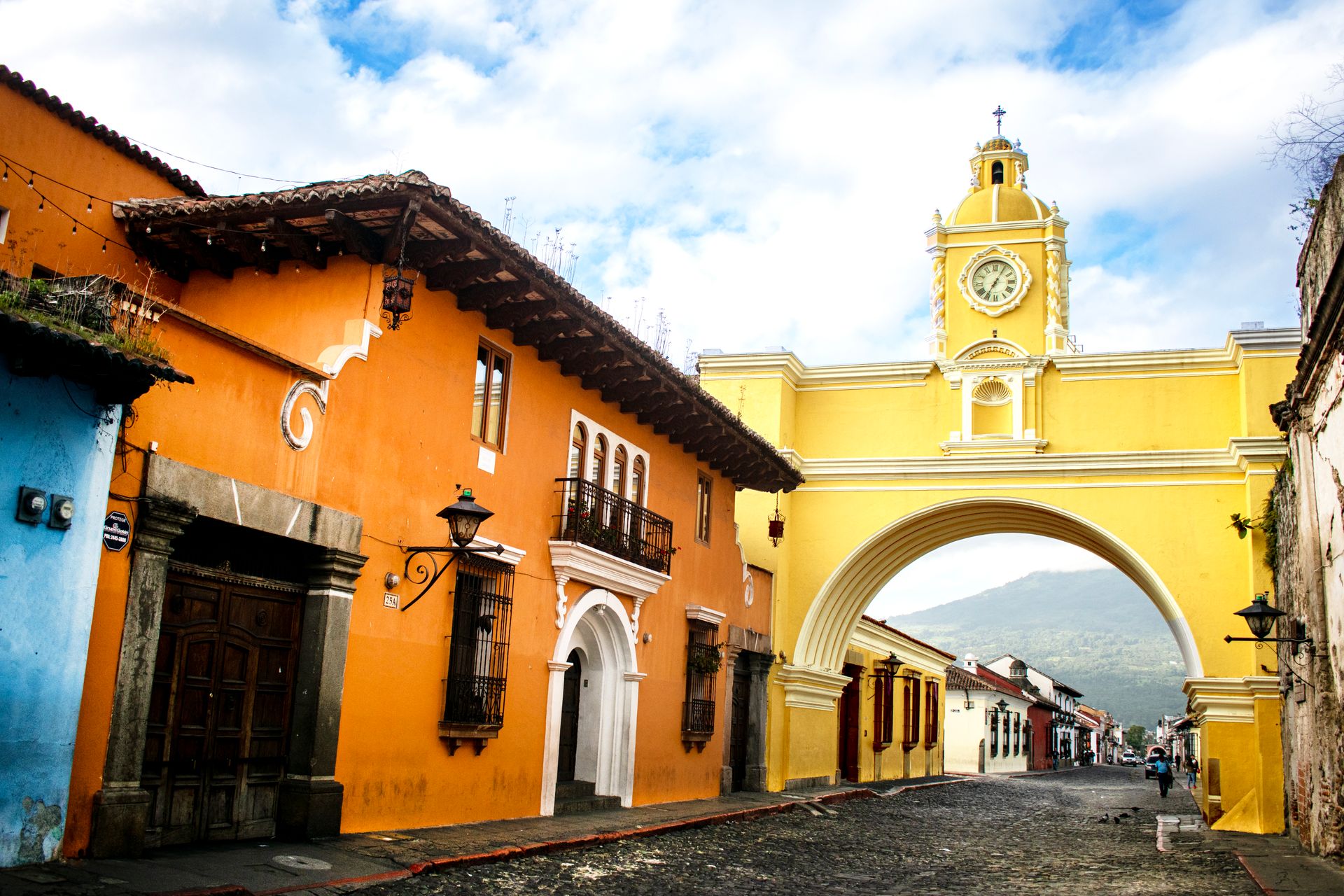
Antigua was one of the easiest places in Guatemala for me to settle into. I arrived planning to explore its historic centre, but quickly found myself enjoying the everyday rhythm of the city just as much.
I spent hours wandering the cobbled streets, passing brightly painted houses, old churches and earthquake-damaged ruins.
I particularly loved those moments when I turned a corner and found one of the surrounding volcanoes perfectly framed at the end of the street.
There was plenty to tempt me to stop walking too.
Antigua had some of the best cafés and restaurants I found in Guatemala, along with rooftop bars where I could sit with a drink and watch the light change over the mountains.
The city's history was always present, but Antigua never felt frozen in the past. Spanish schools, markets, boutique hotels and busy plazas gave it an energy that made me want to stay out exploring.
Semana Santa transforms the city again, with elaborate processions and colourful sawdust carpets filling the streets. Even outside Easter, though, I found Antigua remarkably easy to fall for.
How Antigua fits into your Guatemala itinerary
I'd give Antigua at least three nights and use it as a base for nearby volcano adventures, including Acatenango or Pacaya.
Its location near Guatemala City also makes it a convenient first or final major stop, while Lake Atitlán is a natural next destination when heading west.
I'd get out early at least once. Walking Antigua's cobbled streets before the day gets busy gave me a much quieter view of the churches, plazas and volcanoes.
Tikal
(pronounced: tee-KAL)
Tikal at a glance
Petén Department, northern Guatemala
Maya history, jungle scenery, wildlife, and photography
1 full day
History lovers, wildlife enthusiasts, and adventurous travellers
Ancient, atmospheric, wild, and awe-inspiring
November to April
Tikal was the place in Guatemala where history and nature came together most spectacularly for me.
Exploring the site felt completely different from walking around a conventional archaeological complex.
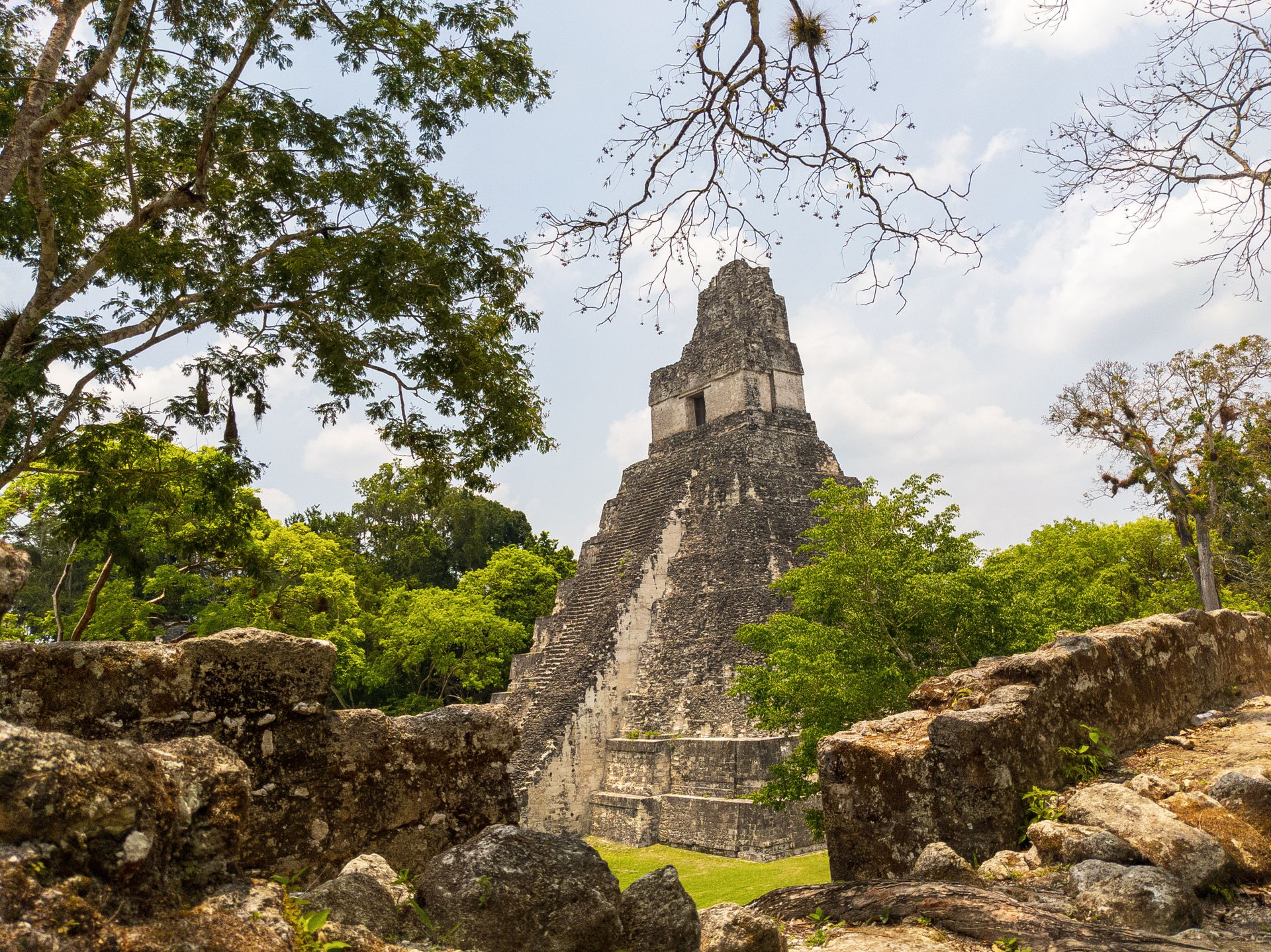
I followed trails through thick rainforest, listening to howler monkeys somewhere above me, before suddenly emerging into enormous plazas dominated by Maya temples.
That sense of discovery never really wore off. Tikal was once one of the most powerful cities in the Maya world, yet much of the surrounding site remains enveloped by forest.
I spotted toucans, parrots and coatis between the ruins, which made the ancient city feel surprisingly alive.
My favourite moment came when I climbed high enough to look across the canopy. Seeing temple tops rising above an apparently endless expanse of jungle gave me a completely different sense of Tikal's scale.
I found the atmosphere especially memorable early in the day, when mist still hung over the forest and the jungle seemed to get louder as morning arrived.
After exploring Guatemala's highlands, volcanoes and towns, spending a full day here felt like a fitting finale.
How Tikal fits into your Guatemala itinerary
I'd stay in Flores and dedicate a full day to exploring Tikal, ideally starting early to avoid the worst of the heat.
It works beautifully as the final major stop in northern Guatemala, especially after travelling through Semuc Champey or before continuing towards Río Dulce and Livingston.
Bring more water than you think you'll need. Tikal is enormous, hot and humid, and I spent far longer walking between the different temple complexes than I initially expected.
Guatemala itinerary ideas
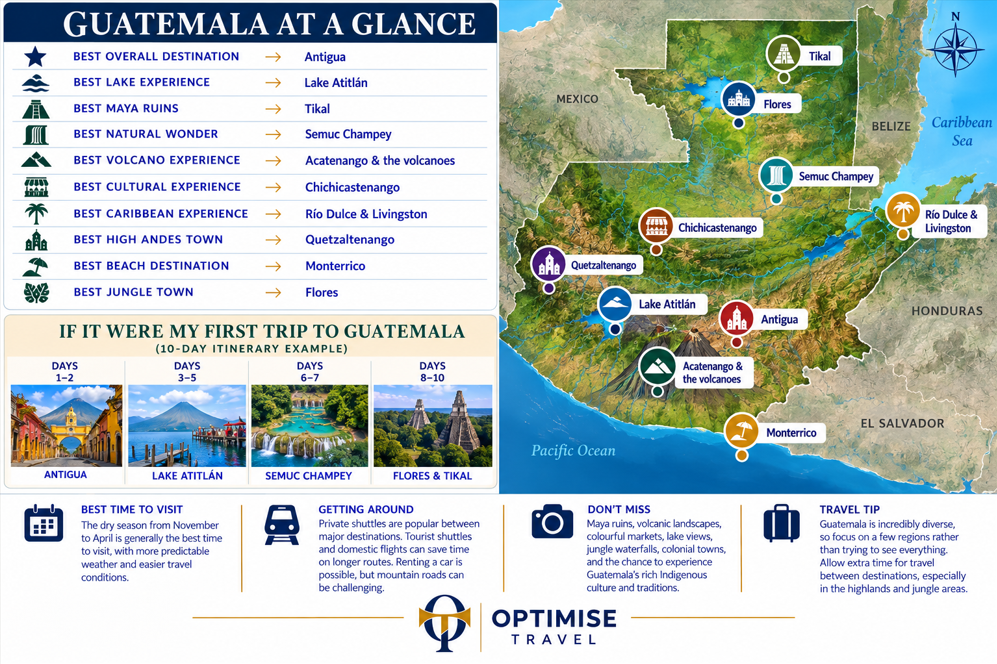
Guatemala looks compact on a map, but travel between the highlands, jungle and Caribbean coast can take longer than the distances suggest.
I found it much more enjoyable to concentrate on a few regions rather than spending half the trip moving between them.
If Guatemala is one stop on a longer Central America trip, five days can give you a brilliant introduction. With ten days, I'd venture further north and include some of the country's wilder landscapes.
Guatemala itinerary: 5 days
Route: Antigua → Lake Atitlán
| Days 1-2 | Day 3-5 |
|---|---|---|
Destination | Antigua | Lake Atitlán |
Overnight | Antigua | Lake Atitlán |
Why this route? I think this works particularly well if Guatemala forms part of a larger Central America trip.
I'd spend two days exploring Antigua's cobbled streets, churches and food scene before slowing things down at Lake Atitlán, where three nights gives you enough time to visit several lakeside villages rather than simply seeing the lake on a day trip.
*If hiking Acatenango is a priority, I'd add at least another day rather than trying to squeeze the overnight trek into this five-day itinerary.
Guatemala itinerary: 10 days
Route: Antigua → Lake Atitlán → Semuc Champey → Flores & Tikal
| Days 1-2 | Day 3-5 | Day 6-7 | Days 8-10 |
|---|---|---|---|---|
Destination | Antigua | Lake Atitlán | Semuc Champey | Flores & Tikal |
Overnight | Antigua | Lake Atitlán | Lanquin | Flores |
Why this route? This would be my choice for a first trip because it brings together four very different sides of Guatemala.
I'd begin among Antigua's volcanoes and colonial architecture, spend three nights exploring Lake Atitlán, then head into the mountains for Semuc Champey before finishing in Flores with a full day at Tikal.
*There are some long transfers in this itinerary, particularly around Semuc Champey. If you prefer slower travel, I'd leave it out and give the extra time to Antigua and Flores.
Why Guatemala deserves more than one stop
Antigua is often the natural starting point for a trip to Guatemala, but some of my favourite experiences happened once I ventured further into the country.
I loved how much variety I found, from travelling between Maya villages around Lake Atitlán and swimming in the turquoise pools of Semuc Champey to exploring the colourful market at Chichicastenango and watching ancient temples rise above the jungle at Tikal.
What stood out to me was how dramatically Guatemala changed as I travelled through it. Volcanoes, highland towns, tropical rainforest, Maya ruins and Caribbean culture could all be part of the same trip.
If you're visiting Guatemala for the first time, I wouldn't limit yourself to Antigua and Lake Atitlán. Give yourself time to explore at least one other region, because that's where I really started to appreciate just how diverse the country is.
FAQs about travelling to Guatemala
The currency in Guatemala is the Guatemalan quetzal (GTQ). Credit and debit cards are widely accepted in larger cities and tourist destinations, but I’d still carry some cash for markets, small businesses and more remote areas.
Visa requirements depend on your nationality. Guatemala classifies nationalities into different visa categories, so some travellers can enter without obtaining a visa in advance while others need one. I’d check the latest requirements with the Guatemalan Institute of Migration before travelling.
Driving can be useful for exploring Guatemala, and traffic travels on the right-hand side of the road. However, road conditions, mountain routes, traffic and journey times can vary considerably, so I’d allow more time than the distance on the map might suggest.
Millions of travellers visit Guatemala, but safety conditions vary considerably by location. I’d check current government travel advice before your trip, use reputable transport, avoid unnecessary travel after dark and take normal precautions with valuables.
Guatemala primarily uses Type A and Type B electrical plugs with a 120V, 60Hz supply. Travellers from countries using different plug types or 220–240V electricity may need a plug adapter and should check whether their devices support 120V.
Spanish is the country's most widely spoken language, alongside 22 officially recognised Maya languages as well as Garífuna and Xinka. I found that Guatemala's linguistic diversity was particularly noticeable when travelling through Indigenous communities in the highlands.
Ready to explore Guatemala? Optimise Travel is here to help
Guatemala packs an incredible amount into one country, and deciding how to divide your time between its colonial cities, volcanoes, Maya communities, lakes, rainforest and Caribbean coast can take some careful planning.
At Optimise Travel, we create personalized travel itineraries based on your interests, travel style, and budget.
Whether you're dreaming of wandering the cobbled streets of Antigua, exploring the villages around Lake Atitlán, swimming in the turquoise pools of Semuc Champey, hiking Acatenango, experiencing the markets of Chichicastenango, or watching the jungle wake up around the ancient temples of Tikal, we'll help you build an itinerary that makes the most of your time.
If you'd like help planning your trip to Guatemala, click here to learn more about our concierge travel services.