

Honduras felt like one of Central America's best-kept secrets when I started exploring it.
I found incredible Maya ruins, lush cloud forests, laid-back Caribbean islands and some of the clearest water I've seen anywhere in the region. Better still, many places felt noticeably less crowded than the Central American destinations I'd visited elsewhere.
What I enjoyed most was how different each part of the country felt, especially once I travelled from the mountains to the Caribbean coast.
These are the five best places to visit in Honduras I'd make room for on your trip.
Have You Seen Our Travel Concierge Service?
Your trip, planned by local experts
We are not a travel agent - we design custom itineraries around your budget and style, without receiving commissions or booking fees.
Custom itinerary
Built around your dates, budget, and travel style.
Local expert knowledge
Recommendations from people on the ground, not review sites.
Travel smarter, spend less
We optimise for your budget to make your money go further.
Lago de Yojoa
(pronounced: LA-goh deh YOH-hoh-a)
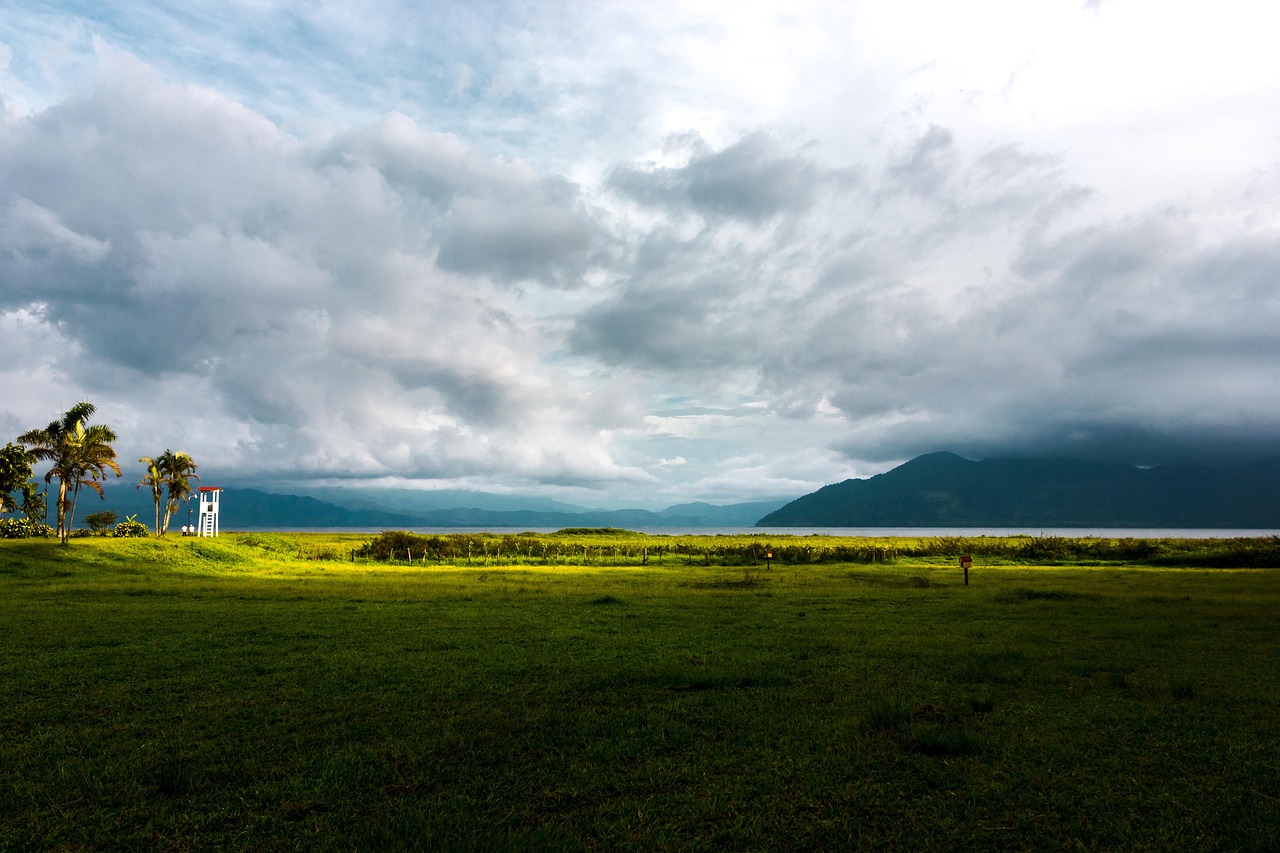
Lago de Yojoa at a glance
Central-western Honduras, between San Pedro Sula and Tegucigalpa
Birdwatching, waterfalls, lake scenery, coffee, and nature
1-2 nights
Nature lovers, birdwatchers, road trippers, slow travellers
Peaceful, green, scenic, unhurried
November to April for drier weather, May to October for greenest scenery
Lago de Yojoa was exactly the kind of stop I could easily have driven past, but I was glad I didn't. After some of Honduras's busier destinations, I loved having somewhere that encouraged me to slow down for a day or two.
The lake sits between green mountains, and I found the scenery especially peaceful first thing in the morning.
This is one of Honduras's best-known birdwatching areas, so even without being a serious birder, I found myself paying far more attention to what was moving through the trees and along the water.
What I enjoyed most was that the lake wasn't the only attraction. I could spend part of the day exploring the surrounding forests and waterfalls, visit a coffee farm, and then return to the lakeshore without traveling far.
I also wasn't expecting to find a craft brewery here. Stopping for a locally brewed beer surrounded by all that greenery was one of those small travel moments that made Lago de Yojoa memorable for me.
It wasn't a place I needed to rush around sightseeing. The appeal was having time to enjoy where I was.
How Lago de Yojoa fits into your Honduras itinerary
I’d use Lago de Yojoa as a one or two-night stop when travelling between San Pedro Sula and Tegucigalpa or the Caribbean coast. Its central location makes it an easy way to break up the journey while adding some nature and downtime to a busier Honduras itinerary.
Stay overnight rather than treating Lago de Yojoa as a roadside stop. Early morning is particularly rewarding for birdwatching, and you'll experience a much quieter side of the lake.
Utila
(pronounced: oo-TEE-la)
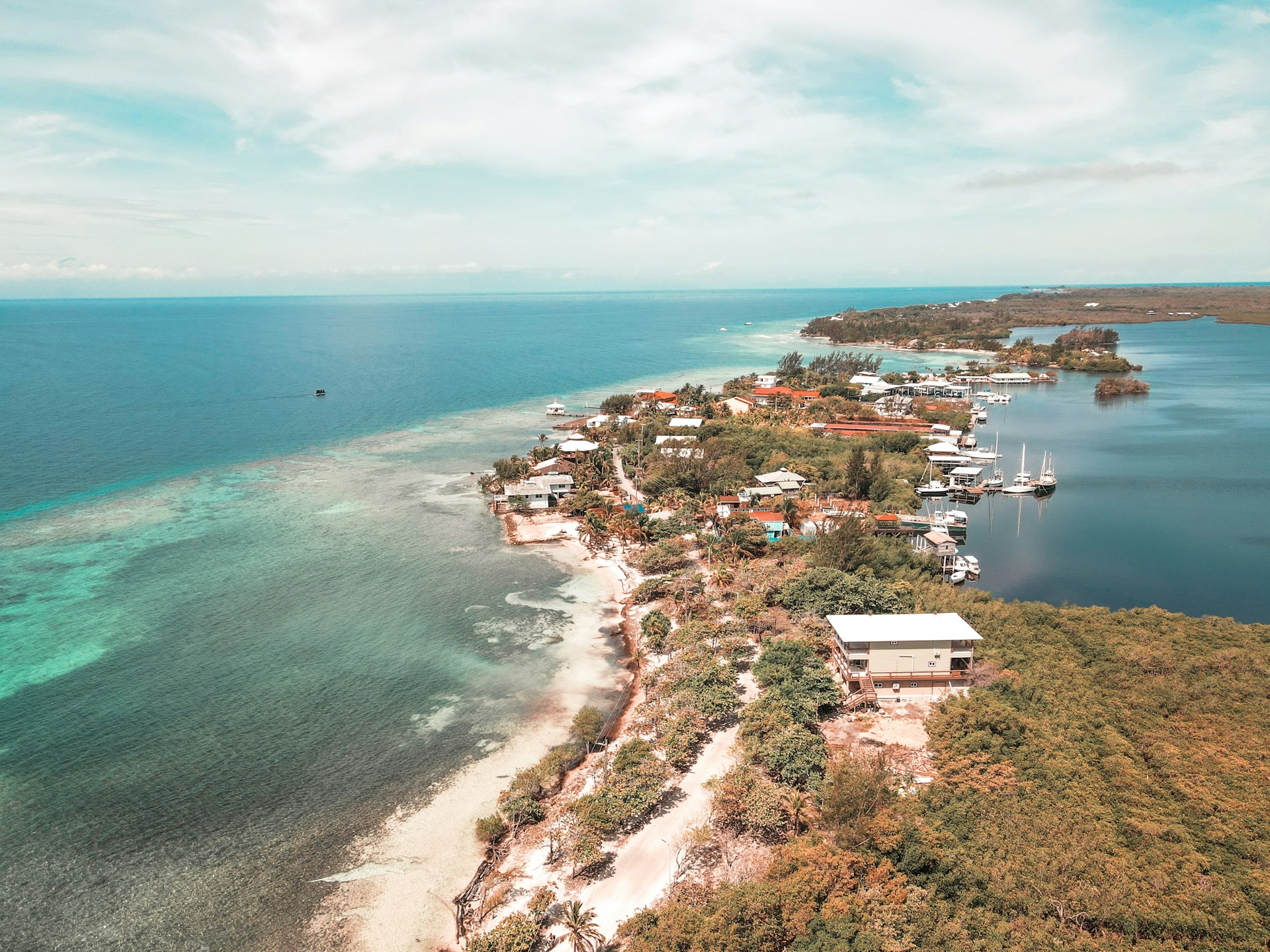
Utila at a glance
Bay Islands, off the Caribbean coast of Honduras
Scuba diving, whale sharks, snorkelling, and island life
3-5 nights
Divers, backpackers, solo travellers, marine-life lovers
Laid-back, youthful, social, and adventurous
March to April and August to September for the best chance of whale shark encounters
Utila felt refreshingly uncomplicated from the moment I arrived. It's the smallest of Honduras's main Bay Islands, and I loved how quickly I slipped into the rhythm of days built around the water rather than a long sightseeing list.
Diving is what really defines the island. Utila sits alongside the Mesoamerican Barrier Reef, and I found plenty of dive shops catering to everyone from complete beginners to experienced divers.
It's also known for relatively affordable certification courses, which explained the mix of backpackers and divers I kept meeting around the island.
The possibility of seeing a whale shark was the experience I was most excited about.
These enormous, gentle fish pass through the waters around Utila throughout the year, with certain months offering better chances of an encounter. Even without one, exploring the reef gave me plenty to look forward to underwater.
Back on land, life was wonderfully casual. I could wander between dive shops, small restaurants, docks and beach bars without feeling like I needed much of a plan.
Three nights gave me a taste of Utila, but if I were taking a diving course, I'd definitely stay longer.
How Utila fits into your Honduras itinerary
I'd give Utila at least three nights and place it alongside the Caribbean portion of a Honduras trip.
Ferries connect the island with La Ceiba on the mainland, making it a natural addition after exploring inland Honduras before continuing along the Caribbean coast.
Don't plan your entire visit around seeing a whale shark. They're wild animals and sightings are never guaranteed, so treat an encounter as an incredible bonus rather than the only reason to come.
The Moskitia
(pronounced: mos-KEE-tya)
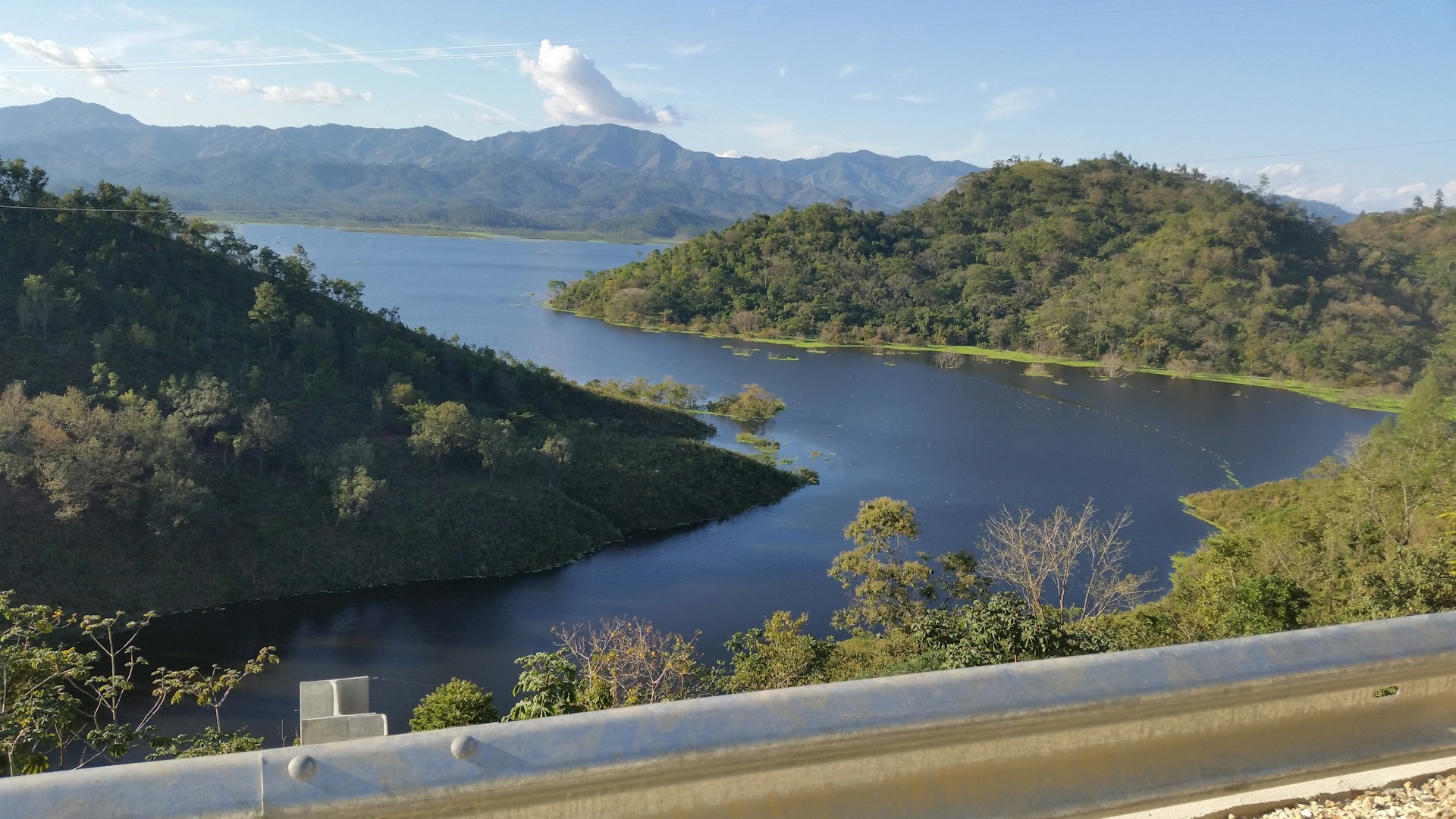
The Moskitia at a glance
Remote northeastern Honduras, extending towards the Nicaraguan border
Rainforest expeditions, wildlife, river journeys, and adventure
4-5 days minimum
Experienced adventurers, wildlife lovers, photographers, and expedition travellers
Remote, wild, immersive, and adventurous
February to May
The Moskitia was the kind of place that reminded me how genuinely wild parts of Central America still are. There are no roads connecting much of this enormous region, so simply getting there became part of the adventure.
Once I travelled deeper into the rainforest by river, the outside world felt increasingly distant. Dense jungle crowded the banks, birds passed overhead, and dugout canoes replaced cars as a normal way of getting around.
I loved how completely different the experience felt from Honduras's towns, islands and more accessible national parks.
Wildlife was a huge part of the appeal.
The wider region supports everything from monkeys and macaws to tapirs, manatees and jaguars, although I quickly learned that travelling through rainforest like this is about appreciating the entire ecosystem rather than ticking animals off a list.
I also found the human side of the journey just as important. The Moskitia is home to Indigenous communities, including the Miskito people, whose lives have long been connected to these rivers and forests.
This wasn't somewhere I could explore on my own. For me, travelling with experienced local guides was essential to the experience.
How the Moskitia fits into your Honduras itinerary
I'd treat the Moskitia as a dedicated adventure within a longer Honduras trip rather than another quick stop.
Allow at least four or five days for the expedition itself, plus enough flexibility on either side for the small-plane and boat connections needed to reach this remote corner of the country.
Don't try to squeeze the Moskitia into a tightly scheduled trip. Weather and river conditions can affect transport, so I'd leave some flexibility around a multi-day expedition.
Copán
(pronounced: koh-PAN)
Copán at a glance
Western Honduras, close to the Guatemalan border
Maya history, stone carvings, scarlet macaws, and colonial atmosphere
2 nights
History lovers, archaeology enthusiasts, culture-focused travellers, photographers
Atmospheric, artsy, relaxed
November to April
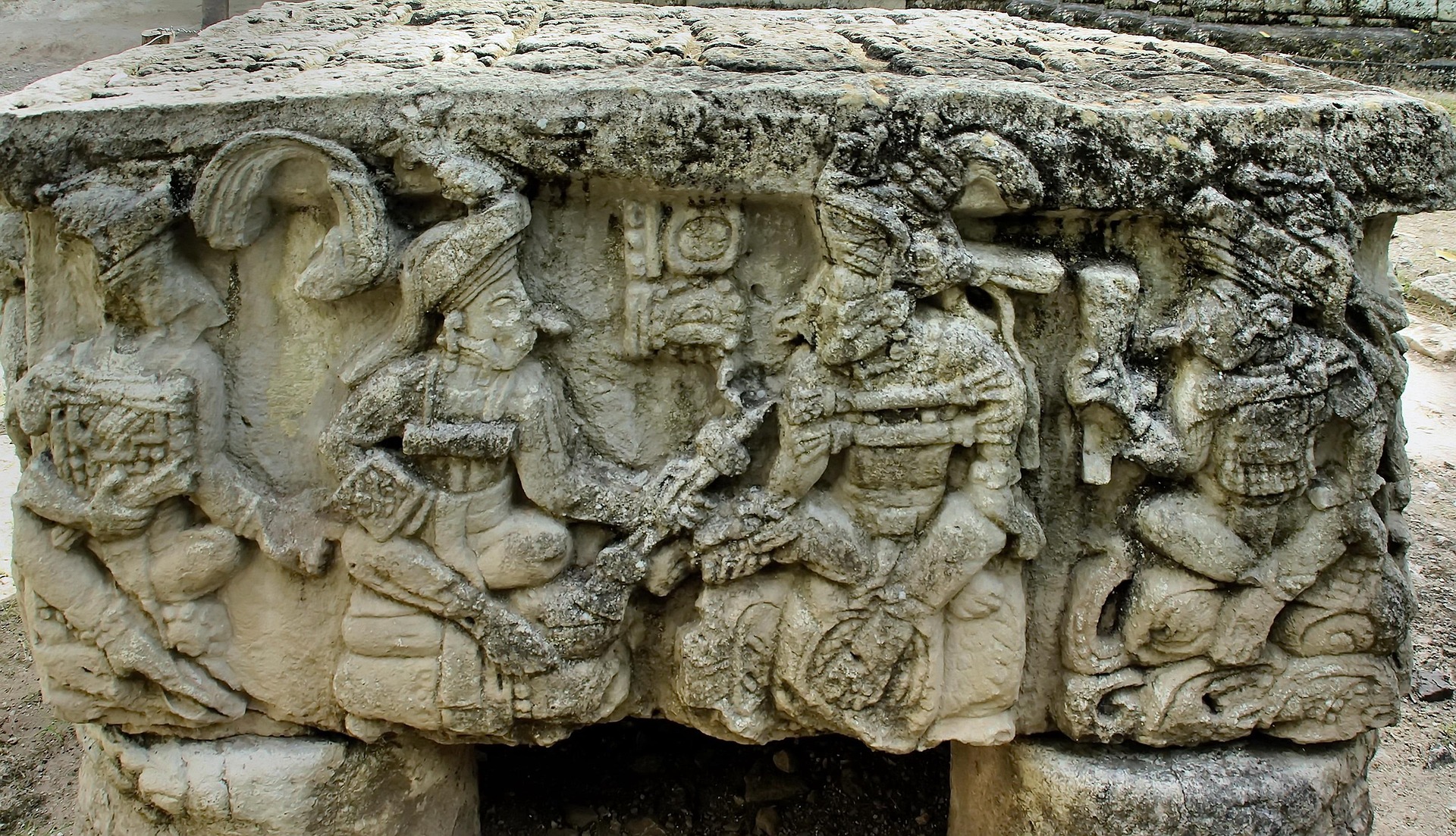
Copán was one of those archaeological sites where I found myself noticing the smallest details rather than simply standing back to admire the scale.
The ancient Maya city is famous for its stone carving, and that was what impressed me most.
I could get surprisingly close to intricately carved stelae covered with figures and symbols, while the Hieroglyphic Stairway gave me an entirely different sense of how much history had been recorded here.
Its 60-plus steps contain the longest known Maya hieroglyphic text.
I also loved the setting. Scarlet macaws flew through the trees around the ruins, adding flashes of brilliant red to all that green. Hearing and seeing them while exploring made Copán feel much more alive than I'd expected from an archaeological site.
The experience didn't end when I left the ruins either. Nearby Copán Ruinas was somewhere I genuinely enjoyed spending time, with cobbled streets, restaurants and a relaxed central plaza that made staying overnight worthwhile.
Two nights felt about right, giving me a full day for the archaeological site without having to rush straight back onto the road.
How Copán fits into your Honduras itinerary
I'd make Copán the main stop in western Honduras and allow two nights before continuing east towards Lago de Yojoa. It's also a natural addition to a wider Central America itinerary if you're travelling overland between Honduras and Guatemala.
Don't skip the site's Sculpture Museum. Seeing the carvings and reconstructed structures there helped me appreciate details I'd otherwise have missed while walking through the ruins.
Roatán
(pronounced: roh-a-TAN)
Roatán at a glance
Bay Islands, off the northern Caribbean coast of Honduras
Scuba diving, snorkelling, beaches, sailing, and Caribbean culture
4-5 nights
Divers, snorkellers, couples, beach lovers, and families
Tropical, easygoing, colourful, and adventurous
March to September
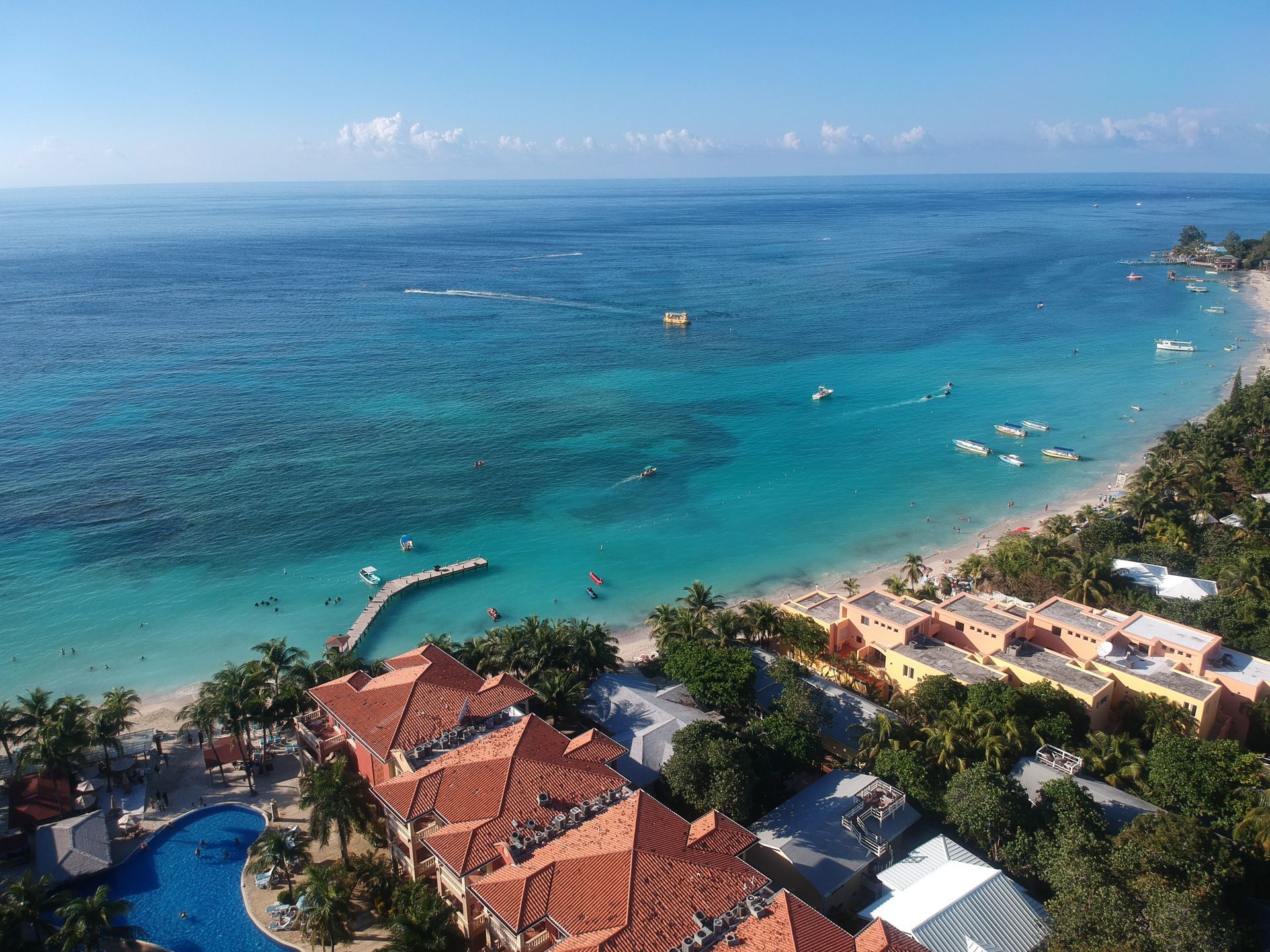
Roatán was where I found the Caribbean side of Honduras I'd been hoping for. The water really was that clear and turquoise, but I quickly realised the island had much more going for it than beautiful beaches.
I spent as much time as possible in the water. Roatán sits alongside the Mesoamerican Barrier Reef, and I loved that some incredible snorkelling and diving was accessible surprisingly close to shore.
Coral walls, colourful fish, turtles and rays made it very easy to understand why divers return here again and again.
West Bay Beach delivered the classic Caribbean scenery, with soft sand, palms and calm water. I enjoyed having somewhere I could do very little for an afternoon after a more active morning underwater.
Exploring beyond the busiest beach areas showed me another side of Roatán. Sailing, smaller coastal communities and the island's Garífuna heritage added far more character than I'd expected from somewhere sometimes described simply as a resort destination.
I also appreciated how flexible Roatán felt. I could make the trip almost entirely about diving or mix the reef with beaches, food and exploring the island.
How Roatán fits into your Honduras itinerary
I'd finish a Honduras trip with at least four nights on Roatán, giving myself time to dive or snorkel without turning every day into an activity day.
You can reach the island by air or ferry from the mainland, and it makes a particularly relaxing contrast after Copán, Lago de Yojoa and Honduras's inland adventures.
Don't spend your entire stay around West Bay. It's beautiful, but exploring farther along the island gave me a much better sense of Roatán beyond its most famous beach.
Honduras itinerary ideas
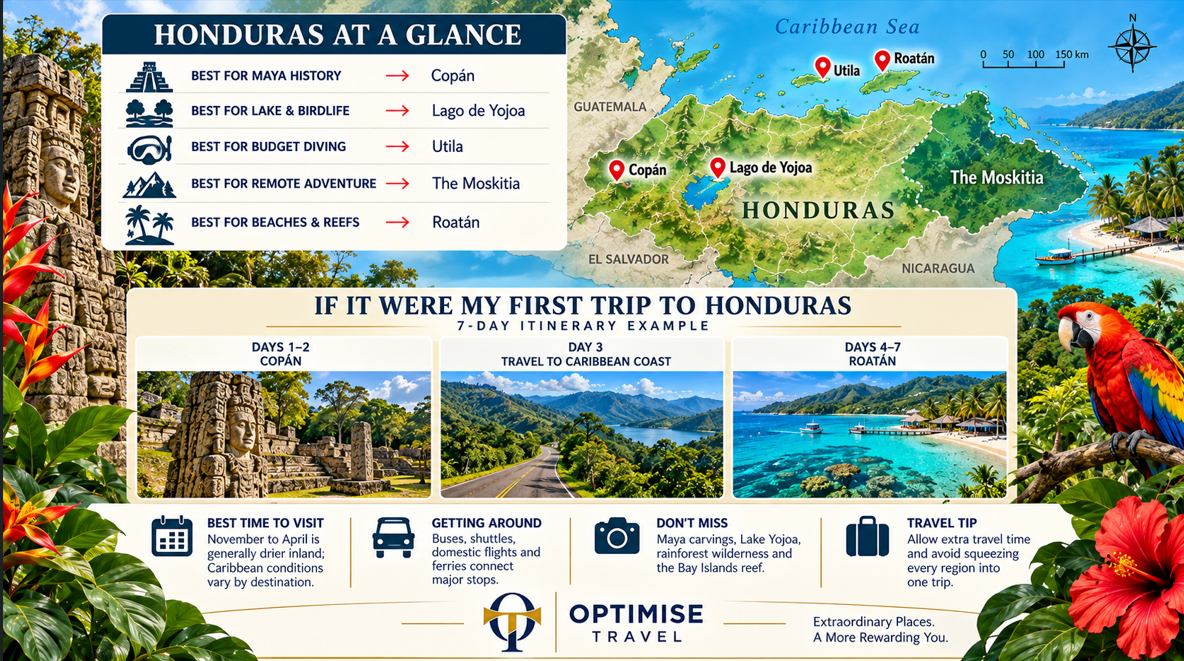
Honduras takes more time to travel around than its size might suggest, so I wouldn't try to squeeze all five places into a one-week trip.
With seven days, I'd concentrate on the west and Bay Islands. With two weeks, you have enough time to add Lago de Yojoa and a proper expedition into the Moskitia without making the entire trip feel like a race.
Honduras itinerary: 7 days
Route: Copán → Roatán
| Days 1-2 | Day 3 | Day 4-7 |
|---|---|---|---|
Destination | Copán | Travel to the Caribbean coast | Roatán |
Overnight | Copán Ruinas | Roatán | Roatán |
Why this route? For a Honduras itinerary of 7 days, I'd rather experience two of the country's highlights properly than lose too much time moving around.
Copán gives you two days of Maya history and culture before the trip changes completely on Roatán, where I'd spend the final four nights diving, snorkelling and enjoying the Caribbean.
*If diving is your priority, you could swap Roatán for Utila. I wouldn't try to visit both islands in a seven-day itinerary, as they offer some similar experiences and each deserves several nights.
Honduras itinerary: 2 weeks
Route: Copán → Lago de Yojoa → La Moskitia → Utila → Roatán
Week 1 | Days 1-2 | Days 3-4 | Days 5-6 |
|---|---|---|---|
Destination | Copán | Lago de Yojoa | The Moskitia |
Overnight | Copán Ruinas | Lago de Yojoa | Expedition accommodation |
Week 2 | Days 9-10 | Days 11-14 |
|---|---|---|
Destination | Utila | Roatán |
Overnight | Utila | Roatán |
Why this route? A Honduras itinerary of 2 weeks gives you enough time to see just how varied the country is. I'd start among the Maya ruins of Copán, slow down around Lago de Yojoa, then devote several days to the remote rainforest and rivers of the Moskitia.
I'd finish on the Bay Islands, experiencing Utila's backpacker and diving scene before giving myself four nights to explore and unwind on Roatán.
*The Moskitia is the wildcard in this itinerary. Reaching such a remote region depends on flights, boats, weather and your expedition operator, so I'd build the rest of the trip around those arrangements rather than treating Days 5–8 as fixed.
Why Honduras deserves more time than you might expect
Honduras was one of those countries where I quickly realised there was much more to experience than its relatively small size suggested.
Some of my favourite memories were completely different from one another, from admiring the intricate Maya carvings at Copán and slowing down beside Lago de Yojoa to exploring the remote rainforest of the Moskitia and getting underwater around the Bay Islands.
What stood out to me was the variety. Ancient ruins, cloud forests, enormous stretches of rainforest and Caribbean islands could all be part of the same trip.
If it's your first visit, I wouldn't try to see everything. I'd choose a few places that match the way you like to travel and give yourself enough time to actually enjoy them.
FAQs about visiting Honduras
The currency in Honduras is the Honduran lempira (HNL). Credit cards are widely accepted in larger towns, hotels and tourist areas, but I'd still carry some cash for smaller businesses and more remote destinations.
Visa requirements for Honduras depend on your nationality. Travellers from many countries can enter Honduras without a visa for tourism for up to 90 days, but you should check the latest Honduran entry requirements before travelling.
Driving in Honduras is possible, and traffic travels on the right-hand side of the road. Main highways can be straightforward, but road conditions vary considerably, so I'd avoid driving after dark and allow extra time in rural and mountainous areas.
Safety conditions vary considerably across Honduras, and some areas experience higher levels of crime than established tourist destinations. I'd check current government travel advice, use reputable transport and tour operators, and take additional care when travelling between destinations.
Honduras primarily uses Type A and Type B electrical plugs, with a standard supply of 120V and 60Hz. Travellers from countries using different plug types or voltages may need an adapter or voltage converter.
Spanish is the official and most widely spoken language in Honduras. English is also commonly spoken in parts of the Bay Islands, particularly Roatán and Utila, while Indigenous and Afro-Indigenous languages are spoken in some communities.
Ready to explore Honduras? Optimise Travel is here to help
Honduras packs an incredible amount into one country, and deciding how to divide your time between Maya ruins, rainforest, lakes, cloud forests, and the Caribbean islands can be surprisingly difficult.
At Optimise Travel, we create personalized travel itineraries based on your interests, travel style, and budget.
Whether you're dreaming of exploring the ancient ruins of Copán, slowing down beside Lago de Yojoa, heading deep into the Moskitia, learning to dive on Utila, or snorkelling over the reefs of Roatán, we'll help you build an itinerary that makes the most of your time.
If you'd like help planning your trip to Honduras, click here to learn more about our concierge travel services.