


Everyone wants to know the secret to a free upgrade, and most of what's written about it online is a guess dressed up as advice.
I sat down with Maria Holmqvist, a former Etihad flight attendant with five years' experience based in Abu Dhabi, and asked her directly what actually decides who gets upgraded.
Her answer wasn't luck, or a trick. It came down to a handful of specific, controllable things.
Here's how to get upgraded to business class, according to someone who used to make the call.
Why airlines actually hand out upgrades
Maria's first point cuts against a lot of assumptions: it's ground staff, not flight attendants, who make the upgrade call, usually well before boarding. Flight attendants find out who's been upgraded the same way everyone else does, from the manifest.
Upgrades often happen when a group cancels at the last minute, and the extra catering is already loaded.
Rather than let it go to waste, ground staff will look for a reason to move a passenger up, which is a genuinely different story to the idea that upgrades are handed out at random.
Airlines also can't upgrade everyone who'd like one, and Maria was clear that doing so too freely is unfair to passengers who've paid full fare for business class.
Understanding that constraint is what makes the rest of her advice make sense, rather than reading as arbitrary tips.
I asked her how often this actually happens on a typical flight, and her answer was refreshingly honest: it varies enormously by route, airline, and even the specific day.
There's no reliable formula a passenger can game, which is exactly why the factors below matter more than any single trick.
Loyalty status is rule number one
When I asked Maria what mattered most, she didn't hesitate. Loyalty status, she said, is rule number one, absolutely, a hundred percent.
Frequent flyers are the passengers airlines most want to keep happy, and an unexpected upgrade is one of the cheapest ways to do that.
If you fly a particular airline regularly, joining its loyalty program before your next trip is genuinely the single highest-leverage thing you can do.
It's worth saying plainly: status won't guarantee anything.
But according to someone who used to help decide these calls, it's the first thing ground staff look at, and it's also the one factor on this list that's entirely within your control before you've even booked the flight.
I think most people underestimate this detail. Signing up costs nothing, and even a mid-tier status earned through everyday spending on a linked credit card can shift you up the list without ever needing to fly business class to earn it.
How you present yourself still matters
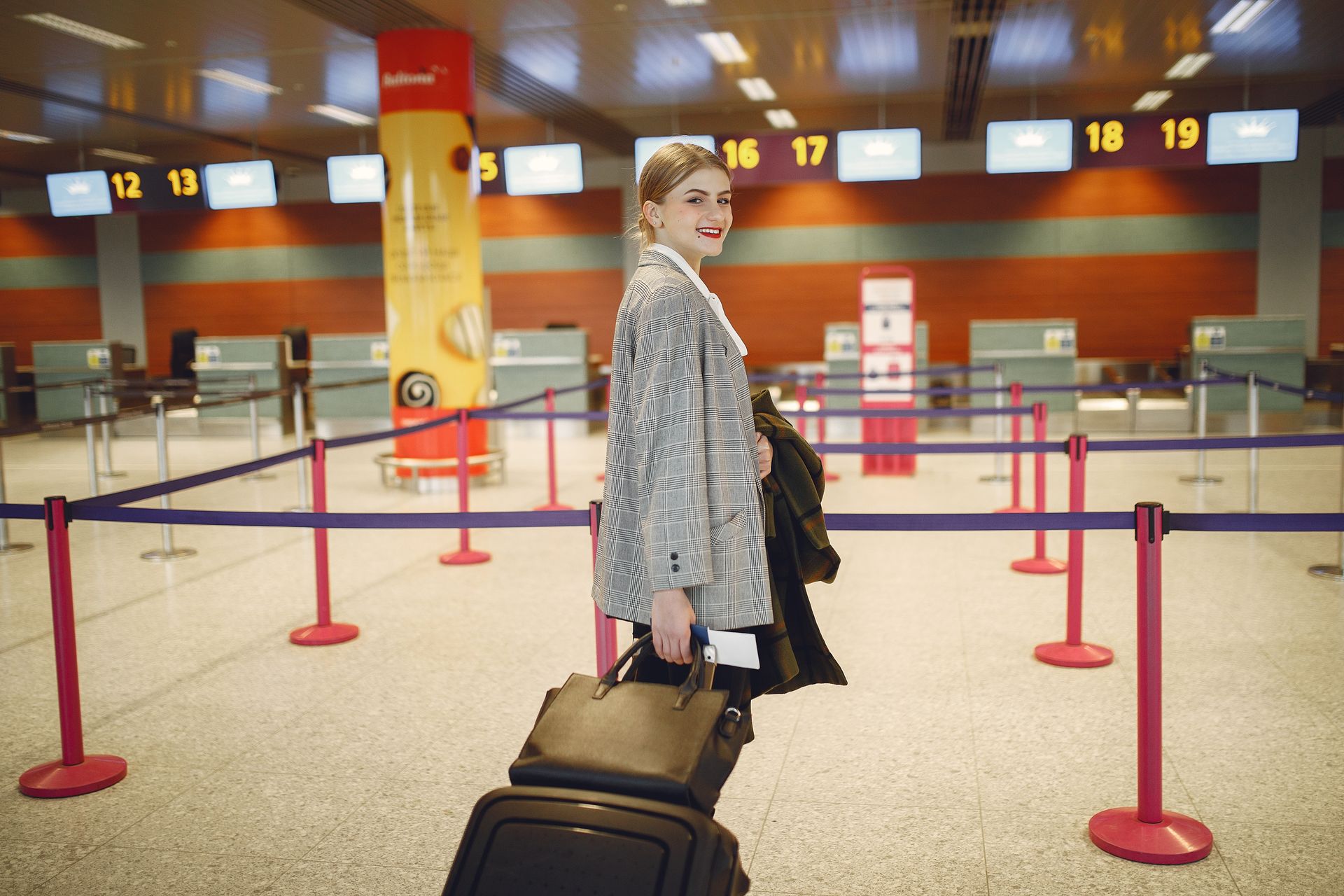
Maria was equally direct about this one: how you present yourself at check-in and the gate genuinely factors in. Dressing reasonably, not black tie, just presentable, makes a real difference to how staff perceive you.
Being polite rather than confrontational matters more than most people think. Ground staff remember who was pleasant to deal with during a stressful delay, and who wasn't, and that impression can follow you to the upgrade decision.
One detail that surprised me: travelling alone, or without children, genuinely improves your odds, simply because a single seat is easier to reallocate than a full row.
It's not something you can always control, but it's worth knowing why a solo business trip sometimes gets lucky when a family holiday doesn't.
Maria also mentioned something worth remembering when things go wrong at the counter: how you handle a delay or a problem gets noticed just as much as how you look.
A passenger who stays calm and reasonable when a flight's been changed at the last minute stands out, for the right reasons, to staff who deal with frustration all day.
When and how to ask
Timing matters more than people assume. Maria's advice was specific: don't rush to be first in the check-in queue. Ground staff are still finalising the manifest early on, and upgrade decisions tend to firm up a little later.
It's genuinely fine to ask politely, even once you're already on board, if a seat still looks empty. The key word is politely. A confident, friendly request costs nothing and occasionally works.
What doesn't work, and Maria was firm on this, is seating yourself in business class uninvited and hoping nobody notices. That's the fastest way to guarantee you don't get asked back.
Honestly, I think the politeness point deserves more weight than it usually gets.
Maria described watching colleagues quietly pass over passengers who'd been rude earlier in the process, even when they technically qualified on paper.
The upgrade decision isn't purely mechanical, and a good attitude is one of the few things a passenger can control completely.
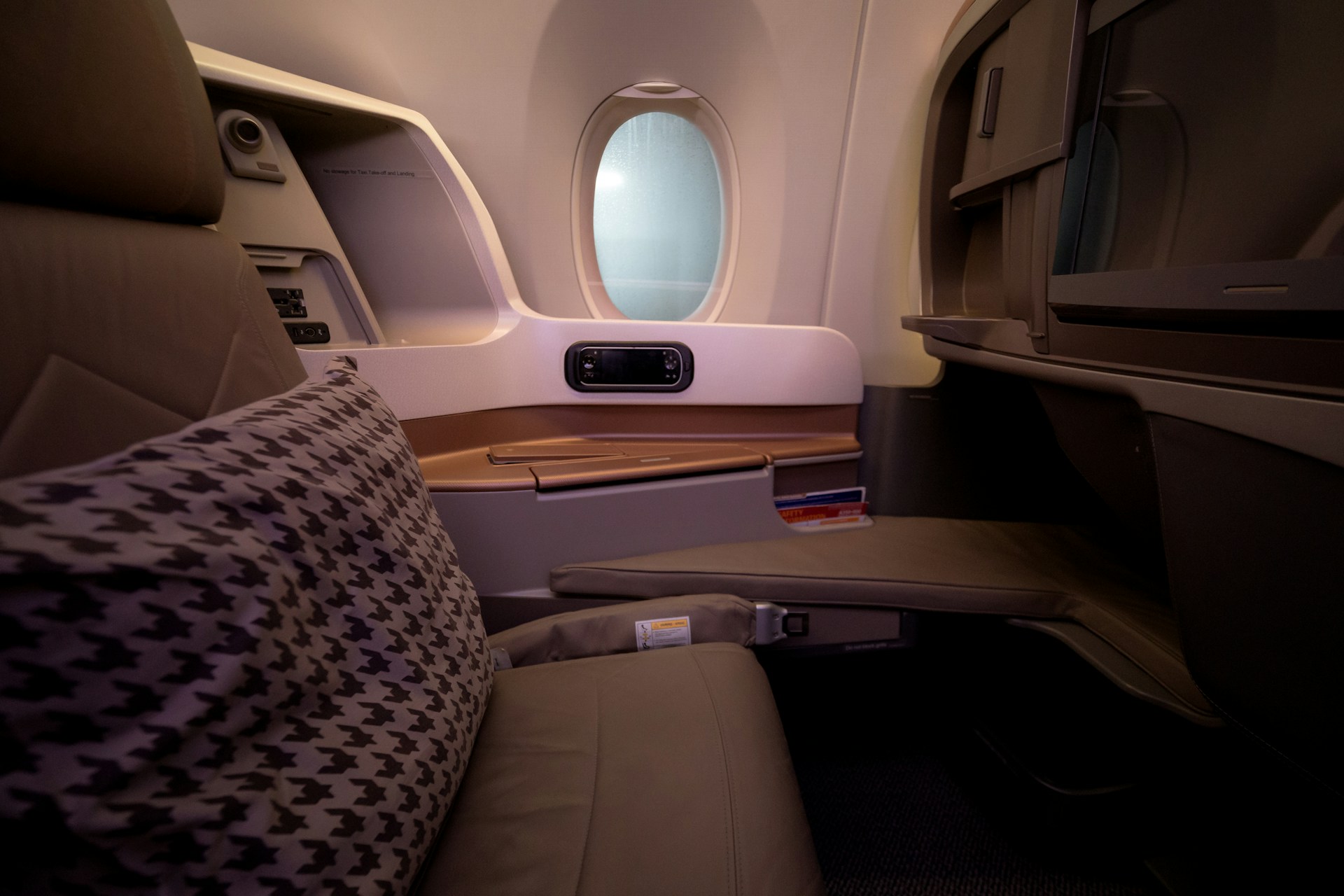
Upgrade bidding programs: the modern option
Everything Maria described is about improving your chances of a free, discretionary upgrade. But another route now gives you more control: bidding for one.
Systems like Plusgrade, which are used by many major airlines, allow eligible passengers to make an offer for an upgrade before departure. If the airline accepts your bid, you pay the amount offered and move into the higher cabin.
How upgrade bidding usually works
- 1You receive an invitation. This may appear after booking, by email, or when managing your flight online.
- 2You choose your bid. The airline will usually set a minimum amount, and you decide how much you're willing to offer.
- 3The airline reviews the bids. Whether yours succeeds depends on factors such as availability and the airline's own criteria.
- 4You find out before departure. If your bid is accepted, you're charged, and your booking is upgraded.
Decide what business class is actually worth to you before placing a bid. It's easy to get caught up in trying to "win," but an upgrade isn't a bargain if you've offered more than you wanted to spend.
I wouldn't see bidding as a replacement for Maria's advice. Loyalty status and how you deal with airline staff can still matter when discretionary upgrades are available.
Bidding simply gives you another option when you'd rather put a price on the upgrade than rely entirely on luck.
Not every airline or ticket is eligible, so check the upgrade options attached to your booking rather than assuming you'll be able to bid.
A quick checklist before your next flight
A distilled version of everything above, worth glancing at before you fly:
Get more from every flight, not just the upgrade
An upgrade ultimately comes down to a handful of controllable factors and genuine luck, and Maria's insight makes that distinction a lot clearer than most advice online manages. None of it is a guaranteed trick, but all of it genuinely shifts the odds in your favour.
The same thinking, understanding what an airline actually wants and booking with that in mind, applies well beyond the upgrade question.
If working that out for an entire trip sounds like more than you want to manage yourself, that's exactly what our personalised travel planning service is built for. We bring the same kind of insider thinking to how a trip gets booked overall.
Frequently asked questions
Yes, many major airlines run bidding programs like Plusgrade that let you offer an amount for an upgrade before you fly.
Not necessarily. Being first in the queue doesn't help much, since ground staff are often still finalising upgrade decisions early in the check-in window.
International flights generally offer more upgrade opportunities, since business class cabins are larger and more likely to have empty seats worth filling.
Rarely, since most budget airlines don't operate a genuine business class cabin. Upgrades are far more relevant on full-service international carriers.
It's still worth asking, though the odds are generally lower, since a single seat is easier for an airline to reallocate than several seats together.
Great artice – Very insightful! Thank you for the tip – will always ask for an upgrade now!