

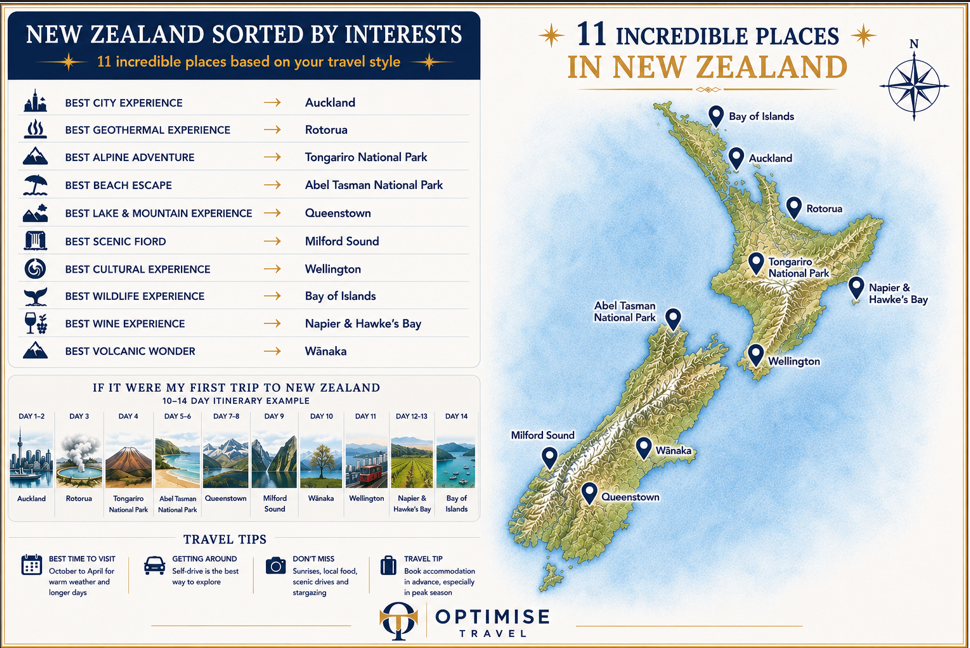
New Zealand packs an incredible amount of scenery into a surprisingly small country.
During my travels, I found glaciers, fjords, volcanic landscapes, ancient forests, and some of the most beautiful coastlines I've ever seen.
What surprised me most was how dramatically the scenery changed from one region to the next. If you're planning a trip, these are the 11 places in New Zealand that I think deserve a spot on your itinerary.
Have You Seen Our Travel Concierge Service?
Your trip, planned by local experts
We are not a travel agent - we design custom itineraries around your budget and style, without receiving commissions or booking fees.
Custom itinerary
Built around your dates, budget, and travel style.
Local expert knowledge
Recommendations from people on the ground, not review sites.
Travel smarter, spend less
We optimise for your budget to make your money go further.
Bay of Islands
Bay of Islands at a glance
North Island
Sailing, history, beaches, coastal scenery
2 - 3 days
Couples, first-time visitors, history lovers
Kerikeri Airport
December - March
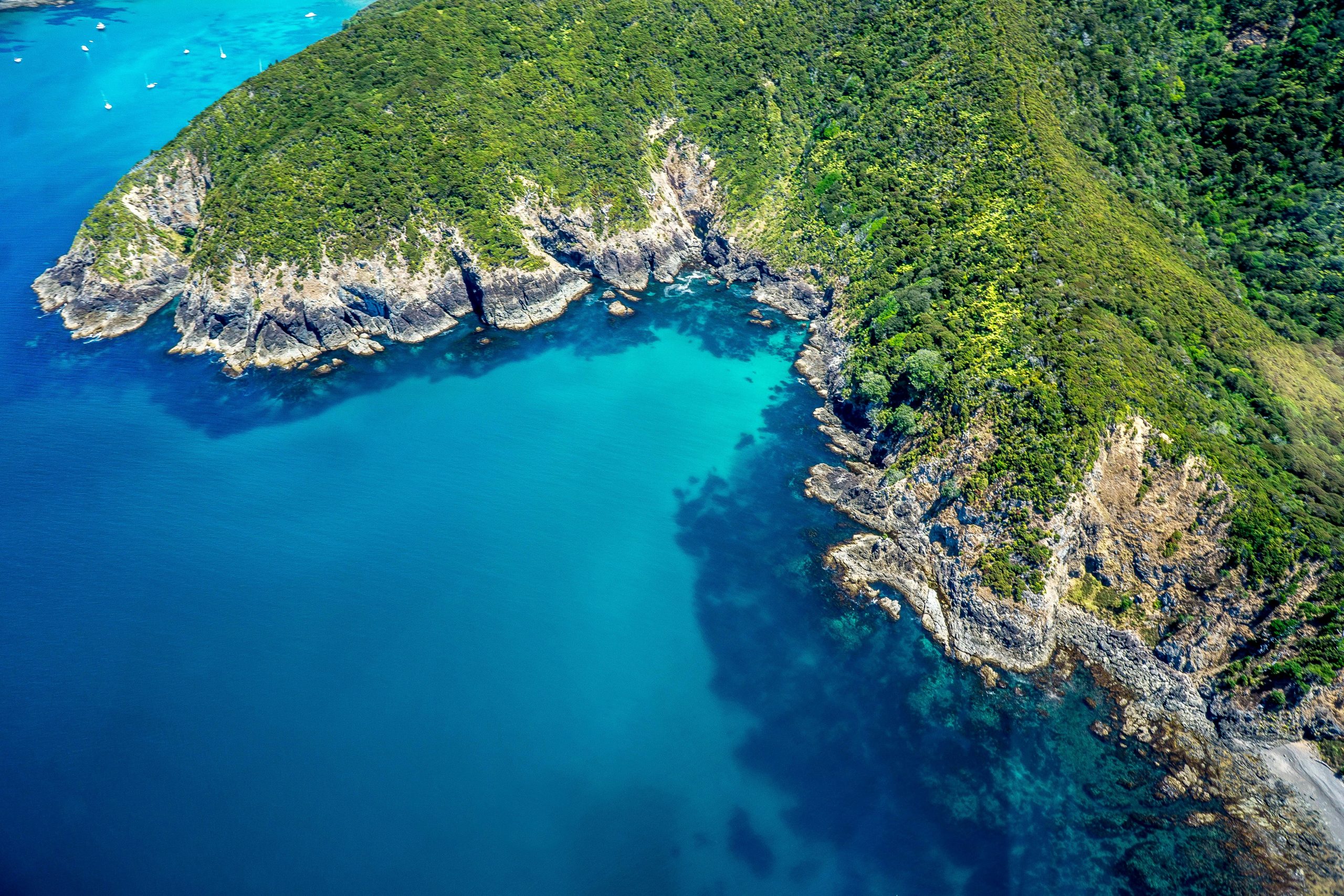
The Bay of Islands was one of the places that completely changed my expectations of New Zealand. Before visiting, I thought of the country mostly in terms of mountains, glaciers, and dramatic landscapes.
I wasn't expecting some of the most beautiful coastal scenery I would encounter anywhere in the country.
What I loved most was the combination of history and water. Visiting the Waitangi Treaty Grounds gave me a much better understanding of New Zealand's story, while the nearby town of Russell quickly became one of my favorite places in the North Island.
Sitting on the waterfront in the evening, it was easy to understand why people stay far longer than they planned.
If I had to choose one experience, it would be spending a day on the water. Sailing between the islands on a clear summer day, with secluded beaches and green hills in every direction, felt like the Bay of Islands at its absolute best.
The Bay of Islands reminded me that some of New Zealand's most memorable places aren't the highest mountains or the most famous viewpoints, but the destinations that encourage you to slow down.
How the Bay of Islands fits into your New Zealand itinerary
The Bay of Islands works particularly well as a northern extension from Auckland and is one of the highlights of the North Island.
I think it's an excellent addition for first-time visitors who want to combine coastal scenery, history, and a more relaxed pace before heading south.
Napier & Hawke's Bay
(pronounced: NAY-pee-er)
Napier & Hawke’s Bay at a glance
North Island
Wine, architecture, food, coastal scenery
2 - 3 days
Couples, food lovers, coastal scenery
Hawke's Bay Airport
February
Napier feels completely different from almost everywhere else in New Zealand. While much of the country is defined by mountains, lakes, and dramatic landscapes, this part of Hawke's Bay is all about architecture, wine, and a slower pace.
I found myself walking much more slowly than usual here.
The Art Deco buildings along Marine Parade and the surrounding streets seem to catch the morning light perfectly, and every façade has its own details, colors, and history.
The city feels remarkably cohesive, which makes sense when you learn that much of it was rebuilt after the 1931 earthquake.
Beyond the city, Hawke's Bay offers another side of the region entirely. I spent time visiting wineries, driving through rolling countryside, and watching thousands of gannets soaring above the cliffs at Cape Kidnappers.
If many New Zealand destinations are about dramatic scenery, Napier is about atmosphere. It was one of the few places where I found myself slowing down, ordering another glass of wine, and staying longer than I had planned.
How Napier & Hawke's Bay fit into your New Zealand itinerary
Napier works particularly well as part of a North Island road trip between Wellington, Rotorua, and Auckland.
I think it's an excellent stop for travelers who enjoy food, wine, history, and slower-paced destinations that feel very different from New Zealand's more famous natural attractions.
Nelson & Abel Tasman
(pronounced: AY-bel TAZ-man)
Nelson & Abel Tasman at a glance
South Island
Coastal walks, kayaking, beaches
3 - 4 days
Active travelers, couples, hikers
Nelson Airport
November - April
If I were recommending a place in New Zealand that combines beautiful scenery with a genuinely relaxing atmosphere, Nelson and Abel Tasman would be near the top of the list.
This part of the South Island feels warmer, sunnier, and more laid-back than many of the country's more dramatic destinations.
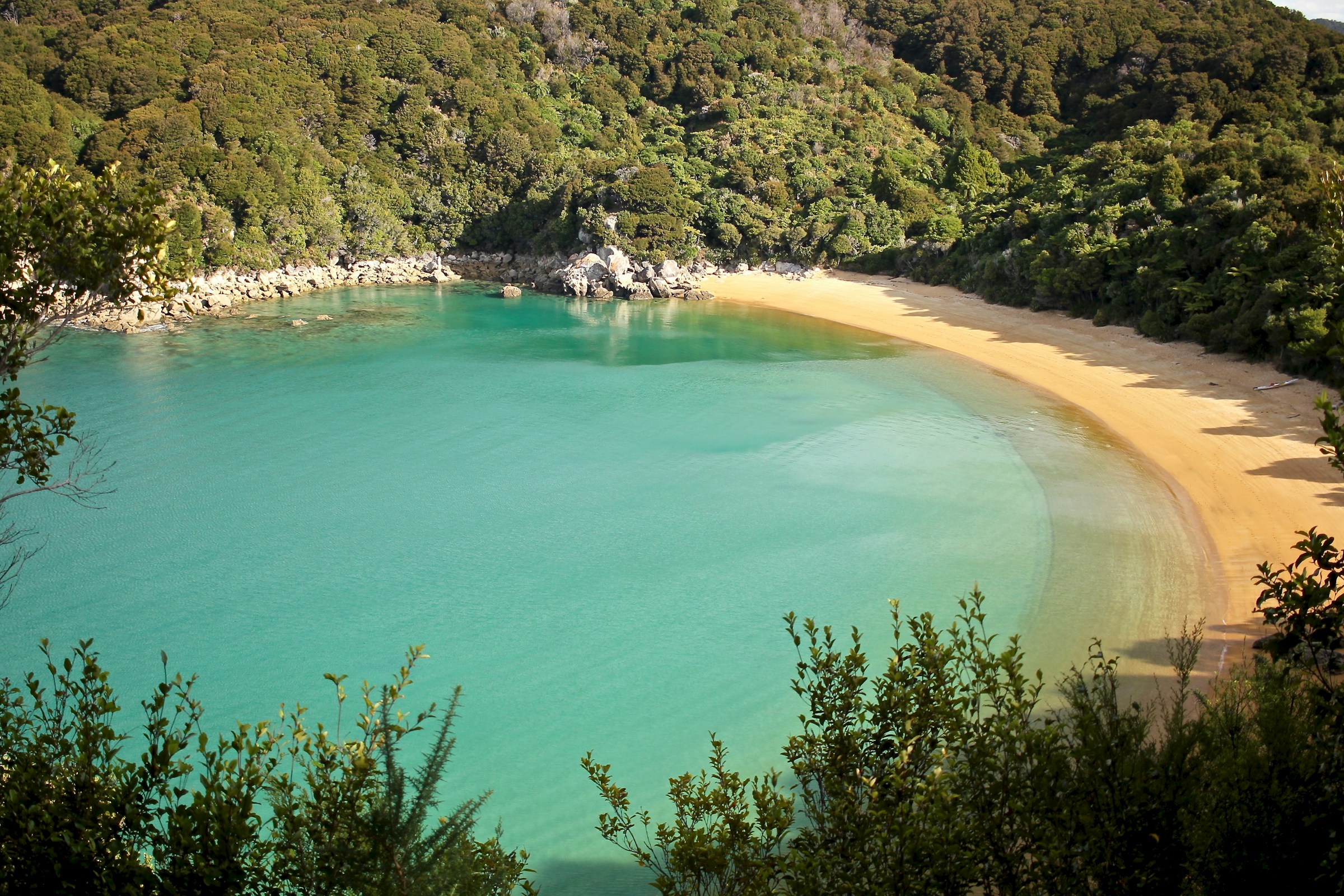
What makes Abel Tasman special is that you experience it from the water as much as from the land.
I loved that the coastal track doesn't force you to commit to a multi-day hike. Instead, you can combine walking, water taxis, and kayaking to create your own version of the park.
Some of my favorite moments happened on the water itself. Paddling past quiet beaches, watching fur seals resting on offshore rocks, and pulling into small bays that can only be reached by kayak made the entire coastline feel surprisingly secluded.
Back in Nelson, the atmosphere shifts completely. The markets, cafés, breweries, and relaxed pace make it a place where I found myself slowing down and staying longer than I had intended.
How Nelson & Abel Tasman fit into your New Zealand itinerary
Nelson and Abel Tasman work particularly well as part of a South Island road trip, especially for travelers who want a break from mountains and long drives.
I think this region appeals most to people looking for beaches, gentle outdoor activities, and a slower pace than Queenstown or the Southern Alps.
Rotorua
(pronounced: roh-toh-ROO-ah)
Rotorua at a glance
North Island
Geothermal landscapes, Māori culture, unique experiences
2 - 3 days
First-time visitors, families, culture enthusiasts
Rotorua Airport
Year-round
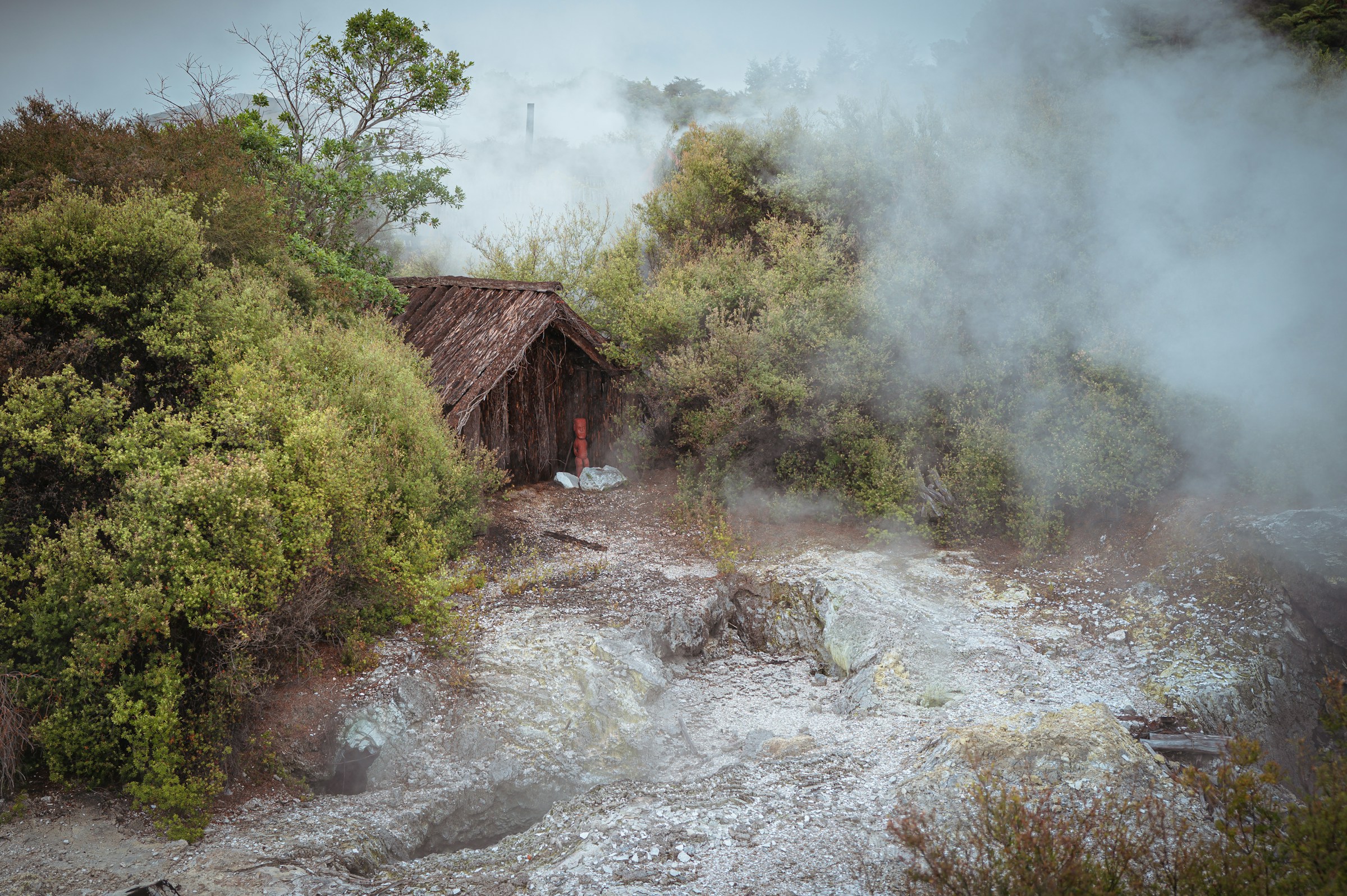
No place in New Zealand feels quite like Rotorua. Long before I saw my first geyser or geothermal pool, I could smell the city. The sulphur hangs in the air, steam rises from parks and roadside vents, and it quickly becomes clear that this is an active volcanic landscape rather than simply a collection of tourist attractions.
The geothermal areas were even more impressive than I expected. Standing beside the Champagne Pool at Wai-O-Tapu, with its vivid colors and constantly steaming water, felt almost otherworldly.
Pohutu Geyser erupting above the thermal valley at Whakarewarewa was equally memorable, especially knowing that the surrounding village has used these geothermal features for cooking and heating for generations.
What sets Rotorua apart, though, is the close connection between the landscape and Māori culture. Sharing a hangi meal and watching a kapa haka performance gave me a much deeper appreciation for the history of the region.
Rotorua also works surprisingly well as a base. Whether it's a day trip to Hobbiton (a must!), mountain biking through the forests, or simply soaking in a hot pool after a day of exploring, there is far more here than I initially expected.
How Rotorua fits into your New Zealand itinerary
Rotorua is one of the essential stops on a North Island itinerary and pairs particularly well with Auckland, Taupō, and the Bay of Plenty.
I think it offers one of the most distinctive experiences in New Zealand, combining geothermal landscapes, Māori culture, and activities that you simply won't find elsewhere in the country.
Wānaka
(pronounced: WAH-nah-kah)
Wānaka at a glance
South Island
Lakes, hiking, relaxation, scenery
2 - 4 days
Couples, hikers, photographers
Queenstown Airport
December-March for hiking, lake activities, and warm weather; June-September for skiing
Wānaka was the place where I finally slowed down. After the energy and activity of Queenstown, arriving here felt like taking a deep breath.
The mountains are just as impressive, the lake is equally beautiful, and yet the entire town moves at a completely different pace.
I quickly found myself doing less and enjoying more. Morning coffee by the lake turned into long walks along the waterfront, and dinner often stretched well into the evening as the light faded over the mountains.
The fact that you can walk across the entire town in a matter of minutes only adds to the feeling that life is a little simpler here.
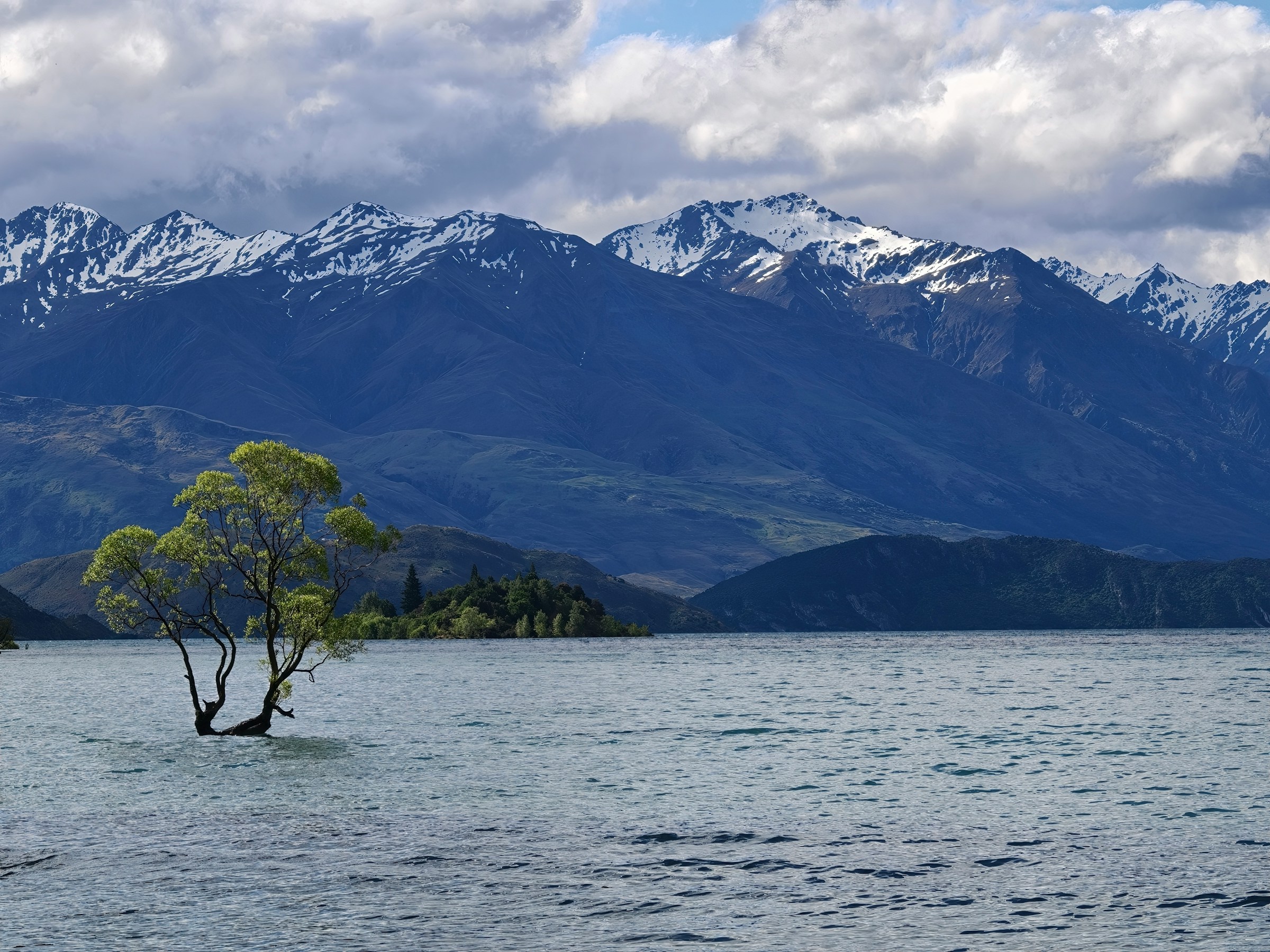
Of course, the scenery is extraordinary. The climb up Roy's Peak delivers one of the finest views in New Zealand, and seeing the famous Wānaka Tree reflected in perfectly still water at sunrise completely justified its reputation.
What makes Wānaka special, though, is that it never feels as though it's trying to impress you. The mountains, the lake, and the town all seem to exist in perfect balance, and I found myself wishing I had planned to stay longer.
How Wānaka fits into your New Zealand itinerary
Wānaka works beautifully as part of a South Island itinerary and pairs naturally with Queenstown, Mount Cook, and the West Coast. I think it's particularly well-suited to travelers who want spectacular scenery without the busier atmosphere of Queenstown.
Wellington
Wellington at a glance
North Island
Museums, food, culture, city life
2 - 3 days
City lovers, foodies, culture enthusiasts
Wellington Airport
Year-round
Wellington grew on me more than any other city in New Zealand. It doesn't have Auckland's size or Queenstown's scenery, but after a day or two, I began to understand why so many New Zealanders say it's the city they'd most like to live in.
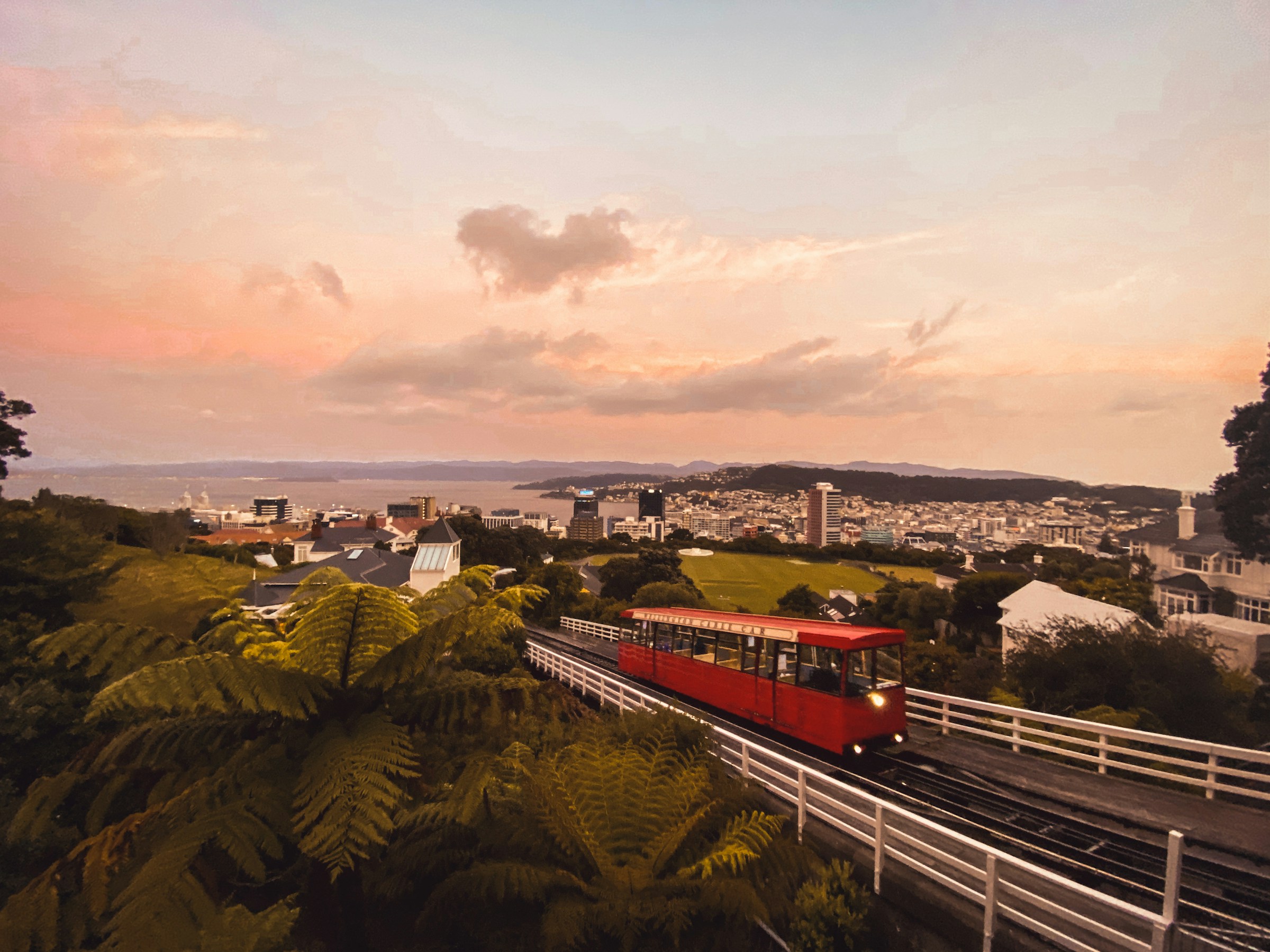
What I enjoyed most was how easy the city felt. You can walk from the waterfront to Cuba Street in a matter of minutes, ride the cable car into the hills, and spend an entire afternoon at Te Papa without ever needing a car.
The city feels compact, creative, and surprisingly energetic for its size.
Te Papa ended up taking far more of my time than I expected. I walked in planning a quick visit and left several hours later with a much deeper understanding of New Zealand's history and culture.
Later that evening, wandering through Cuba Street and finding live music, independent cafés, and busy restaurants made the city feel even more distinctive.
Wellington may not have New Zealand's biggest mountains or most famous landscapes, but I think it offers the country's best urban experience.
How Wellington fits into your New Zealand itinerary
Wellington works perfectly as either the beginning or end of a North Island trip and also serves as the gateway to the South Island ferry crossing. I think it appeals most to travelers who enjoy museums, food, culture, and cities with a strong local personality.
Auckland
(pronounced: AWK-land)
Auckland at a glance
North Island
City life, food, islands, day trips
2 - 3 days
First-time visitors, food lovers, couples
Auckland Airport
January - March
Most travelers arrive in Auckland and immediately start planning how to leave it for the rest of New Zealand.
I think that's a mistake. While Auckland may not have the dramatic scenery of the South Island, it offers something different: a fascinating mix of urban life, volcanic landscapes, and easy access to the sea.
What struck me most was how connected the city feels to the water. Ferries leave the downtown waterfront for islands scattered across the Hauraki Gulf, and some of my favorite experiences happened just beyond the city itself.
Spending an afternoon on Waiheke Island, walking between vineyards and looking back toward Auckland across the water, ended up being one of the highlights of my time here.
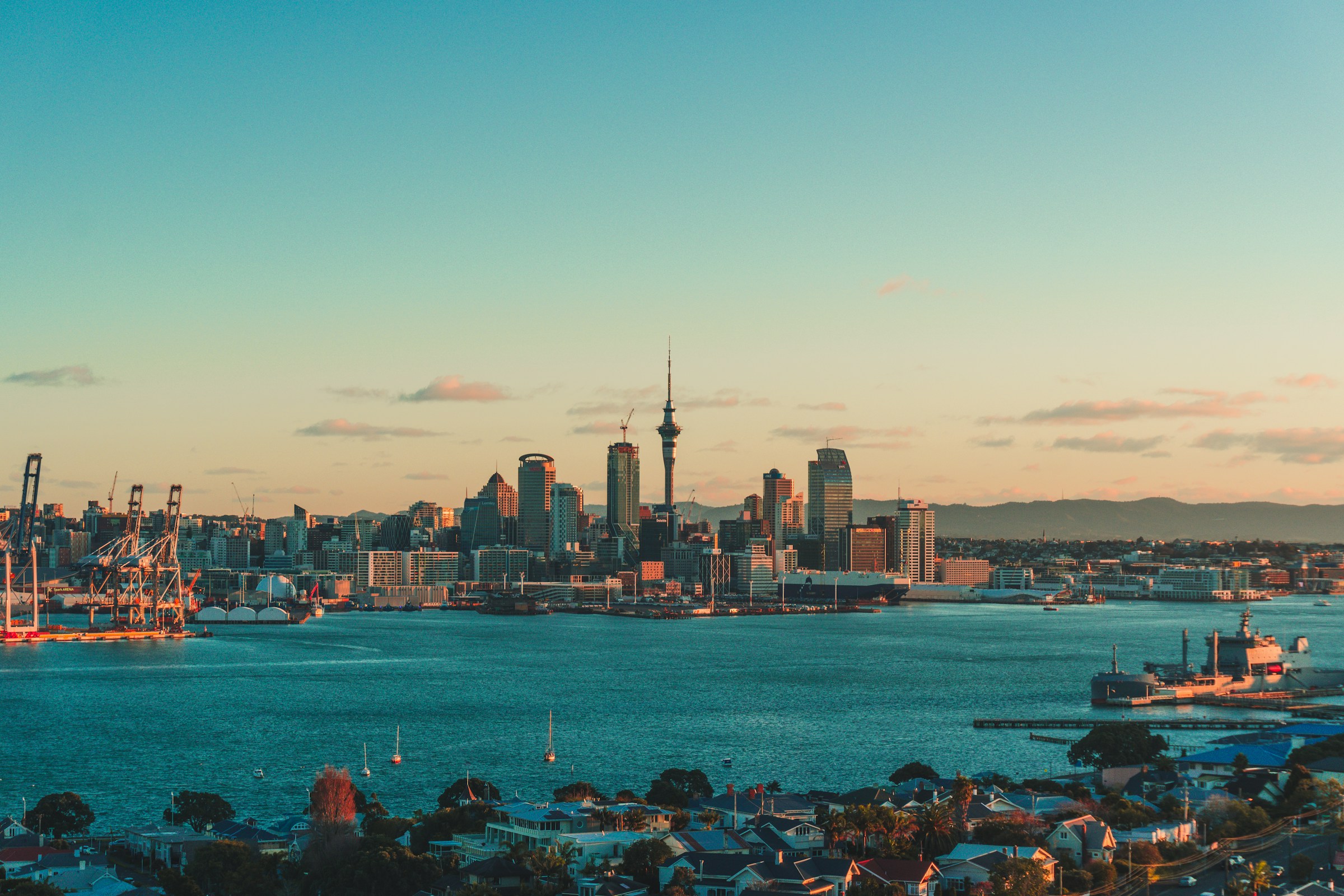
I also loved the variety. One day can include a city skyline view from the Sky Tower, a ferry ride to a volcanic island, and a sunset on the black-sand beaches of Piha. Few cities offer that kind of diversity within such a short distance.
Auckland may be New Zealand's largest city, but it often feels more like a collection of coastal communities connected by harbors and green volcanic hills.
How Auckland fits into your New Zealand itinerary
Auckland is the gateway to New Zealand and the starting point for most North Island itineraries.
I think it's worth spending at least a couple of days here before heading further afield, particularly if you enjoy food, waterfront cities, and easy day trips that combine nature and culture.
Tongariro National Park
(pronounced: tong-gah-REE-roh)
Tongariro National Park at a glance
North Island
Hiking, volcanic landscapes, adventure
1 - 2 days
Hikers, active travelers, photographers
Taupō Airport
November-April for hiking; June-September for skiing
Some places become so famous that you begin to wonder whether they can possibly live up to their reputation.
The Tongariro Alpine Crossing was one of those places for me, and somehow it still exceeded my expectations.
The first thing that struck me was how quickly the landscape changes.
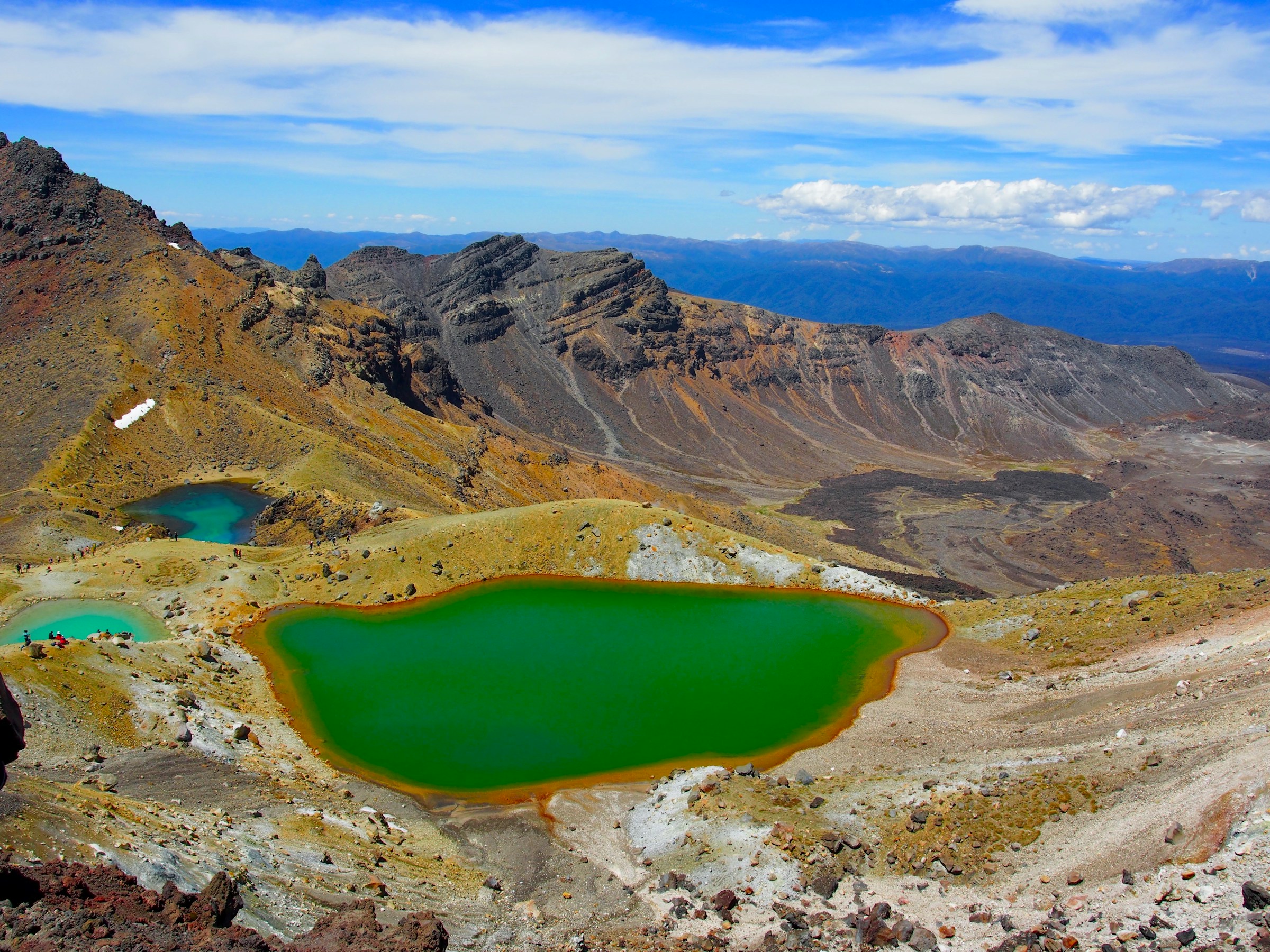
One moment you're walking across alpine meadows, and an hour later you're climbing through red volcanic rock with steam rising from the ground around you.
The Emerald Lakes genuinely look unreal, their bright colors contrasting against the dark volcanic terrain in a way that almost feels artificial.
What I appreciated most about Tongariro was that the scenery feels earned. The crossing is challenging enough that reaching the highest sections gives you a real sense of accomplishment, and the changing landscapes keep the entire day interesting.
Even people who aren't particularly interested in hiking often recognize Mount Ngauruhoe from the Lord of the Rings films, but for me, the volcanic landscape itself became the real attraction.
Few places in New Zealand feel this dramatic or this different from everything around them.
How Tongariro National Park fits into your New Zealand itinerary
Tongariro is one of the essential stops on a North Island itinerary, particularly for active travelers. I think it works best between Auckland and Wellington and offers some of the most dramatic landscapes you'll find anywhere on the North Island.
Aoraki & Mount Cook
(pronounced: ah-oh-RAH-kee)
Aoraki & Mount Cook at a glance
South Island
Mountain scenery, hiking, stargazing
2 - 3 days
Photographers, hikers, first-time visitors
Christchurch Airport
June-August for snowy scenery; November-March for hiking
There are very few places where the drive to the destination becomes just as memorable as the destination itself.
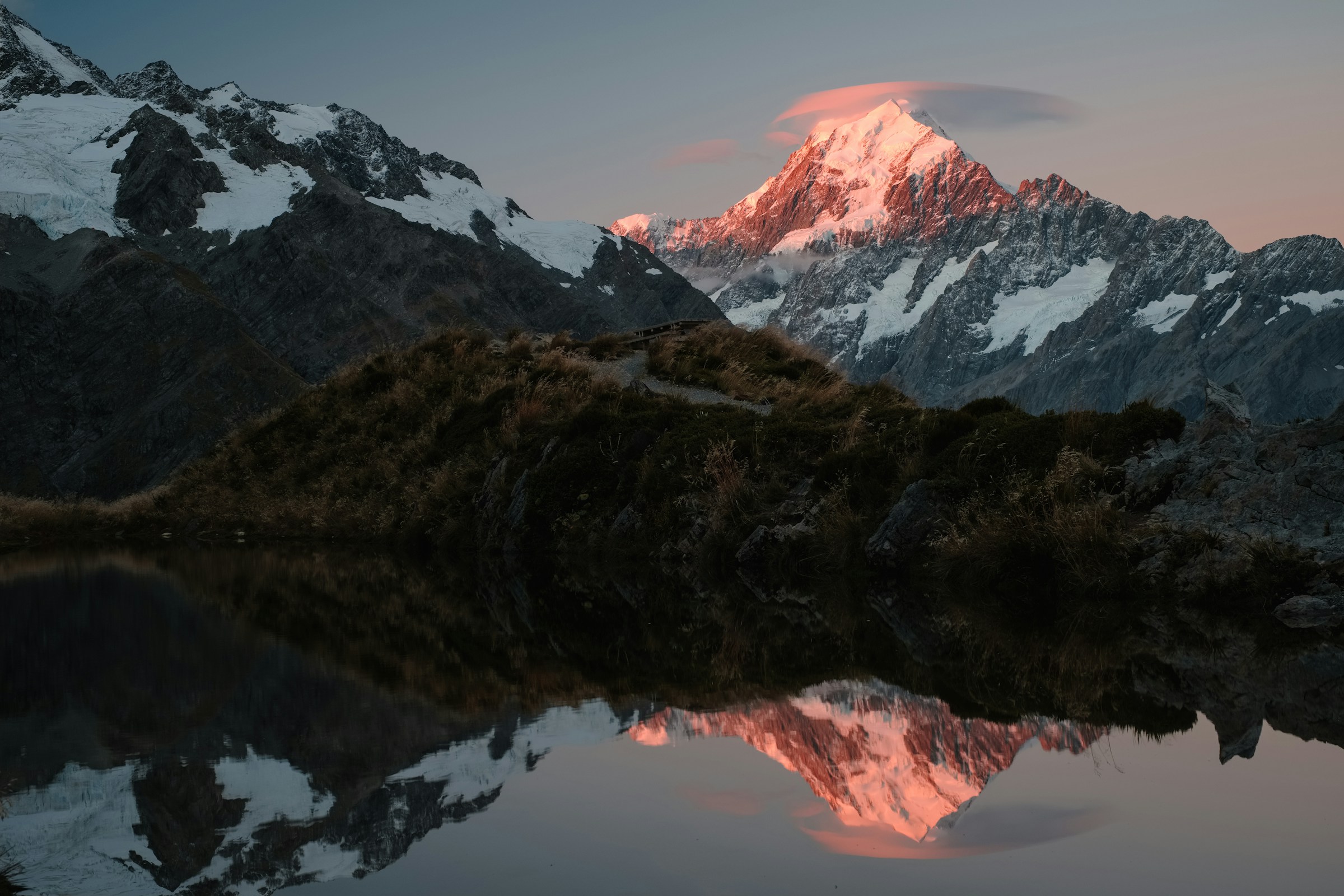
The approach to Aoraki & Mount Cook along Lake Pūkaki was one of those experiences for me. The color of the lake hardly seems believable, and the mountain gradually grows larger in front of you until it dominates the entire landscape.
What impressed me most about Mount Cook was the sheer scale of everything.
The valleys feel enormous, the glaciers seem impossibly large, and the surrounding peaks make you feel very small very quickly. Even relatively easy walks here deliver views that would require major hikes in many other countries.
The Hooker Valley Track ended up being one of my favorite walks in New Zealand.
Crossing the suspension bridges and arriving at the glacial lake, with icebergs floating beneath Aoraki itself, felt almost unreal. Later that evening, when the clouds finally cleared and the stars appeared above the mountains, I understood why so many people consider this one of New Zealand's most special places.
For me, Mount Cook isn't simply a mountain destination. It's where New Zealand's landscapes feel their largest and most dramatic.
How Aoraki / Mount Cook fits into your New Zealand itinerary
Aoraki / Mount Cook is one of the essential stops on a South Island road trip and pairs naturally with Wānaka, Queenstown, and Christchurch. I think it offers some of the finest mountain scenery in the country and is particularly rewarding for travelers who enjoy hiking, photography, and dramatic landscapes.
Milford Sound / Fiordland
Milford Sound / Fiordland at a glance
South Island
Fjords, cruises, hiking, dramatic scenery
1 - 2 days
First-time visitors, photographers, nature lovers
Queenstown Airport
October-April, though beautiful year-round
Milford Sound is one of the few places I've visited that somehow manages to exceed the photographs.
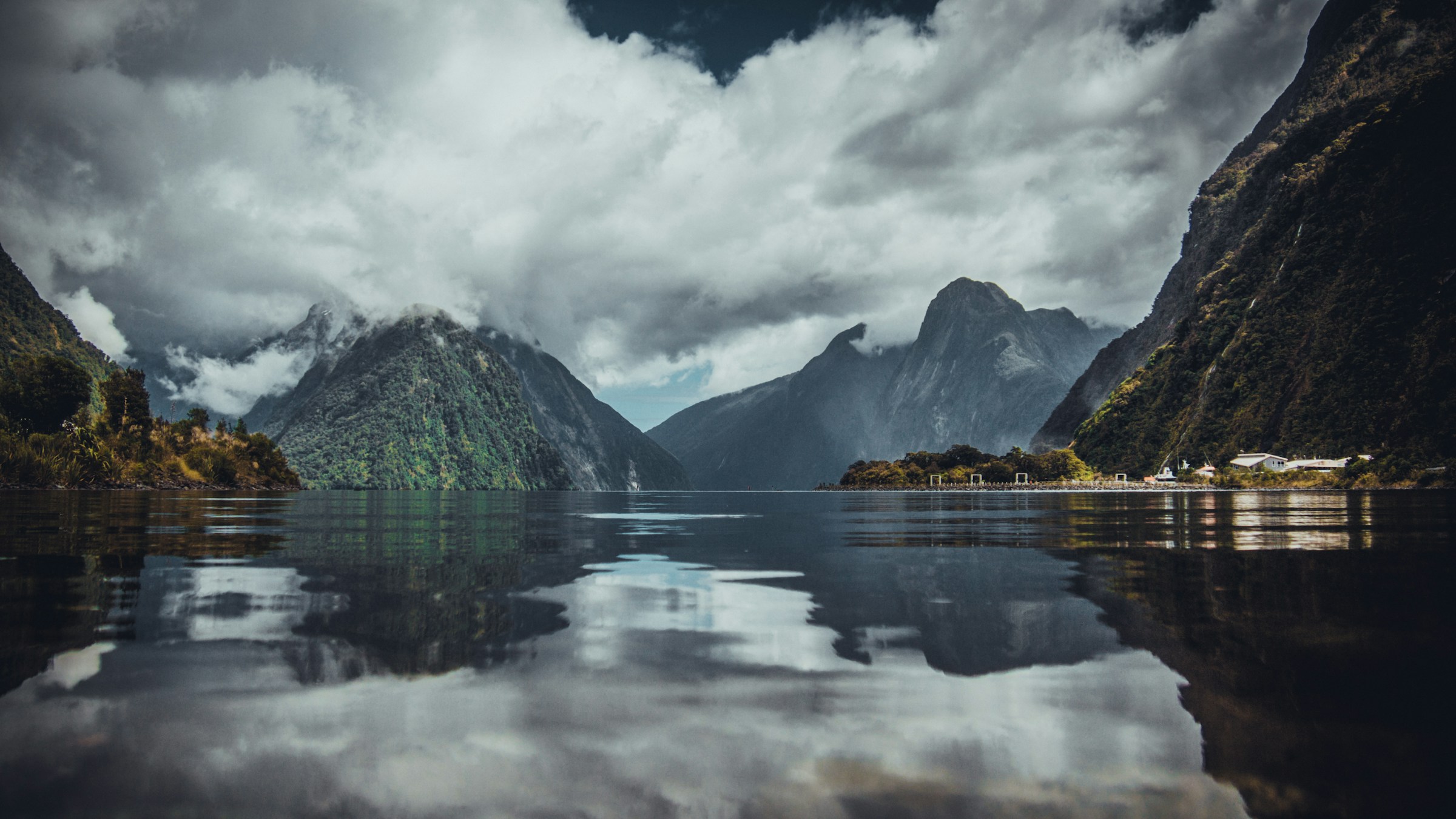
The scale is difficult to appreciate until you're actually there, standing at the water's edge with cliffs rising almost vertically around you.
The drive into Fiordland is part of the experience. As the road climbs toward the Homer Tunnel, the landscape becomes progressively wilder, and by the time you emerge on the other side, it feels as though you've entered an entirely different world.
Every corner seems to reveal another waterfall, valley, or mountain face.
What I found most fascinating about Milford Sound is that the weather almost doesn't matter.
On clear days, Mitre Peak reflects perfectly in the water and the scenery feels impossibly grand. During rain, hundreds of temporary waterfalls appear on the cliffs, clouds descend into the fjord, and the entire landscape becomes even more dramatic.
I particularly loved exploring the fjord by kayak. Sitting at water level, with the cliffs towering overhead and almost complete silence around me, felt very different from experiencing it aboard a larger boat.
There are many beautiful places in New Zealand, but Milford Sound is one of the very few that feels genuinely overwhelming.
How Milford Sound fits into your New Zealand itinerary
Milford Sound is one of the essential experiences on a South Island itinerary and, for many travelers, becomes the highlight of their entire trip.
I think it pairs best with Queenstown, Wānaka, and Te Anau, and I would find it very difficult to recommend a South Island itinerary that doesn't include it.
Queenstown
Queenstown at a glance
South Island
Adventure, scenery, skiing, food and wine
First-time visitors, couples, adventure seekers
4 - 6 days
Queenstown Airport
December-March for hiking and lake activities; June-September for skiing
If I had to choose one place that best captures everything people imagine New Zealand to be, it would probably be Queenstown.
The mountains are dramatic, the lake is beautiful, and almost every direction seems to lead to another unforgettable experience.
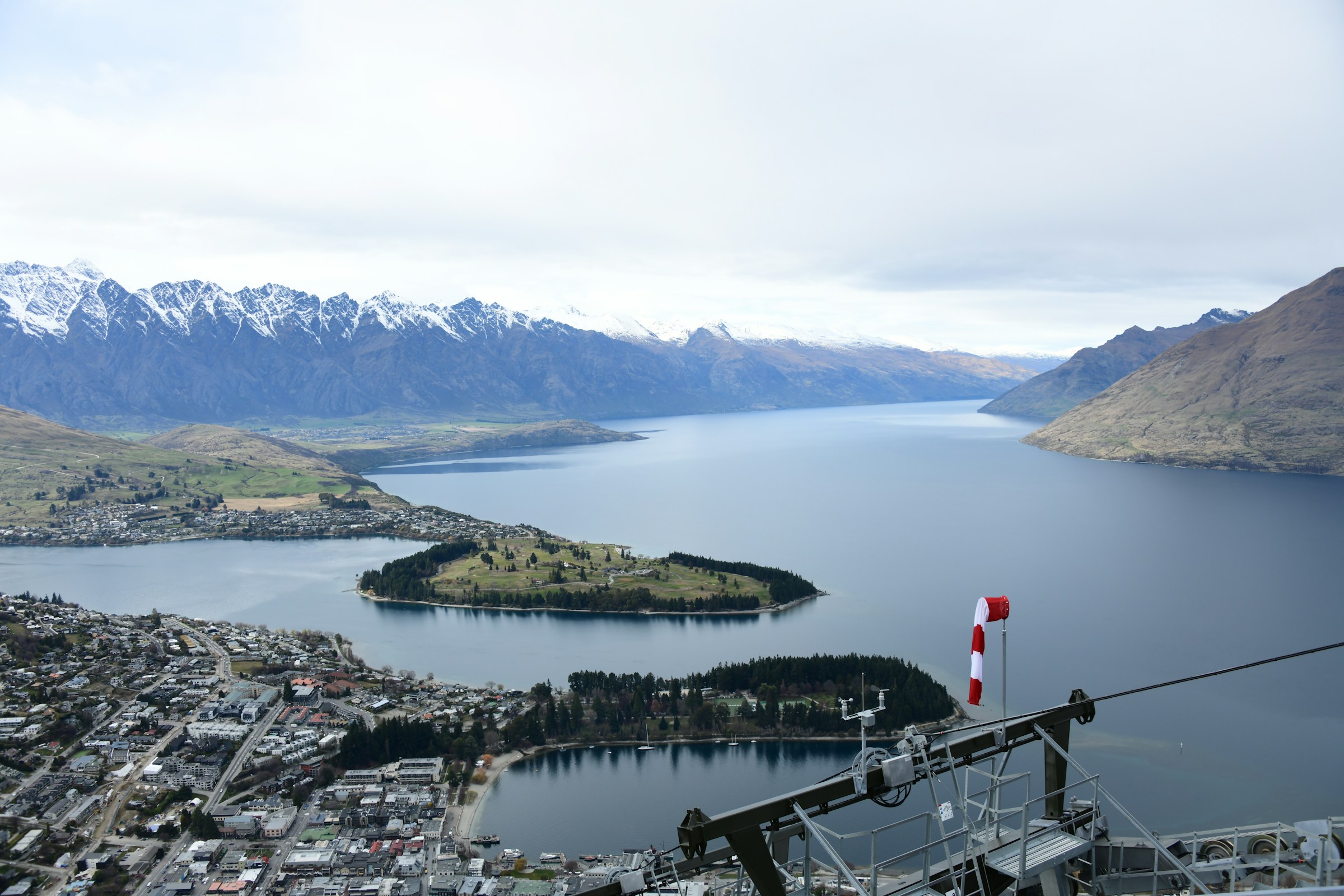
What makes Queenstown different from many scenic destinations is how much variety exists within such a small area. One morning might begin with a hike or a gondola ride above town, while the afternoon is spent exploring wineries, taking a cruise on Lake Wakatipu, or wandering the historic streets of nearby Arrowtown.
In winter, the ski fields are only a short drive away, while summer brings hiking, cycling, and countless opportunities to get out on the water.
For me, the best moment came before most people had even started their day. Taking the first gondola to Bob's Peak and watching the sun slowly reach the Remarkables while Queenstown remained in shadow below felt surprisingly peaceful for a town so well known for adventure.
Queenstown does almost everything well, which is probably why so man
How Queenstown fits into your New Zealand itinerary
Queenstown is, in my opinion, the essential destination on a South Island itinerary. It pairs perfectly with Milford Sound, Wānaka, and Aoraki / Mount Cook, and for first-time visitors, it often becomes the base around which the rest of the South Island trip is planned.
New Zealand may look relatively small on a map, but distances between destinations can be longer than expected, especially when mountain roads and ferry crossings are involved. Here are the routes I’d personally recommend based on the length of your trip.
New Zealand Itinerary: 7 Days
Route: Auckland → Rotorua → Tongariro National Park → Wellington
Header | Days 1-2 | Days 3-4 | Days 5-6 | Day 7 |
|---|---|---|---|---|
Destination | Auckland | Rotorua | Tongariro National Park | Wellington |
Overnight | Auckland | Rotorua | Tongariro National Park | Wellington (or departure) |
Why this route? This seven-day itinerary offers an excellent introduction to New Zealand’s North Island without requiring any domestic flights.
It combines Auckland’s waterfront and nearby islands, Rotorua’s geothermal landscapes and Māori culture, the dramatic volcanic scenery of Tongariro National Park, and the museums, food, and creative atmosphere of Wellington.
*Driving is recommended for this itinerary, particularly between Rotorua, Tongariro National Park, and Wellington.
New Zealand Itinerary: 10 Days
Route: Queenstown → Wānaka → Aoraki/Mount Cook → Queenstown → Milford Sound
Header | Days 1-3 | Days 4-5 | Days 6-7 | Day 8 | Days 9-10 |
|---|---|---|---|---|---|
Destination | Queenstown | Wānaka | Aoraki/ | Queenstown | Milford Sound |
Overnight | Queenstown | Wānaka | Aoraki/ | Queenstown | Queenstown (or departure) |
Why this route? If I had ten days for a first visit to New Zealand, I would focus on the lower South Island rather than trying to rush between both islands.
Returning to Queenstown after visiting Aoraki/Mount Cook makes it easier to reach Milford Sound and avoids trying to connect these destinations through more complicated mountain routes.
*Driving is required for most of this itinerary. Milford Sound can be visited on a long day trip from Queenstown, although staying near Te Anau the night before would make the journey easier.
New Zealand Itinerary: 14 Days
Route: Auckland → Rotorua → Tongariro National Park → Wellington → Queenstown → Wānaka → Aoraki/Mount Cook → Milford Sound
Week 1 | Days 1-2 | Days 3-4 | Days 5-6 | Day 7 |
|---|---|---|---|---|
Destination | Auckland | Rotorua | Tongariro National Park | Wellington |
Overnight | Auckland | Rotorua | Tongariro National Park | Wellington |
Week 2 | Days 8-9 | Days 10-11 | Days 12-13 | Day 14 |
|---|---|---|---|---|
Destination | Queenstown | Wānaka | Aoraki/ | Milford Sound |
Overnight | Queenstown | Wānaka | Aoraki/ | Queenstown (or departure) |
Why this route? This 14-day New Zealand itinerary provides a balanced introduction to both the North and South Islands. It begins with city life, geothermal landscapes, Māori culture, and volcanic scenery before continuing south to New Zealand’s alpine lakes, glaciers, mountains, and fiords.
*This itinerary requires a domestic flight between Wellington and Queenstown, followed by a rental car for the South Island portion.
Why I think everyone should visit New Zealand at least once
Some of my favorite travel memories in New Zealand haven't come from a single destination. They've come from the incredible contrast between places.
I can spend one day walking across an active volcanic landscape in Tongariro, the next kayaking along the golden beaches of Abel Tasman, and a few days later find myself standing beneath glaciers at Mount Cook or watching waterfalls pour down the cliffs of Milford Sound.
Few countries change this dramatically over such short distances.
If it's your first trip to New Zealand, don't feel like you need to see all eleven destinations. Some travelers will be drawn to the adventure and energy of Queenstown, while others may prefer the food and culture of Wellington, the geothermal landscapes of Rotorua, or the quieter beauty of Wānaka.
The best New Zealand itinerary is the one that matches your interests, your pace, and the experiences you'll still be talking about long after you return home.
FAQs about traveling to New Zealand
New Zealand uses the New Zealand dollar (NZD or NZ$) as its official currency.
Visa requirements depend on your nationality, but travelers from visa-waiver countries usually need an approved New Zealand Electronic Travel Authority (NZeTA) before departure.
Yes, driving is one of the best ways to explore New Zealand, but vehicles travel on the left-hand side and many rural roads are narrow, steep, or winding.
Yes, New Zealand is generally considered a safe destination, although travelers should still take normal precautions and prepare carefully for outdoor activities and changing weather.
New Zealand uses Type I plugs with a standard voltage of 230V and a frequency of 50Hz.
Ready to explore New Zealand? Optimise Travel is here to help
New Zealand is one of the world's great travel destinations, but planning an itinerary can be surprisingly difficult. Deciding how to divide your time between the North and South Islands, choosing which regions to prioritize, and balancing cities, mountains, coastlines, and national parks often becomes the hardest part of the trip.
At Optimise Travel, we create personalized travel itineraries based on your interests, travel style, and budget.
If you'd like help planning your New Zealand adventure, click here to learn more about our concierge travel services.