

Austria looks compact enough for a week of constant movement. My trips there have made me appreciate almost the opposite.
Vienna has repeatedly rewarded me for slowing down, Salzburg is a city I never seem to tire of, and some of my strongest Austrian memories come from the lakes and mountains around the Salzkammergut rather than another hotel change.
That is what shaped this seven-day route: Vienna → Salzburg, with a full day in the Salzkammergut.
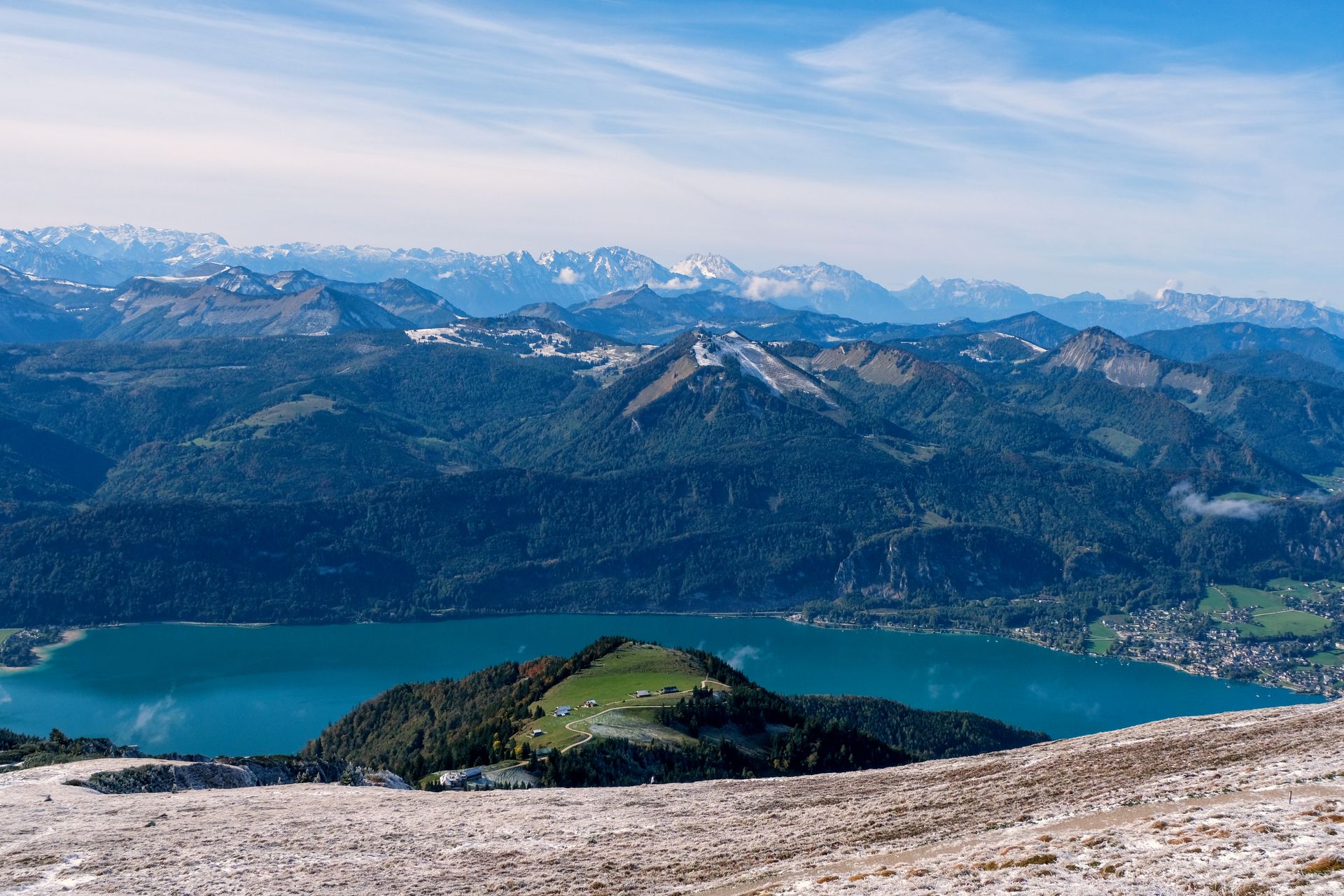
Lake Wolfgangsee and surrounding mountains in Sankt Wolfgang, Austria
My 7-day Austria itinerary at a glance
Overview
Day | Route | Overnight |
|---|---|---|
1 | Vienna | Vienna |
2 | Vienna | Vienna |
3 | Vienna | Vienna |
4 | Vienna → Salzburg | Salzburg |
5 | Salzburg | Salzburg |
6 | Salzkammergut / Hallstatt day trip | Salzburg |
7 | Salzburg | Departure or return to Vienna |
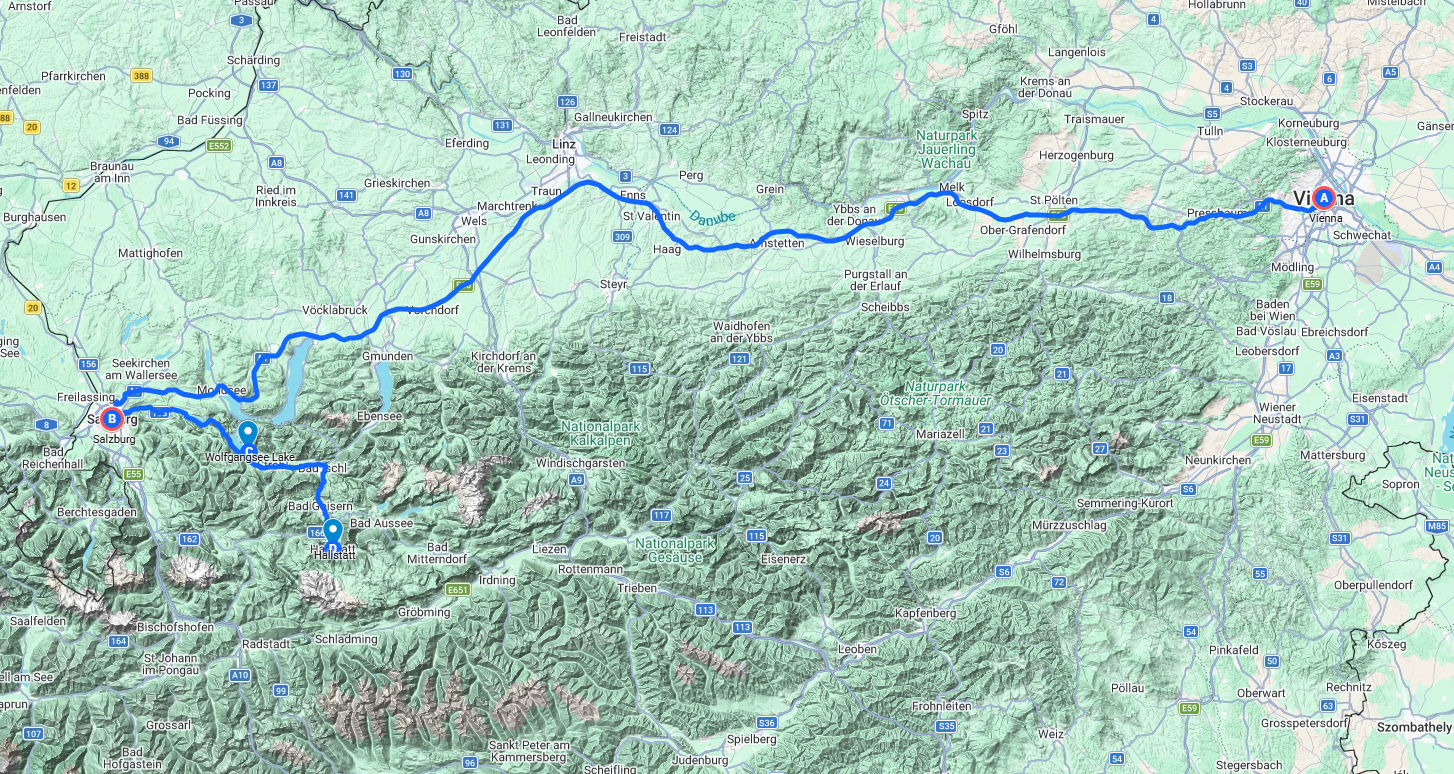
7-day Austria itinerary route
Why two bases worked for me
An older version of this route continued through the Wachau Valley and Innsbruck.
Both are excellent. I have particularly strong memories of autumn vineyards along the Danube and taking the Nordkette above Innsbruck.
But seven days changes the calculation.
Vienna and Salzburg both became better for me when I had enough time to experience them beyond their headline attractions, while the Salzkammergut fitted naturally around Salzburg without another hotel move.
That is why the simpler version now feels more convincing.
Days 1–3: Vienna
I have been to Vienna several times, and every visit has reinforced the same impression: the city becomes more enjoyable once the major sights stop dictating every hour.
Imperial architecture is everywhere, but some of my favourite memories involve markets, coffee, museums, concerts and ordinary walks between them.
Day 1: Historic Vienna and the Ringstrasse
Stephansplatz, St Stephen's Cathedral, the Hofburg and Ringstrasse brought the scale of imperial Vienna into focus quickly.

Historic Graben Street in Vienna featuring the iconic Plague Column
What I liked was how naturally those grand buildings mixed with normal city life.
A few streets could take me from monumental architecture into a café, market or residential area without Vienna ever feeling like an open-air museum.
That made walking through the centre as important to my first impression as entering another palace.
Stay: Vienna.
Day 2: Schönbrunn and the Vienna I remember between sights
Schönbrunn is one of Vienna's major sights, and timed entry becomes useful during busy periods.
But one of my favourite mornings in Vienna happened somewhere much more ordinary.
Around the Naschmarkt, I stopped for coffee and pastries while locals shopped for produce.
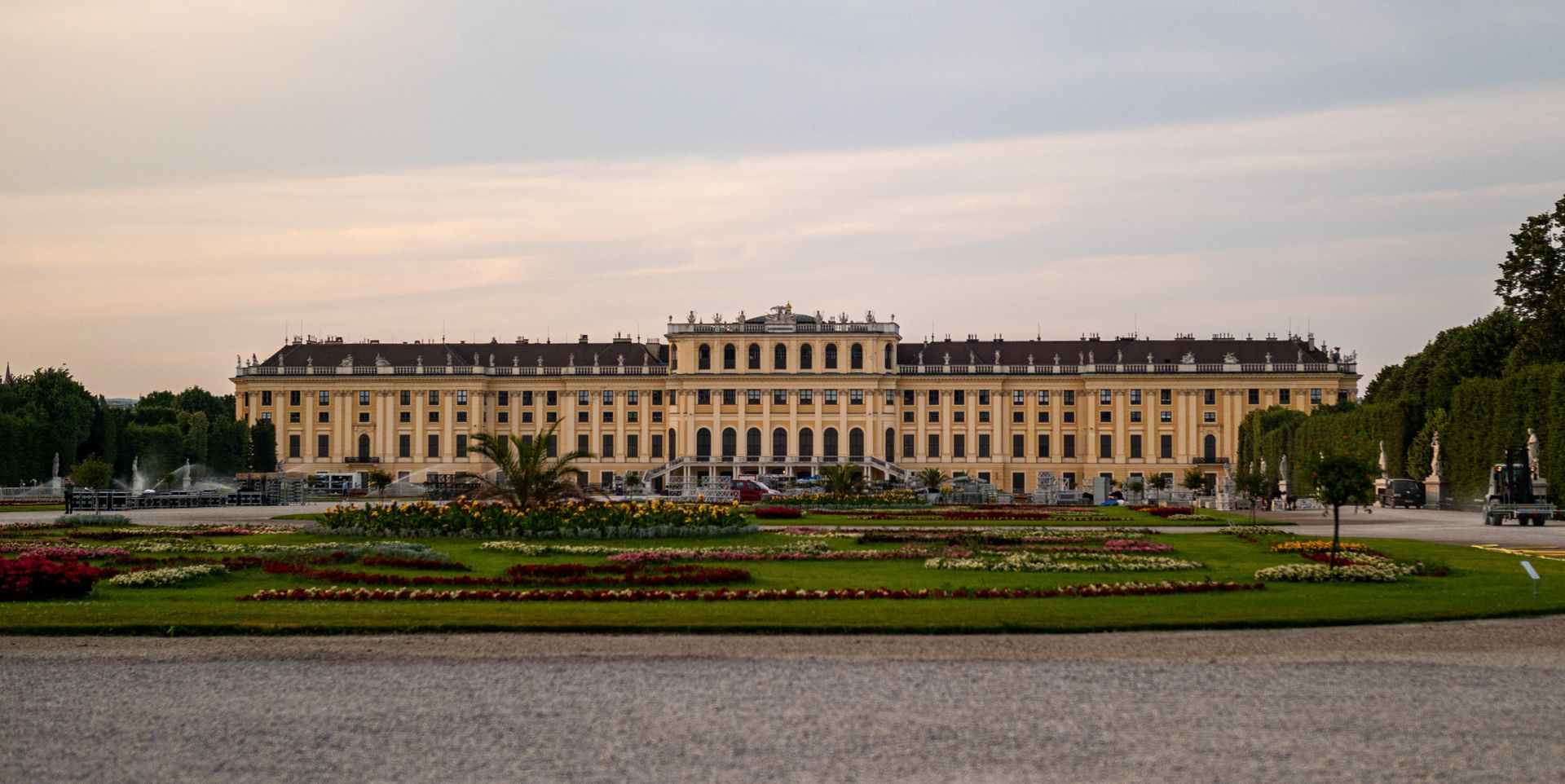
Schonbrunn Palace in Vienna, Austria
That morning stayed with me more strongly than trying to fit several palaces into one day.
Vienna's coffeehouses worked in much the same way. They became memorable when I actually sat there rather than treating them as another famous institution to tick off.
Stay: Vienna.
Day 3: Museums, music and having some choice left
The Kunsthistorisches Museum became one of my favourite museums in Europe.
I could easily lose several hours there, which is exactly why having a third Vienna day mattered.
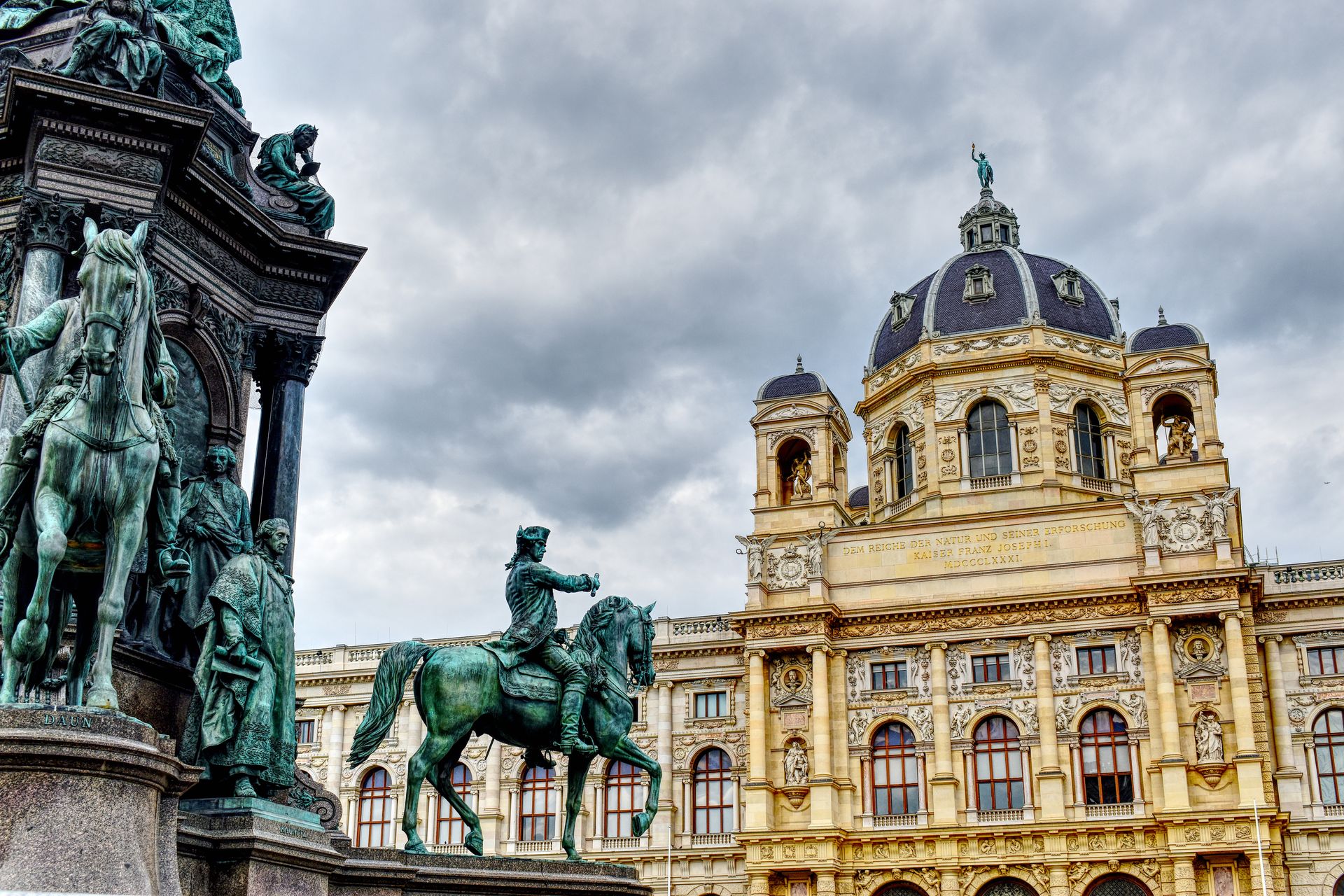
Vienna's Kunsthistorisches Museum and the Maria Theresa monument
On other visits, the value of that extra time has been completely different: a concert, more of the Ringstrasse, another neighbourhood or simply dinner without squeezing in one final attraction.
My favourite Vienna evenings have often been that simple.
The city felt much better once there was room for whatever interested me most rather than another fixed list.
Stay: Vienna.
Where the Wachau Valley fits
The Wachau Valley remains one of my favourite regions in Austria.
I visited in autumn when the vineyards along the Danube had turned gold.
Dürnstein was especially memorable, including the climb toward the castle ruins and the view across the river.
That experience is why I see Wachau as a genuine alternative to the third Vienna day rather than another compulsory addition.
For a first visit focused on Vienna, three city days still make sense to me.
For someone more interested in wine and river landscapes, Wachau changes the balance without changing hotels.
Day 4: Vienna to Salzburg
The direct train west is one of the easiest transitions in the week, typically taking around 2.5 hours.
Once I reached Salzburg, the trip immediately felt different.
Baroque streets, the fortress above the city and mountains in the background make Salzburg unusually easy to enjoy without a complicated plan.
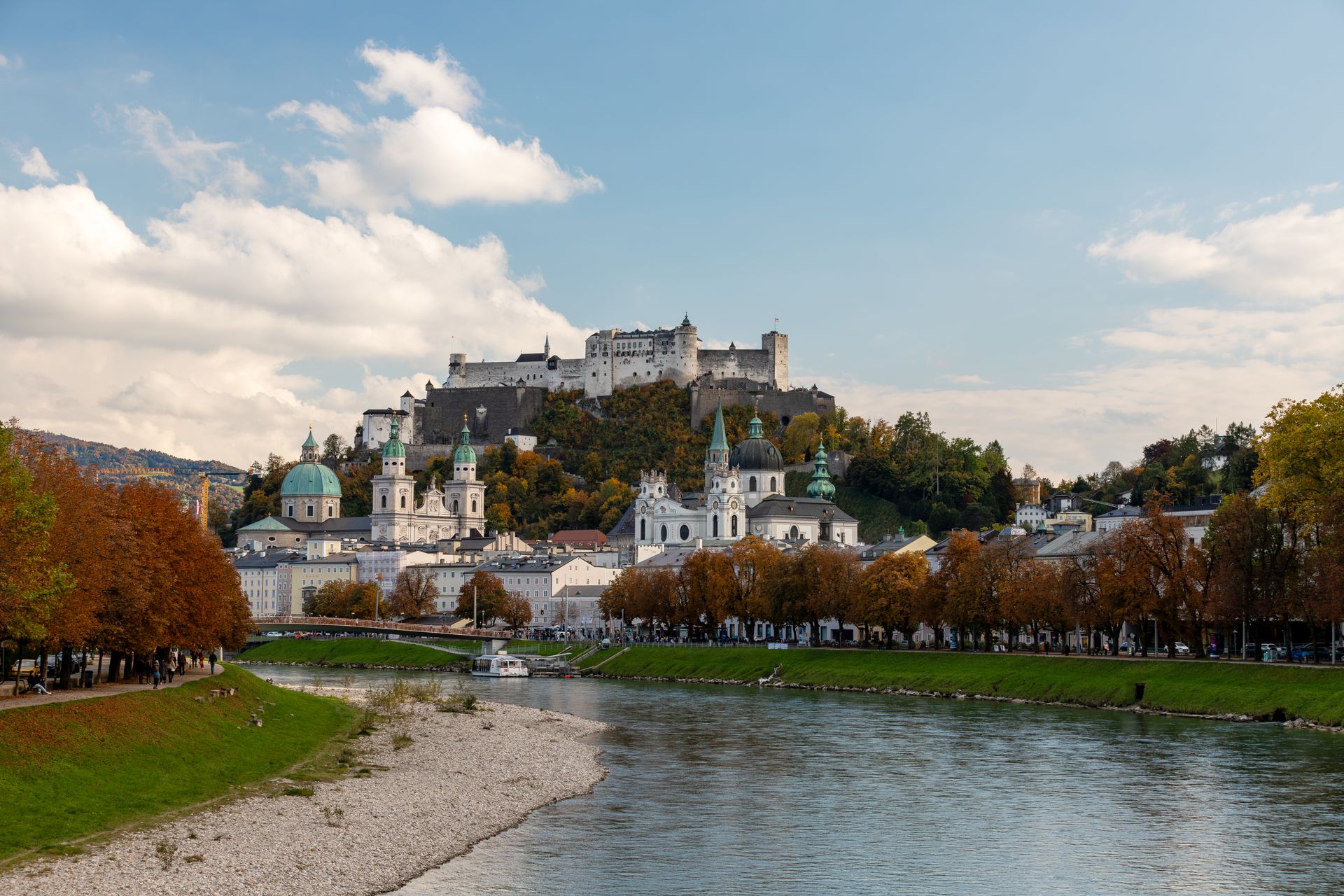
Hohensalzburg Fortress and wide autumn view of Salzburg's historic riverfront
The Old Town, Getreidegasse, cathedral area, river and Mirabell Gardens all sit close enough that the first afternoon became an introduction through walking rather than another transport exercise.
Stay: Salzburg.
Day 5: What keeps bringing me back to Salzburg
Salzburg is one of the cities I never seem to get tired of.
Hohensalzburg Fortress gives the obvious elevated view, but the combination of architecture and surrounding mountains is what makes the city memorable to me.
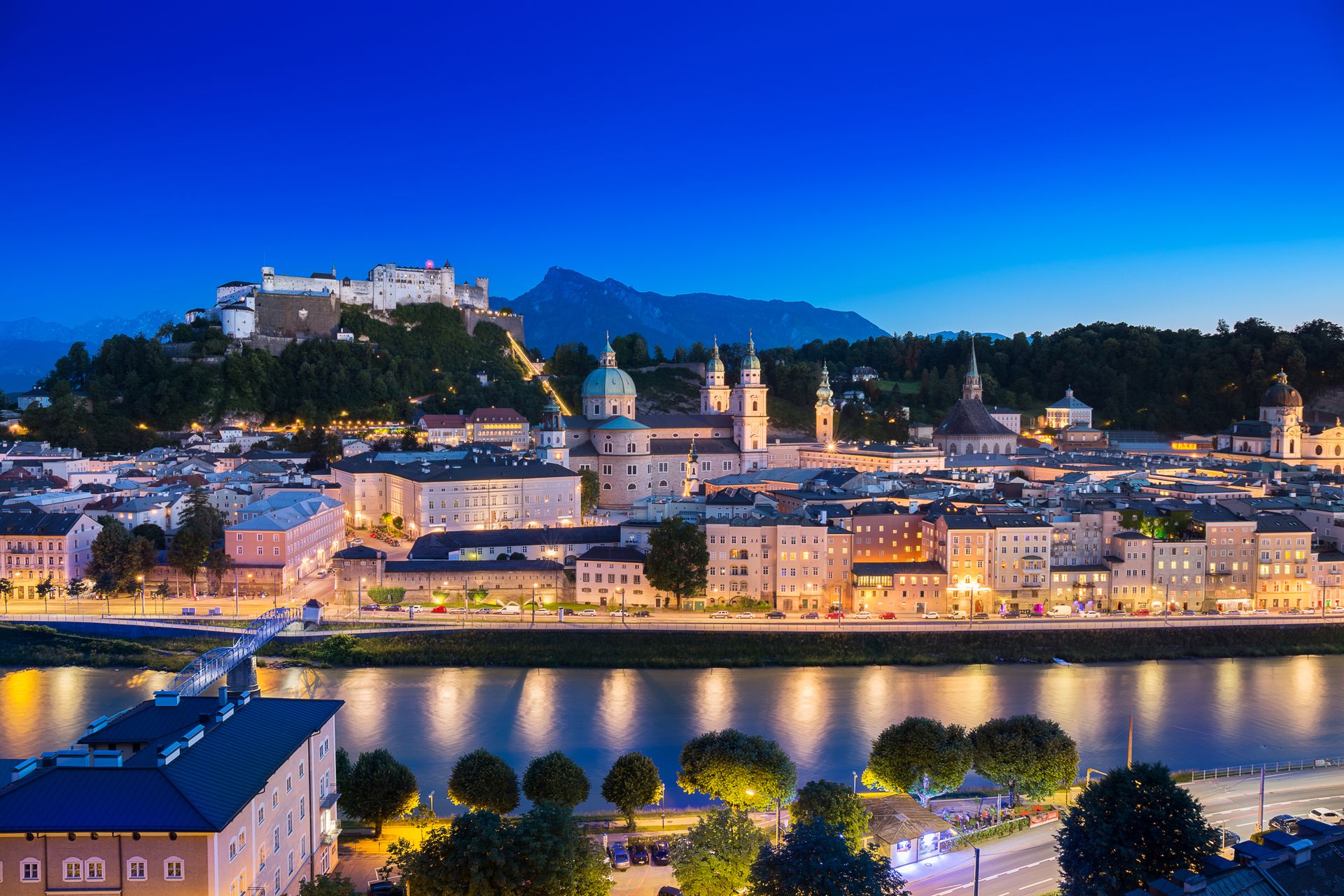
Salzburg cityscape with the illuminated Hohensalzburg Fortress at dusk
Music has also shaped some of my strongest Salzburg memories.
The Felsenreitschule was unlike any theatre I had entered before. Walking into a performance space carved into the mountainside was striking enough; the acoustics and setting made the evening much more memorable than I expected.
Performances vary by date, so the current calendar determines whether that experience is available.
Mozart sites matter enormously to some visitors and much less to others. Having a full day meant Salzburg did not depend on following one predetermined cultural checklist.
Stay: Salzburg.
Day 6: The Salzkammergut beyond Hallstatt
The Salzkammergut is one of the most beautiful regions I have visited in Europe.
Hallstatt deserves its reputation, but my experience of the lake district is much bigger than one village.
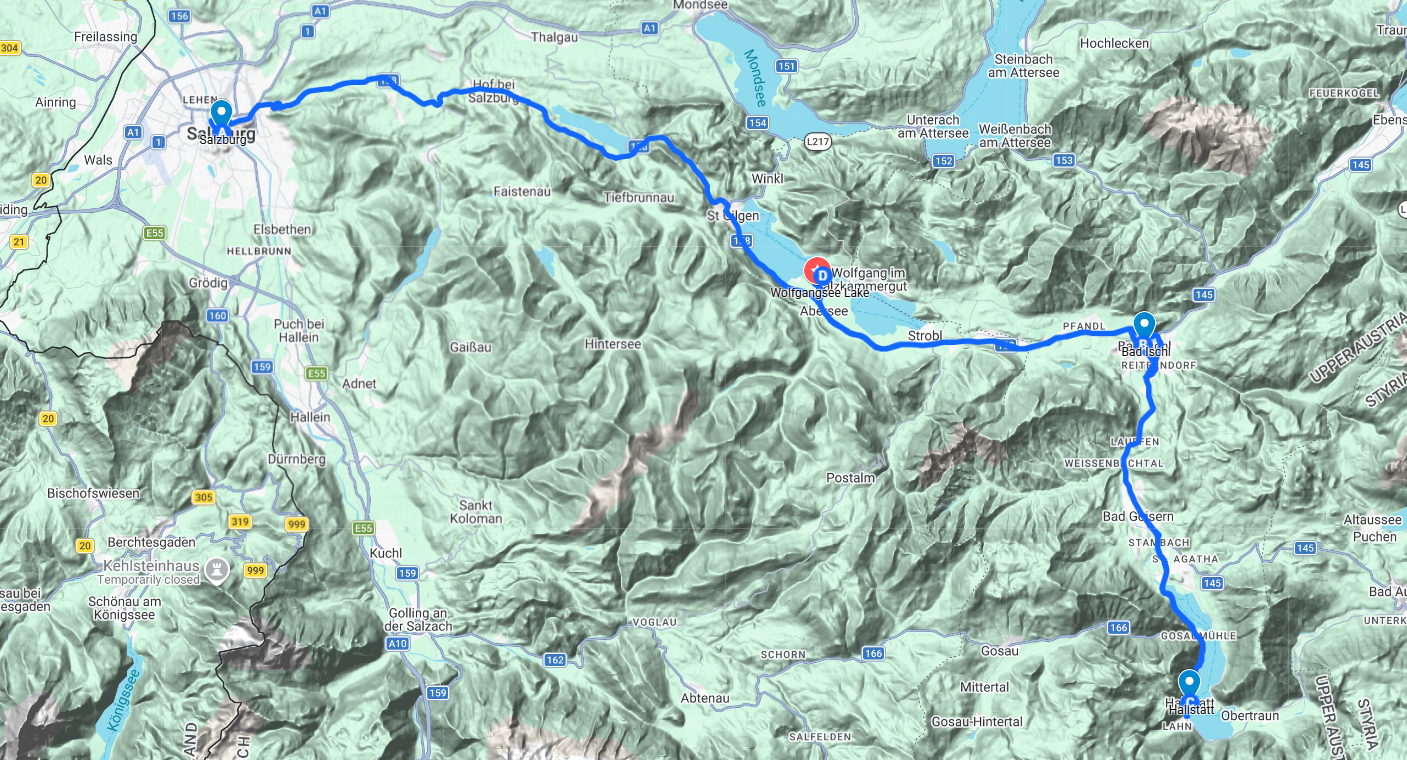
Small day-trip map for Austria itinerary
Hallstatt and the value of timing
I once stayed overnight in Hallstatt and set my alarm early enough to walk along the lakeshore before the tour buses arrived.
Around 7 a.m., the water was still, the mountains reflected across the lake and the village felt completely different from the busier version later in the day.
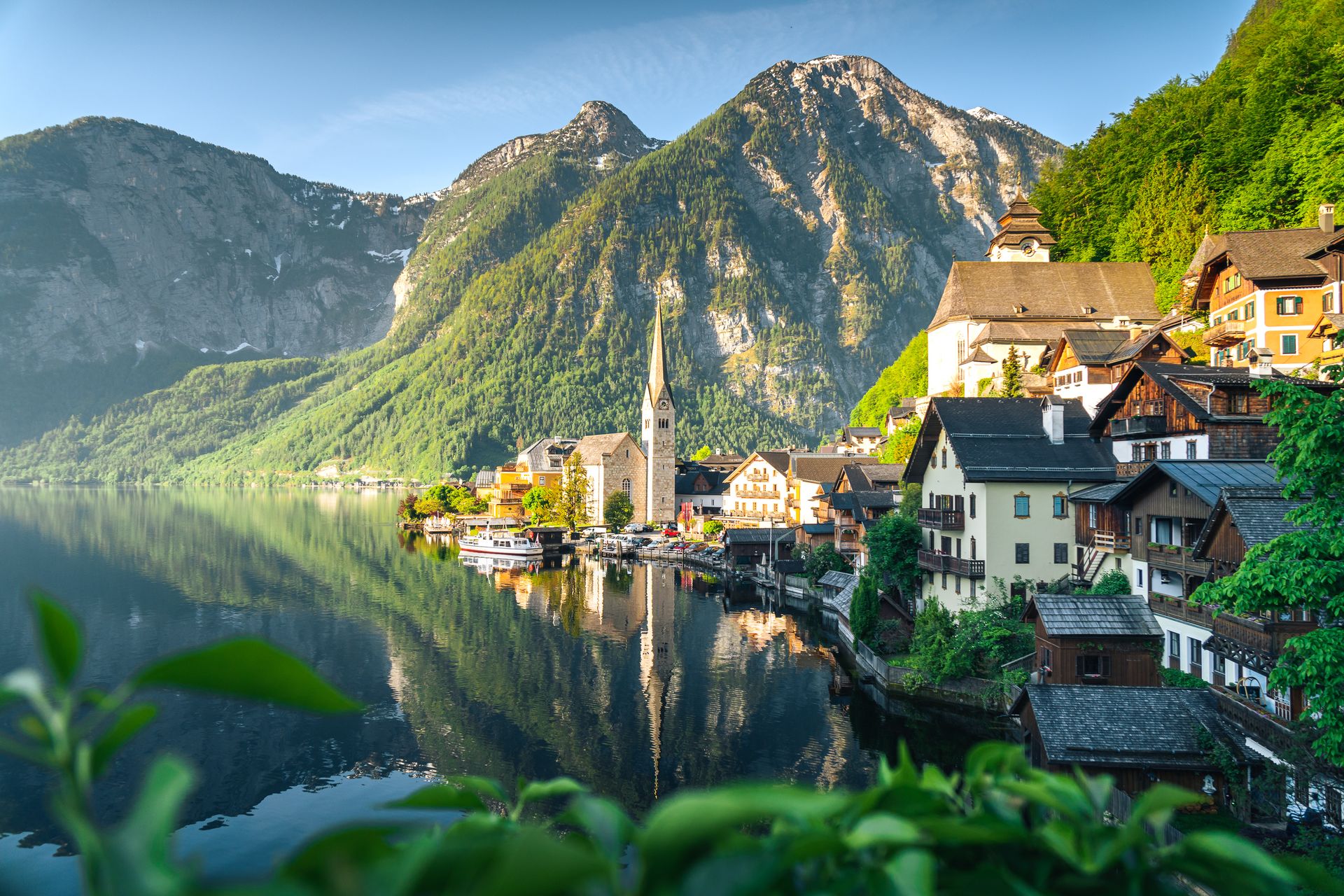
Hallstatt village, lake, and mountain landscape in Austria
That memory changed the way I think about Hallstatt.
A Salzburg day trip cannot completely recreate an overnight stay, but timing still changes the experience substantially.
The Hallstatt salt mine, funicular and Skywalk reopened on 29 August 2026 after a major modernisation project. Seasonal hours vary, so current Salzwelten information matters when those attractions are part of the day.
Why Wolfgangsee stayed with me
Wolfgangsee is actually one of my favourite parts of the region.
I loved the clarity of the water and how frequently another lake-and-mountain view appeared around the road.
My strongest memory was the SchafbergBahn from St Wolfgang.
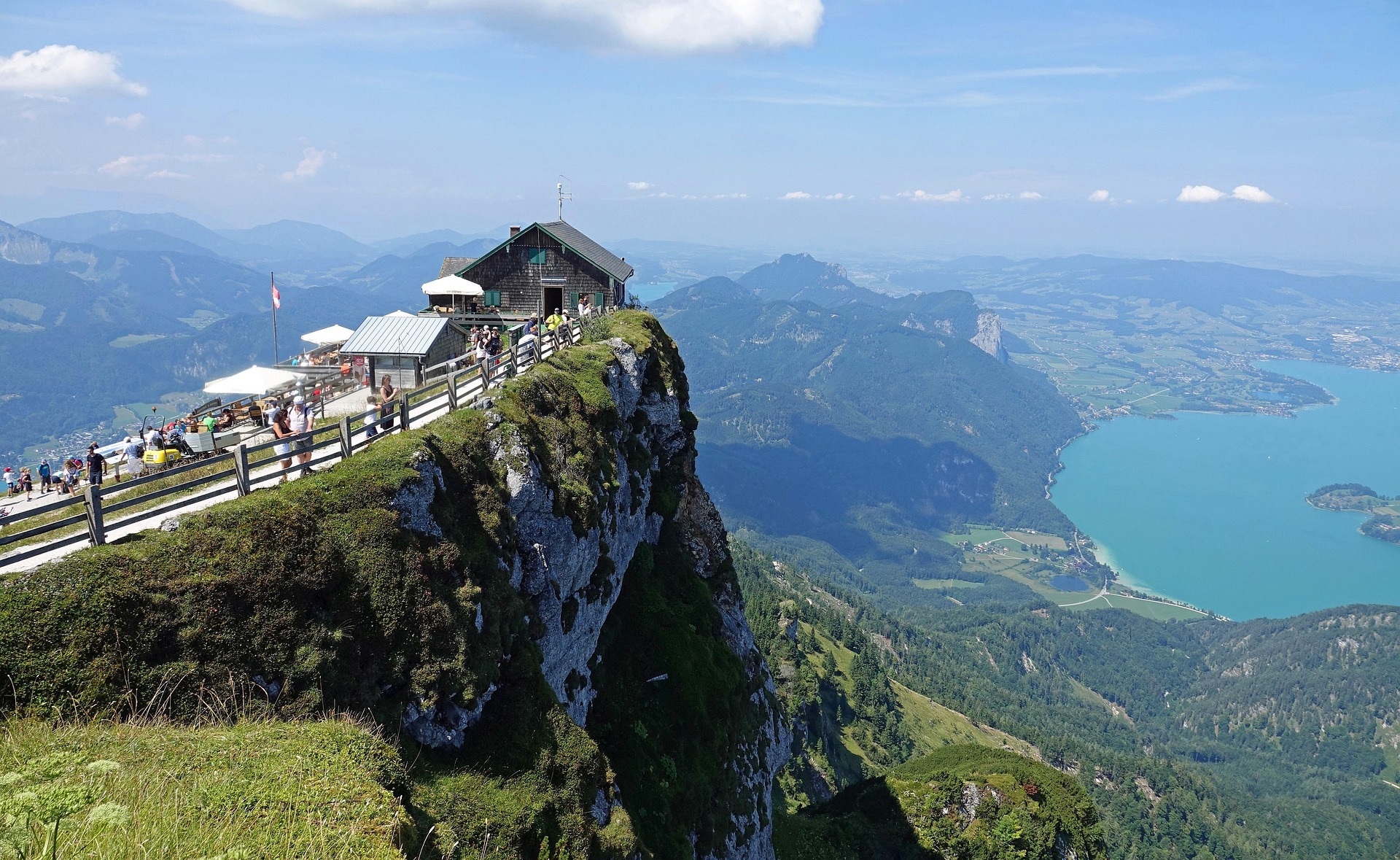
View from Schafberg towards Mondsee in the Austrian Alpine landscape
As the cogwheel railway climbed, the lakes spread out below us until the summit opened onto a huge panorama across the Salzkammergut.
The railway is seasonal, so its operating dates matter.
Hallstatt and Wolfgangsee create two different versions of the same day. Public transport makes focusing on one area easier, while a car opens up more freedom between lakes and villages.
Stay: Salzburg.
Day 7: A quiet end in Salzburg
A final morning in Salzburg worked well precisely because it did not need another major attraction.
Mirabell Gardens, another Old Town walk, a café or a slower breakfast all fitted naturally depending on the departure time.
Direct trains also make the return toward Vienna straightforward when an international flight leaves from there.
For me, the value of this final day is the margin.
After a week built around only two hotel bases, there is little reason to undo that rhythm by inventing another destination for the last few hours.
Why Innsbruck stayed out of this route
Innsbruck has one of the most dramatic city settings I have experienced in Austria.
Taking the Nordkette above the city and looking across the Inn Valley made a strong impression on me.
Its omission from this route is therefore about time rather than quality.
Vienna → Salzburg → Innsbruck is geographically logical.
Once the Salzkammergut is included as well, however, the extra hotel move starts taking time from the places that made the trip memorable in the first place.
With nine or ten days, Innsbruck fits much more naturally.
What transport felt like
Vienna was easier without a car, and the Vienna–Salzburg rail connection was simple.
The Salzkammergut was the one part where a car could materially change the experience by making several lakes and villages easier to combine.
Public transport still works when the day has one main focus.
The pattern that made sense to me was therefore mostly:
How much travel is involved?
When this Austria route works best
Late spring through early autumn brings the broadest access to lakes, hiking and mountain transport.
Summer also brings the largest crowds around Hallstatt and Salzburg.
September and early October can be particularly appealing when the weather cooperates, and my own autumn experience in Wachau showed how much the season can add to the landscape.
Winter creates a different trip: more city culture and Christmas markets, with some mountain railways and seasonal attractions unavailable.
Current mountain railway, boat, salt mine and trail information matters whenever one specific experience is central to the trip.
Have You Seen Our Travel Concierge Service?
Your trip, planned by local experts
We are not a travel agent - we design custom itineraries around your budget and style, without receiving commissions or booking fees.
Custom itinerary
Built around your dates, budget, and travel style.
Local expert knowledge
Recommendations from people on the ground, not review sites.
Travel smarter, spend less
We optimise for your budget to make your money go further.
What seven days in Austria felt like
Seven days was enough for a strong first experience of Austria once I stopped treating the country's compact size as a reason to keep moving.
Vienna gave me imperial architecture, museums, music, markets and café culture.
Salzburg felt smaller and more immediately connected to the mountains.
The Salzkammergut added the lakes and Alpine scenery that made the week feel completely different from a normal two-city European break.
That variety came from experiencing the places more deeply, not from adding another hotel every night.