

Norway is one of those countries where every time I thought I'd seen its most spectacular landscape, the next fjord, mountain, or valley somehow raised the bar again.
I've returned several times over the years, and I still feel like I'm discovering how much there is to see. From dramatic fjords and remote Arctic islands to colorful coastal cities and incredible road trips, Norway rewards exploring beyond the obvious stops.
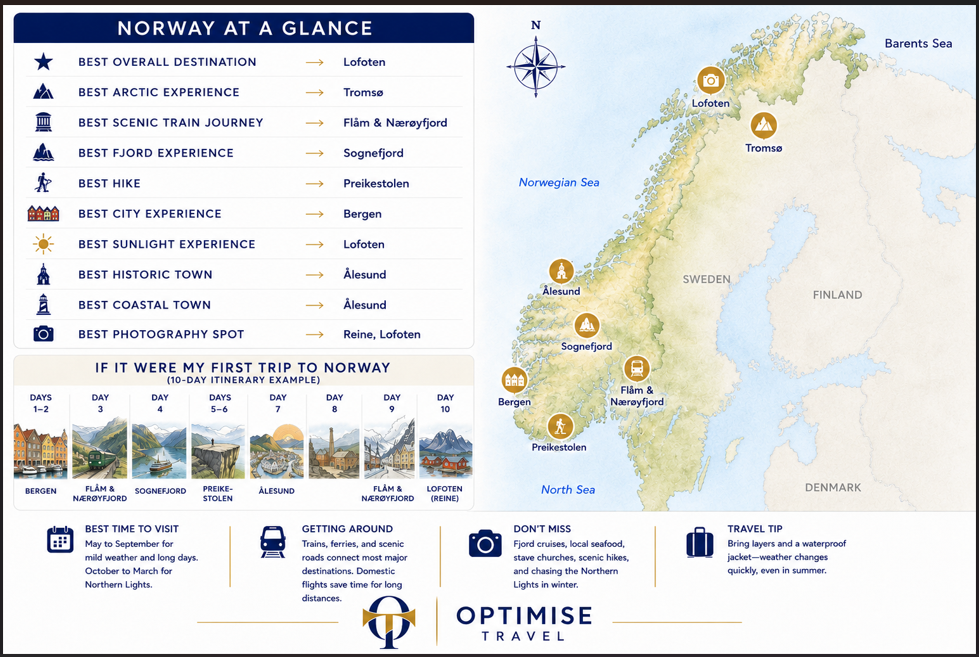
Here are the 10 best places to visit in Norway that I think everyone should experience at least once.
Have You Seen Our Travel Concierge Service?
Your trip, planned by local experts
We are not a travel agent - we design custom itineraries around your budget and style, without receiving commissions or booking fees.
Custom itinerary
Built around your dates, budget, and travel style.
Local expert knowledge
Recommendations from people on the ground, not review sites.
Travel smarter, spend less
We optimise for your budget to make your money go further.
Rjukan
(pronounced: RYU-kan)
Rjukan at a glance
Telemark, southern Norway
Unusual experiences, WWII history, hiking, and mountain
1-2 nights
History lovers, hikers, and curious travelers
Remote, fascinating, dramatic, and wonderfully unusual
November to February for sun mirrors, June to September for hiking
Rjukan is one of the strangest and most memorable places I've visited in Norway. The town sits so deep within a narrow mountain valley that, for several months each winter, the surrounding peaks prevent direct sunlight from reaching the town center.
So Rjukan did something wonderfully Norwegian: it installed three enormous mirrors high on the mountainside to reflect sunlight into the town square.
I visited in winter and watched people deliberately gather inside that small patch of light. Some sat with their faces tilted toward the sun and their eyes closed while the rest of the valley remained in shadow. It sounds slightly absurd when you describe it, but standing there, I found it surprisingly moving.
Rjukan also has a remarkable wartime history. I visited the Vemork hydroelectric plant, where heavy water was produced during the Nazi occupation. The museum tells the story of the Norwegian resistance operation to sabotage its production, and I found it genuinely gripping.
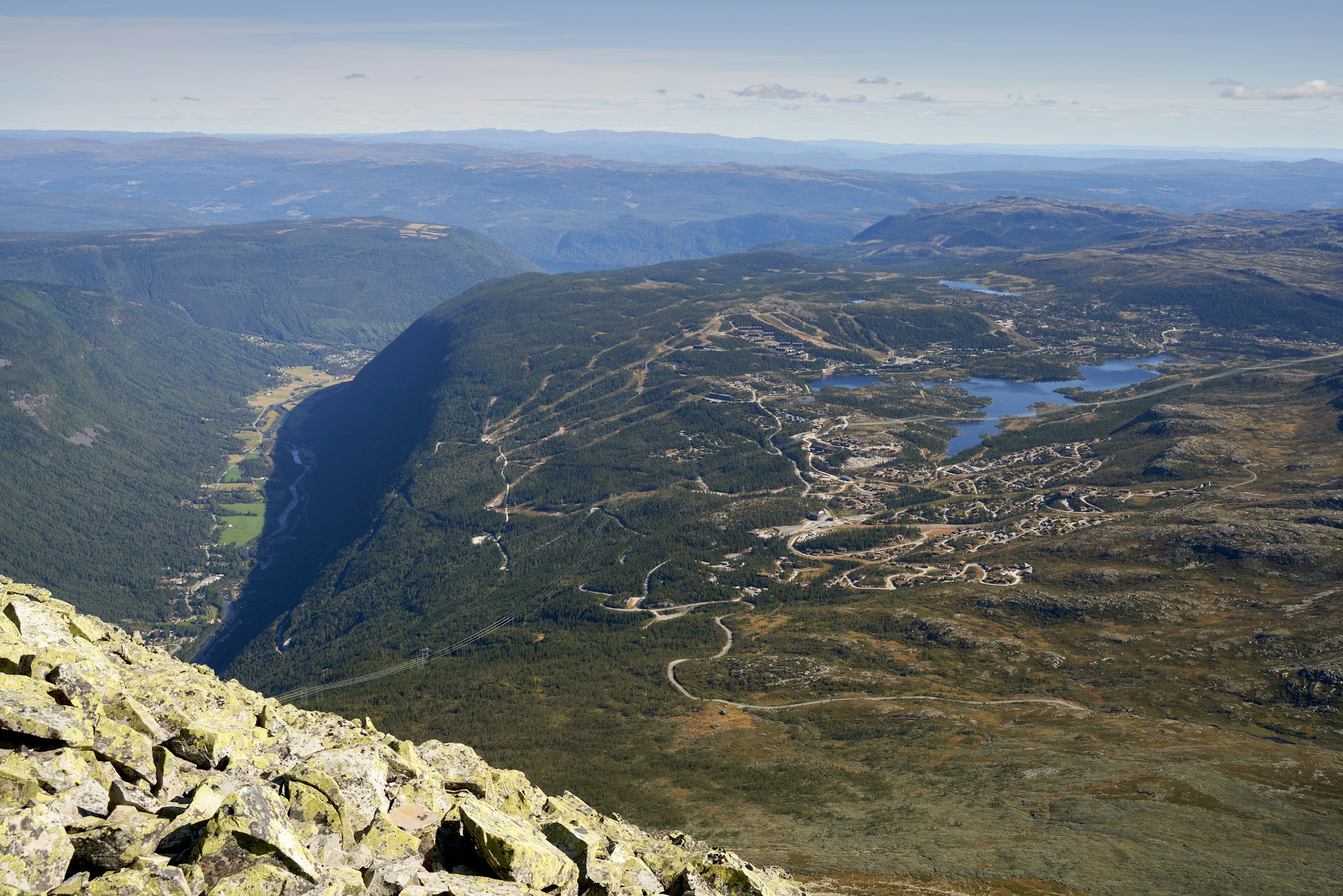
In summer, the experience changes completely. Nearby Gaustatoppen offers some spectacular hiking and, on a clear day, an enormous panorama across southern Norway.
Rjukan isn't the Norway most first-time visitors picture, and that's precisely why I'd include it.
How Rjukan fits into your Norway itinerary
I'd give Rjukan one night in winter or two nights if you're hiking in summer. It's roughly three hours from Oslo, making it a fascinating detour when traveling west from the capital into Norway's mountainous interior.
Røros
(pronounced: ROO-ros)
Røros at a glance
Trøndelag, central Norway
Historic architecture, winter scenery, mining history, and Sámi culture
2 nights
History lovers, photographers, and winter travelers
Atmospheric, snowy, historic, and wonderfully preserved
December to March for winter, June to August for warmer weather
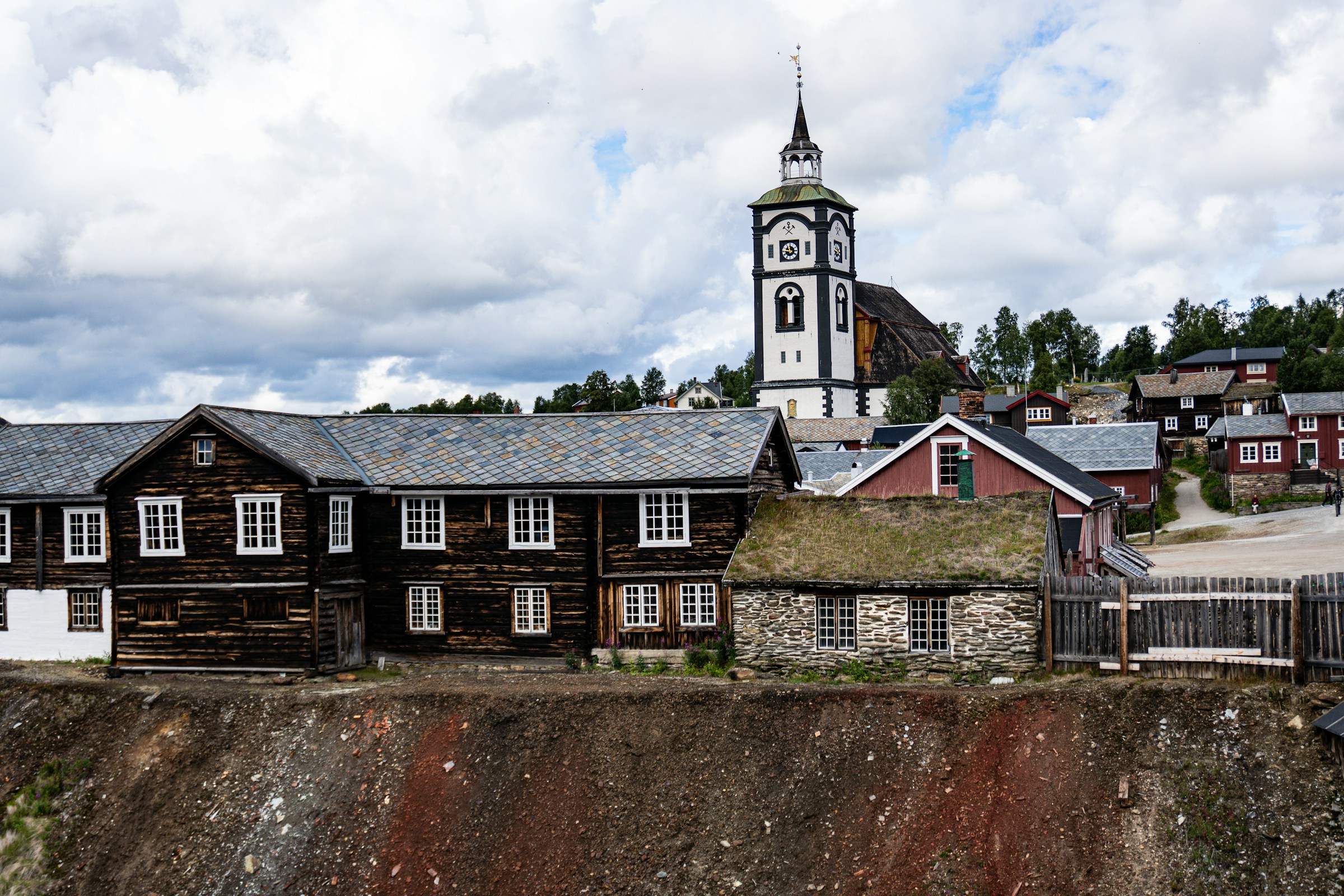
Røros in winter barely felt real to me. I arrived to find this tiny wooden mining town buried beneath snow, with wood smoke hanging in the air and that deep blue winter light that makes everything look slightly cinematic.
At one point, I spotted reindeer near the edge of town and remember thinking that if someone had deliberately designed the perfect Norwegian winter village, it would probably look exactly like this.
Røros developed around copper mining, which shaped the town for more than 300 years. Today, the historic mining town and surrounding landscape are protected as a UNESCO World Heritage Site.
I walked among centuries-old wooden buildings and explored the old smelting works, which helped me understand why the town looks the way it does.
But what stayed with me most was simply the atmosphere. Røros doesn't feel like a collection of historic buildings preserved behind museum ropes. People still live and work in these houses, and that gave the town a sense of continuity I rarely find in places this well preserved.
If you can time your visit for the February winter market, even better. Horse-drawn sleds, traders, reindeer and winter festivities fill the streets, continuing a tradition that dates back to the 19th century, and feels a bit like a Hallmark movie.
How Røros fits into your Norway itinerary
I'd spend two nights in Røros, particularly in winter. It fits naturally with Trondheim, with the train journey taking roughly 2½ hours, making the two destinations easy to combine on a central Norway itinerary.
Ålesund
(pronounced: OH-leh-soon)
Ålesund at a glance
Møre og Romsdal, western Norway
Art Nouveau architecture, coastal scenery, and fjords
2 nights
Photographers, couples, and fjord explorers
Colorful, maritime, elegant, and scenic
May to September
Ålesund looked different from every other Norwegian city I visited, and there's a remarkable reason for that. A devastating fire destroyed most of the town center in 1904, leaving thousands of people homeless.
When Ålesund was rebuilt, Art Nouveau was at its height, creating the unusually cohesive collection of architecture you see today.
I loved walking through the center and noticing the decorative towers, colorful facades, and little architectural details that would have been easy to miss if I'd simply treated Ålesund as a gateway to the fjords.
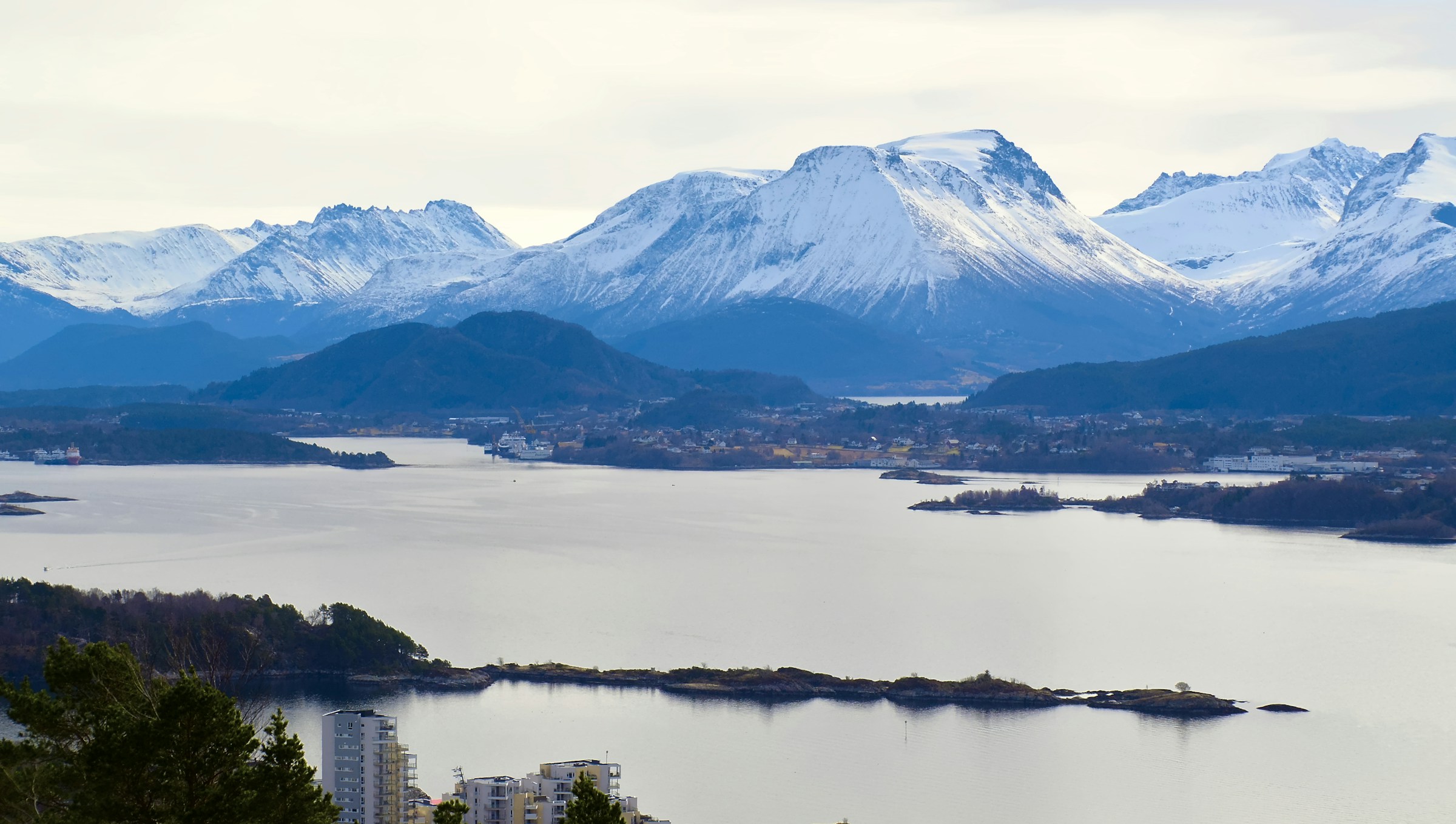
But my favorite view required a bit more effort. I climbed the 418 steps to the Aksla viewpoint, where the entire town suddenly appeared below me, scattered across islands with mountains and water stretching into the distance. I went around sunset, and the combination of the fading light and surrounding landscape made the climb completely worthwhile.
I also enjoyed Ålesund's waterfront setting. Fishing remains an important part of the city's identity, and wandering around the harbor gave me a completely different perspective from the hilltop view.
Many travelers pass through Ålesund on their way to Norway's famous fjords, but I think the city deserves time of its own.
How Ålesund fits into your Norway itinerary
I'd spend two nights in Ålesund and use it as a base for exploring this section of Norway's western coast.
It pairs particularly well with Geirangerfjord, which makes Ålesund a natural stop on a longer fjord-focused Norway itinerary.
Hardangerfjord
(pronounced: HAR-dan-ger-fyord)
Hardangerfjord at a glance
Vestland, western Norway
Fjord scenery, waterfalls, orchards, glaciers, and road trips
1-2 days
Nature lovers, road trippers, and outdoor adventurers
Dramatic, peaceful, lush, and scenic
May to apple blossoms, June to September for outdoor activities
I came to Hardangerfjord in May expecting spectacular fjord scenery. What I wasn't expecting were the apple orchards.
The banks of the fjord were covered in fruit trees bursting with white blossoms, with deep blue water below and snow-covered mountains rising behind them. I've traveled around Norway for years, and this is still one of the most dramatically beautiful landscapes I've encountered.
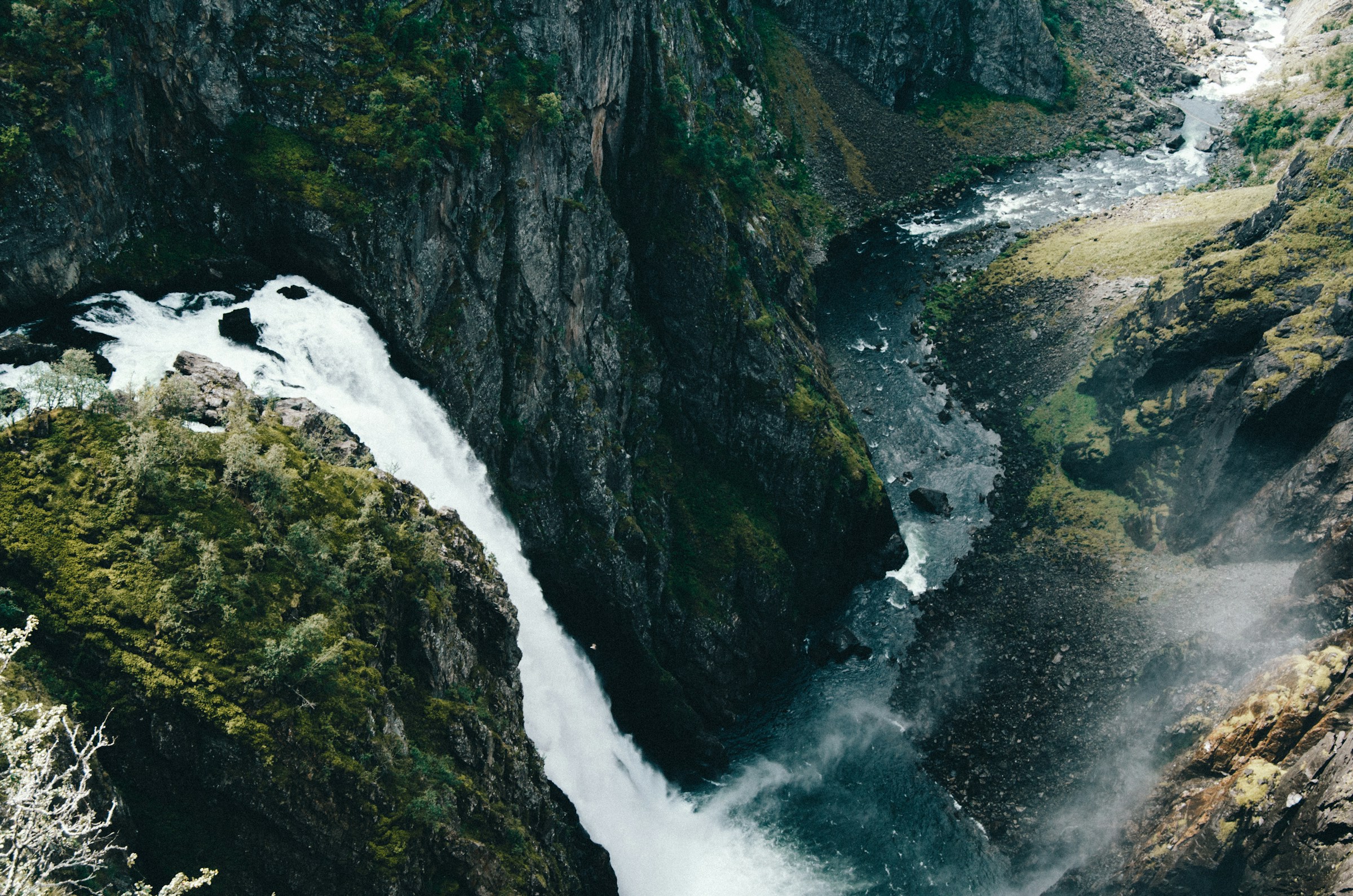
There's much more here than the fjord itself. I visited Vøringsfossen, where the water plunges 182 metres into the Måbødalen valley below.
Standing on the viewing platforms above the gorge gave me a slightly uncomfortable reminder of just how enormous the landscape was. If you're nervous about heights, parts of this experience may test you as they did me!
Another highlight is Folgefonna, one of Norway's largest glaciers. In summer, guided glacier hikes let you put on crampons and walk directly onto the ice, which feels worlds away from the orchards and tiny fjord villages below.
I'd recommend driving if you can. Ferries, bridges, waterfalls and little villages turn the journey itself into part of the experience, and this is somewhere I found myself wanting to stop constantly.
How Hardangerfjord fits into your Norway itinerary
Hardangerfjord fits naturally into a western Norway itinerary and is easily combined with Bergen.
You can see some of the region on a long day trip, but I'd allow one or two days if you want time for the waterfalls, villages, orchards, and glacier scenery without rushing.
Bergen
(pronounced: BER-gen)
Bergen at a glance
Vestland, southwestern Norway
Historic architecture, fjords, hiking, seafood and coastal scenery
2 nights
City explorers, foodies, and hikers
Colorful, maritime, and wonderfully rainy
May to September
Bergen is famously rainy, and rather than apologizing for it, the locals seem almost proud of the fact.
After spending time here, I understood why. The rain keeps everything incredibly green, clouds roll dramatically between the surrounding mountains, and the constantly changing weather gives the city an atmosphere I really loved.
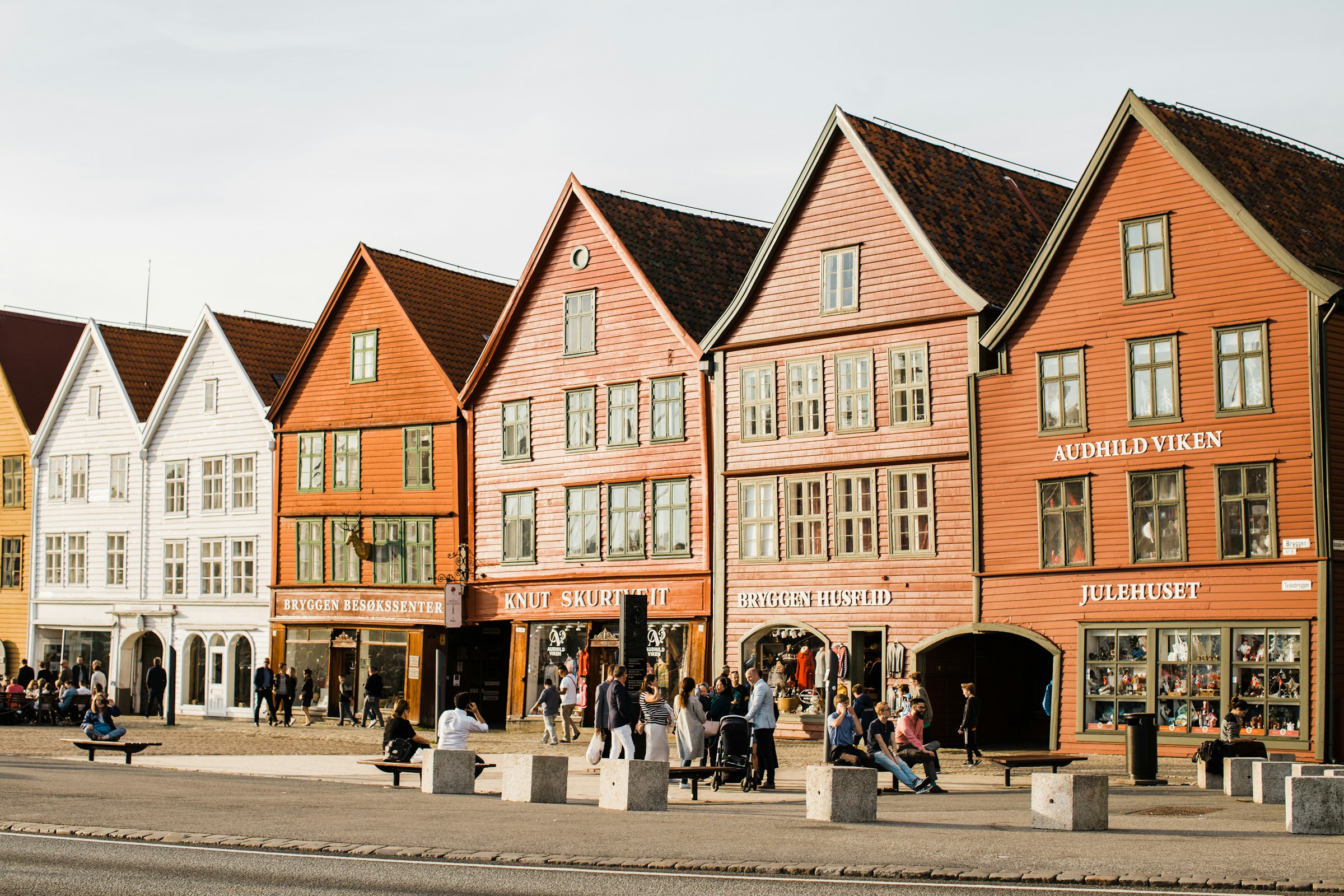
I headed to Bryggen early in the morning, before the cruise-ship crowds arrived. Walking between those colorful wooden buildings with the harbor still quiet and the smell of the sea in the air felt completely different from visiting later in the day.
I also took the Fløibanen funicular up Fløyen. The ride only takes about eight minutes, but suddenly you're looking across Bergen's rooftops, harbor, islands, and surrounding mountains. I stayed longer to explore some of the trails rather than immediately heading back down, which I'd definitely recommend.
And, of course, I absolutely bought myself one of Bergen's famous Norwegian wool sweaters to take home. It wasn't exactly the lightest souvenir to squeeze into my luggage, but every time I wear it, it reminds me of being here.
Bergen may be the gateway to the fjords, but I wouldn't treat it simply as somewhere to pass through.
How Bergen fits into your Norway itinerary
I'd spend at least two nights in Bergen before heading deeper into western Norway.
It combines naturally with Hardangerfjord and provides excellent connections to Norway's other western fjord regions, making it one of the easiest places to use as an anchor for this part of the country.
Flåm & Nærøyfjord
(pronounced: FLOHM, NAIR-uh-fyord)
Flåm & Nærøyfjord at a glance
Vestland, western Norway
Fjord scenery, scenic rail journeys, and kayaking
1-2 nights
Nature lovers, railway enthusiasts, and outdoor adventurers
Dramatic, peaceful, and scenic
May to September
I've taken the Flåm Railway twice, and I'd happily get back on it tomorrow. In less than an hour, the train descends around 860 metres from Myrdal to Flåm, passing through tunnels, alongside waterfalls, and down mountainsides that seem almost impossibly steep.
Even knowing what was coming the second time didn't make the journey any less spectacular.
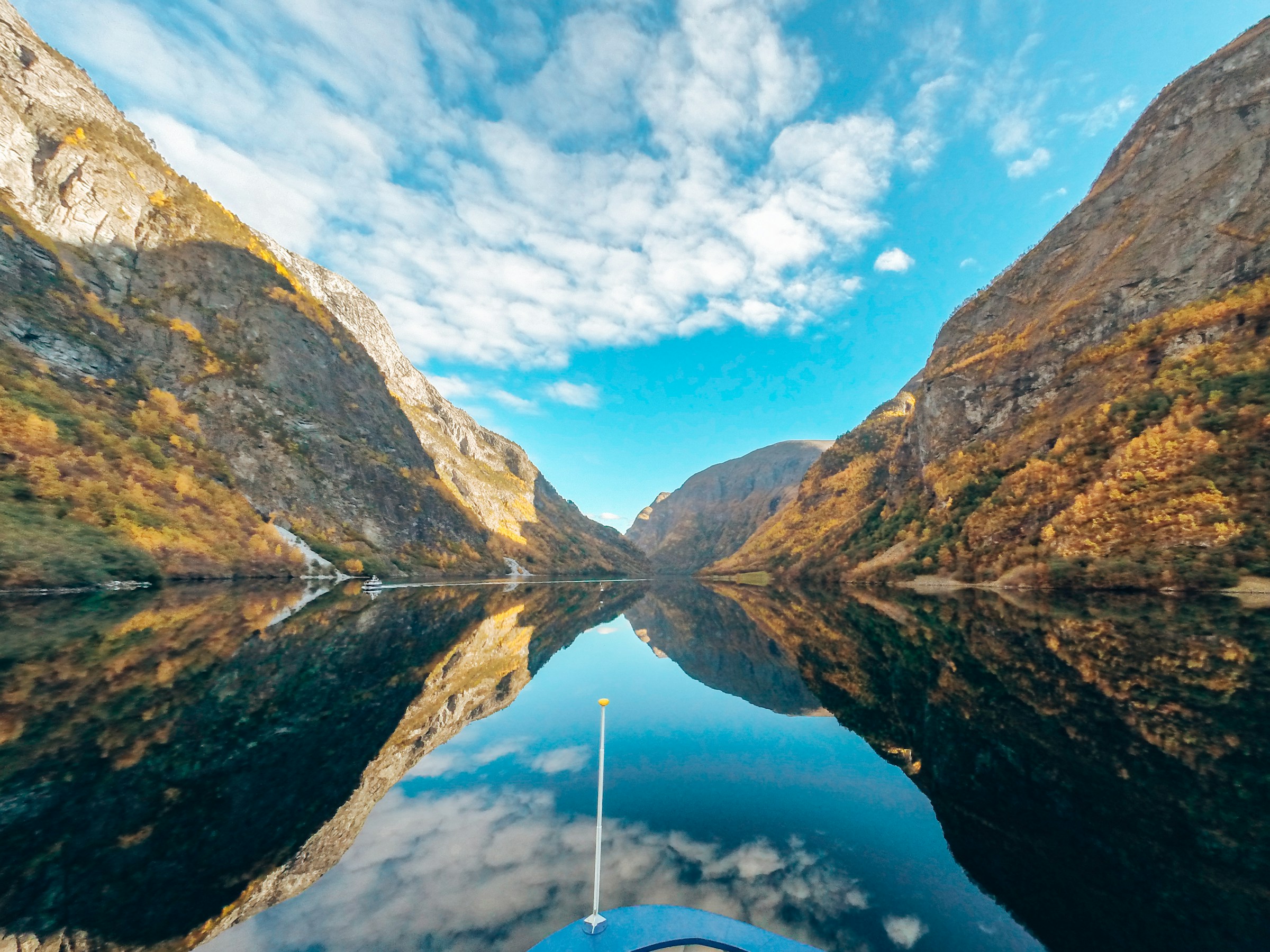
But for me, the real reason to stay in Flåm is Nærøyfjord. This UNESCO-listed fjord becomes extraordinarily narrow, with enormous cliffs rising almost vertically from the water and waterfalls dropping straight down their sides.
I found the best way to appreciate the scale was from a kayak. Sitting right at water level, surrounded by those huge walls, made me feel absolutely tiny in a way that simply looking down at a fjord from a viewpoint couldn't replicate.
Flåm itself gets very busy during the summer, particularly when trains, ferries, and cruise ships arrive.
Staying overnight completely changed the experience for me. Once the daytime crowds disappeared, everything became quieter, and getting onto the fjord early the following morning felt like experiencing an entirely different place.
If you only have time to experience one Norwegian fjord, Nærøyfjord would be very difficult for me to beat.
How Flåm & Nærøyfjord fit into your Norway itinerary
I'd stay at least one night in Flåm rather than visiting as a day trip.
Its position on the Myrdal connection makes it particularly easy to incorporate between Oslo and Bergen, and it combines naturally with Bergen and the other fjord destinations in western Norway.
Tromsø
(pronounced: TROHM-suh)
Tromsø at a glance
Northern Norway, about 350 km north of the Arctic Circle
Northern Lights, midnight sun, and dog sledding
3-4 nights
Aurora seekers, adventure travelers, and winter lovers
Arctic, adventurous, lively, and otherworldly
October to March for Northern Lights, late May to July for midnight sun
I'll never forget the first time I saw the Northern Lights outside Tromsø. It was around two in the morning, minus fifteen degrees, and I'd spent hours being driven around by a guide who seemed to check the aurora and cloud forecasts every fifteen minutes.
Then the lights appeared, and what surprised me most was how much they moved.
They didn't just hang in the sky like the photographs I'd seen. They rolled, folded, shifted and danced above us, and for a while I completely forgot how cold I was. It's still one of the most extraordinary things I've experienced anywhere.
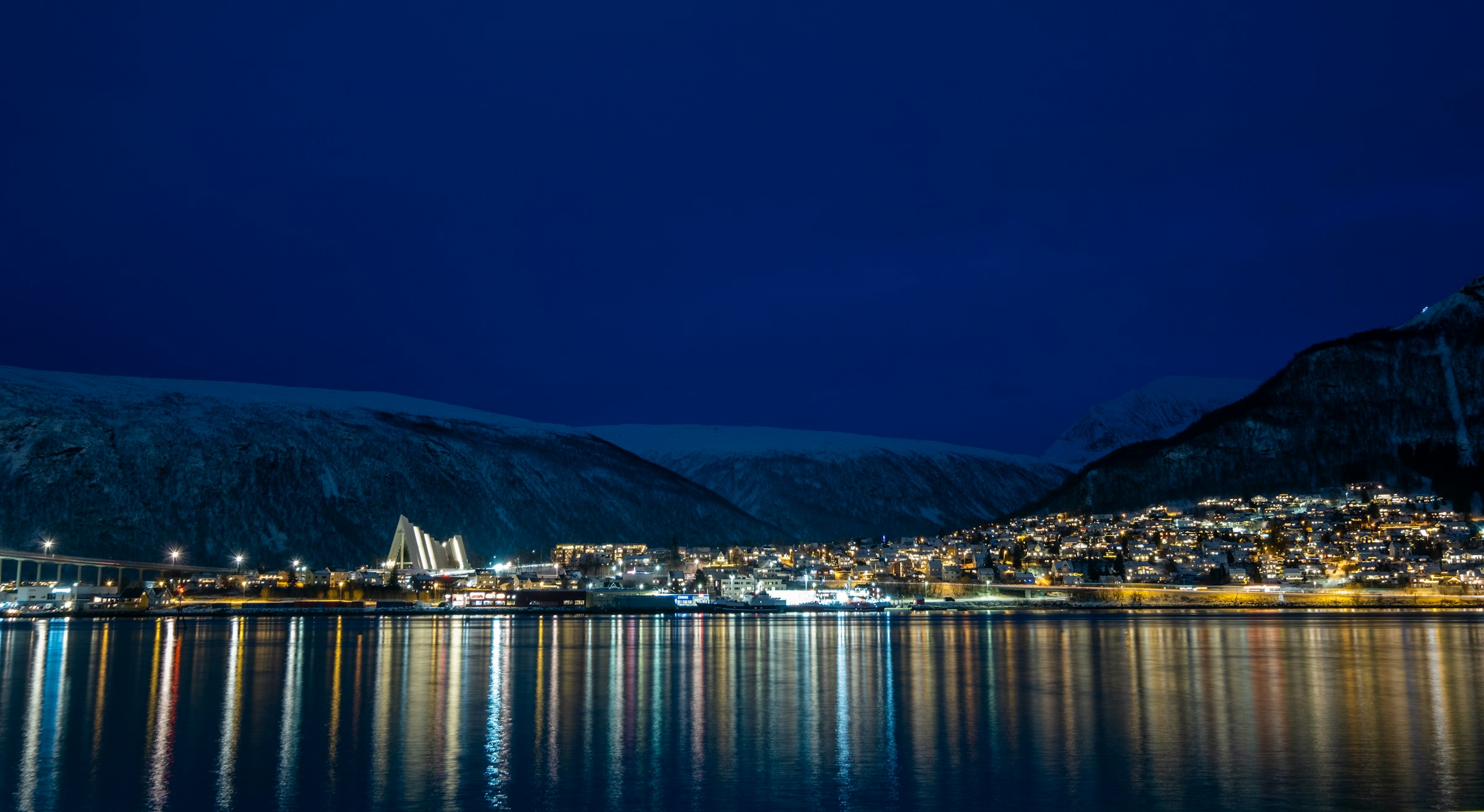
Tromsø makes an excellent base for seeing them because you get a proper little city alongside the Arctic wilderness. I also loved seeing the Arctic Cathedral illuminated across the water, and I'd absolutely make time for a dog-sledding trip into the countryside.
I'd like to return in summer too, because Tromsø essentially becomes a different destination. The midnight sun stays above the horizon for weeks, creating the wonderfully strange experience of walking outside around midnight to find what looks like broad daylight.
Whether you visit in winter or summer, Tromsø offers a side of Norway that feels completely removed from the fjords and cities farther south.
How Tromsø fits into your Norway itinerary
Tromsø is far enough north that I'd treat it as a separate section of your Norway trip rather than trying to reach it overland from the fjords.
I'd fly from Oslo or another major Norwegian city and stay at least three nights, giving you enough time for Arctic activities and several chances to see the Northern Lights in winter.
Preikestolen
(pronounced: PRAY-keh-stoh-len)
Preikestolen at a glance
Rogaland, southwestern Norway
Hiking, fjord views, photography, and dramatic scenery
1 full day
Hikers, outdoor adventurers, and active travelers
Exhilarating, dramatic, exposed, and unforgettable
May to September
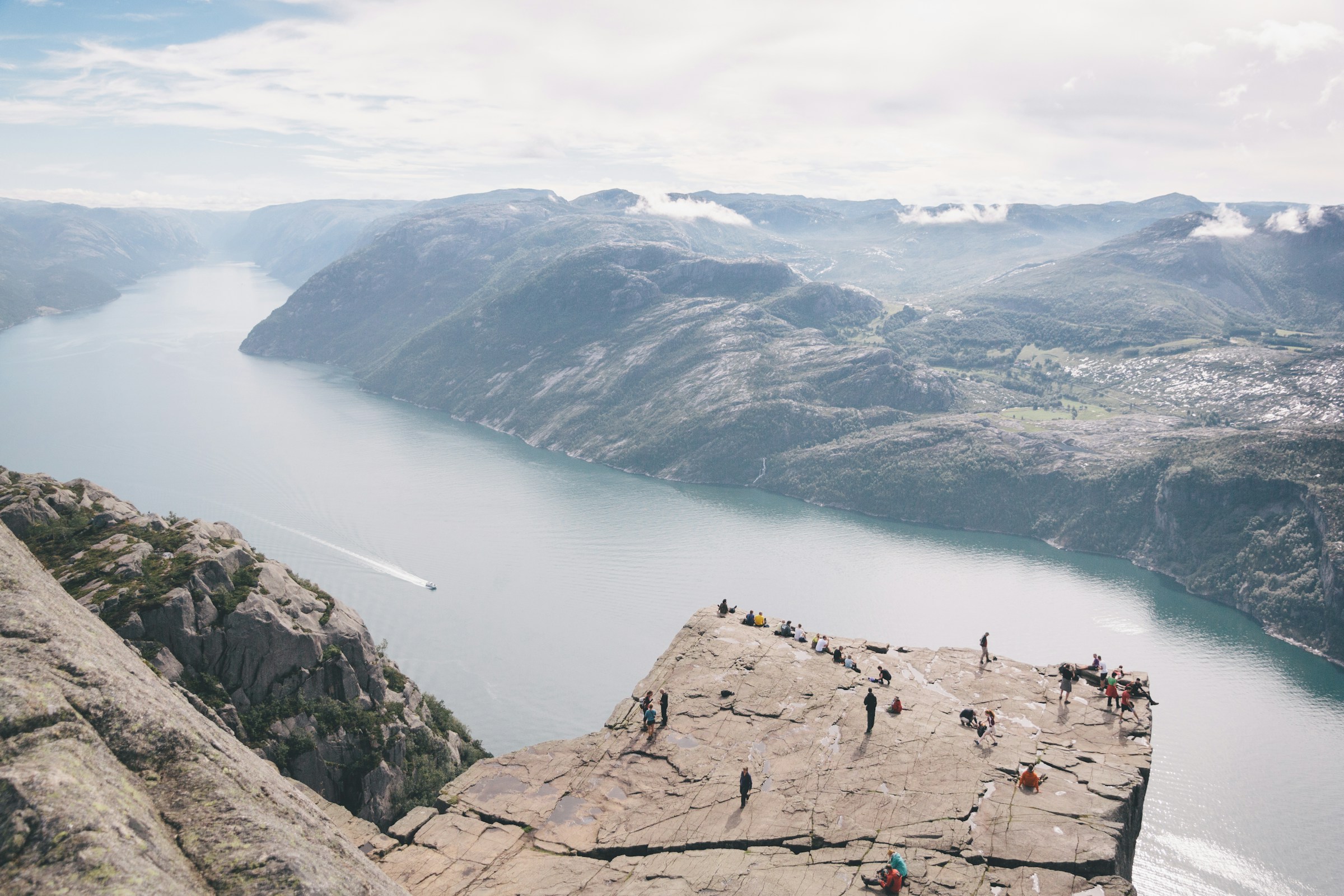
I've stood at a lot of incredible viewpoints in Norway, but Preikestolen is the one I still find myself thinking about.
The famous flat-topped cliff rises 604 metres above Lysefjord, and when you reach the top, there's no fence separating you from the drop. I remember walking toward the edge, sitting down and eventually letting my legs dangle over it, with nothing between me and the fjord far below.
It sounds terrifying, and I expected it to feel that way. Strangely, once I was sitting there surrounded by mountains and water, it somehow felt like exactly where I was supposed to be.
Getting there requires some effort. The hike takes around two hours each way, with several steep sections along the route, but I found the trail manageable and the view at the end more than worth it.
I'd also recommend seeing Preikestolen from below. I took a boat through Lysefjord and looked back up toward the tiny plateau I'd been standing on hundreds of metres above. That completely changed my sense of its scale.
Seeing it from both perspectives made this much more than another Norwegian viewpoint for me.
How Preikestolen fits into your Norway itinerary
I'd base myself in Stavanger and dedicate one full day to Preikestolen and Lysefjord. Hike to the plateau early, then experience the fjord from the water afterward.
Geographically, it works particularly well before traveling north along Norway's western coast toward Bergen and the fjord regions.
Sognefjord
(pronounced: SONG-neh-fyord)
Sognefjord at a glance
Vestland, western Norway
Fjords, glaciers, small villages, hiking, and slow travel
3-4 days
Nature lovers, hikers, and road trippers
Immense, peaceful, and wonderfully unhurried
May to September
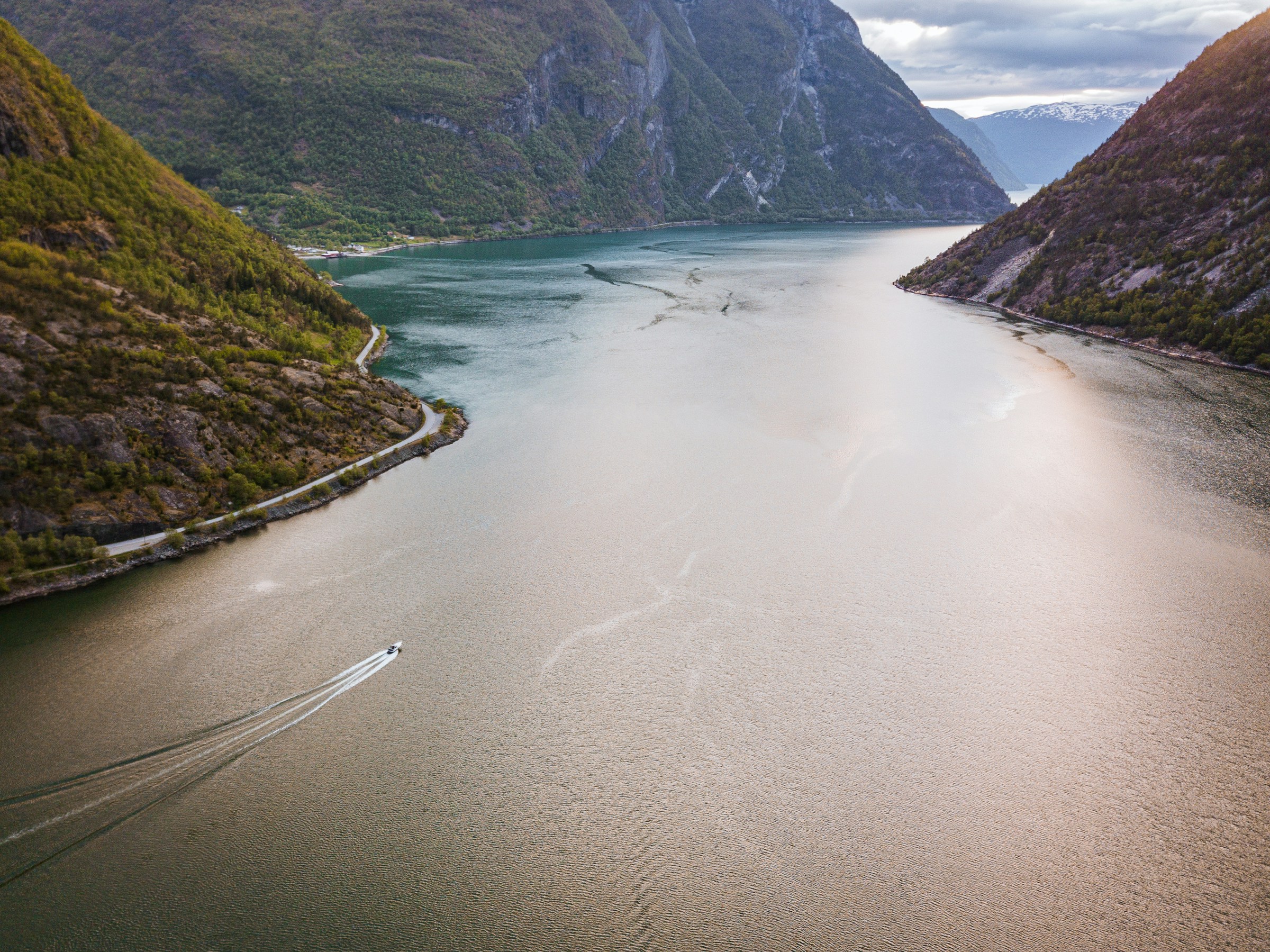
I knew before visiting that Sognefjord was enormous, but the statistics didn't prepare me for what that actually looked like. At 204 kilometres long and more than a kilometre deep in places, it's Norway's longest and deepest fjord.
I remember standing on a ferry watching one headland disappear behind us, only to round it and discover what felt like an entirely new landscape waiting beyond. It just kept going.
Balestrand became one of my favorite places to slow down. I loved its wooden waterfront buildings, mountains reflected in the water, and the almost ridiculous peacefulness after spending time in Bergen.
I also visited Mundal, Norway's wonderfully quirky Book Town. Second-hand books seemed to spill out of every available building, but somehow the setting was even better: a tiny village squeezed between the fjord, mountains, and waterfalls.
Then there's Jostedalsbreen, the largest glacier in mainland Europe. Seeing Nigardsbreen up close was another reminder of how much variety there is around Sognefjord.
For a longer stay, I actually preferred Sognefjord to Nærøyfjord. Nærøyfjord delivers immediate drama, but Sognefjord gave me more to discover, and I never felt like I was finished with it.
How Sognefjord fits into your Norway itinerary
I'd allow three or four days for Sognefjord, especially if you want to explore its villages and glacier landscapes rather than simply cruise through.
It combines naturally with Bergen and Flåm & Nærøyfjord, making this entire region an excellent centerpiece for a western Norway itinerary.
Lofoten
(pronounced: LOH-foh-ten)
Lofoten at a glance
Nordland, northern Norway
Arctic scenery, fishing villages, Northern Lights, and hiking
4-7 nights
Photographers, nature lovers, and Arctic adventurers
Remote, cinematic, and otherworldly
February to March for winter and Northern Lights, June to August for midnight sun and hiking
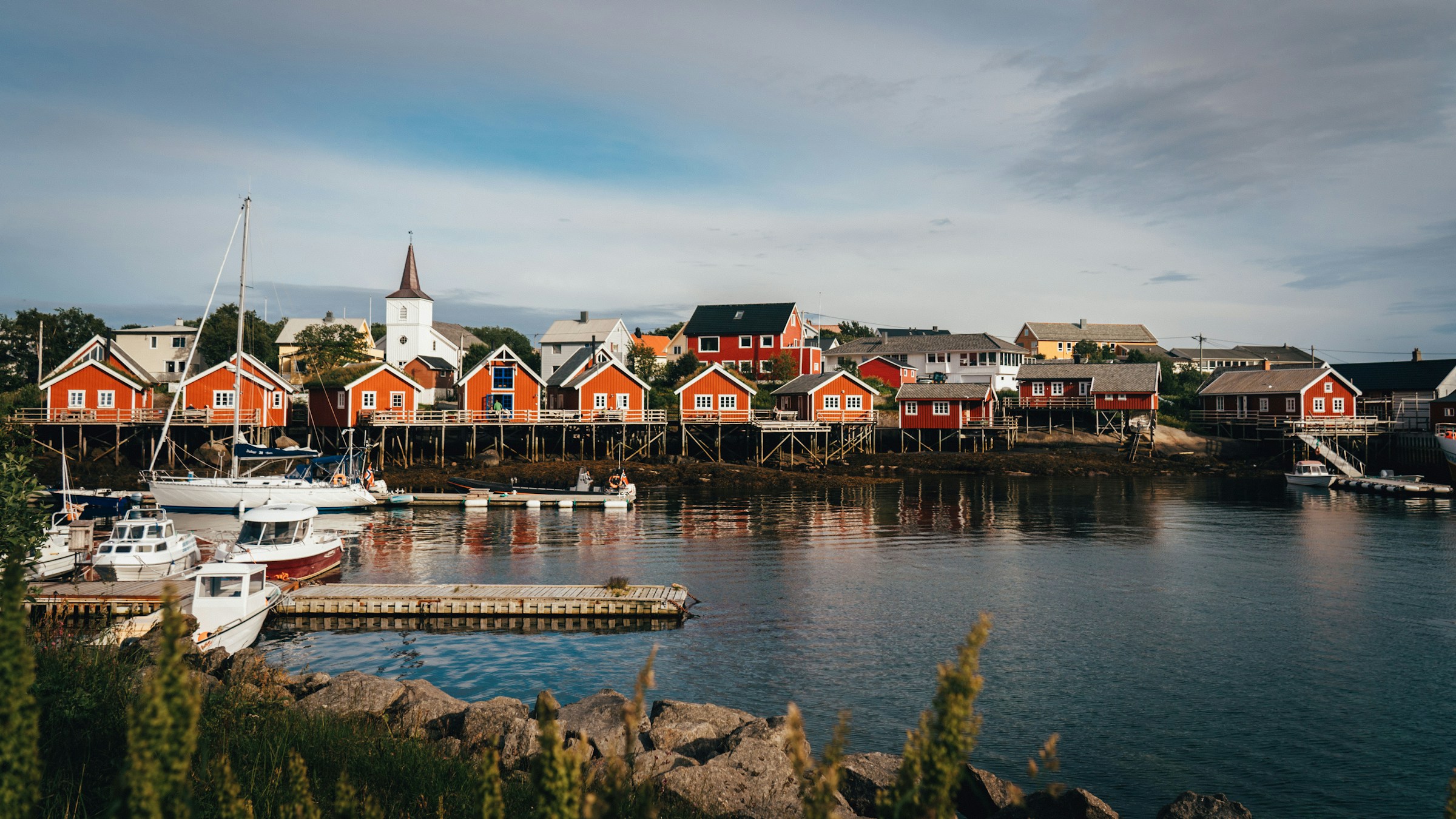
I've tried to explain Lofoten to people before, and I've mostly given up. You can describe the red fishing huts, jagged mountains, Arctic beaches and Northern Lights, but none of it quite communicates what it feels like to actually be there.
I arrived in Reine early one February morning while the sky was still dark. Lights from the rorbuer reflected across the water, with the mountains barely visible behind them. I ended up sitting outside in the cold for nearly an hour before I even went inside. I didn't really want to do anything except look at it.
The light was what surprised me most. In winter, it stays low and seems to hit the landscape sideways, making even ordinary scenes look extraordinary. I quickly understood why artists have been drawn to these islands for generations.
And then there are the extremes. In winter, I could watch for the Northern Lights from the harbor. In summer, the midnight sun means darkness barely arrives at all.
But my favorite version of Lofoten is still February: staying in a rorbu beside the water, with no particularly ambitious itinerary. Just the cold, the mountains, the changing light, and nowhere I urgently needed to be (plus a good book).
Of everywhere I've visited in Norway, this is the place I'd most happily disappear into for a week.
How Lofoten fits into your Norway itinerary
I'd give Lofoten at least four nights, although I'd happily stay for a week.
Because it's so far north, I'd treat it as its trip. Many visit Norway with this one destination in mind, and it's often paired with a trip to Finland for even more Arctic adventure.
Norway is a difficult country to rush. Distances can be surprisingly large, and once you factor in ferries, mountain roads, scenic rail journeys, and the temptation to stop every five minutes for another view, trying to cover too much can quickly work against you.
For a first trip, I'd concentrate on one part of the country rather than trying to connect all 10 destinations.
These Norway itineraries use the places I've included in this guide while keeping the routes realistic.
Norway Itinerary: 5 Days
Route: Bergen → Flåm & Nærøyfjord → Sognefjord
| Days 1-2 | Day 3 | Day 4-5 |
|---|---|---|---|
Destination | Bergen | Flåm & Nærøyfjord | Sognefjord |
Overnight | Bergen | Flåm | Sognefjord or departure |
Why this route? For a Norway itinerary in 5 days, I think this gives you the best introduction to what makes the country special. You'll have time to explore Bergen before taking the spectacular journey toward Flåm, experience Nærøyfjord from the water, and then slow down around Sognefjord.
*I'd use trains, ferries, and boats for this itinerary. This is one part of Norway where the journey between destinations is every bit as memorable as the places themselves.
Norway Itinerary: 7 Days
Route: Bergen → Hardangerfjord → Flåm & Nærøyfjord → Sognefjord
| Days 1-2 | Day 3 | Day 4 | Days 5-7 |
|---|---|---|---|---|
Destination | Bergen | Hardangerfjord | Flåm & Nærøyfjord | Sognefjord |
Overnight | Bergen | Hardangerfjord | Flåm | Sognefjord |
Why this route?
This Norway itinerary for 7 days is the one I'd choose if fjords and mountain scenery are your priorities. Bergen gives you the urban side of western Norway before the landscapes become increasingly dramatic.
Hardangerfjord brings waterfalls, orchards, and glacier scenery, while Flåm gives you the famous railway and Nærøyfjord. Finishing with three days around Sognefjord means you finally have time to slow down, explore smaller villages, and see more than the view from a ferry.
*A rental car gives you more freedom around Hardangerfjord and Sognefjord, although you can build much of this trip around Norway's excellent trains, ferries, and buses if you don't want to drive.
Norway Itinerary: 10 Days
Route: Bergen → Flåm & Nærøyfjord → Sognefjord → Lofoten
| Days 1-2 | Day 3 | Days 4-6 | Days 7-10 |
|---|---|---|---|---|
Destination | Bergen | Flåm & Nærøyfjor | Sognefjord | Lofoten |
Overnight | Bergen | Flåm | Sognefjord | Lofoten |
Why this route?
For a 10-day Norway itinerary, this gives you two completely different sides of the country without turning the trip into a race.
You'll start with Bergen and the western fjords, including the Flåm Railway, Nærøyfjord, and several days exploring Sognefjord. Then I'd fly north and finish with four nights in Lofoten.
*Use trains and ferries through western Norway, then fly north for Lofoten. Once you reach the islands, I'd rent a car. Having your own vehicle makes it much easier to explore at your own pace and react to changing weather and light.
Have more time? With two weeks, I'd start looking at adding Tromsø for more Arctic experiences, or Ålesund and Preikestolen if you want to extend the fjord-focused portion of the trip. I wouldn't try to force all 10 places into one journey. Norway is much better when you give each region enough time to actually experience it.
Why Norway deserves a visit beyond the famous fjords
Norway's fjords absolutely deserve their reputation, but some of my favorite experiences here have come from discovering just how much the country offers beyond them.
I've watched people soak up reflected winter sunlight in Rjukan, wandered through snow-covered wooden streets in Røros, climbed above Ålesund at sunset, chased the Northern Lights outside Tromsø, and sat beside the water in Lofoten wondering how anywhere could possibly look like this.
Even Bergen surprised me by becoming somewhere I wanted to stay rather than simply pass through on my way to the fjords.
If it's your first visit, don't feel like you need to see all 10 destinations. Some travelers will want dramatic hikes and fjord scenery, while others will prefer Arctic landscapes, historic towns, scenic train journeys, or quiet fishing villages.
FAQs about traveling to Norway
The currency in Norway is the Norwegian krone (NOK), and credit and debit cards are accepted almost everywhere.
Norway is part of the Schengen Area, so many travelers, including U.S. citizens, can visit visa-free for up to 90 days within a 180-day period.
Yes, Norway is generally easy to drive in, and you drive on the right-hand side of the road, although narrow mountain roads, ferries, tunnels, and winter conditions can make some routes more challenging.
Yes, Norway is considered a very safe destination for travelers, although you should still take normal precautions with your belongings and prepare carefully for changing weather when hiking or exploring remote areas.
Norway uses Type C and Type F plugs, with a standard voltage of 230V and a frequency of 50Hz.
The official language is Norwegian, with Bokmål and Nynorsk as its two written standards, and English is widely spoken throughout the country as well.
Ready to explore Norway? Optimise Travel is here to help
Norway's excellent transport network makes getting around relatively straightforward, but deciding how to divide your time between its fjords, Arctic islands, mountain landscapes, and historic towns can be surprisingly difficult.
At Optimise Travel, we create personalized travel itineraries based on your interests, travel style, and budget. Whether you're dreaming of exploring Bergen, riding the Flåm Railway, kayaking through Nærøyfjord, hiking above Lysefjord, chasing the Northern Lights in Tromsø, or slowing down among the incredible landscapes of Lofoten, we'll help you build an itinerary that makes the most of your time.
If you'd like help planning your trip to Norway, click here to learn more about our concierge travel services.