

Lithuania surprised me more than almost anywhere I've visited in northern Europe.
I came expecting beautiful Vilnius and plenty of Baltic history, but found medieval castles, peaceful lakes, enormous sand dunes, colourful towns, and a coastline that looked nothing like I'd imagined.
Better yet, many of my favourite places still felt wonderfully uncrowded.
If you're planning your first trip, these are the 10 places in Lithuania I'd make room for on your itinerary.
Have You Seen Our Travel Concierge Service?
Your trip, planned by local experts
We are not a travel agent - we design custom itineraries around your budget and style, without receiving commissions or booking fees.
Custom itinerary
Built around your dates, budget, and travel style.
Local expert knowledge
Recommendations from people on the ground, not review sites.
Travel smarter, spend less
We optimise for your budget to make your money go further.
Klaipėda
(pronounced: klai-PAY-da)
Klaipėda at a glance
Lithuania's Baltic coast, at the entrance to the Curonian Lagoon
Coastal atmosphere, architecture, and the Curonian Spit
1-2 nights
Couples, road trippers, coastal travelers
Maritime, relaxed, historic, and distinctly northern European
May to September
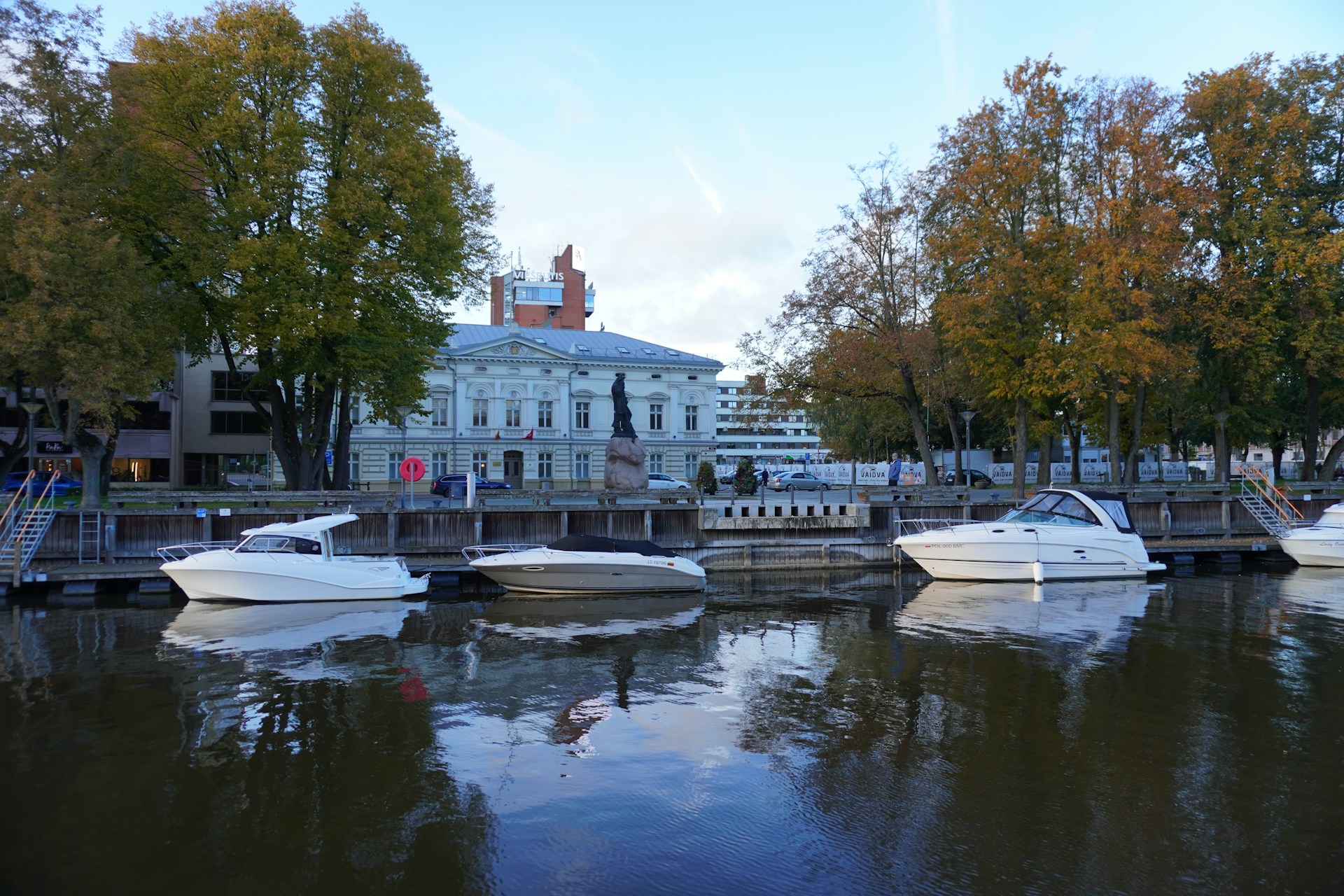
Klaipėda felt different from the Lithuania I'd experienced farther inland, and that was one of the things I liked most about it.
I started in the old town, where cobbled streets and half-timbered buildings gave parts of the city an almost German feel. That isn't accidental. Klaipėda spent centuries under German and Prussian influence, and I enjoyed spotting those traces as I wandered through the historic center.
Theatre Square became one of my favorite corners of the city. It's not enormous or particularly grand, but I liked its relaxed atmosphere and the surrounding architecture.
From there, I wandered toward the waterfront, where Klaipėda's identity as Lithuania's major port became much more obvious.
What really made the city memorable for me, though, was its relationship with the water. The Baltic Sea and Curonian Lagoon meet here, and ferries constantly make the short crossing toward the Curonian Spit.
I found Klaipėda easy to enjoy without a long sightseeing checklist. I could wander the old streets, spend time along the waterfront, stop for something to eat, and simply enjoy being somewhere that felt noticeably different from Vilnius and Lithuania's interior.
How Klaipėda fits into your Lithuania itinerary
I'd spend one night in Klaipėda, or two if you prefer using it as a base for the coast. It's around three hours from Vilnius and works naturally as the starting point for exploring western Lithuania.
Druskininkai
(pronounced: droos-kin-IN-kai)
Druskininkai at a glance
Southern Lithuania, near the Belarusian border
Spas, relaxation, nature, and Soviet history
1-2 nights
Couples, wellness travelers, and anyone wanting a slower stop
Peaceful, green, and relaxing
May to September for outdoor activities, year-round for spas
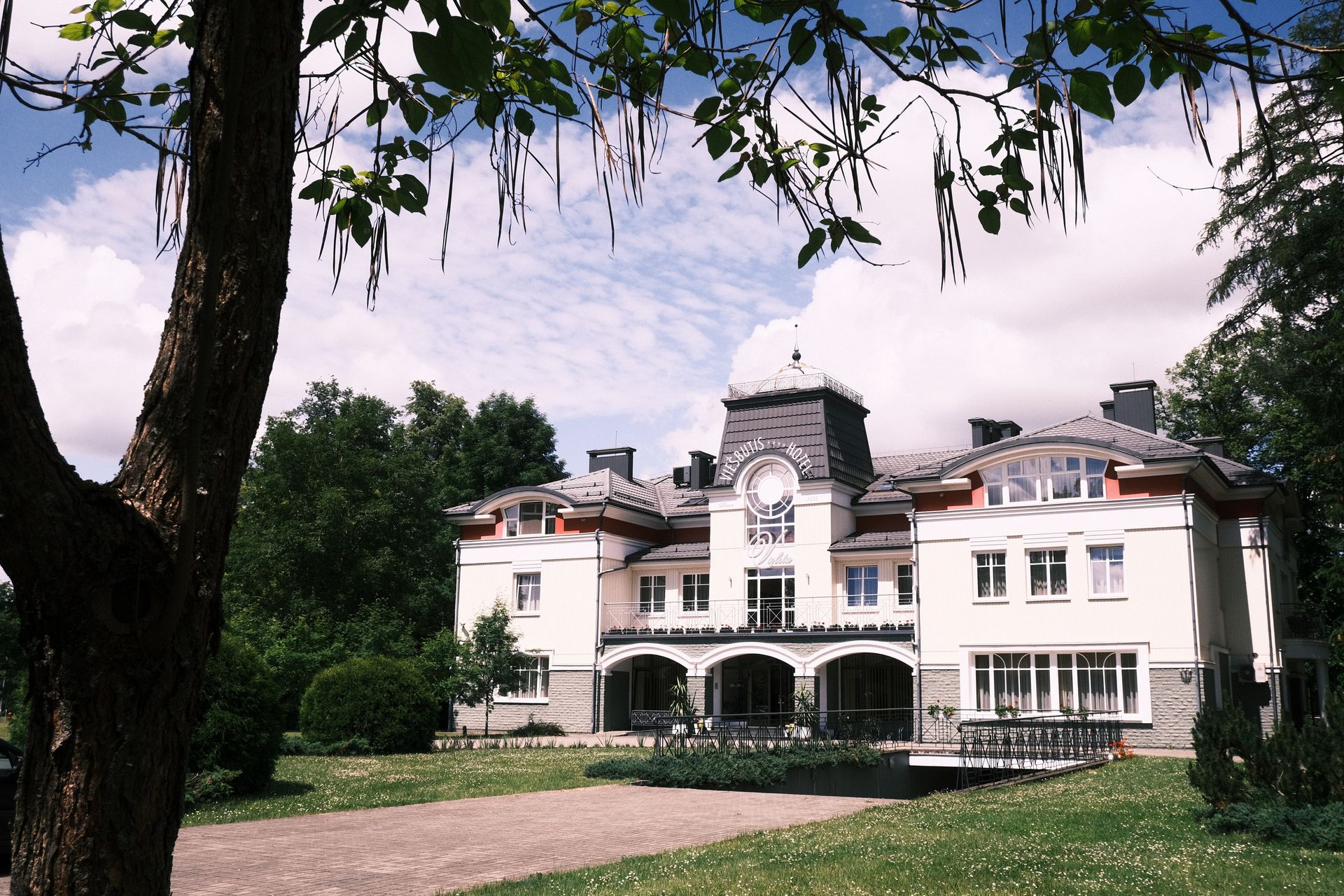
Druskininkai came at exactly the right point in my trip. After spending days exploring cities and historic sites, I was ready for somewhere that encouraged me to slow down.
The town is surrounded by pine forest and sits beside the Nemunas River, so I spent plenty of time simply walking. I loved the contrast between the quiet riverfront, leafy paths, and the elegant spa-town atmosphere that has attracted visitors here for generations.
But my most unusual experience was nearby Grūtas Park.
Walking through a Lithuanian forest surrounded by enormous statues of Lenin and other Soviet-era figures was every bit as strange as it sounds. Many of the monuments were removed from public spaces after Lithuania regained independence and eventually brought here.
I found the experience fascinating, uncomfortable, and occasionally surreal, particularly because the peaceful woodland setting felt so at odds with what the sculptures represented.
Back in Druskininkai, I was happy to return to the slower pace. Between the spas, forest, river, and almost resort-like atmosphere, this became less about sightseeing and more about taking a break from it.
I left feeling genuinely refreshed, which isn't something I can say about every stop on a busy trip.
How Druskininkai fits into your Lithuania itinerary
I'd spend one or two nights in Druskininkai, particularly if you're traveling around Lithuania for a week or longer.
It's roughly two hours south of Vilnius and works well as a change of pace between more sightseeing-heavy destinations.
Kernavė
(pronounced: ker-NA-veh)
Kernavė at a glance
About 35 km northwest of Vilnius
Ancient history, archaeological sites, and countryside views
Half day
History lovers, photographers, families, and nature lovers
Peaceful, ancient, green, and wonderfully open
May to September
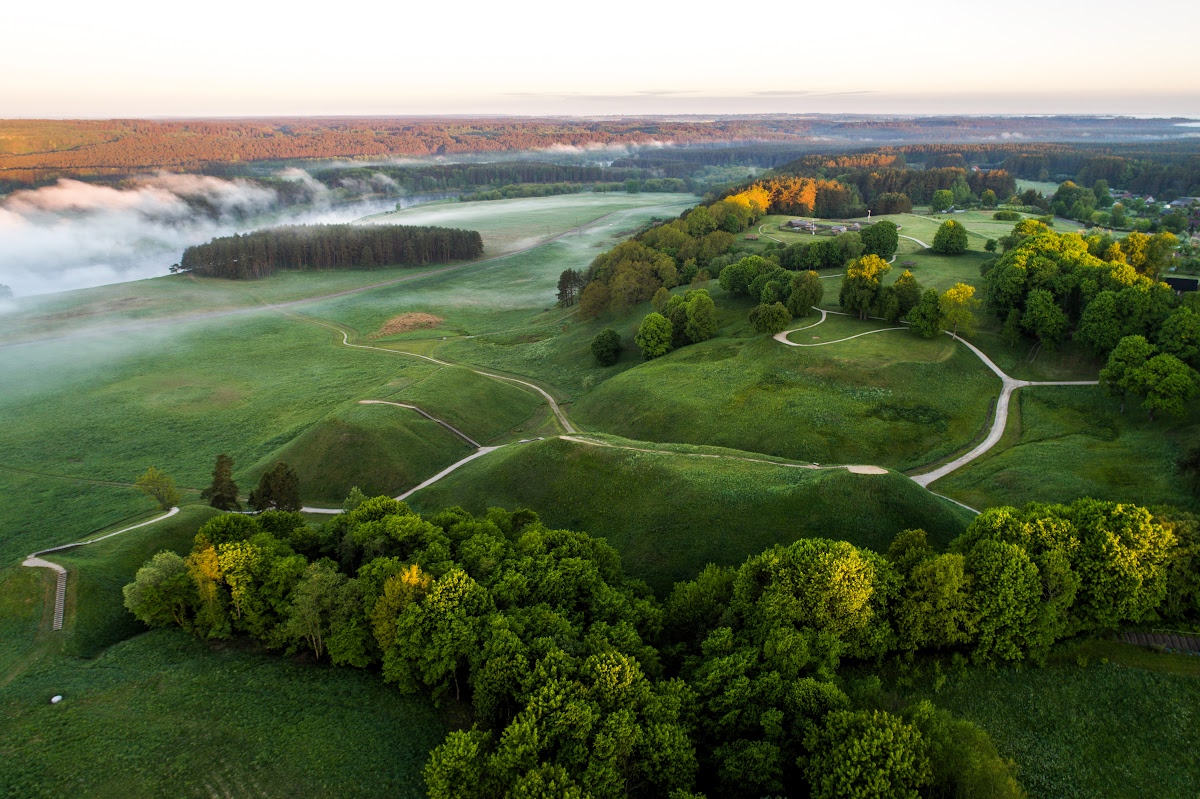
One of the first things that struck me about Kernavė was just how beautifully green everything seemed to be.
The five grassy hillforts rise above the Neris River valley, surrounded by forests and open countryside, and I found the entire setting much more dramatic than photographs had led me to expect. On a clear day, the layers of green seemed to stretch in every direction.
I walked between the mounds and climbed to the viewpoints overlooking the valley, where the Neris curved through the landscape below. It was incredibly peaceful, but knowing that Kernavė was once an important center of medieval Lithuania made it much easier to imagine how different this quiet countryside must once have been.
I also spent some time at the archaeological museum, which helped me understand what had actually occupied the landscape I was looking across. Without that context, the hillforts could easily seem like little more than unusually shaped hills.
What I enjoyed most was the combination of history and nature. Kernavė didn't feel like an archaeological site I'd simply arrived to inspect. I could walk through it, climb the hills, enjoy the views, and gradually piece together the story of what had once stood there.
How Kernavė fits into your Lithuania itinerary
I'd allow half a day for Kernavė. At only about 35 kilometres northwest of Vilnius, it's an easy addition to a stay in the capital without needing to change hotels.
If you're driving, I'd combine it with some time exploring the forests and countryside around Neris Regional Park rather than heading directly back to Vilnius.
Palanga
(pronounced: pa-LAN-ga)
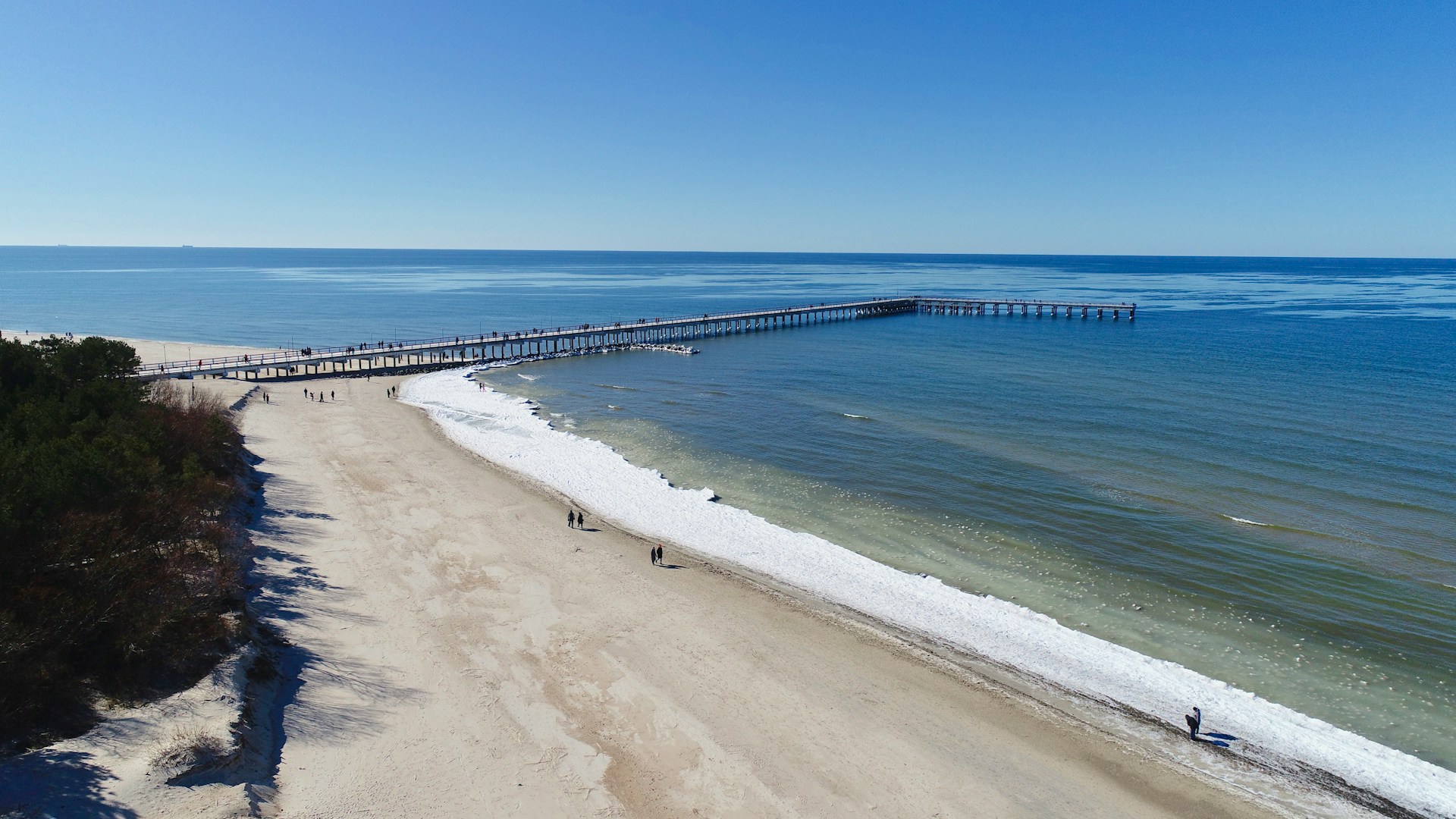
Palanga at a glance
Baltic coast, about 20 km north of Klaipėda
Beaches, summer atmosphere, gardens, and Baltic amber
1 full day to 1 night
Beach lovers, families, couples, and summer travelers
Lively, summery, relaxed, and distinctly Baltic
June to August
Palanga showed me a completely different side of Lithuania. After historic cities, forests, and quiet countryside, arriving here in summer felt like discovering where Lithuanians themselves go on holiday.
The beach was the biggest surprise. It's wide, sandy, and backed by dunes, and on a warm day it felt much more like a traditional seaside resort than I'd expected to find on the Baltic coast.
I walked out along the long Palanga Pier, which gave me a great view back toward the beach and coastline. It's especially beautiful around sunset.
Away from the sand, I loved wandering through Palanga Botanical Park. The gardens felt wonderfully peaceful compared with the busier center, and the elegant Tiškevičiai Palace in the park houses the Palanga Amber Museum.
Seeing pieces of Baltic amber up close gave me a new appreciation for something I'd previously thought of mostly as a souvenir.
By evening, the atmosphere changed again. Basanavičius Street filled with people strolling between restaurants, cafés, and shops, and Palanga suddenly felt far livelier than almost anywhere else I'd visited in Lithuania.
It was busy, but in a fun, unmistakably summery way.
How Palanga fits into your Lithuania itinerary
I'd give Palanga one full day, although spending the night makes it much easier to enjoy the evening atmosphere and sunset without watching the clock.
It's only about 20 kilometres north of Klaipėda, so I'd combine the two rather than treating Palanga as a separate part of the trip. Klaipėda, Palanga, and the Curonian Spit together make a fantastic coastal section of a wider Lithuania itinerary.
Hill of Crosses
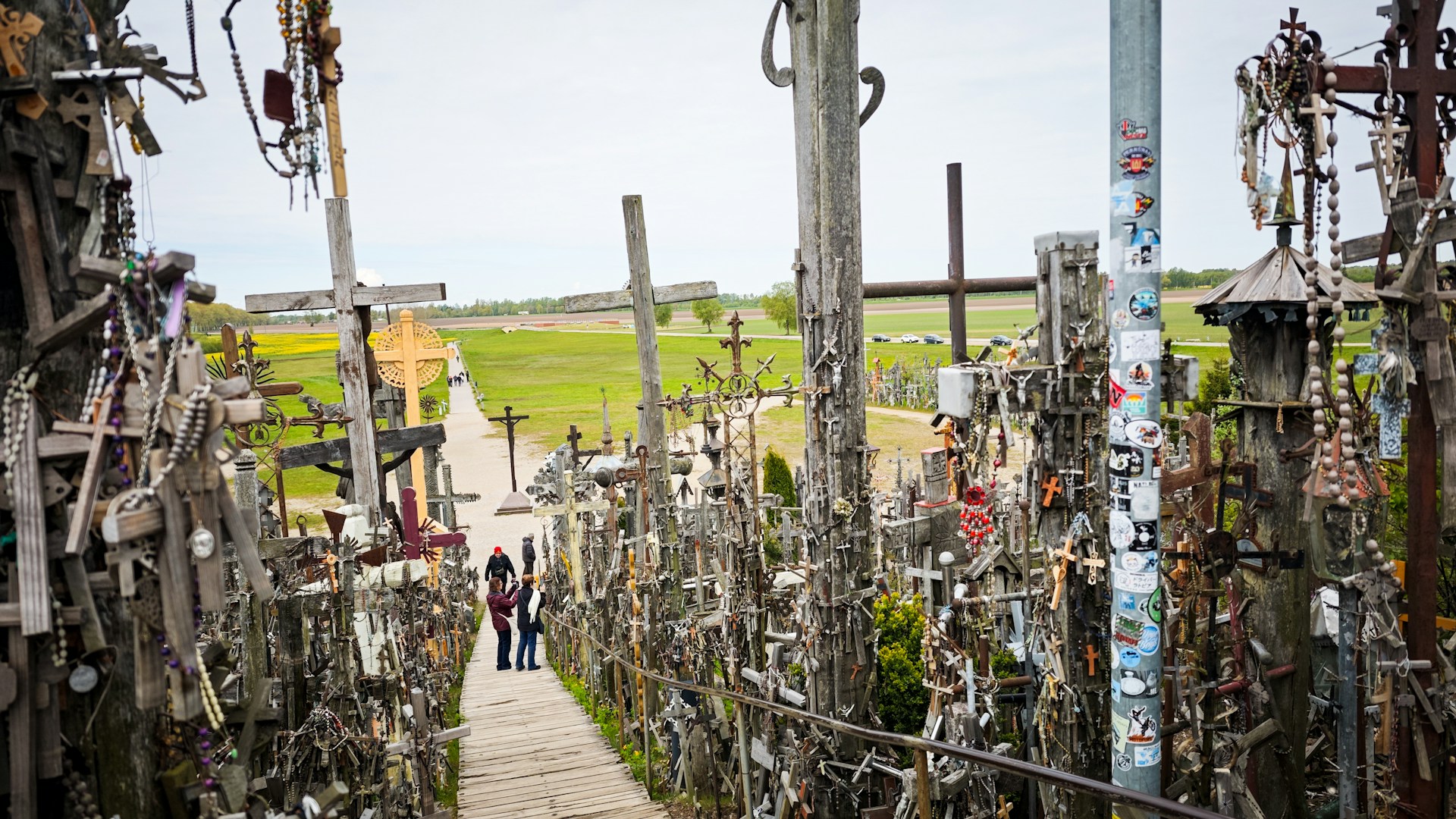
Hill of Crosses at a glance
Near Šiauliai, northern Lithuania
Lithuanian history, culture, and photography
1-2 hours
History lovers, photographers, and spiritual people
Spiritual, haunting, moving, and completely unique
May to September, preferably early in the day
I'd seen photographs of the Hill of Crosses before arriving, but they didn't prepare me for what it actually felt like to stand there.
From a distance, it looked like a small hill rising from otherwise flat countryside. As I got closer, individual crosses gradually became thousands upon thousands of them, packed together so densely that it was almost impossible to take everything in.
I wandered along the narrow paths between enormous wooden crosses, intricate metal ones, rosaries, carvings, and tiny handmade crosses tucked into almost every available space.
Some were elaborate memorials, while others looked as though someone had quietly placed them there that morning.
What affected me most was the sound. When the wind moved through the hill, crosses and rosaries shifted and knocked gently against one another. It gave the entire place an atmosphere that photographs simply can't capture.
The Hill of Crosses is deeply connected to Lithuania's Catholic identity, but I didn't think you needed to be religious to find it moving. Knowing that crosses continued to appear here despite repeated Soviet attempts to destroy the site made the sheer number of them feel even more significant.
It was easily one of the most memorable places I visited in Lithuania.
How the Hill of Crosses fits into your Lithuania itinerary
I'd allow around two hours here, although the site itself doesn't require an overnight stay.
It's about 12 kilometres outside Šiauliai, so having a car makes the visit considerably easier.
It also makes an excellent stop if you're traveling overland between Lithuania and Latvia, particularly if your wider Baltic itinerary continues north toward Riga.
Kaunas
(pronounced: KOW-nas)
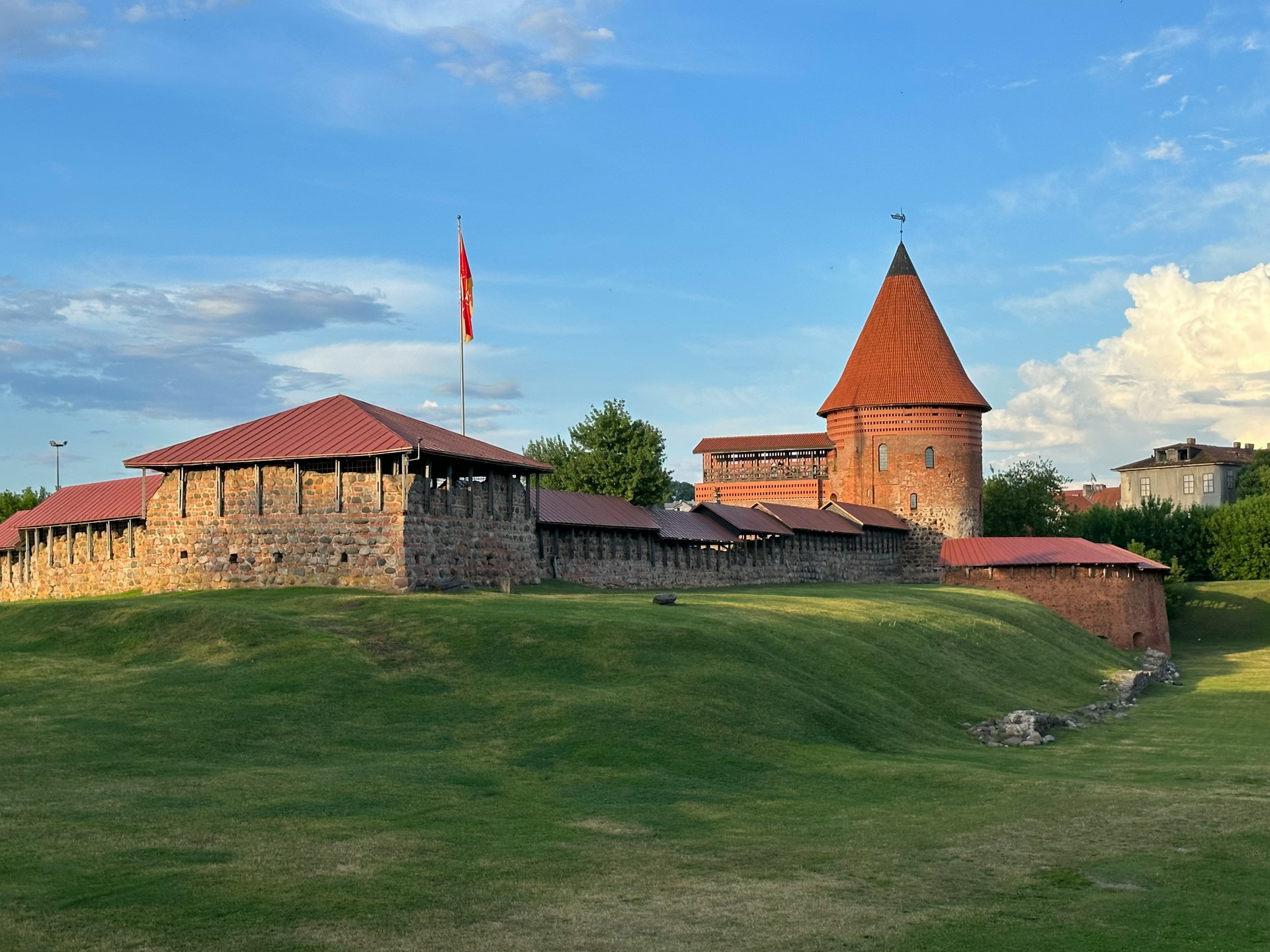
Kaunas at a glance
Central Lithuania, about 100 km west of Vilnius
Architecture, Lithuanian history, food, and city breaks
1-2 nights
History lovers, foodies, architecture fans, and city explorers
Relaxed, creative, historic, and distinctly Lithuanian
May to September
Kaunas felt noticeably different from Vilnius. It was less polished and touristy, but I liked that about it. The city had a relaxed, lived-in energy that made wandering around without much of a plan especially enjoyable.
I spent time exploring the old town and Kaunas Castle before making my way along Laisvės Alėja, the long pedestrian boulevard running through the newer part of the city.
With its trees, cafés, shops, and striking modernist buildings, it became one of my favorite places to simply walk and watch everyday life going on around me.
Kaunas also gave me one of my favorite Lithuanian food experiences. I ate a really good plate of cepelinai, traditional potato dumplings typically filled with minced meat and served with sour cream and bacon.
They're hearty, filling, and exactly the kind of meal I wanted after a day of walking around the city.
The much heavier side of Kaunas came at the Ninth Fort. Visiting this former fortress and prison, which became a site of mass murder during the Nazi occupation, was difficult but important. It added a completely different perspective to my time in the city.
Between the food, architecture, history, and relaxed streets, I was glad I hadn't treated Kaunas as somewhere to rush through.
How Kaunas fits into your Lithuania itinerary
Kaunas’ central location also makes Kaunas an easy stop when traveling between Vilnius and Lithuania's western coast.
Aukštaitija National Park
(pronounced: owk-shtai-TEE-ya)
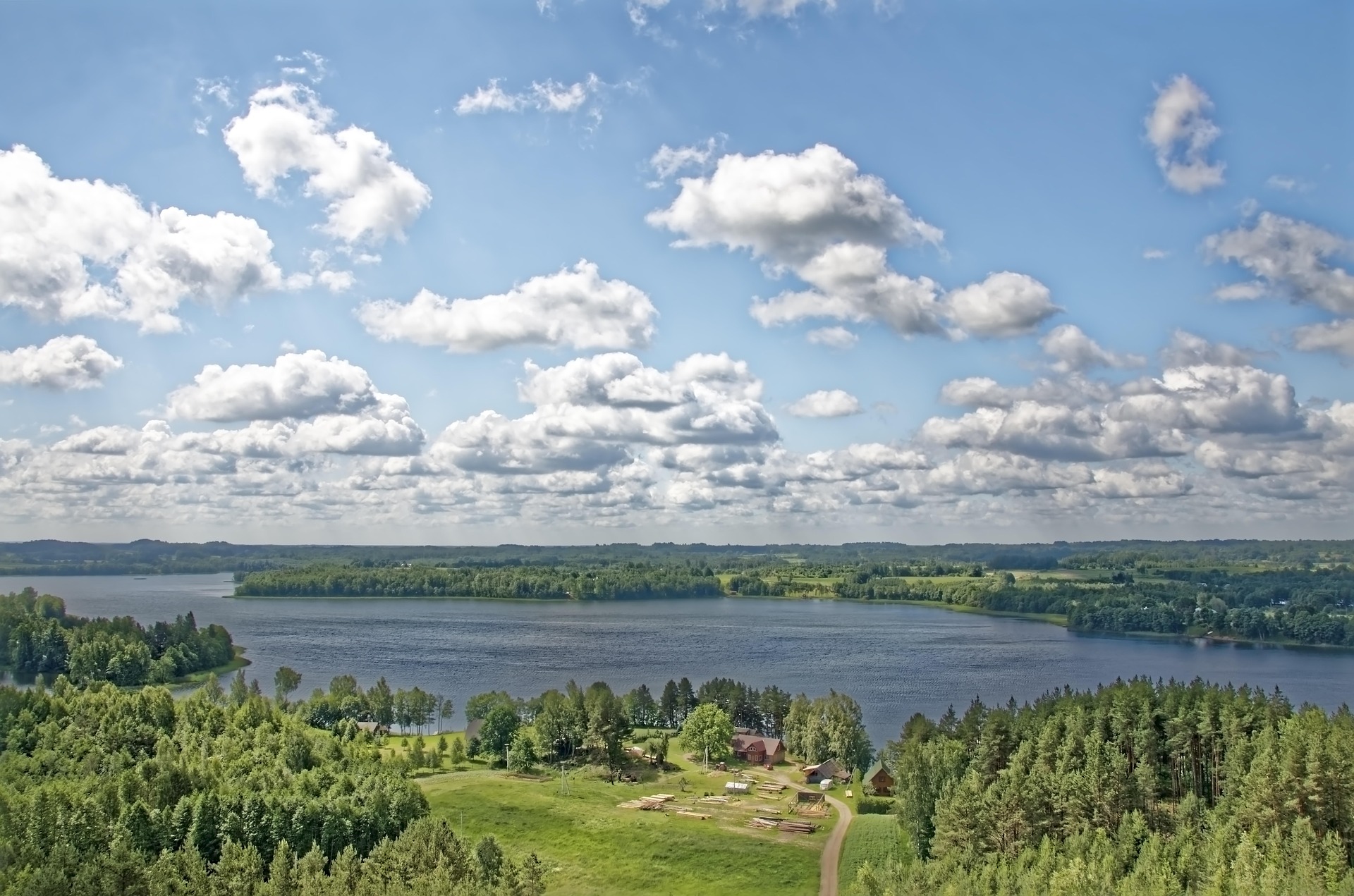
Aukštaitija National Park at a glance
Northeastern Lithuania, about 100 km from Vilnius
Lakes, kayaking, hiking, cycling, and nature
2-3 nights
Nature lovers, paddlers, cyclists, families, and slow travelers
Peaceful, forested, traditional, and wonderfully unhurried
June to September
Aukštaitija National Park was one of those places that made me want to completely slow down.
With more than 100 lakes scattered between seemingly endless forests, it felt wonderfully removed from the cities I'd been exploring elsewhere in Lithuania.
I based myself around Palūšė, a tiny village on the shore of Lake Lūšiai, and immediately understood why this area is better experienced over several days rather than squeezed into a quick visit.
Some of my favorite time here was spent on and around the water.
Kayaking gave me a completely different view of the park, with forested shorelines reflected in the calm lakes and stretches where there seemed to be almost nobody else around.
I also loved walking the forest trails and seeing how the lakes continually appeared between the trees.
There was something wonderfully simple about the rhythm of my days here. I could spend the morning paddling, stop somewhere for local food, explore by bike or on foot in the afternoon, and finish beside the lake as the light began to disappear.
It was another place where Lithuania's incredible greenery really stood out to me, but here it was the combination of forest and water that made the landscape so memorable.
How Aukštaitija National Park fits into your Lithuania itinerary
I'd place Aukštaitija after a few busy days of sightseeing in Vilnius. It provides a complete change of scenery and gives you time to experience rural Lithuania before continuing elsewhere in the country.
Trakai
(pronounced: TRAK-eye)
Trakai at a glance
About 28 km west of Vilnius
Medieval history, castles, lakes, kayaking, and Karaite culture
Half day to 1 night
History lovers, couples, families, photographers, and foodies
Fairytale-like, peaceful, historic, and scenic
May to September
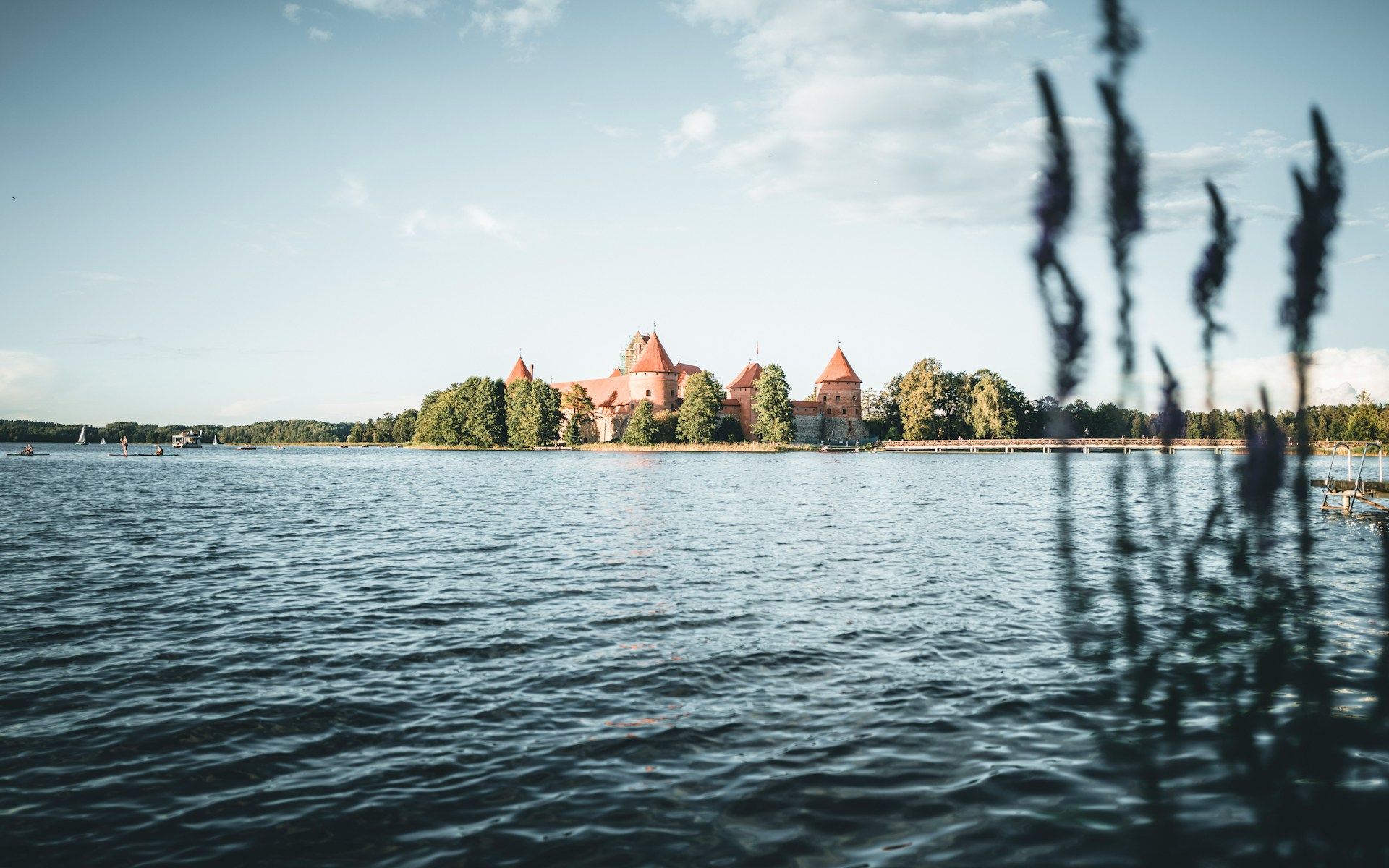
I'd seen plenty of photographs of Trakai before I visited, and somehow the castle still impressed me when I finally saw it in person.
Trakai Island Castle sits on an island in Lake Galvė, with red-brick towers reflected in the water and wooden bridges leading across from the shore. It looked almost too picturesque to be real, especially with the surrounding lake and forest adding even more color to the setting.
I crossed the bridges and explored the restored castle before spending more time around the lake itself. This was another place where I really appreciated just how much water and greenery Lithuania has.
In summer, you can kayak, take a boat onto the lake, or even swim, so I wouldn't come here solely for the castle.
I also enjoyed discovering a completely different part of Lithuania's history in the town. Trakai has been home to a Karaite community for centuries, and I made sure to try kibinai, the traditional crescent-shaped pastries associated with the community. They're usually filled with meat, although other fillings are available, and made a very good lunch after exploring the castle.
Trakai was touristy, but I understood why. Few places in Lithuania deliver such an impressive first view.
How Trakai fits into your Lithuania itinerary
Trakai is only about 28 kilometres from Vilnius, making it one of the easiest day trips from the capital.
Half a day is enough to see the castle and town, but I'd allow a full day if you want to spend time on the lake.
Curonian Spit / Nida
(pronounced: NEE-da)
Curonian Spit / Nida at a glance
Baltic coast, reached by ferry from Klaipėda
Sand dunes, cycling, beaches, nature, and coastal scenery
2-3 nights
Nature lovers, cyclists, couples, photographers, and beach lovers
Wild, peaceful, windswept, and wonderfully remote
Late June to August
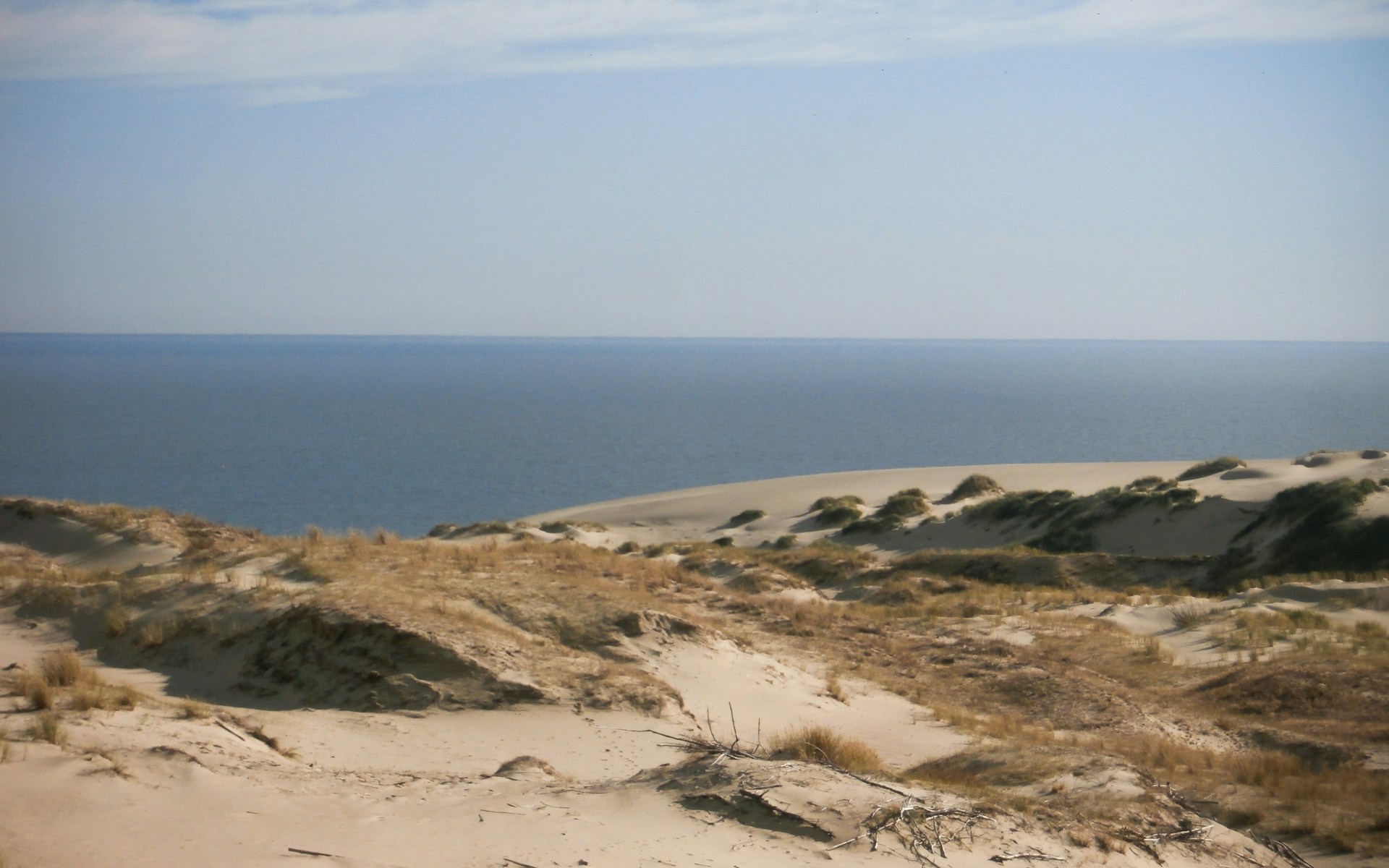
The Curonian Spit was unlike anywhere else I visited in Lithuania. I knew there would be sand dunes and beaches, but I hadn't expected the landscape to feel quite so wild or the contrast between the Baltic Sea, pine forest, enormous dunes, and calm lagoon to be so dramatic.
Nida became my base, and I loved its colourful fishermen's cottages, traditional weathervanes, and relaxed atmosphere. It felt more like a small coastal retreat than somewhere I needed to rush around ticking off sights.
The Parnidis Dune was the real showstopper. Walking up onto that huge expanse of sand and looking across the Curonian Lagoon gave me one of my favorite views of the entire trip. From up there, I could really appreciate just how narrow and unusual the spit is.
I also loved exploring by bicycle. The cycling paths cut through fragrant pine forests, occasionally opening onto dunes, small settlements, or stretches of water. On one side was the sheltered lagoon, while crossing to the other brought me to huge Baltic beaches that seemed to stretch forever.
What stayed with me most was the sense of space. I found myself slowing down here without even trying, particularly in the evening when the light changed over the lagoon.
How the Curonian Spit and Nida fit into your Lithuania itinerary
I'd stay two or three nights in Nida rather than attempting to see the Curonian Spit as a quick excursion.
Reaching the Lithuanian side involves taking the ferry from Klaipėda and then continuing south along the spit, so this is somewhere worth giving proper time.
I'd pair Nida directly with Klaipėda and Palanga for the coastal portion of a Lithuania itinerary. Together, they showed me three very different versions of the country's Baltic coast.
Vilnius
(pronounced: VIL-nyoos)
Vilnius at a glance
Southeastern Lithuania
Baroque architecture, food, viewpoints, and culture
3 nights
Couples, foodies, architecture fans, and city explorers
Beautiful, creative, historic, and surprisingly relaxed
May to September or December for Christmas atmosphere
Vilnius surprised me almost immediately. I expected an interesting Baltic capital, but I wasn't prepared for just how beautiful the Old Town would be.
I started around Cathedral Square before wandering south through streets filled with Baroque churches, hidden courtyards, pastel-colored buildings, and old university architecture. This was one of those cities where I repeatedly spotted an interesting doorway or narrow street and changed direction just to see where it went.
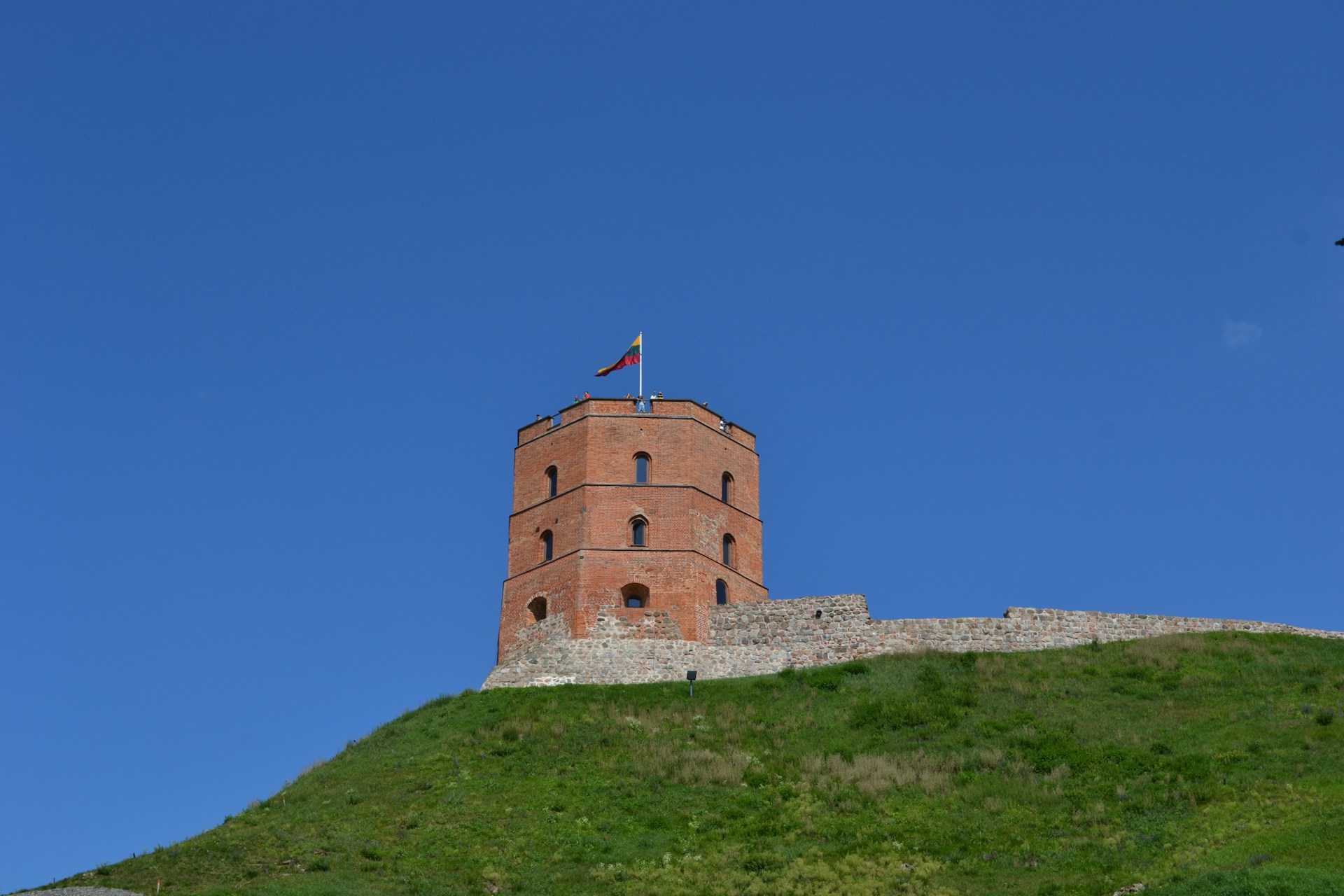
For a completely different perspective, I climbed to Gediminas Tower. Looking across Vilnius from above, with red rooftops spreading toward the surrounding greenery and the river winding through the city, became one of my favorite views in Lithuania.
I also loved wandering through Užupis, the wonderfully eccentric neighborhood that famously declared itself an independent republic. Its murals, galleries, cafés, and slightly rebellious personality felt completely different from the grand architecture just across the river.
Vilnius also has much heavier stories to tell. Learning about its once-thriving Jewish community and what happened during the Holocaust added an important layer to my understanding of the city.
But some of my favorite moments were much simpler: sitting at an outdoor café, wandering through another courtyard, or heading up to the Hill of Three Crosses as the light changed over the city.
How Vilnius fits into your Lithuania itinerary
Vilnius is also the natural starting point for a wider Lithuania itinerary. Trakai and Kernavė are easy excursions from the capital, while Kaunas, Druskininkai, and Aukštaitija National Park can all fit naturally into the next stage of the trip. It's also very easy to travel to Poland from Vilnius.
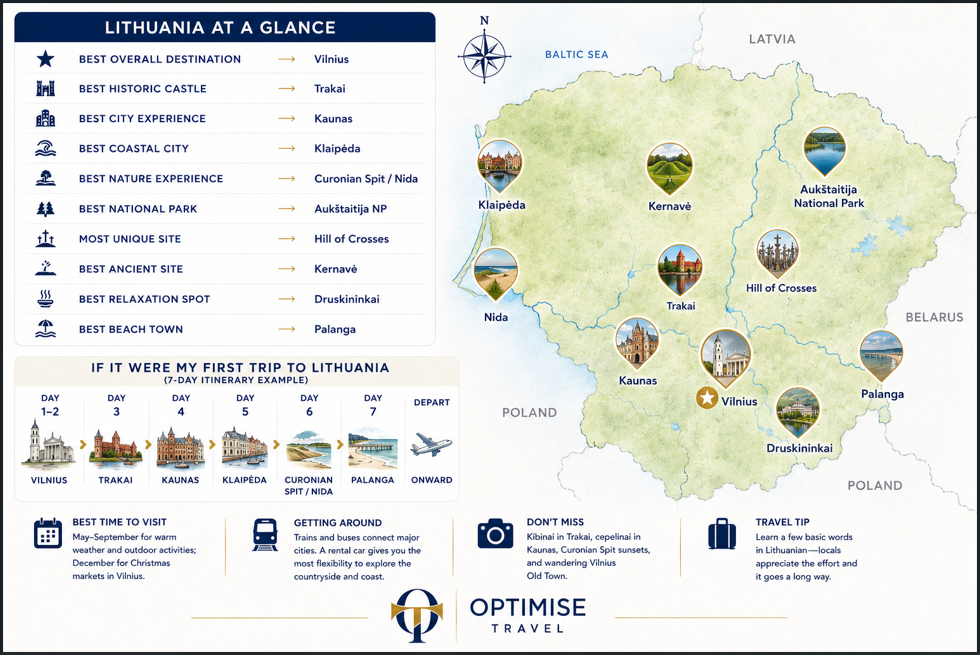
Lithuania is relatively compact, but I still wouldn't try to see everything in a single trip.
Some of my favorite experiences came from slowing down, whether I was cycling through pine forests, wandering around Vilnius, or simply watching the light change over the Curonian Lagoon.
For a first visit, I think a 7-day Lithuania itinerary gives you a great introduction to the country without spending every day on the road.
Lithuania Itinerary: 7 Days
Route: Vilnius → Trakai → Kaunas → Klaipėda → Curonian Spit & Nida → Palanga
| Days 1-2 | Day 3 | Days 4 | Days 5-6 | Days 7 |
|---|---|---|---|---|---|
Destination | Vilnius | Trakai & Kaunas | Klaipėda | Curonian Spit & Nida | Palanga |
Overnight | Vilnius | Kaunas | Klaipėda | Nida | Klaipėda or departure |
Why this route? For a Lithuania itinerary in 7 days, I think this gives you a fantastic introduction to the country without trying to see too much. You'll experience Vilnius and Trakai's history before continuing through Kaunas to Klaipėda, the Curonian Spit, Nida, and Lithuania's beautiful Baltic coast.
*I'd rent a car for this itinerary if possible. Lithuania's major cities are well connected by public transportation, but having a car gave me much more freedom to explore smaller towns, national parks, and countryside stops at my own pace.
Why Lithuania deserves a visit beyond Vilnius
Vilnius absolutely deserves its reputation, but some of my favorite experiences in Lithuania came from discovering just how much the country offers beyond its capital.
I've cycled through pine forests on the Curonian Spit, climbed the grassy hillforts of Kernavė, kayaked between peaceful lakes in Aukštaitija National Park, eaten traditional cepelinai in Kaunas, and stood among thousands of crosses at one of the most unusual places I've ever visited.
Even Lithuania's Baltic coast surprised me, from the enormous dunes around Nida to the lively summer atmosphere of Palanga.
If it's your first visit, don't feel like you need to see all 10 destinations. Some travelers will fall in love with Lithuania's history and architecture, while others will prefer quiet lakes, forests, beaches, cycling, unusual cultural sites, or simply slowing down in the countryside.
FAQs about traveling to Lithuania
Lithuania uses the euro (EUR).
Lithuania is part of the Schengen Area, and travelers from many countries, including the United States, can visit visa-free for up to 90 days within a 180-day period.
Yes, driving in Lithuania is generally straightforward, and vehicles drive on the right-hand side of the road.
Yes, Lithuania is generally considered a safe destination for travelers, although normal precautions against petty theft are recommended in busy tourist areas.
Lithuania uses Type C and Type F plugs with a standard voltage of 230V and a frequency of 50Hz.
Lithuanian is the country's official language, although English is widely spoken in major cities and tourist areas, particularly among younger Lithuanians.
Ready to explore Lithuania? Optimise Travel is here to help
Lithuania may be relatively compact, but deciding how to divide your time between its historic cities, peaceful lake districts, forests, and Baltic coastline can be surprisingly difficult.
At Optimise Travel, we create personalized travel itineraries based on your interests, travel style, and budget. Whether you're dreaming of wandering through Vilnius, exploring Trakai Castle, kayaking in Aukštaitija National Park, cycling the Curonian Spit, relaxing beside the Baltic Sea, or discovering unusual places like the Hill of Crosses, we'll help you build an itinerary that makes the most of your time.
If you'd like help planning your trip to Lithuania, click here to learn more about our concierge travel services.