

Slovakia surprised me with just how much it packs into such a small country. I found medieval castles, beautiful old towns, traditional villages, and some of the most spectacular mountain scenery in Central Europe, often without the crowds I'd expect elsewhere.
From hiking in the High Tatras to wandering through centuries-old mining towns, Slovakia gave me far more reasons to slow down and explore than I expected.
Here are the 10 best places to visit in Slovakia that I think are worth experiencing at least once.
Have You Seen Our Travel Concierge Service?
Your trip, planned by local experts
We are not a travel agent - we design custom itineraries around your budget and style, without receiving commissions or booking fees.
Custom itinerary
Built around your dates, budget, and travel style.
Local expert knowledge
Recommendations from people on the ground, not review sites.
Travel smarter, spend less
We optimise for your budget to make your money go further.
Trenčín
(pronounced: TREN-cheen)
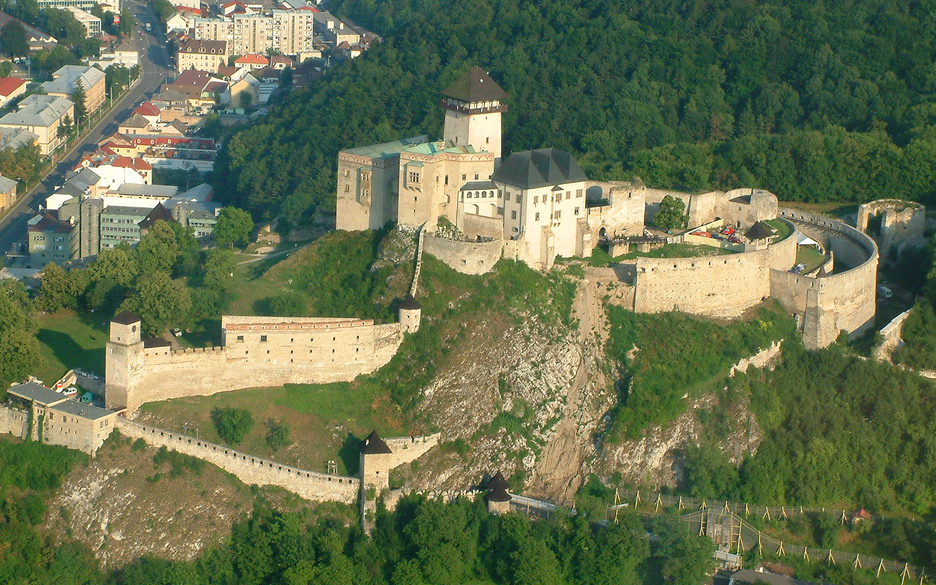
Trenčín at a glance
Northwestern Slovakia, on the Váh River
Castles, history, and old-town atmosphere
Full day
History lovers, castle enthusiasts, and photographers
Historic, dramatic, and surprisingly relaxed
April to October
Trenčín has one of those skylines that immediately tells you why you've come. Trenčín Castle sits on an enormous rocky crag directly above the old town, and from almost anywhere in the center, it seems to be looming over you.
The climb to the castle is absolutely worth it. It's one of the largest castle complexes in Slovakia, and from the top I had fantastic views across the old town, the Váh River, and the surrounding hills.
Back below, the historic center is compact and easy to explore, with colorful buildings, cafés, and a plague column in the main square.
One of the quirkiest things I discovered is Hotel Elizabeth, which sits directly against the castle cliff. Parts of the building incorporate the rock itself, and it's also where you'll find a viewing point for my favorite historical detail in Trenčín.
Carved into the rock beneath the castle is a Roman inscription dating to 179 AD, commemorating a Roman victory at Laugaricio, the ancient settlement here.
I love that something so historically significant is sitting right in the middle of town and can be surprisingly easy to miss.
How Trenčín fits into your Slovakia itinerary
Trenčín is about 120 kilometres northeast of Bratislava and roughly 1.5 hours away by train, making it an easy day trip from the capital.
A full day gives you plenty of time to explore the castle and old town without rushing. If you're traveling by car and have more time, Trenčín also pairs naturally with Bojnice, around 40 kilometres to the east.
Vlkolínec
(pronounced: VLKO-lee-nets)
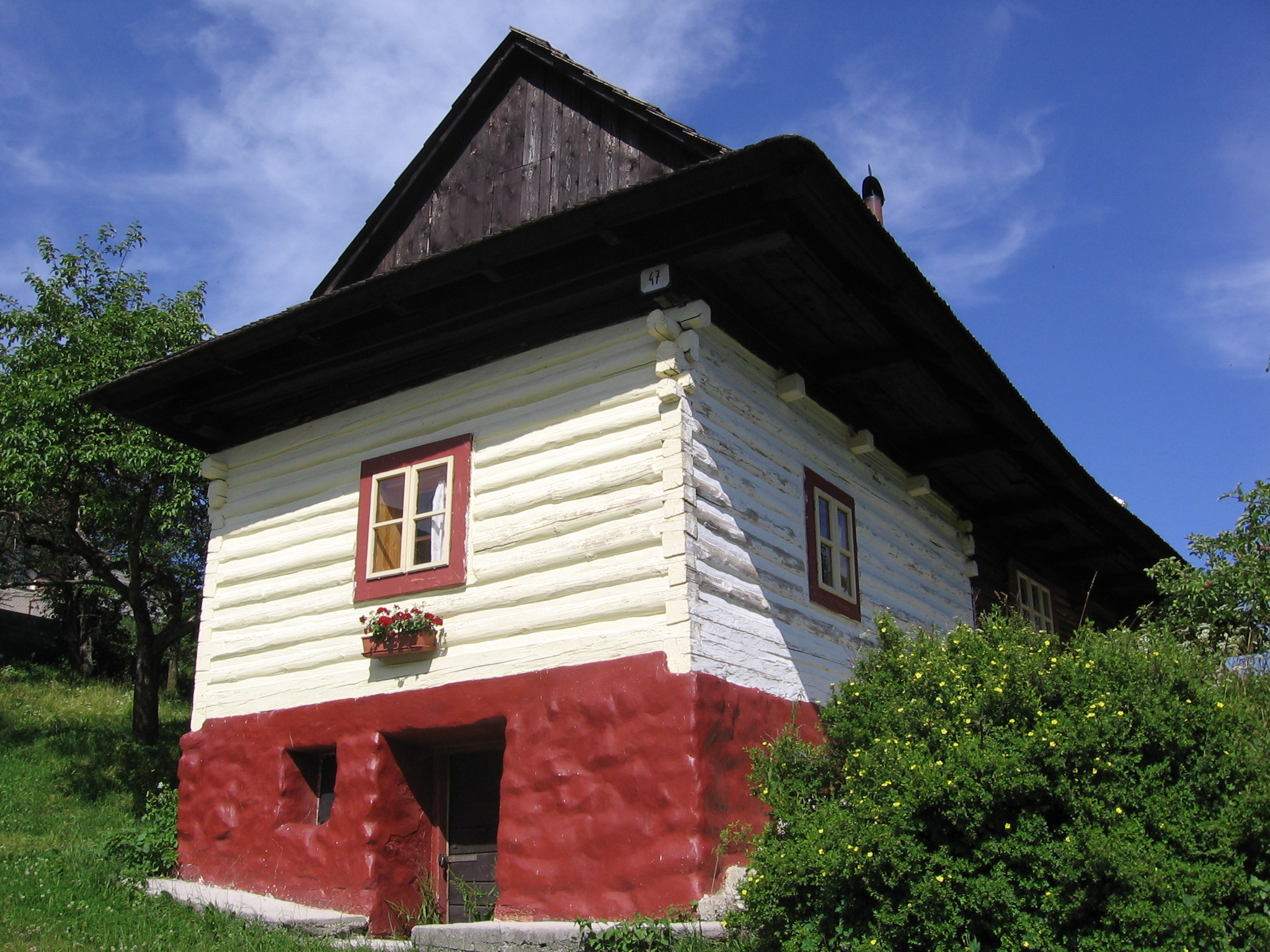
Vlkolínec at a glance
Central Slovakia, near Ružomberok
Traditional culture, architecture, and mountain scenery
Half day
Culture lovers, photographers, and slow travelers
Rural, peaceful, and beautifully preserved
May to October
What I love about Vlkolínec is that it doesn't feel like someone has simply recreated an old Slovak village for tourists. People still live here, tending their gardens, hanging out laundry, and going about everyday life among traditional log houses that have stood for centuries.
The UNESCO-listed village sits high on a hillside near Ružomberok, surrounded by the mountains of central Slovakia. There are around 45 traditional log houses, many painted in soft colors with beautiful wooden details, connected by simple paths rather than busy streets. Walking through the village feels wonderfully removed from modern life.
My favorite feature is actually the wooden belfry. It dates to 1770, and there's something about seeing it standing among the houses and knowing it remains part of a living community that made a bigger impression on me than a perfectly preserved museum ever could.
I also really enjoyed the setting. At around 755 metres above sea level, Vlkolínec is surrounded by green hills and mountains, and even the journey up feels like part of the experience.
This isn't somewhere I would rush through ticking off sights. The pleasure is simply walking slowly, noticing the details, and appreciating how remarkably well this tiny mountain settlement has survived.
How Vlkolínec fits into your Slovakia itinerary
You only need a few hours in Vlkolínec, so I wouldn't plan an overnight stay here. It's around five kilometres from Ružomberok and can be reached by local transport or on foot if you'd like to turn the journey into part of the experience.
I'd combine Vlkolínec with Ružomberok and some time exploring the surrounding mountains, making it an easy addition to a road trip through central Slovakia.
Banská Štiavnica
(pronounced: BAN-skah SHTYAHV-nee-tsah)
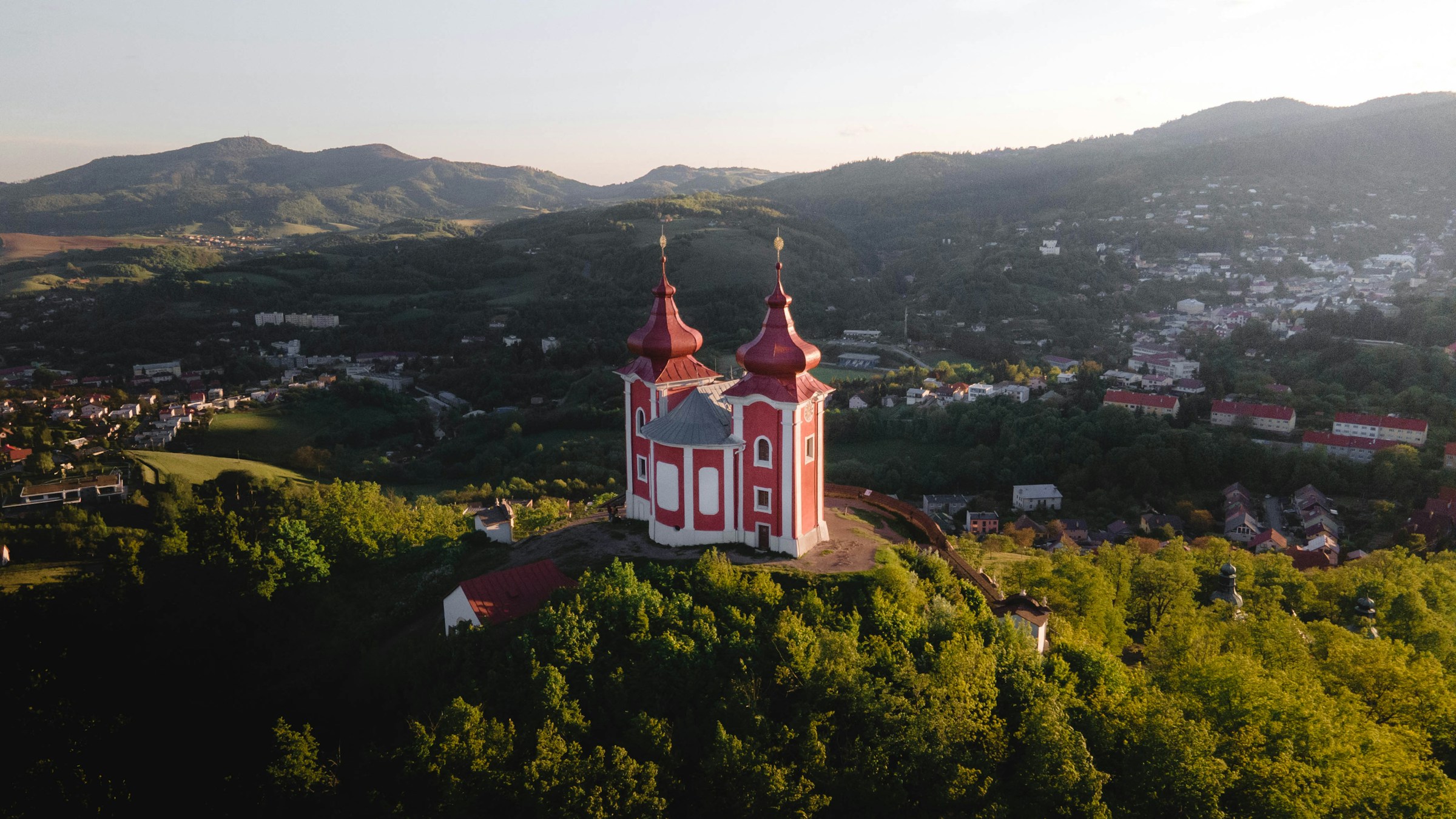
Banská Štiavnica at a glance
Central Slovakia, Štiavnické Hills
Mining history, architecture, and UNESCO heritage
1-2 nights
History lovers, couples, and curious travelers
Atmospheric and creative
May to October
Banská Štiavnica is a town shaped almost entirely by what lies beneath it. For centuries, silver and gold mining made this one of the wealthiest towns in Europe, and when that prosperity eventually faded, it left behind an incredibly well-preserved historic center tucked into the surrounding hills.
I loved exploring the old town around Holy Trinity Square, where Baroque churches and former palaces hint at just how important this relatively small place once was.
Above the center, the Old Castle adds another layer of history, while the Calvary climbs dramatically up the hillside through a series of chapels.
My partner's favorite part was the Mining Museum, where you can actually head underground and experience part of the old mine system. It gives you a much better understanding of the work that created all that wealth above ground and makes the town's history feel much more tangible.
I was especially fascinated by the tajchy, the network of artificial lakes surrounding the town. They formed part of an ingenious water-management system developed to provide energy for the mines, turning the landscape itself into part of Banská Štiavnica's industrial history.
For me, though, the highlight is walking up to the Calvary in the late afternoon. Looking down over the old mining town surrounded by green hills is one of those views that makes me want to stay longer than planned.
How Banská Štiavnica fits into your Slovakia itinerary
Banská Štiavnica fits naturally into the middle of a Slovakia road trip as you travel between Bratislava and the mountainous regions farther north and east. I'd spend one or two nights here before continuing toward Vlkolínec and the Low Tatras.
If you're traveling in the opposite direction, it also makes a fantastic final historic stop before heading back toward Bratislava.
Demänovská Cave System
(pronounced: deh-MAY-nov-skah)
Demänovská Cave System at a glance
Low Tatras National Park, Central Slovakia
Caves, geology, and unusual natural landscapes
Full day
Nature lovers, families, and adventurous travelers
Otherworldly, dramatic, and adventurous
May to September
I've visited plenty of caves while traveling, but what makes the Demänovská Valley particularly interesting is that you can experience two completely different underground environments within just a couple of kilometres of each other.
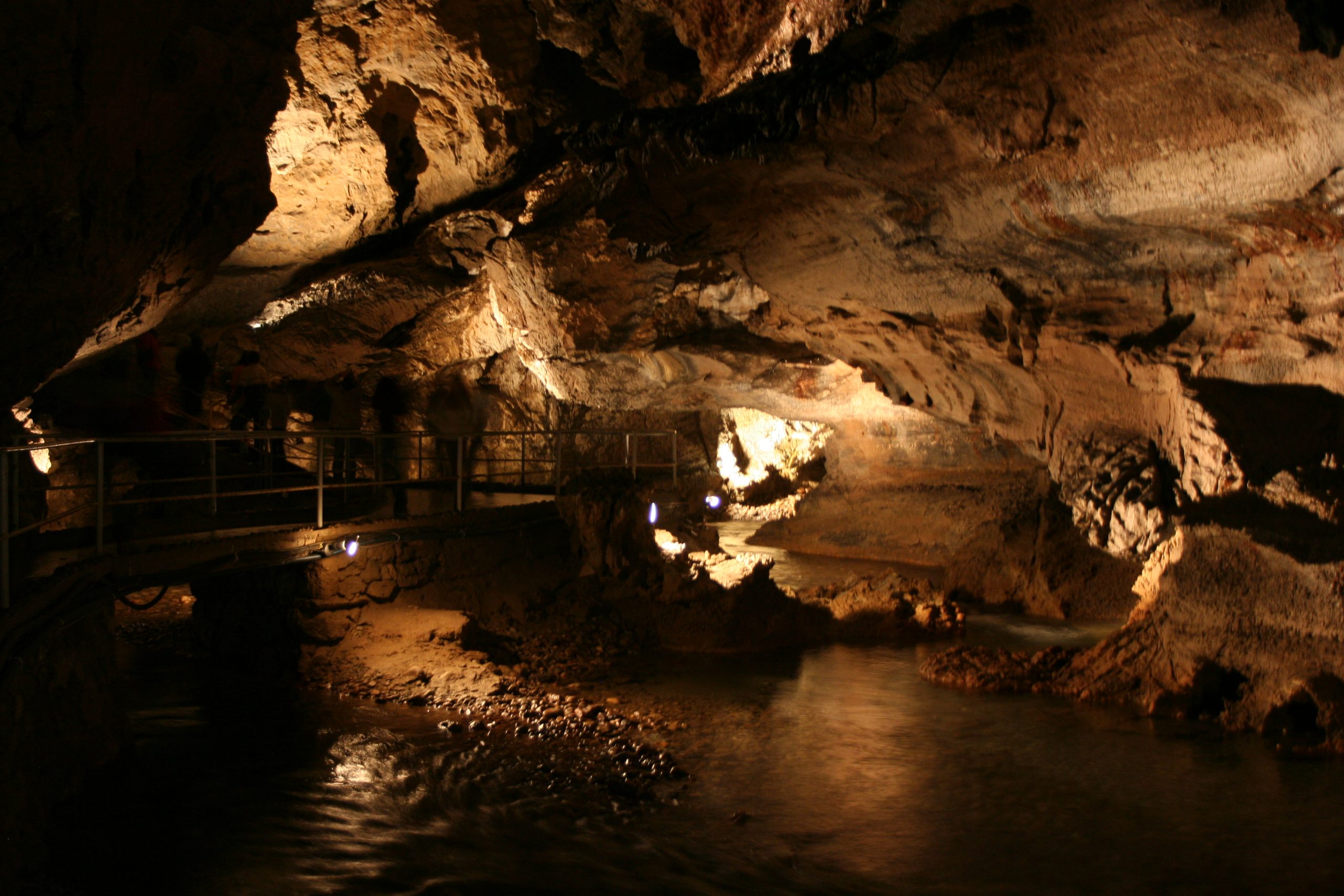
The Demänovská Cave of Liberty is the more spectacular of the two in terms of scale. Inside, enormous chambers are filled with stalactites, stalagmites, colorful mineral formations, and an underground river.
It's the sort of cave where I kept losing my sense of how far beneath the mountains I'd actually traveled.
Then there's the Demänovská Ice Cave. Its chambers contain ice formations that create a completely different atmosphere, particularly when conditions are good. Going from the elaborate rock formations of the Liberty Cave to the colder, darker environment of the Ice Cave makes visiting both much more worthwhile than choosing just one.
The setting adds another reason to come. Both caves are in the Demänovská Valley within Low Tatras National Park, so you're already surrounded by some of Slovakia's most impressive mountain scenery.
I'd dedicate a full day to the valley rather than treating the caves as a quick roadside attraction. Visit both, spend some time outside between tours, and enjoy the Low Tatras scenery while you're here.
How the Demänovská Cave System fits into your Slovakia itinerary
The Demänovská Valley is an ideal stop as your Slovakia itinerary moves from the historic towns of central Slovakia into the country's mountain regions.
It pairs particularly well with Vlkolínec, and Liptovský Mikuláš makes a convenient base for exploring this part of the Low Tatras. From here, you can continue east toward the High Tatras rather than doubling back toward Bratislava.
Bardejov
(pronounced: BAR-dyeh-yov)
Bardejov at a glance
Prešov Region, Northeastern Slovakia
Medieval history, architecture, and UNESCO heritage
Full day to 1 night
History lovers and slow travelers
Medieval, peaceful, and beautifully preserved
May to September
Bardejov is exactly the kind of place I love finding on a trip through Europe: a beautifully preserved medieval town that would probably be packed with visitors if it were located a few hundred kilometres farther west.
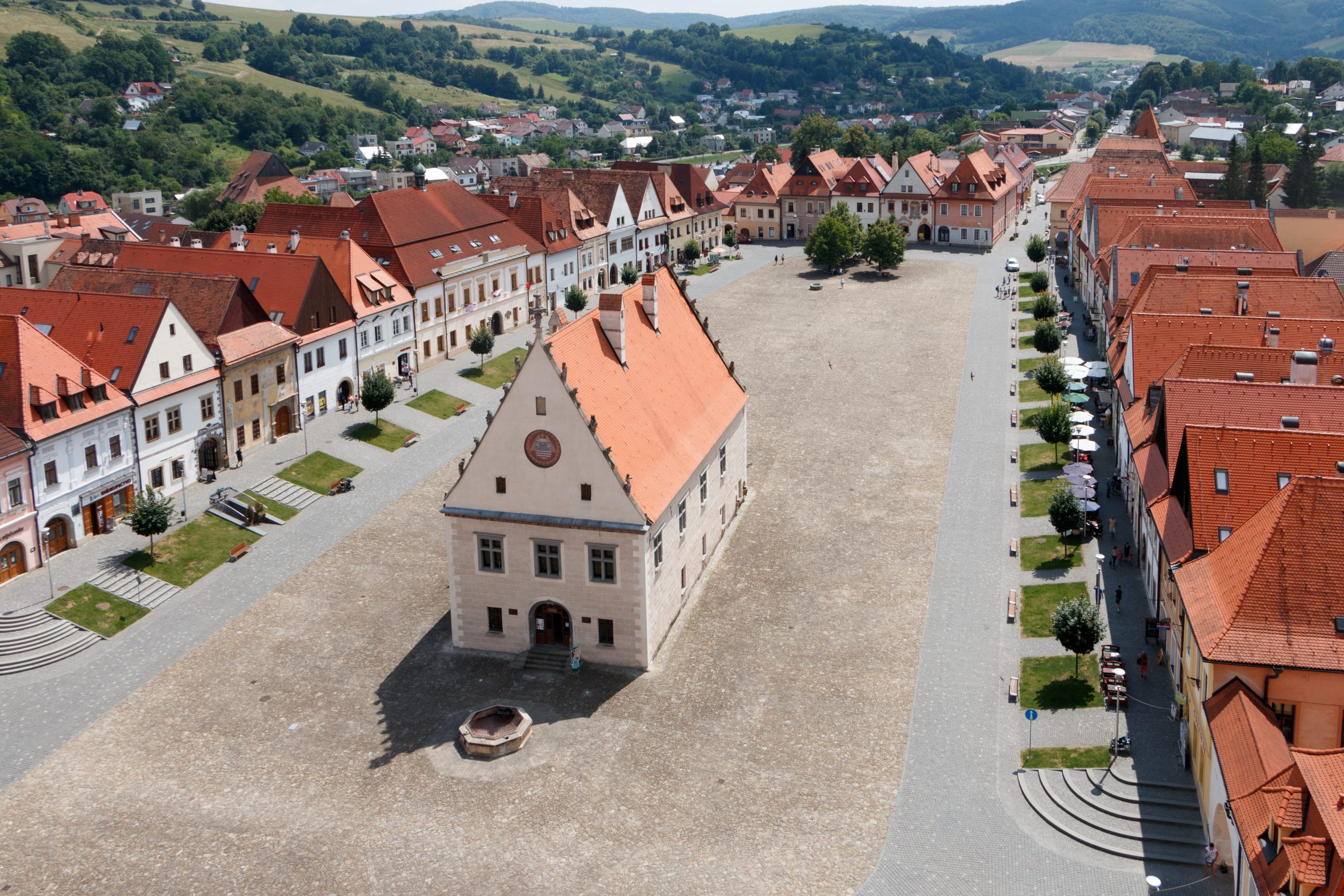
The historic center is remarkably intact, beginning with its long central square surrounded by colorful Gothic and Renaissance houses. The old town hall sits right in the middle, while the Church of St Egidius anchors one end of the square.
Inside the church, you can still see a collection of original Gothic winged altarpieces dating from the 15th and 16th centuries.
There's more here than the postcard-perfect square, too. Sections of Bardejov's medieval fortifications and defensive towers survive around the old town, while its Jewish heritage adds another important layer to the city's history.
Just outside town, Bardejovské Kúpele offers something completely different. This historic spa resort has attracted visitors for centuries and still retains some of the atmosphere of a traditional Central European spa town.
My favorite time in Bardejov is after dinner, when the day visitors have disappeared. With the historic facades illuminated, the town hall glowing in the center of the square, and remarkably few people around, the entire old town feels wonderfully atmospheric.
How Bardejov fits into your Slovakia itinerary
Bardejov makes the most sense once your Slovakia trip has moved east.
Rather than traveling here separately from Bratislava, I'd incorporate it after exploring the High Tatras, continuing through the Prešov region toward Bardejov.
Its northeastern location also makes it a good addition if you're building Slovakia into a longer Central European road trip that continues north into Poland.
Bojnice Castle
(pronounced: BOY-nee-tseh)
Bojnice Castle at a glance
Bojnice, Central-Western Slovakia
Castles, architecture, and photography
Fully day
Castle lovers, couples, families, and photographers
Romantic, whimsical and fairy-tale like
April to October
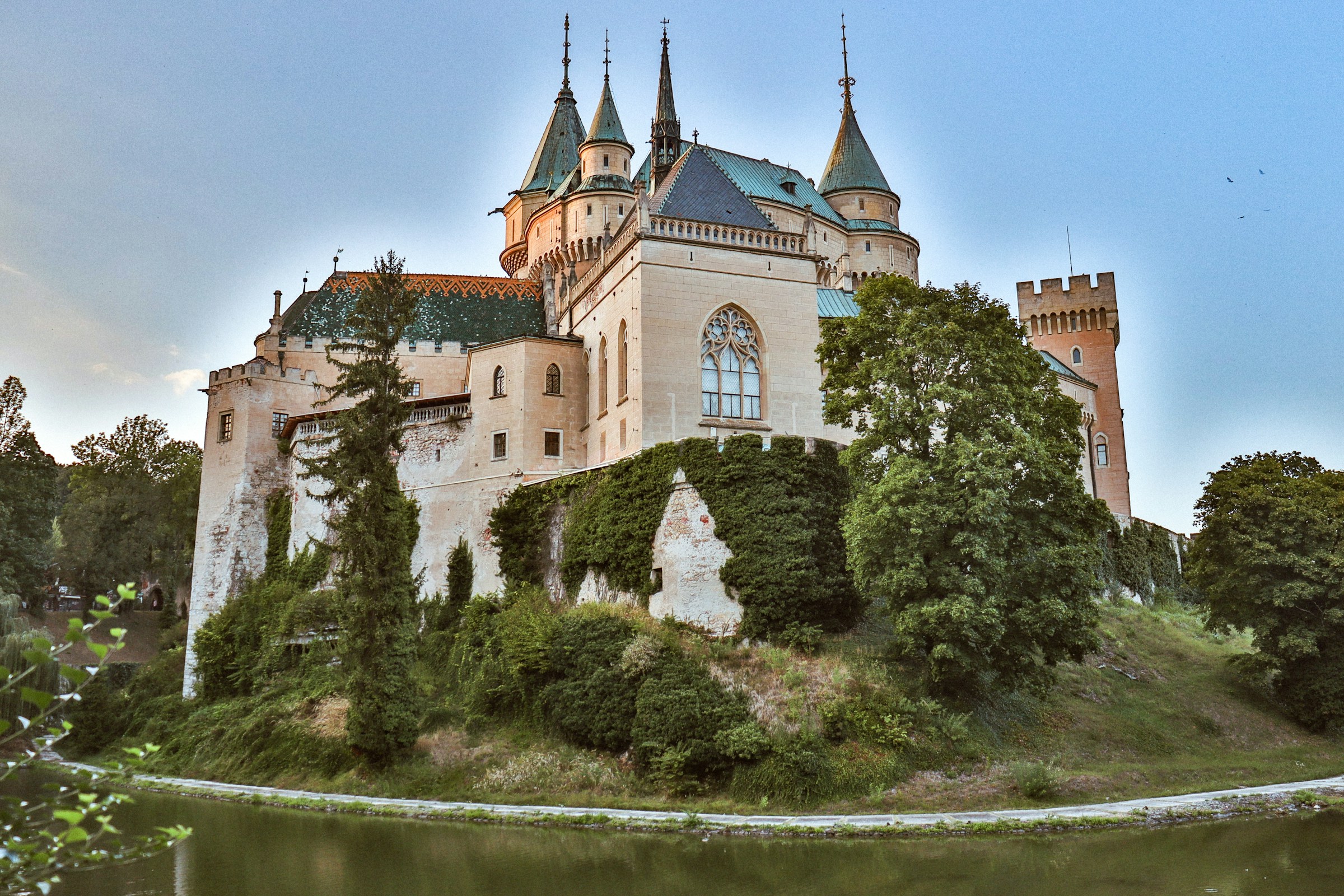
If you asked me to draw a fairy-tale castle, I'd probably end up with something that looks remarkably similar to Bojnice.
Towers, turrets, a moat, a drawbridge, elaborate interiors and beautiful parkland are all packed into one of Slovakia's most recognizable landmarks.
The castle's history stretches back to the 12th century, but much of what you see today is the work of Count Ján Pálffy, who dramatically rebuilt it between 1889 and 1910. He was inspired by the romantic castles of France, and the result feels very different from Slovakia's more imposing medieval fortresses.
I think the interiors are a big part of what makes Bojnice worth visiting. Pálffy's collections, ornate rooms and chapel mean the experience doesn't peak when you take your first photograph outside.
Then there's one of the castle's strangest features: a natural travertine cave beneath the building. You can actually descend into it as part of the castle experience, which isn't something I expected to find underneath a Romantic fairy-tale palace.
The surrounding park is worth leaving time for as well. Bojnice is extremely photogenic from almost every direction, so I'd resist the temptation to tour the interior and immediately move on.
How Bojnice Castle fits into your Slovakia itinerary
Bojnice fits particularly well into the western-to-central portion of a Slovakia road trip. I'd pair it with Trenčín, which is roughly 40 kilometres away, before continuing toward Banská Štiavnica and then deeper into central Slovakia.
That creates a logical route from Bratislava through some of the country's best castles and historic towns without unnecessary backtracking.
Slovak Paradise
(pronounced: sloh-VEN-skee RAH-ee)
Slovak Paradise at a glance
Spiš Region, Eastern Slovakia
Gorge hiking, waterfalls, and adventure
1-2 nights
Hikers, nature lovers, and adventurous travelers
Wild, exhilarating, and wonderfully unusual
May to October
I've hiked in plenty of beautiful places, but Slovak Paradise offers something completely different. Here, the trails don't simply take you alongside the gorges. They send you straight through them.
The most famous route is Suchá Belá, where I found myself walking through stream beds, crossing wooden platforms, and climbing metal ladders bolted directly into the rock beside waterfalls. It feels more like an obstacle course through a canyon than a conventional hiking trail, and that's exactly what makes it so much fun.
I remember reaching my first big metal ladder, looking straight up at where the trail was taking me, and wondering what exactly I'd gotten myself into.
Suchá Belá is the classic introduction, while Piecky offers narrower canyon walls and another fantastic gorge hike. The routes through the gorges are generally one-way, so you climb through the canyon before returning along easier forest trails above.
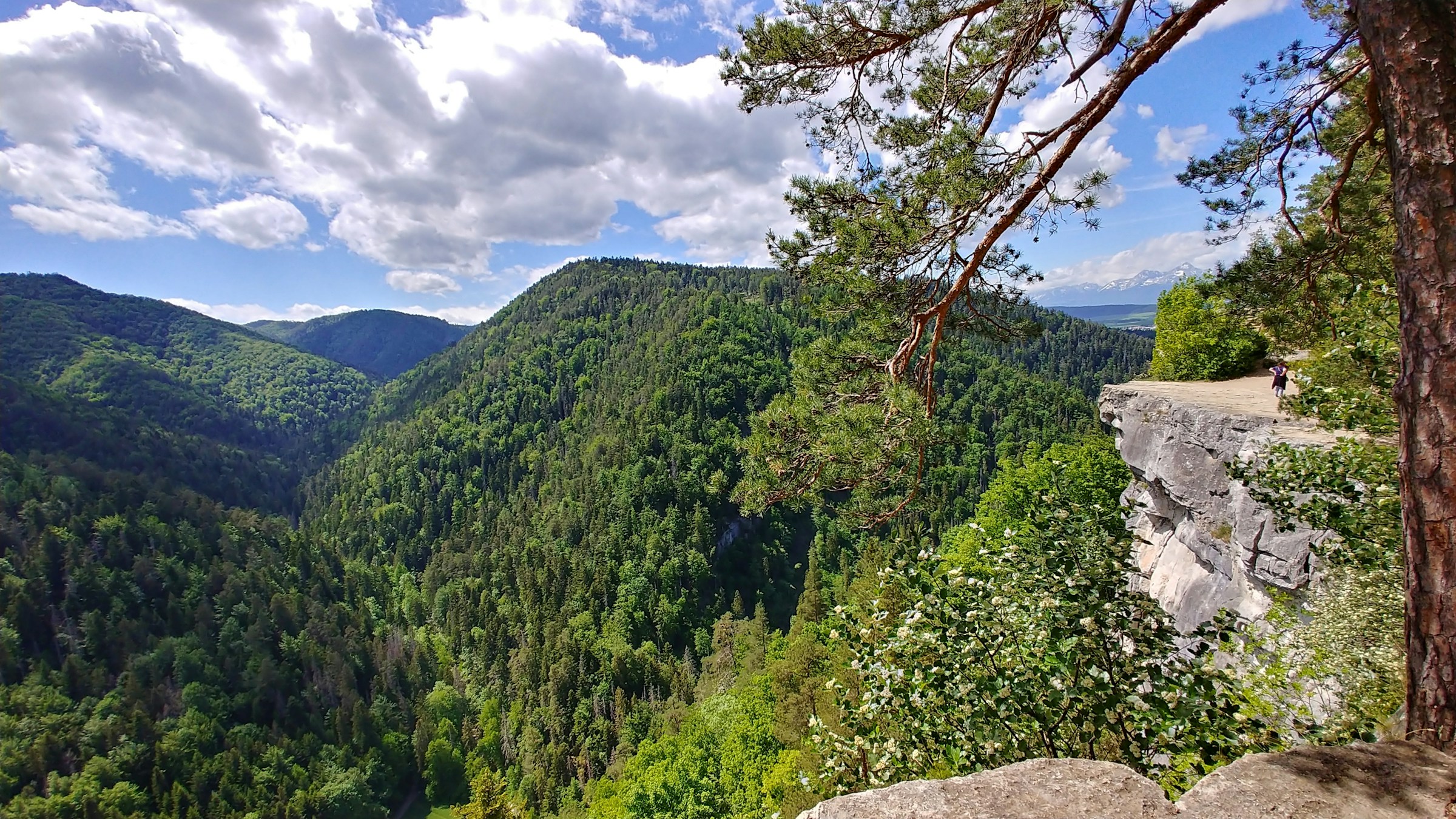
I'd also make time for Tomášovský výhľad, a rocky viewpoint overlooking the Hornád River canyon. It's a completely different perspective on the national park and one of my favorite views in eastern Slovakia.
How Slovak Paradise fits into your Slovakia itinerary
Slovak Paradise belongs in the eastern portion of a longer Slovakia itinerary and pairs particularly well with Spiš Castle.
If you're traveling east from the Low Tatras, I'd explore Slovak Paradise before continuing through the Spiš region and toward the High Tatras or Bardejov. This is one part of the trip where having a car gives you considerably more flexibility.
Bratislava
(pronounced: brat-ee-SLAH-vah)
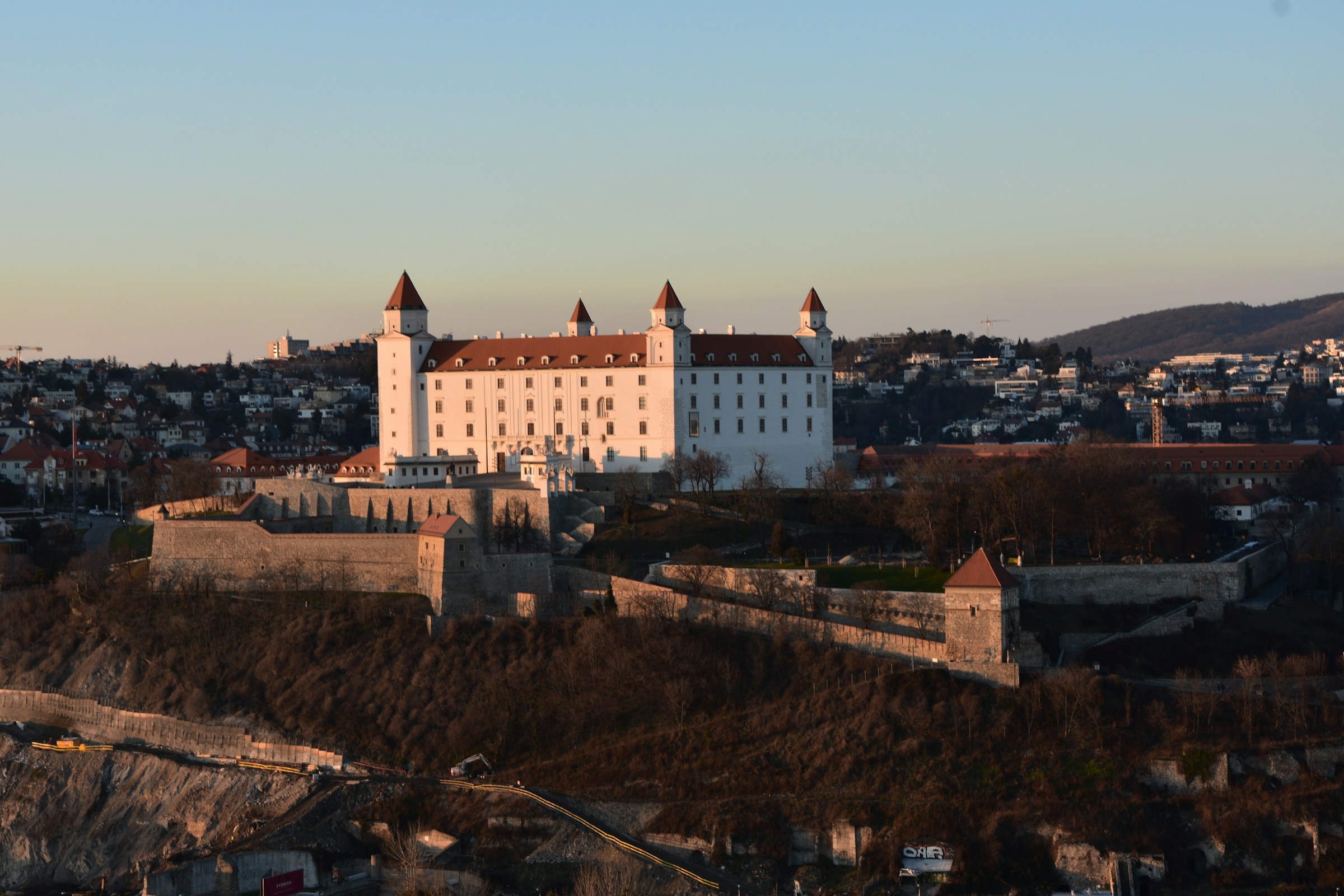
Bratislava at a glance
Southwestern Slovakia, on the Danube
History, architecture, food, and city breaks
2 nights
History lovers, couples, and first-time visitors
Compact, colorful, and relaxed
April to June and September to October
Bratislava is one of those European capitals that I think benefits from not trying to compete with its much bigger neighbors.
Vienna is just across the border, Budapest is down the Danube, yet Bratislava feels smaller, easier, and much more relaxed than either.
I love how quickly I can explore the historic center on foot. The old town is filled with narrow lanes, Baroque palaces, cafés, and little squares, while Bratislava Castle rises above everything with fantastic views across the Danube and toward Austria.
The city's history is also much bigger than its size suggests. Bratislava served as the coronation city and, for a long period, the administrative center of the Kingdom of Hungary during the Ottoman occupation of much of Hungary. That history is still visible in its churches and palaces.
Then there's the wonderfully eccentric side of Bratislava. The Blue Church of St Elizabeth looks almost unreal with its pale blue exterior, while the UFO-shaped observation deck above the SNP Bridge gives you one of the best views over the city.
One of my favorite memories of Bratislava is simply walking beside the Danube in the evening and realizing that Austria was right there on the other side of the landscape. Few European capitals make international borders feel quite so close.
How Bratislava fits into your Slovakia itinerary
Bratislava is the natural starting or finishing point for most Slovakia itineraries, particularly if you're flying internationally or combining Slovakia with the Czech Republic, Hungary, or the Austria.
Spiš Castle
(pronounced: SPEE-esh-skee HRAHD)
Spiš Castle at a glance
Spiš Region, Eastern Slovakia
Castles, medieval history, and panoramic views
Full day
History lovers, photographers, and castle enthusiasts
Epic, windswept, and medieval
May to October
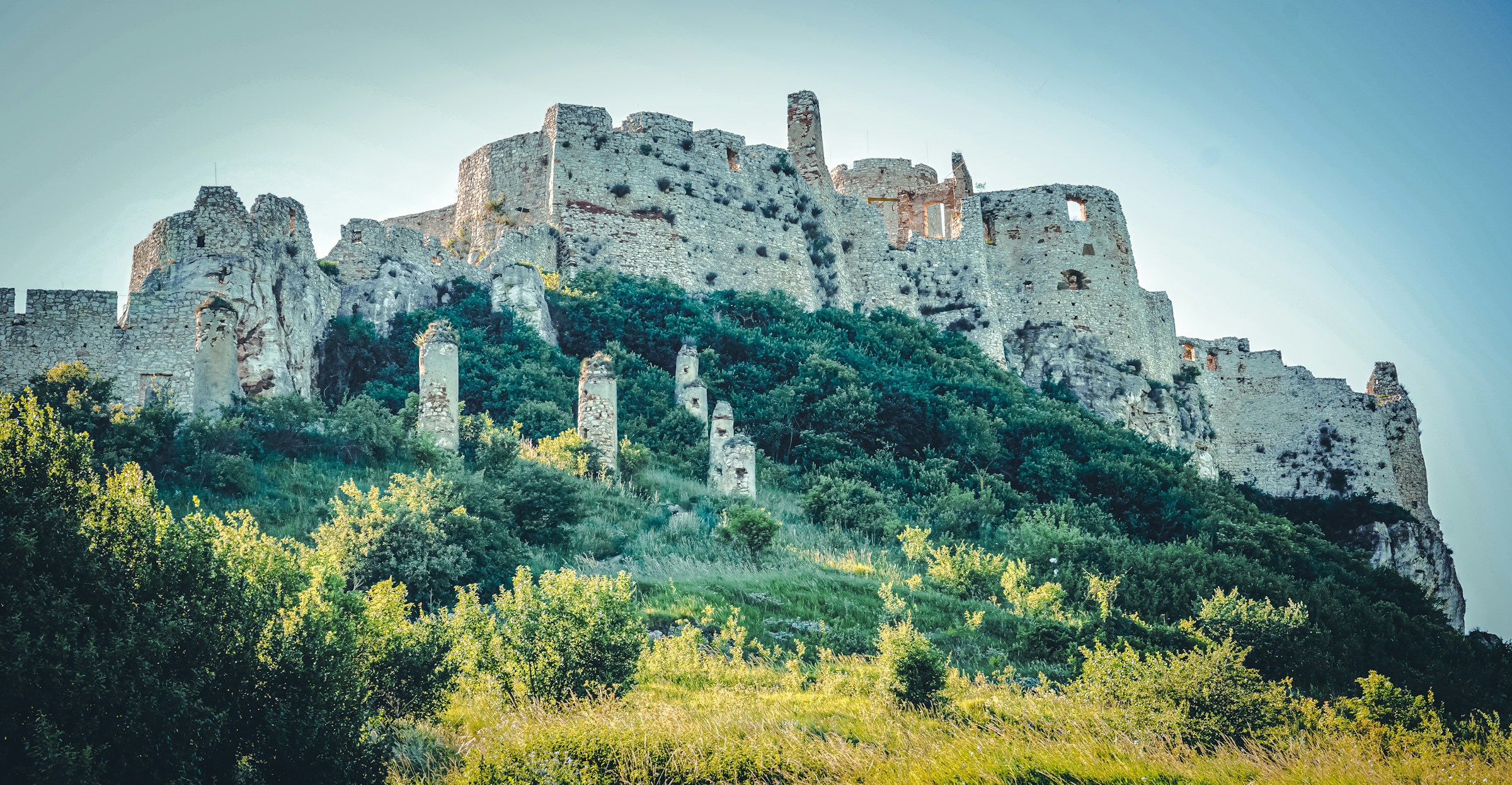
I've visited a lot of castles around Europe, but the sheer scale of Spiš Castle is what makes this one memorable.
Rather than a single fortress sitting neatly on top of a hill, the ruins seem to stretch endlessly across the entire ridgeline.
The castle dates back to the 12th century and continued expanding through the Gothic and Renaissance periods before a fire devastated it in 1780. What remains is enormous.
You can wander through ruined courtyards, defensive walls, towers, and gateways while gradually climbing toward the upper castle.
I remember reaching the upper keep and spending far longer looking at the view than I did taking photographs. On a clear day, the countryside of the Spiš region spreads out beneath you, with mountains rising in the distance. It's one of those places where the landscape is as much a part of the experience as the castle itself.
And I wouldn't treat Spiš Castle as an isolated attraction. It's part of a much larger UNESCO cultural landscape that includes Spišská Kapitula, a tiny walled ecclesiastical settlement, and nearby Levoča, where you'll find a beautifully preserved historic center and the enormous Gothic wooden altar created by Master Paul.
Together, they make this one of my favorite areas in Slovakia for medieval history.
How Spiš Castle fits into your Slovakia itinerary
Spiš Castle is perfectly positioned for the eastern, mountain-heavy portion of a Slovakia road trip.
I'd combine it with Slovak Paradise, then continue north toward the High Tatras or northeast toward Bardejov.
High Tatras
(pronounced: VEES-o-keh TAH-tree)
High Tatras at a glance
Northern Slovakia, along the Polish border
Hiking, alpine lakes, and mountain scenery
3-4 nights
Hikers, nature lovers, and outdoor adventurers
Dramatic, wild, and exhilarating
June to September
The High Tatras are my number one place to visit in Slovakia because they show just how dramatic the landscape of this small country can be.
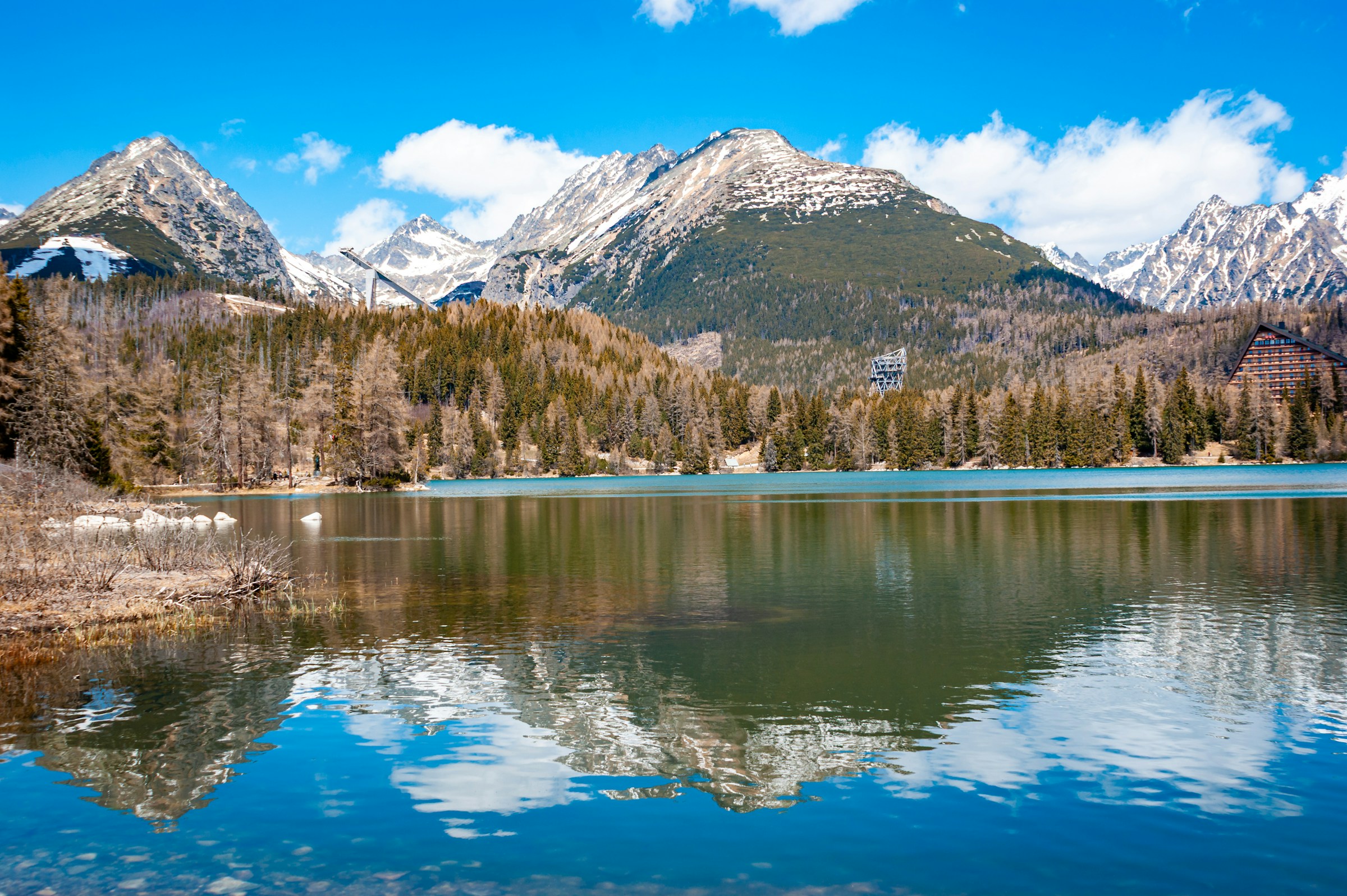
Granite peaks rise sharply above forests and clear alpine lakes, and everything is packed into a surprisingly compact mountain range.
What I particularly love is how accessible the mountains can be. You don't have to be an experienced mountaineer to enjoy them. Towns like Starý Smokovec, Štrbské Pleso, and Tatranská Lomnica are connected by an electric mountain railway, and there are beautiful valley walks and lower-level hiking trails alongside much more challenging routes for experienced hikers.
Štrbské Pleso and Popradské Pleso are wonderful introductions to the scenery, while the cable car from Tatranská Lomnica takes you high into the mountains toward Lomnický štít. At 2,634 metres, the views on a clear day extend across an enormous section of Slovakia and into Poland.
One of my favorite memories from the High Tatras is watching the mountains slowly reappear after a storm, with individual granite peaks emerging from the clouds and reflecting in the lakes below.
It was one of those moments when I stopped worrying about where I was supposed to hike next and just watched.
If you enjoy being outdoors, I'd give the High Tatras more time than almost anywhere else in Slovakia. Three days is enough for an introduction, but I could easily spend longer hiking different valleys and trails.
How the High Tatras fit into your Slovakia itinerary
I'd make the High Tatras the centerpiece of the eastern half of a Slovakia itinerary.
They fit naturally after exploring the Low Tatras and Demänovská Cave System, or after Slovak Paradise and Spiš Castle if you're traveling east before looping north.
Slovakia is compact enough to see a surprising amount on a single trip, but I'd give yourself at least 7 days for a first visit.
That gives you time to travel from Bratislava into the historic towns and castles of central Slovakia before finishing among the national parks and mountains in the east.
Slovakia Itinerary: 7 Days
Route: Bratislava → Trenčín → Banská Štiavnica → Low Tatras → Spiš Region → High Tatras
| Days 1-2 | Day 3 | Days 4 | Days 5-6 | Days 7 |
|---|---|---|---|---|---|
Destination | Bratislava | Trenčín & Bojnice | Banská Štiavnica | Low Tatras & Demänovská Caves | Slovak Paradise & Spiš Castle |
Overnight | Bratislava | Bojnice | Banská Štiavnica | Low Tatras | Spiš Region or departure |
Why this route? This seven-day Slovakia itinerary gives you a little of everything I love about the country: Bratislava, medieval towns and castles, caves, national parks, and some spectacular mountain scenery. The route also gradually works east across Slovakia rather than having you constantly backtrack.
*Seven days won't let you see everything. I'd save places like Bardejov, Vlkolínec, and Bojnice Castle for a longer trip rather than rushing through them just to tick them off a list.
Why Slovakia shouldn't be overlooked on your Central European travels
Before exploring Slovakia, I knew it was surrounded by some of Europe's biggest travel destinations. With Vienna, Budapest, Prague, and Kraków all nearby, it would be incredibly easy to pass straight through without realizing how much there is to see.
I'm very glad I didn't. I found fairy-tale castles, beautifully preserved medieval towns, fascinating mining history, traditional mountain villages, adventurous gorge hikes, and some of the most spectacular scenery in Central Europe.
The High Tatras alone are reason enough for me to recommend visiting.
If it's your first trip, don't feel like you need to see all 10 destinations. Some travelers will come for the castles and historic towns, while others will want to spend most of their time hiking in the Tatras and national parks.
Whatever you choose, I wouldn't treat Slovakia as somewhere to simply pass through between its more famous neighbors. It deserves to be a destination in its own right.
FAQs about traveling to Slovakia
Slovakia uses the euro (€ or EUR) as its official currency, and credit and debit cards are widely accepted in cities and most tourist areas.
Visa requirements depend on your nationality, but Slovakia is part of the Schengen Area, allowing many travelers to visit visa-free for up to 90 days within a 180-day period.
Yes, driving in Slovakia is generally straightforward, and you'll drive on the right-hand side of the road, although mountain roads can be narrow and you'll need a valid motorway vignette when using designated motorways and expressways.
Yes, Slovakia is generally a safe destination for travelers, although normal precautions against pickpocketing and petty theft are sensible in busy tourist areas and on public transportation.
Slovakia uses Type C and Type E plugs, with a standard voltage of 230V and a frequency of 50Hz.
The official language is Slovak, although English is commonly spoken in major cities and tourist destinations, particularly among younger Slovaks and people working in tourism.
Ready to explore Slovakia? Optimise Travel is here to help
Slovakia may be a small country, but deciding how to divide your time between its historic towns, castles, national parks, and mountain regions can be surprisingly challenging.
At Optimise Travel, we create personalized travel itineraries based on your interests, travel style, and budget. Whether you're dreaming of hiking in the High Tatras, exploring fairy-tale castles, wandering through UNESCO-listed medieval towns, climbing through the gorges of Slovak Paradise, or discovering Slovakia's fascinating mining and cultural heritage, we'll help you build an itinerary that makes the most of your time.
If you'd like help planning your trip to Slovakia, click here to learn more about our concierge travel services.