

Switzerland packs an incredible amount into a surprisingly small country, and I had the best time visiting.
I found myself moving between snow-covered Alpine peaks, turquoise lakes, medieval old towns, vineyard-covered hillsides, and cities where the language could change within a few hours of travelling.
The mountains were every bit as spectacular as I'd hoped, but some of my favourite experiences happened away from the obvious Alpine scenery.
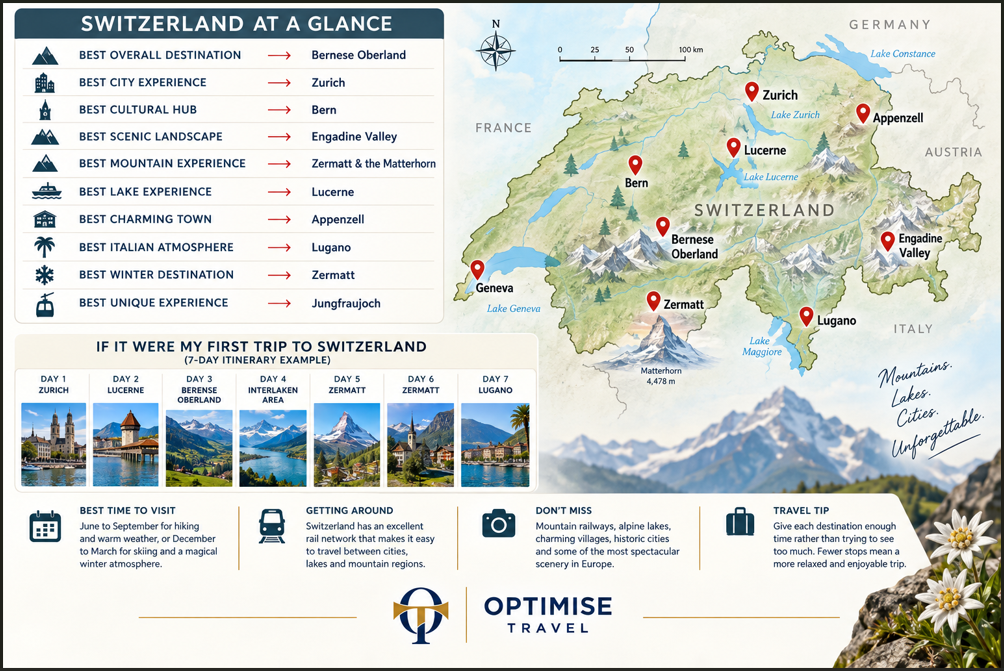
If you're planning your first trip, these are the 10 places in Switzerland I'd make room for on your itinerary.
Have You Seen Our Travel Concierge Service?
Your trip, planned by local experts
We are not a travel agent - we design custom itineraries around your budget and style, without receiving commissions or booking fees.
Custom itinerary
Built around your dates, budget, and travel style.
Local expert knowledge
Recommendations from people on the ground, not review sites.
Travel smarter, spend less
We optimise for your budget to make your money go further.
Appenzell
(pronounced: AHP-en-tsel)
Appenzell at a glance
Northeastern Switzerland, in the canton of Appenzell Innerrhoden
Alpine traditions, hiking, local cheese, and mountain scenery
1-2 nights
Hikers, foodies, photographers, and culture seekers
Traditional, colourful, rural, and distinctly Swiss
May to October
Appenzell gave me a glimpse of the Switzerland I'd pictured long before I actually visited. Green hills rolled away from the village, cowbells carried across the countryside, and the centre was lined with beautifully painted buildings in pink, yellow and green.
I started by wandering through the village itself, where the decorative façades and small shops made even a simple walk interesting.
Food was definitely part of the experience too. I couldn't come to Appenzell without trying its famously strong local cheese, and tasting it here somehow felt more appropriate than ordering it elsewhere in Switzerland.
The highlight, though, was heading into the Alpstein mountains.
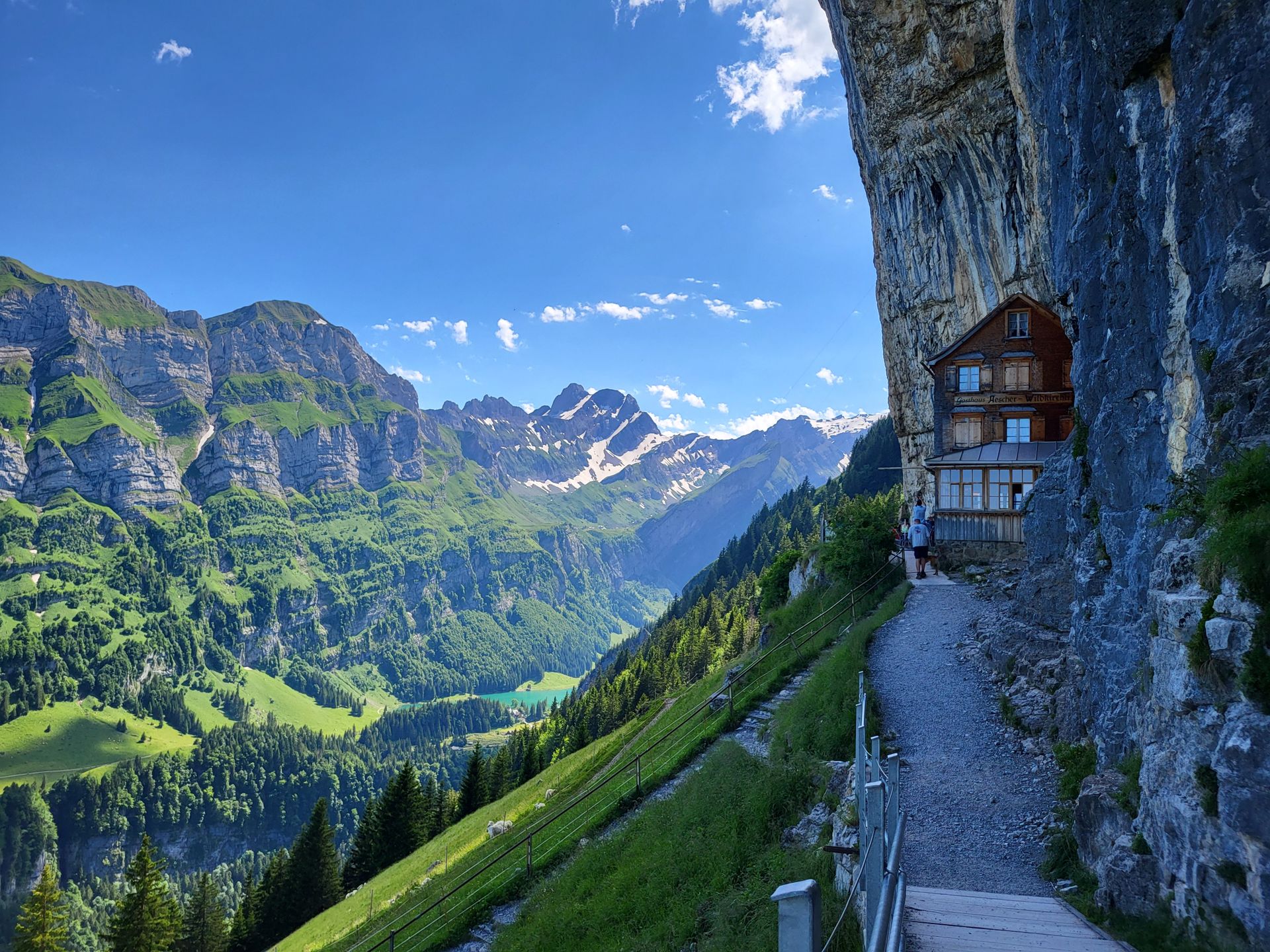
I took the cable car towards Ebenalp and followed the trail to Aescher, the historic guesthouse tucked directly beneath a huge cliff. Seeing it in person was far more dramatic than the photographs I'd seen.
What stayed with me most was how closely village life and the surrounding mountains seemed connected. Appenzell didn't feel like an Alpine resort built around visitors.
The farms, food, dialect and traditions all felt rooted in everyday life, which gave this small corner of Switzerland a character entirely its own.
How Appenzell fits into your Switzerland itinerary
I'd place Appenzell near the beginning or end of a Switzerland trip, particularly if you're travelling through Zurich or Austria.
It's around an hour and a half from Zurich by train, and I'd stay overnight if possible so you have time for both the village and the Alpstein mountains without rushing.
Wear proper walking shoes even if you're only planning to visit Aescher. The route is relatively short, but sections of the mountain path can be steep or slippery depending on the weather.
Rhine Falls
(pronounced: RYN FAWLZ)
Rhine Falls at a glance
Northern Switzerland, near Schaffhausen
Waterfall views, boat trips, picnics, and easy day trips
Half a day
Nature lovers, families, photographers, and first-time visitors
Powerful, dramatic, refreshing, and accessible
June to July for the highest water flow, or autumn for fewer crowds
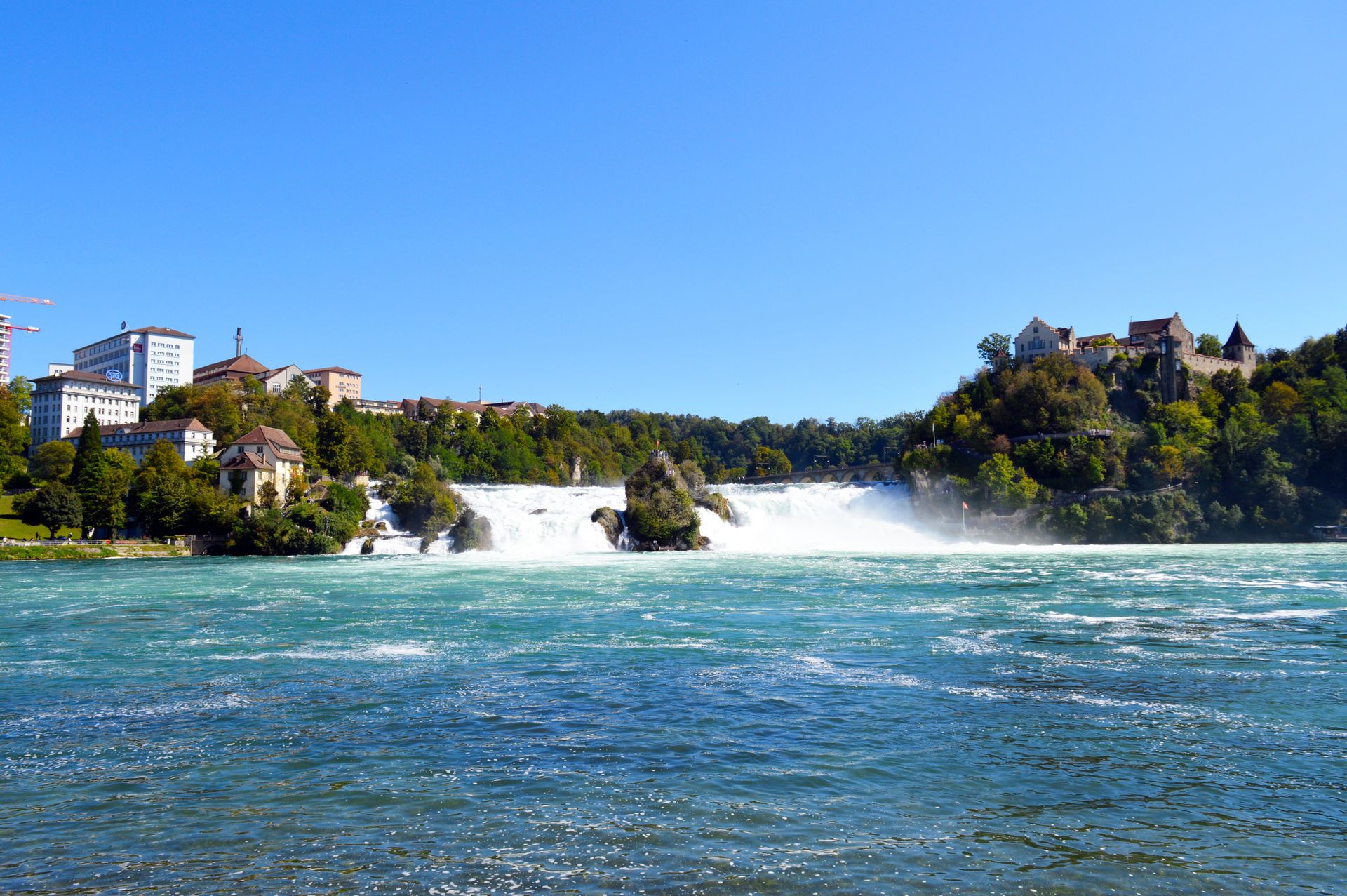
I could hear Rhine Falls before I had a proper view of them, and that first glimpse immediately put their scale into perspective.
They aren't particularly tall, but seeing that enormous volume of water crashing across the 150-metre-wide falls was far more impressive than I expected.
I definitely wouldn't skip the boat trip. Getting out onto the Rhine brought me much closer to the power of the falls, with spray blowing through the air as we approached the central rock. I loved being right in the middle of it rather than simply watching from the riverbank.
We picked up lunch from a local café and found a spot near the falls for a picnic afterwards. Sitting there with the sound of the water in the background was such a nice way to enjoy the setting without immediately rushing on to the next attraction.
I also made time for nearby Schaffhausen. Its medieval streets, colourful painted façades and distinctive oriel windows gave me another reason not to treat Rhine Falls as a quick photo stop.
For me, that combination of the boat, picnic and old town turned a famous waterfall into a really enjoyable half-day out.
How Rhine Falls fits into your Switzerland itinerary
Rhine Falls works particularly well as a half-day trip from Zurich, with trains making the journey north straightforward. I'd combine the falls with Schaffhausen rather than travelling back immediately, then return to Zurich later in the afternoon.
Pack a lightweight poncho if you're taking the boat and don't want to get wet. The spray is part of the fun, but depending on the conditions, you can come away considerably wetter than you might expect.
Lugano
(pronounced: loo-GAH-noh)
Lugano at a glance
Southern Switzerland, in the canton of Ticino
Lake scenery, Italian-influenced food, boat trips, and mountain views
2 nights
Couples, foodies, lake and mountain lovers
Mediterranean, elegant, relaxed, scenic
March to October
Lugano brought out a side of Switzerland I hadn't experienced anywhere else. Palm trees lined the waterfront, Italian food filled the streets, and sitting outside with a coffee felt much closer to northern Italy than the Alpine Switzerland I'd been exploring.
I loved walking along the lakefront before wandering into the old town, where narrow lanes opened onto piazzas filled with cafés and restaurants.
There was a slower rhythm here that encouraged me to linger over meals rather than keep checking what I needed to see next.
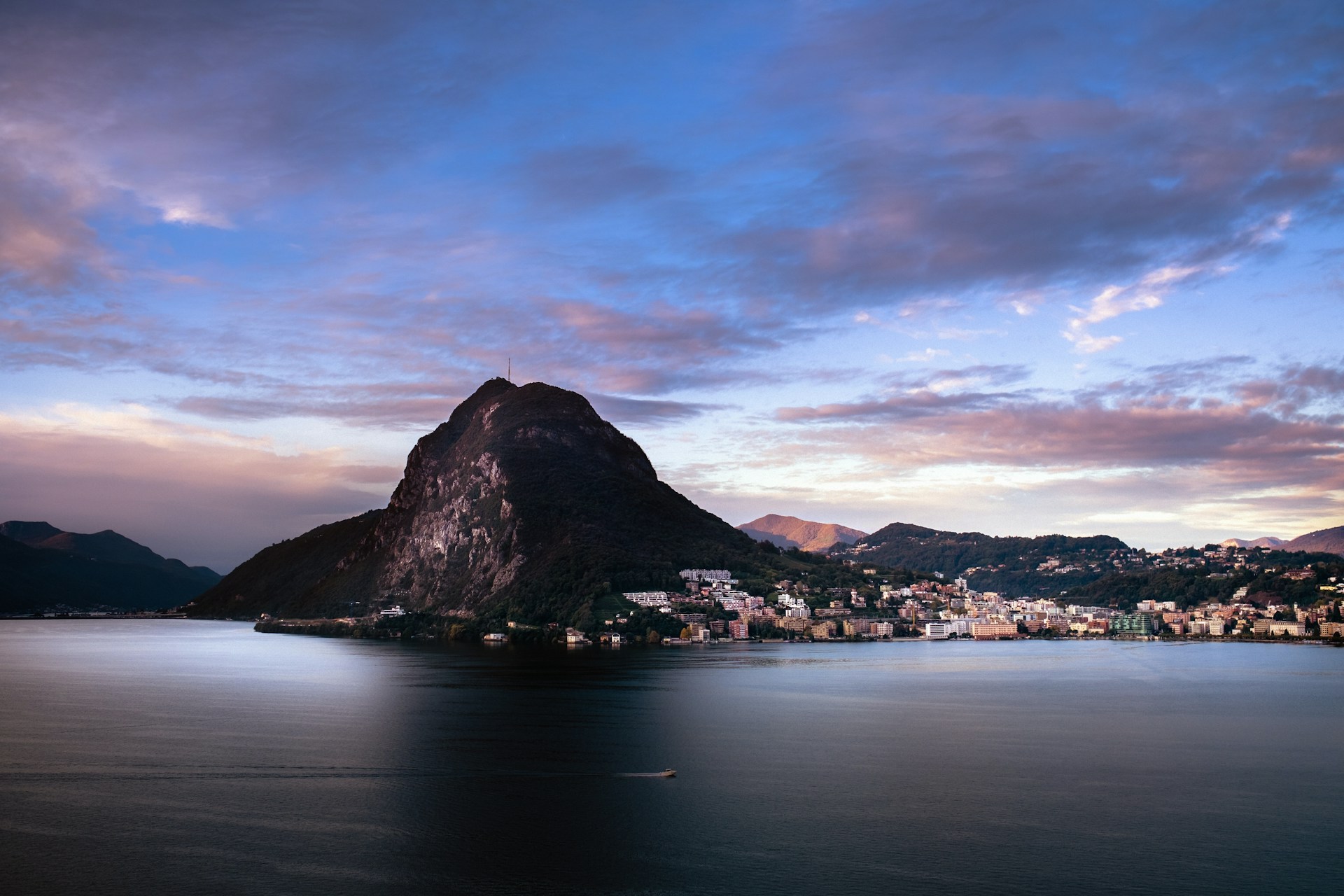
For the views, I headed up Monte San Salvatore. Looking down over the twisting shoreline of Lake Lugano, with mountains rising in almost every direction, gave me a completely different perspective on the region.
My favourite experience, though, was taking the boat to Gandria. The little village seemed to tumble down the hillside towards the water, with ochre houses, stone lanes and terraces squeezed into the slope. I stayed into the late afternoon before returning across the lake.
Watching the mountains catch the last light from the boat was a beautiful way to end the day, and probably the moment that best summed up Lugano for me.
How Lugano fits into your Switzerland itinerary
I'd give Lugano two nights and include it when travelling between central Switzerland and Italy or as a southern detour from Zurich. The train journey through the Gotthard route also makes the transition into Ticino part of the experience rather than simply a transfer.
Check the return boat timetable before heading to Gandria, particularly outside the summer season. I'd plan around the final sailings so you can enjoy the village without worrying about getting back.
Geneva
(pronounced: jeh-NEE-vah)
Geneva at a glance
Southwestern Switzerland, at the western end of Lake Geneva
International history and science, museums, and lake views
2 nights
History and science enthusiasts and culture seekers
International, polished, intellectual, and historic
May to September
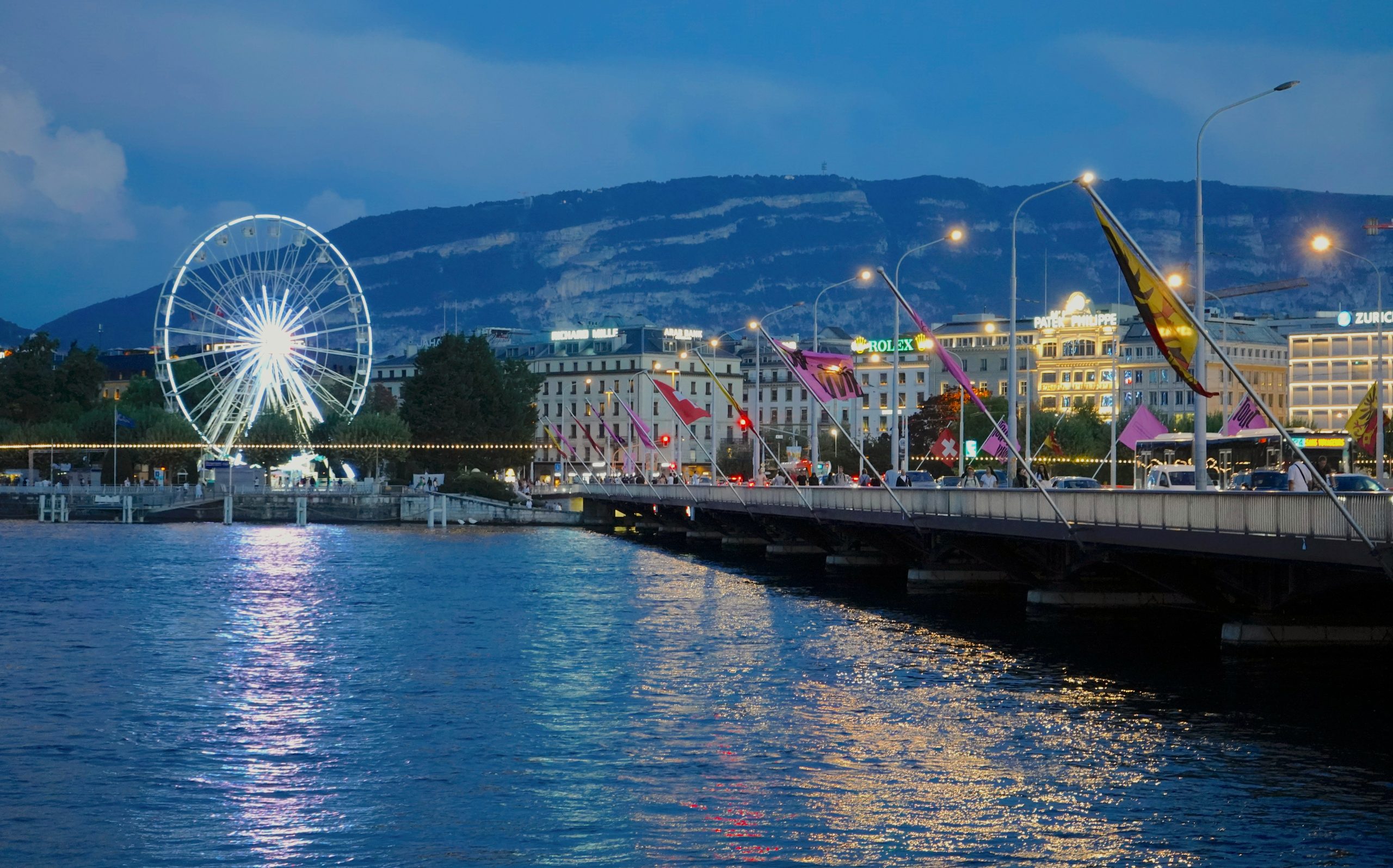
Geneva was one of those cities where I enjoyed looking beyond the image I already had in my head. I knew about the UN, luxury watches and the Jet d'Eau, but I found much more history and science here than I expected.
I started around the lakefront, where the Jet d'Eau was impossible to miss, before walking uphill into the Old Town. The narrow streets felt remarkably removed from Geneva's international side, and Saint Pierre Cathedral was one of my favourite stops.
I especially enjoyed exploring the archaeological site underneath it, where Roman mosaics and early Christian remains revealed layers of the city I'd never have noticed above ground.
The experience I wouldn't skip, though, is CERN. Visiting such an important centre of scientific research gave my time in Geneva an entirely different dimension, particularly after spending the previous day exploring centuries of history.
I also found the city's international character fascinating. Seeing institutions such as the Palais des Nations alongside historic neighbourhoods, busy cafés and the lake made Geneva feel much more varied than its businesslike reputation suggests.
By the end, I was glad I'd given it two days rather than treating it purely as an arrival point.
How Geneva fits into your Switzerland itinerary
Geneva works particularly well at the beginning or end of a Switzerland itinerary because of its international airport.
It's also very easy to travel to France from Geneva, with flights to Paris in just over an hour.
If CERN is important to you, organise your visit before finalising the rest of your Geneva plans. Tour availability can be limited, so I'd build the sightseeing schedule around the time you secure.
Bern
(pronounced: BEHRN)
Bern at a glance
Central Switzerland, in the canton of Bern
Medieval architecture, Swiss history, and riverside scenery
1-2 nights
History lovers, architecture enthusiasts, couples, city-break travellers
Elegant, walkable, and understated
Year-round, especially May to September
Bern was a city I enjoyed most on foot.
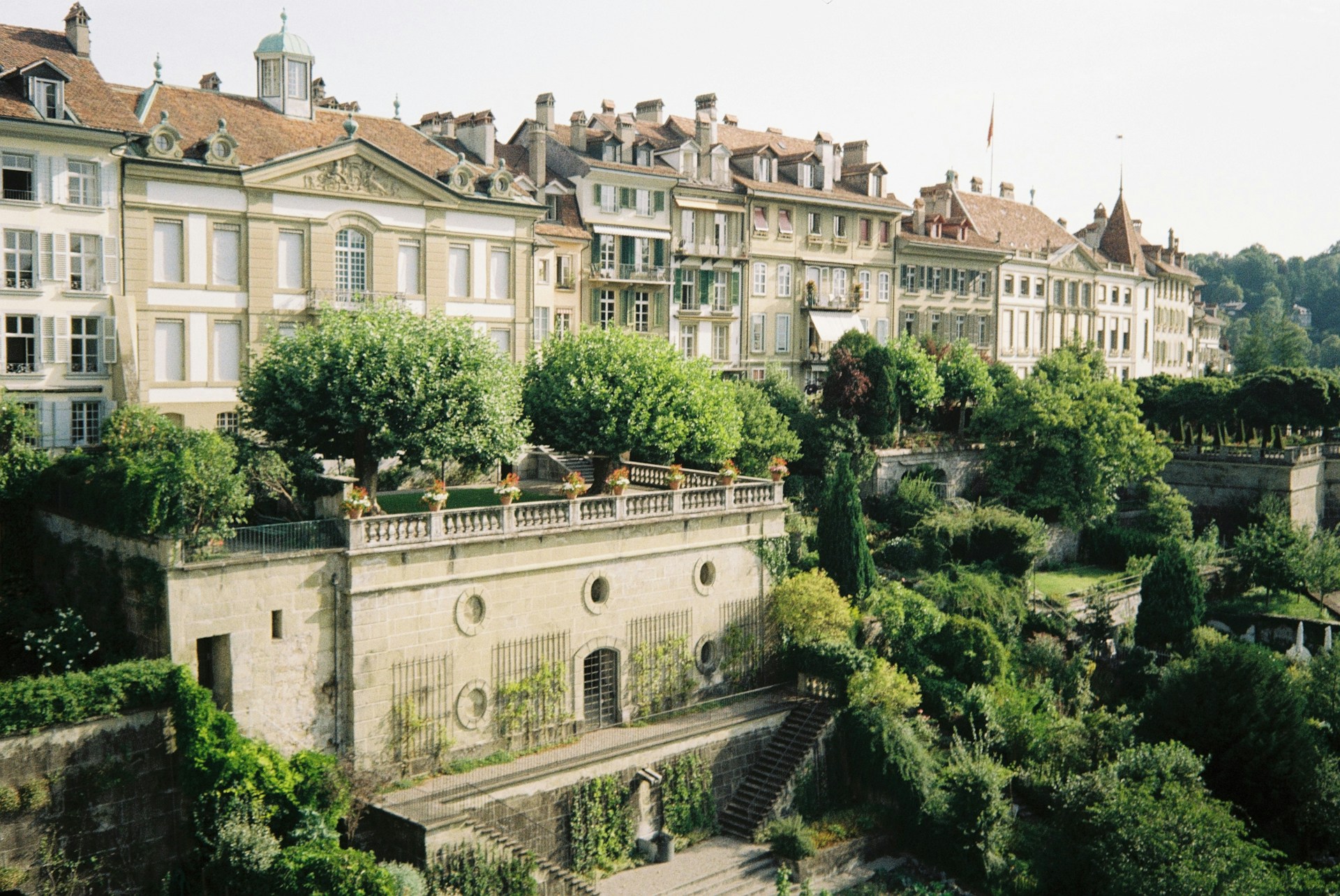
The historic centre curves around a bend in the Aare River, and I loved wandering beneath its long sandstone arcades, occasionally stepping out to explore fountains, little shops and streets that seemed remarkably intact for a modern capital.
I stopped at the Zytglogge to watch its astronomical clock come to life before the hour, then continued along Kramgasse.
Knowing Albert Einstein once lived and worked along the same street added another layer to a city already packed with history.
What really made Bern memorable for me, though, was seeing it from above. I walked across the river and up to the Rose Garden towards the end of the day.
From there, I could see the rooftops and medieval towers wrapped inside the turquoise curve of the Aare, with the Alps appearing in the distance on a clear day.
I stayed as the light softened over the sandstone buildings, and it became my favourite view of the city.
Bern may be Switzerland's capital, but I liked that it never felt dominated by that status. It remained compact, historic and wonderfully easy to explore.
How Bern fits into your Switzerland itinerary
Bern's central location makes it one of the easiest cities to incorporate into a wider Switzerland trip.
I'd give it at least a full day, or stay overnight before continuing towards the Bernese Oberland, where the scenery shifts dramatically from medieval city streets to the Alps.
Time your walk to the Rose Garden for late afternoon and stay through sunset. I'd also bring a light layer, as it can feel noticeably cooler once the sun disappears.
Lucerne
(pronounced: loo-TSERN)
Lucerne at a glance
Central Switzerland, on Lake Lucerne
Lake cruises, Alpine scenery, and mountain excursions
2 nights
First-time visitors, couples, and mountain lovers
Picturesque, romantic, lively, and Alpine
April to October, or December for the Christmas markets
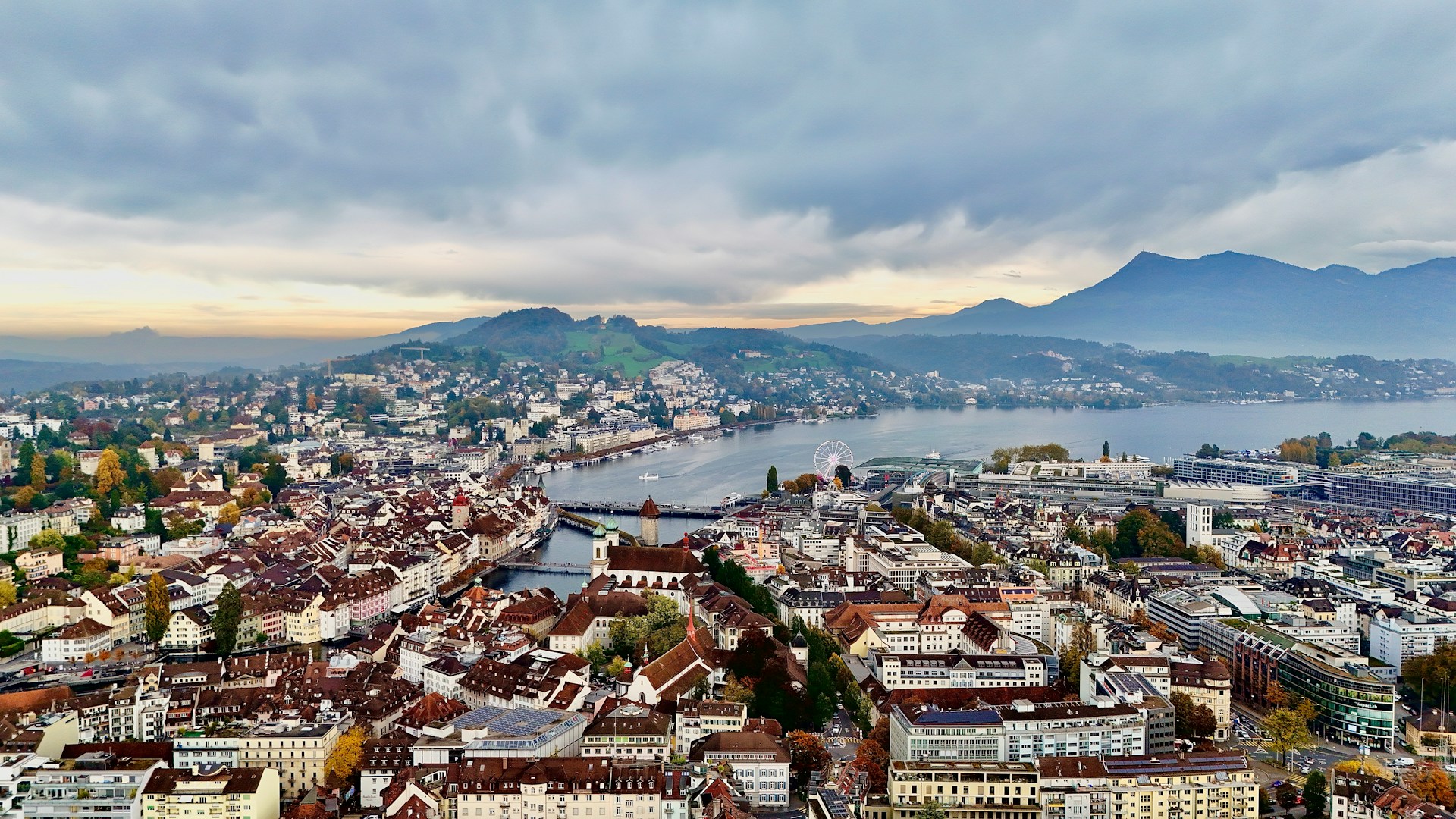
Lucerne was one of those places where I understood the appeal almost immediately. The combination of lake, mountains and old-town architecture gave me that classic Swiss scenery I had been hoping to find.
I started around the Reuss River and Chapel Bridge, crossing beneath its painted roof before wandering through the old town.
I loved the colourful buildings, waterfront views and the way the mountains seemed to appear at the end of streets when I least expected them.
The Lion Monument was a quieter stop, and seeing the enormous lion carved directly into the rock was much more moving in person.
The next day, I swapped the city for the mountains and headed towards Mount Pilatus.
Getting up there was part of the fun, but it was the view from the top that stayed with me: Lake Lucerne winding between mountains far below and Alpine peaks stretching across the horizon.
I'd also make time to get onto the lake itself. Seeing Lucerne from a boat completely changed my perspective, especially once the city disappeared behind me and the mountains began closing in around the water.
Two days felt right because I could enjoy both sides of Lucerne without cramming everything into one sightseeing marathon.
How Lucerne fits into your Switzerland itinerary
Lucerne is only about an hour from Zurich by train, so I'd place it early in a Switzerland itinerary before continuing deeper into the Alps.
Two nights gives you enough time for the historic centre and lakefront plus a separate day for Mount Pilatus or a longer boat journey on Lake Lucerne.
If you're visiting Mount Pilatus in summer, consider combining the boat, cogwheel railway and cable car rather than travelling up and down the same way. It turns the mountain excursion into a much more memorable round trip.
The Engadine Valley
(pronounced: en-gah-DEEN)
The Engadine Valley at a glance
Southeastern Switzerland, in the canton of Graubünden
Alpine hiking, lakes, glaciers, and traditional villages
3 nights
Hikers, nature lovers, and outdoor enthusiasts
Wild, expansive, peaceful, and distinctly Alpine
June to September for hiking, or December to March for winter sports
The Engadine Valley was where I really wanted to put on my hiking boots and spend entire days outside.
St Moritz may have the famous name, but it was the trails, lakes and mountains surrounding it that made the biggest impression on me.
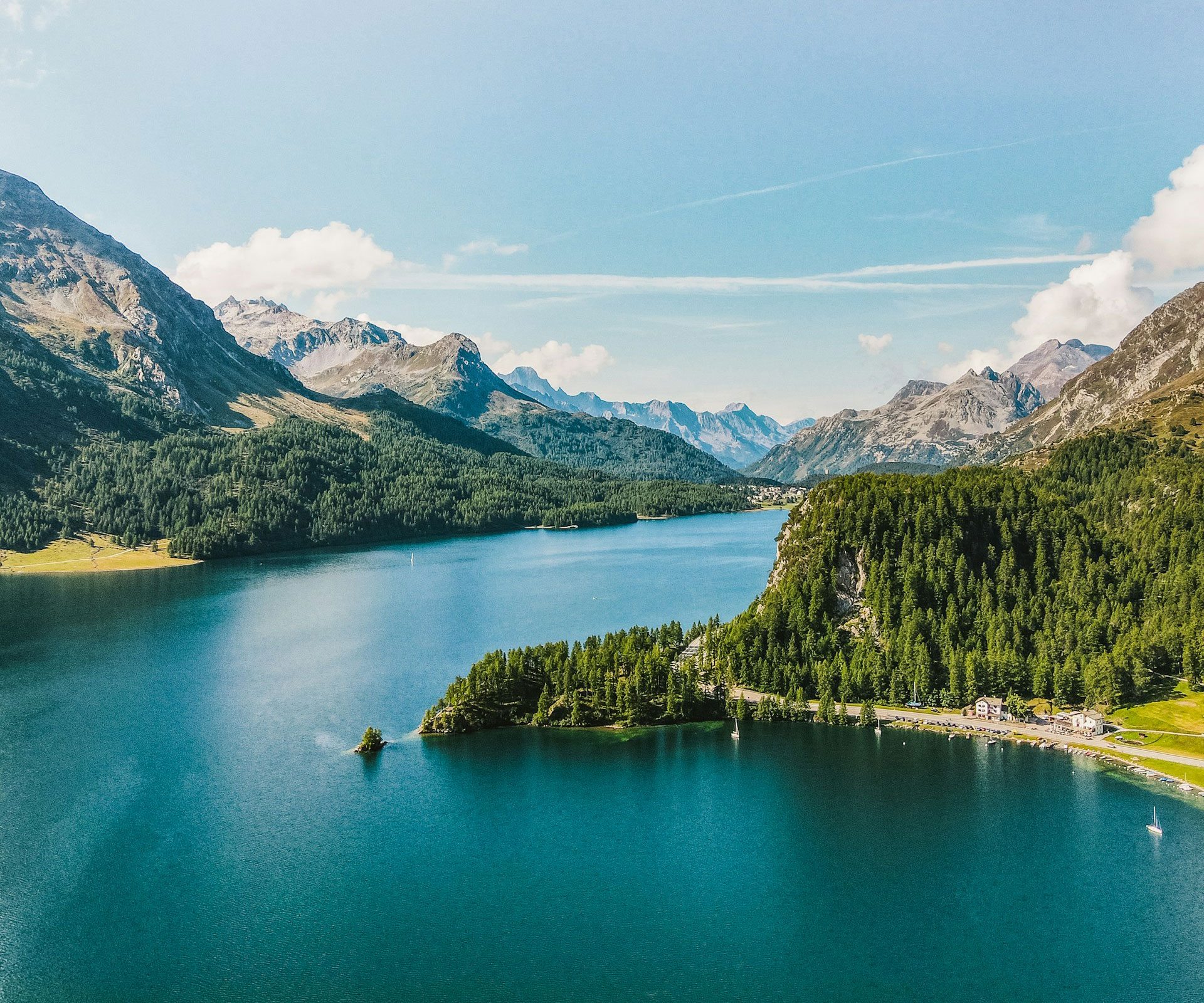
One of my favourite hikes took me above the Upper Engadine lakes, where I could look down over Lake Sils and Lake Silvaplana from the mountainside.
The higher I climbed, the wider the valley became, with turquoise water below me and peaks stretching into the distance. I loved stopping along the trail simply to take it all in.
I also hiked towards the Morteratsch Glacier from near Pontresina. It was an easier walk, following the valley towards the ice, but the markers showing where the glacier had reached in previous decades made this one particularly thought-provoking.
Between hikes, I enjoyed exploring villages such as Sils Maria and noticing the intricate sgraffito decorating traditional Engadine houses. It gave the valley a cultural identity that felt just as distinctive as its scenery.
Three nights gave me enough time to alternate longer walks with slower afternoons, although I could easily have stayed longer with so many trails still unexplored.
How the Engadine Valley fits into your Switzerland itinerary
I'd allow at least three nights for the Engadine rather than treating St Moritz as a quick stop. It works especially well as the southeastern Alpine section of a longer rail itinerary, with connections through Chur making the journey into the valley part of the experience.
Mountain conditions can change quickly even in summer, so I carried an extra layer and checked the forecast before choosing each day's hike. I'd also start longer routes early to leave plenty of daylight.
The Bernese Oberland
(pronounced: BEHR-neh-zeh OH-ber-lant)
The Bernese Oberland at a glance
Central Switzerland, in the southern canton of Bern
Alpine hiking, waterfalls mountain railways, glaciers, and dramatic scenery
4 nights
Hikers, outdoor enthusiasts, and mountain lovers
Dramatic, adventurous, and spectacular
June to September
The Bernese Oberland was the Switzerland I'd been waiting to see. I'd already spent plenty of time in the mountains, but nothing quite prepared me for how enormous everything felt here.
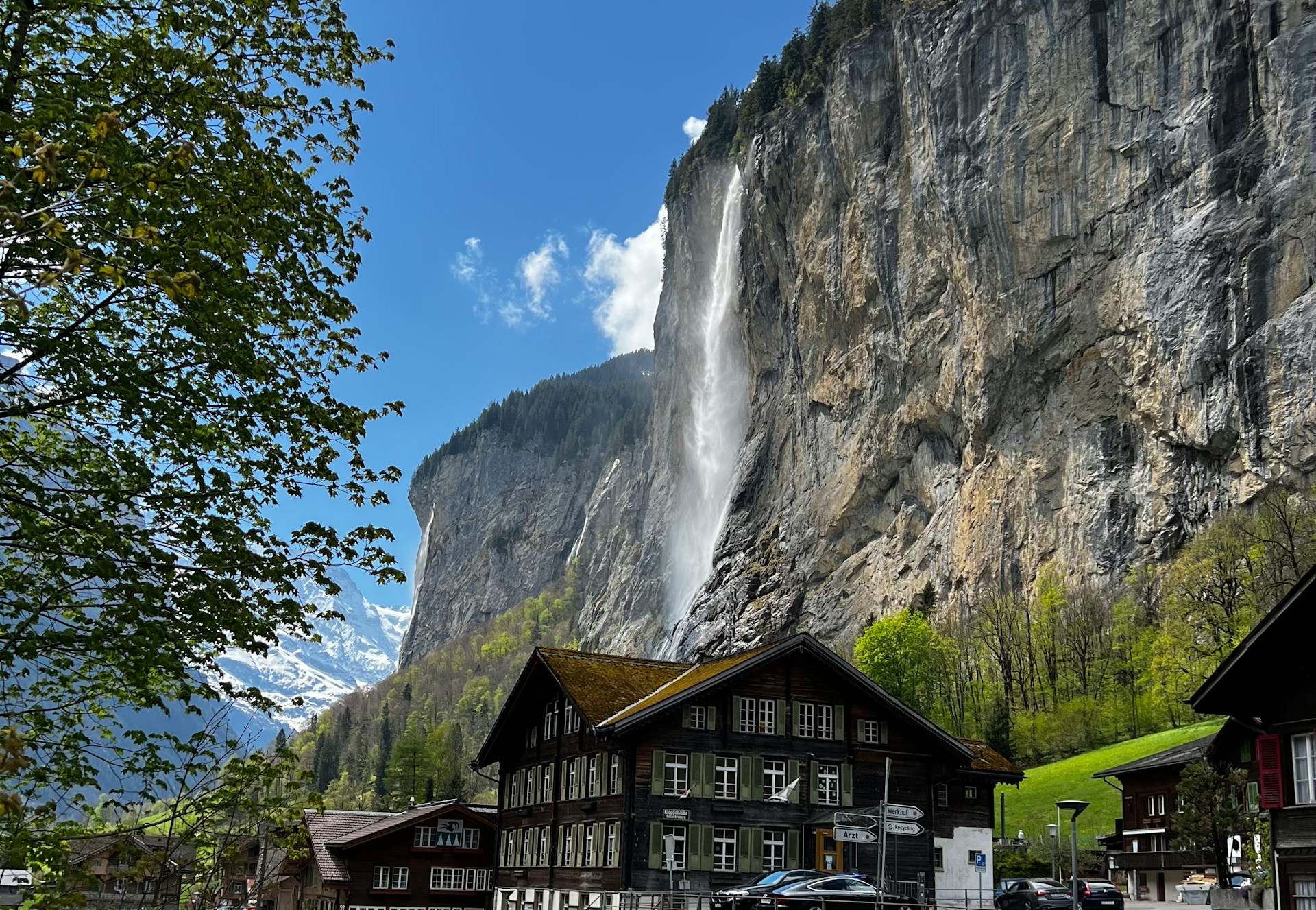
I based myself between Grindelwald and Lauterbrunnen and spent as much time hiking as I could. Walking beneath the Eiger was a particular highlight.
From around Kleine Scheidegg, I followed trails with the North Face towering beside me, occasionally stopping simply because the scale of the mountain was difficult to comprehend while moving.
The trails above Grindelwald were equally memorable. Hiking higher into the landscape gave me huge views across to the Eiger, Mönch and Jungfrau, with green valleys dropping away beneath the path.
Lauterbrunnen offered something completely different. I walked through the valley with sheer cliffs rising on both sides and waterfalls spilling from seemingly impossible heights. Staubbach Falls was impressive, but I loved how waterfalls kept appearing as I explored.
I also made the journey to Jungfraujoch, where the snow, ice and enormous Aletsch Glacier made the landscape feel almost otherworldly.
Four nights still left me wanting more. For anyone who loves hiking, this was easily one of the parts of Switzerland where I found it hardest to leave.
How the Bernese Oberland fits into your Switzerland itinerary
I'd make the Bernese Oberland the main mountain section of a first Switzerland itinerary and give it at least four nights. Bern makes a natural stop beforehand, while Lucerne works well before or after it if you're building a route through central Switzerland.
I wouldn't automatically schedule Jungfraujoch for a particular day before arriving. If your itinerary allows some flexibility, check the mountain forecast and webcams and choose the clearest day for the trip.
Zurich
(pronounced: TSYOO-rikh)
Zurich at a glance
Northeastern Switzerland, at the northern end of Lake Zurich
Historic streets, art and culture, lake activities, and nightlife
2 nights
City-break travellers, foodies, and first-time visitors
Polished, cosmopolitan, energetic, and surprisingly relaxed
Year-round, especially June to September and December
Zurich was much more than a convenient place for me to start or finish a trip through Switzerland.
Once I stopped treating it as a transport hub, I found a city where I genuinely enjoyed spending a couple of days.
I explored the Altstadt on foot, wandering along both sides of the Limmat and crossing back and forth between its historic streets.
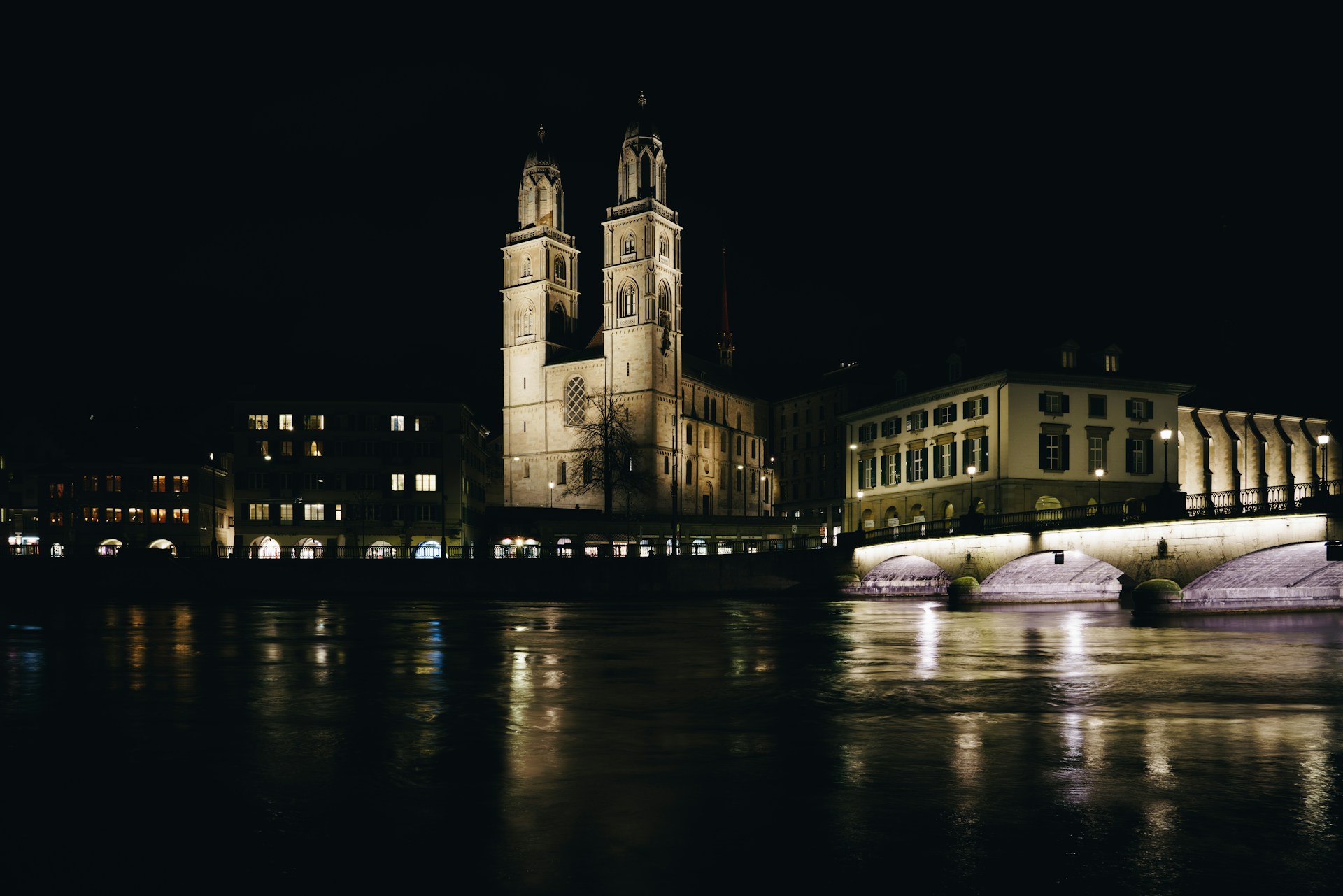
The twin towers of the Grossmünster were almost always somewhere in view, while the Chagall windows inside the Fraumünster were one of the details I was particularly glad I hadn't rushed past.
I also made time for the Kunsthaus. After so much mountain scenery elsewhere in Switzerland, spending a few hours surrounded by art gave me a completely different kind of day.
What I liked most, though, was Zurich's relationship with the water. I walked along Lake Zurich in the morning, watching boats move across the lake with the Alps in the distance, and understood why locals make so much use of it in summer.
In the evening, I headed towards Langstrasse for dinner. Its mix of restaurants and livelier atmosphere felt far removed from the immaculate shopping streets I'd seen earlier.
Zurich gave me a much broader impression of Swiss city life than I'd expected.
How Zurich fits into your Switzerland itinerary
Zurich is an easy place to begin or finish a Switzerland itinerary because of its international airport and excellent rail connections.
It's a natural stopping place for those road-tripping from Germany. I'd stay for two nights rather than immediately heading for the mountains, then continue towards Lucerne, Appenzell or the Engadine depending on your route.
Don't limit yourself to Bahnhofstrasse and the Altstadt. I'd cross the tracks towards Langstrasse for dinner, where I found a much livelier and more multicultural side of Zurich.
Zermatt & The Matterhorn
(pronounced: TSER-mat / MAT-er-horn)
Zermatt & The Matterhorn at a glance
Southern Switzerland, in the canto of Valais
Matterhorn views, Alpine hiking, skiing, mountain scenery, and car-free village life
3 nights
Hikers, skiers, photographers, couples, and mountain lovers
Magical, dramatic, romantic, and unmistakably Alpine
June–October for hiking or December–March for a snowy winter escape
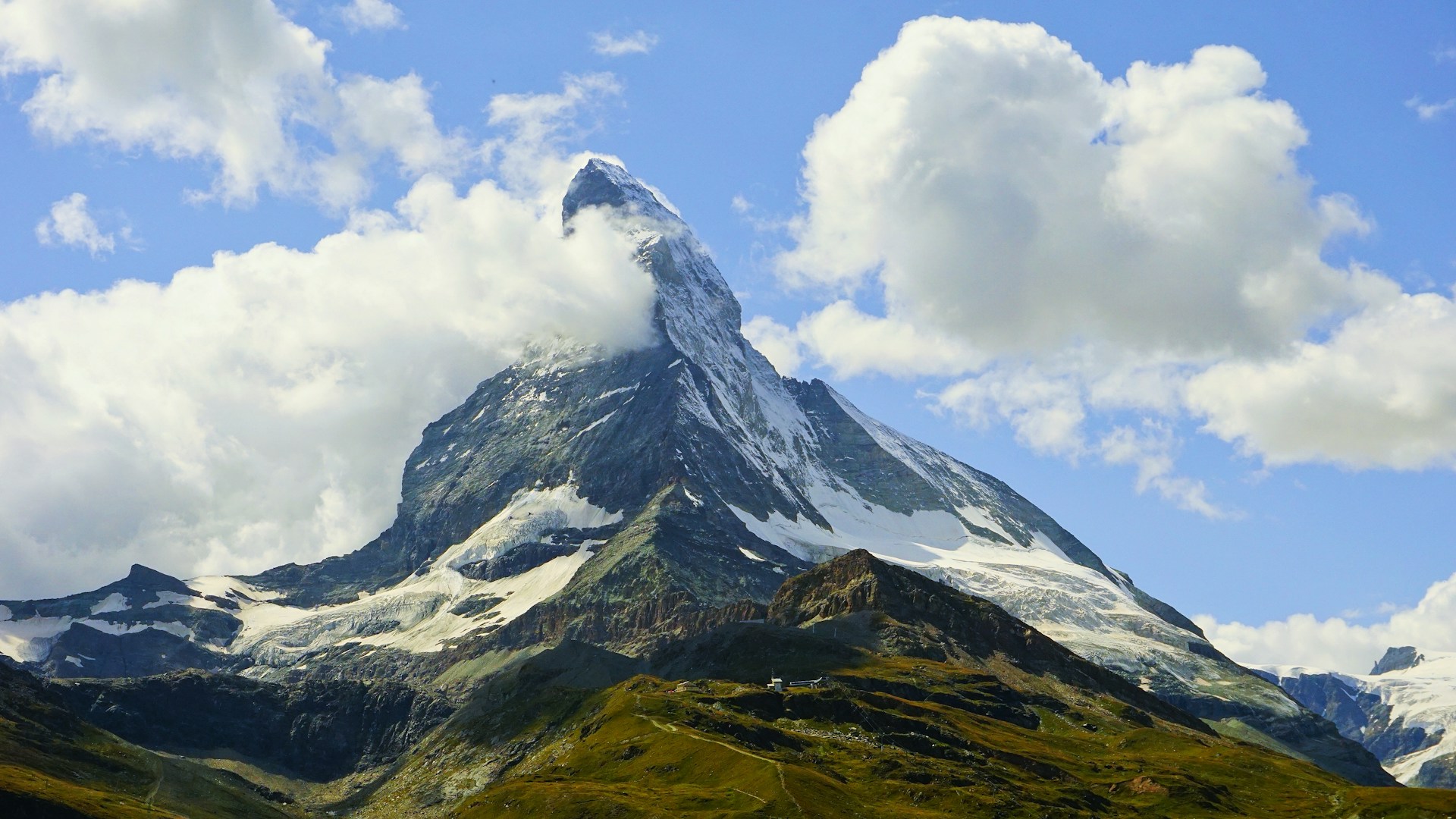
Seeing the Matterhorn in person was one of those travel moments I'd built up in my head for years, and somehow the real thing still exceeded it.
No photograph quite prepared me for how dramatically that familiar pyramid rises above Zermatt.
I visited in December, and the village itself was every bit as memorable.
With snow covering the rooftops and streets, warm lights glowing from the chalets and no regular cars passing through, Zermatt genuinely felt like I'd stepped inside a Hallmark Christmas movie.
I loved simply walking around in the evening and soaking up the atmosphere.
The mountain was never far from the experience. I headed up towards Klein Matterhorn for enormous views across the surrounding Alps, where the scale of the landscape was completely different from down in the village.
What I especially liked about Zermatt was that I didn't need to be skiing or tackling a serious mountain route to enjoy being here.
Slowing down, wandering the car-free streets and looking up whenever the Matterhorn appeared between the buildings were experiences in themselves.
Winter gave Zermatt a completely different character from Switzerland's summer hiking destinations, and that snowy December atmosphere became one of my favourite memories from the trip.
How Zermatt fits into your Switzerland itinerary
I'd give Zermatt at least three nights because reaching the end of the Mattertal Valley takes some time and mountain weather can disrupt carefully made plans.
It pairs naturally with other stops in Valais or with the Bernese Oberland if you're building an itinerary around Switzerland's most dramatic Alpine scenery.
I'd leave some flexibility for your best Matterhorn views. Clouds can hide the entire mountain surprisingly quickly, so if you wake up to clear skies, take advantage of them rather than saving your mountain excursion for later.
Switzerland's rail network made it tempting for me to keep adding stops, but I found the country much more enjoyable when I gave each region enough time rather than changing hotels every night.
For a shorter trip, I'd concentrate on one part of the country. With seven or ten days, you can start combining cities, lakes, and Alpine regions without spending too much of the trip in transit.
Switzerland itinerary 5 days
Route: Zurich → Lucerne → Bernese Oberland
| Days 1 | Day 2-3 | Day 4-5 |
|---|---|---|---|
Destination | Zurich | Lucerne | Bernese Oberland |
Overnight | Zurich | Lucerne | Grindelwald or Lauterbrunnen |
Why this route? I like this itinerary because the scenery builds as you go. You begin with Zurich's old town and lake, move into the mountains around Lucerne, and finish surrounded by the huge peaks and waterfalls of the Bernese Oberland.
*Five days goes quickly, so I wouldn't try to squeeze Zermatt or southern Switzerland into this route. I'd rather have two proper days in the Bernese Oberland than lose valuable time travelling between distant regions.
Switzerland itinerary 7 days
Route: Geneva → Bern → Zermatt
| Days 1-2 | Day 3-4 | Days 5-7 |
|---|---|---|---|
Destination | Geneva | Bern | Zermatt |
Overnight | Geneva | Bern | Zermatt |
Why this route? This itinerary gave me three very different versions of Switzerland without trying to cover the entire country.
Geneva brings the international and French-speaking side, Bern adds medieval history, and Zermatt finishes the trip with the Matterhorn and a completely different Alpine atmosphere.
*I'd especially like this route in December, when Zermatt covered in snow felt like I'd stepped inside a Hallmark Christmas movie. In summer, you could use the same itinerary for hiking and high-mountain excursions instead.
Switzerland itinerary 10 days
Route: Zurich → Appenzell → Engadine Valley → Lugano
| Days 1-2 | Day 3-4 | Days 5-7 | Days 8-10 |
|---|---|---|---|---|
Destination | Zurich | Appenzell | Engadine Valley | Lugano |
Overnight | Zurich | Appenzell | St Moritz, Sils Maria or Pontresina | Lugano |
Why this route? This is the itinerary I'd choose if I wanted to see just how varied Switzerland can be.
Appenzell's green hills and traditions felt completely different from the high Alpine landscape of the Engadine, while arriving in Italian-speaking Lugano brought another dramatic change in scenery, architecture, food, and atmosphere.
*Ten days gives you more breathing room, and I'd use it. The Engadine in particular deserves several nights if you enjoy hiking, while Lugano is somewhere I'd slow down and enjoy the lake rather than treating it as another sightseeing stop.
Why Switzerland deserves a trip beyond its famous cities
Zurich, Geneva, and Lucerne are all worth exploring, but some of my favourite experiences in Switzerland happened once I headed deeper into the mountains and smaller communities.
I loved how quickly the country changed as I travelled through it, from hiking beneath the enormous peaks of the Bernese Oberland to exploring the turquoise lakes of the Engadine Valley and experiencing Zermatt covered in snow in December.
Switzerland's regional differences were a huge part of what made it so interesting to me. Languages, food, architecture, landscapes, and local traditions could change considerably within just a few hours of travelling.
If you're planning a trip to Switzerland, I wouldn't stick entirely to the major cities. Make room for at least one Alpine region or smaller town, because that's where I really started to appreciate just how much variety Switzerland packs into such a small country.
FAQs about travelling to Switzerland
The currency in Switzerland is the Swiss franc (CHF), not the euro. Credit and debit cards are widely accepted in hotels, restaurants, shops, and major attractions.
Visa requirements depend on your nationality. EU/EFTA citizens do not need a visa, while many other nationalities can visit Switzerland and the wider Schengen Area visa-free for short stays of up to 90 days within a 180-day period; other travellers require a Schengen visa.
Driving in Switzerland is generally straightforward, with well-maintained roads and clear signage, and traffic drives on the right. Mountain roads can be narrow and challenging, particularly in winter, and Switzerland's excellent rail network means a car isn't necessary for many itineraries.
Switzerland is generally considered a safe destination for travellers, although normal precautions still apply, particularly around belongings in busy stations, cities, and tourist areas.
Switzerland primarily uses Type C and Type J plugs with a 230V, 50Hz electricity supply. Type C plugs fit Swiss Type J sockets, but some other European plugs may not, so I'd check your devices and bring a suitable Swiss adapter if necessary.
Switzerland has four national languages: German, French, Italian, and Romansh. Which language you'll encounter depends heavily on the region, with German most widespread, French dominant in the west, Italian in Ticino and parts of Graubünden, and Romansh spoken primarily in parts of Graubünden.
Ready to explore Switzerland? Optimise Travel is here to help
Switzerland may be relatively small, but deciding how to divide your time between its historic cities, Alpine villages, mountain valleys, lakes, and different cultural regions can quickly become the hardest part of planning a trip.
At Optimise Travel, we create personalized travel itineraries based on your interests, travel style, and budget.
Whether you're dreaming of seeing the Matterhorn above Zermatt, hiking through the Bernese Oberland, exploring the lakes of the Engadine Valley, wandering Bern's medieval streets, cruising Lake Lucerne, or experiencing the Italian-influenced atmosphere of Lugano, we'll help you build an itinerary that makes the most of your time.
If you'd like help planning your trip to Switzerland, click here to learn more about our concierge travel services.